

Togo First
Togo: How to dissolve a branch office?

The legal structure of branch offices allows companies to expand globally while at the same time retaining control of business operations since such types of companies have no legal identity and are fully incorporated with the head office.
Cessation of activities after completion of corporate goals or even financial difficulties are some reasons that can push the head office of a company to dissolve one of its branches. In Togo, the related formalities should be carried out at the Center for Business Formalities (CFE). Applicants making the request must have full legal capacity. The cost of the procedure is CFA24, 125 for Togolese and ECOWAS nationals, and CFA29,125 for non-ECOWAS nationals.
The request is usually processed within 24 hours and the branch office ceases to exist on the national territory.
Eligibility criteria:
Individuals with full legal capacity
Cost of the procedure:
- CFA24,125 for Togolese and ECOWAS nationals
- CFA29,125 for non-ECOWAS nationals
Processing time:
24 hours after submission of the request.
Where to submit the request?
Name of the office: Center for Business Formalities (CFE)
Address : Angled corner between avenue de la Présidence & avenue Georges Pompidou located at the Togo Chamber of Commerce and Industry (CCIT), B.P. 3210, Lomé, Togo.
Contact : 22 23 62 60
E-mail : This email address is being protected from spambots. You need JavaScript enabled to view it.
Web Portal: www.cfetogo.org
Required documentation:
- Amendment minute
- Original of the business ID card or trade register
Togo: An in-depth look at the modification procedures for an individual company
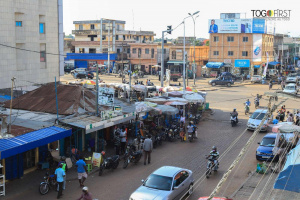
When starting a business for the first, entrepreneurs often prefer creating an individual company, since it is a simplified type of business with no minimum capital requirement.
However, while they have less complex legal characteristics, this type of business may fuse the entrepreneur’s assets with the business’. Moreover, it leaves no room for managing partners.
Over time and as it grows, the entrepreneur will have to change the business’ status, notably for legal, financial, fiscal purposes or even in the event of a name or location change.
The business owner can request necessary changes at the Center for Business Formalities (CFE), provided that he or she has full legal capacity upon submitting the request. For Togolese and ECOWAS nationals, the cost of that procedure is CFAF22,700 and for non-ECOWAS nationals, it is CFA27,700.
Eligibility criteria:
Individuals with full legal capacity
Cost of the procedure:
- CFA22,700 for Togolese and ECOWAS nationals
- CFA27,700 for non-ECOWAS nationals
Processing time:
24 hours after the application is submitted
Where to submit the application?
Name of the office: Center for Business Formalities (CFE)
Address : Angled corner between avenue de la Présidence & avenue Georges Pompidou located at the Togo Chamber of Commerce and Industry (CCIT), B.P. 3210, Lomé, Togo.
Contact : +228 22 23 62 60
E-mail : This email address is being protected from spambots. You need JavaScript enabled to view it.
Web Portal: www.cfetogo.org
Required documentation:
- A duly filled natural person identification form
- A copy of the national ID card for Togolese, the consular card for ECOWAS citizens, and the passport for other foreigners
- Proof of residence, namely the residence permit for ECOWAS citizens, the residence certificate for Togolese, and a visa for other foreigners
- A statement proving that the applicant has no prior or pending convictions
- A photo ID of the company manager or CEO
- Original of the business ID card or trade register
Togo Business Guide
Over the past decade, Togo’s business environment has undergone serious reforms.
Once complex, slow, and costly, procedures have been democratized gradually, through reforms and innovations. This has made the country more attractive to investors and economic operators, and it has also improved its ranking in various indexes.
Current procedures are better structured and simpler, making it easier to start a business, declare or pay taxes, undertake projects involving land, secure public contracts, request authorizations or social protection. The same applies to procedures related to the free-trade zone.
Our Togo Business Guide is designed to help you understand steps related to every procedure as well as associated reforms.
How to start an individual company in Togo
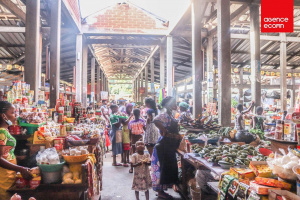
Individual companies make up ⅔ of businesses registered in Togo. They have grown in number in the past three years, bolstered by women and youth’s growing interest in entrepreneurship.
In 2019, 2020, and the first half of 2021 respectively, 7862, 7930, and 4447 of these companies were created in the country. The growth is mainly attributable to a battery of reforms introduced by the government and aimed at improving the business climate. Here, we take a look at procedures related to the creation of individual businesses in Togo.
Eligibility criteria:
Individuals with full legal capacity:
- Togolese
- ECOWAS citizens
- Non-ECOWAS citizens residing in Togo
Cost of the procedure:
- CFA26,400 for Togolese and ECOWAS citizens;
- CFA31,400 for non-ECOWAS citizens.
Processing time:
7 hours after submission of the application file.
Where to submit the application?
Name of the office: Center for Business Formalities (CFE)
Adress: Angled corner between avenue de la Présidence & avenue Georges Pompidou located at the Togo Chamber of Commerce and Industry (CCIT), B.P. 3210, Lomé, Togo.
Contact : 22 23 62 60
E-mail : This email address is being protected from spambots. You need JavaScript enabled to view it.
Web Portal: www.cfetogo.org
Required documents:
- A duly filled company registration form
- A copy of the national id card for Togolese, the consular card for ECOWAS citizens, and the passport for other foreigners
- A copy of the residence document namely, residence permit for ECOWAS citizens, residence certificate for Togolese, and visa for other foreigners
- A statement of no prior or pending convictions
- A certified copy of the diploma or certificate for liberal professions
- A photo ID of the managing director or CEO of the company
- A hand-drawn map of the company’s geographical location
Togo: How to start a corporation
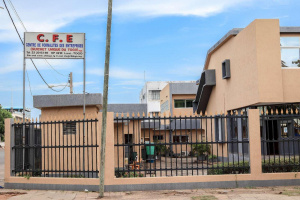
In 2019, 2020, and the first half of 2021, respectively 3,652, 4,662, and 2,864 new businesses were established in Togo. The growth was driven by reforms that were introduced in recent years to improve the business climate. These reforms, according to the authorities, were successful and made it easier to start a business - faster and cheaper also.
The cost for setting up a corporation (legal persons) was reduced to CFA29,250 for Togolese and ECOWAS citizens, and CFA34,250 for foreigners.
Regarding the time needed to set up a business, it reduced from around 100 days to just 24 hours, and later to 7 hours.
These are breakthroughs considering that in 2012, operators had to spend CFA262,000 to start their business. In addition to this cost, CFA62,000 was needed to obtain legal announcements published on the Center for Business Formalities (CFE)’s website. This fee isn’t required anymore.
Eligibility criteria:
As per current regulations, Togolese, ECOWAS, and non-ECOWAS citizens that live outside or in (legally) Togo can start a business at the CFE.
Cost per procedure :
- CFA29,250 for Togolese and ECOWAS citizens
- CFA34,250 for non-ECOWAS citizens.
Processing time:
7 hours after submitting the full application.
Where to submit the application?
Name of the office: Center for Business Formalities (CFE)
Adress : Angled corner between avenue de la Présidence & avenue Georges Pompidou located at the Togo Chamber of Commerce and Industry (CCIT), B.P. 3210, Lomé, Togo.
Contact : 22 23 62 60
E-mail : This email address is being protected from spambots. You need JavaScript enabled to view it.
Web Portal: www.cfetogo.org
Required documentation:
- A duly filled business registration form
- A copy of the national ID card for Togolese, the consular card for ECOWAS citizens, and the passport for other foreigners
- A copy of the residence document namely, residence permit for ECOWAS citizens, residence certificate for Togolese, and visa for other foreigners
- A statement of no prior or pending convictions
- Three (03) copies of the statuses
- A photo ID of the managing director or CEO of the company
- A hand-drawn map of the company’s geographical location
Dissolving a legal person: Everything you need to know

Many reasons could explain a company’s dissolution. Its life term could have expired; it may have completed its corporate goal; it could be due to operational issues resulting from a disagreement between managing partners; or even serious financial problems.
Dissolution is a prerequisite to liquidating the company’s assets. In Togo, formalities related to this process are carried out at the Center for Business Formalities (CFE). The person submitting the request must have full legal capacity. For Togolese and ECOWAS nationals, the cost of the procedure is CFA24,125 and for non-ECOWAS nationals, it is CFA29,125.
The dissolution is usually effective 24 hours after the necessary documentation has been submitted. Once effective, the company ceases to exist.
Eligibility criteria:
Individuals with full legal capacity.
Cost of the procedure:
- CFA24,125 for Togolese and ECOWAS nationals
- CFA29,125 for non-ECOWAS nationals
Processing time:
24 hours after the request is submitted.
Where to submit the request?
Name of the office: Center for Business Formalities (CFE)
Address : Angled corner between avenue de la Présidence & avenue Georges Pompidou located at the Togo Chamber of Commerce and Industry (CCIT), B.P. 3210, Lomé, Togo.
Contact : 22 23 62 60
E-mail: This email address is being protected from spambots. You need JavaScript enabled to view it.
Web portal: www.cfetogo.org
Required documentation:
- Minutes of the dissolution
- Original copy of the business ID card or trade register
Togo: UNDP finances local civil society organizations to boost environmental protection
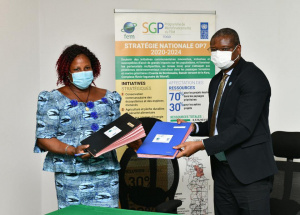
The United Nations Development Programme (UNDP) office in Togo provided CFA146 million in grants to nine civil society organizations (CSOs) on February 22, 2022. The related agreement was initialed by UNDP’s representative, Aliou Mamadou Dia.
With the money, the CSOs will develop community projects that focus on natural resource management and environmental protection. In detail, each of them will get between 10 and 24 million CFA francs to develop agricultural activities around the hydro-agricultural dam of Narcré in the township of Tône 3, and to restore ecosystems on the slopes and mountains in the district of Naki-Est, among others.
The grants, which cover 24 months, will also be used to carry out initiatives aimed at conserving the Kpankpandjéka forest in the village of Hélota in the Kéran, to grow a botanical garden in the Niamtougou district, and to set up a 500-hectare improved cashew plantation in Agouloudè.
The financing was provided as part of the Global Environment Facility (GEF) Small Grants Program. The latter is implemented by the UNDP and executed by the United Nations Office for Project Services (UNOPS).
According to UNDP data, so far, the program has financed 122 projects in Togo for $3.3 million, or about CFA1.9 billion.
Esaïe Edoh
Saudi Development Fund to help Togo implement its 2020-205 development roadmap
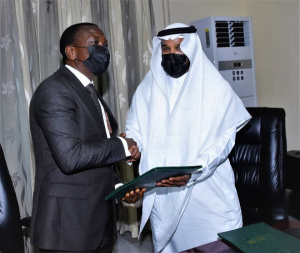
Saudi Arabia will help Togo develop the projects falling under the West African government’s 2020-2025 roadmap. To this end, the two countries inked last Tuesday a memorandum of understanding (MoU) in the Togolese capital Lomé.
The MoU was signed by Togo’s Minister of Trade, Kodjo Adedze, and Ahmad Ibrahim Al-humaid, representing the Saudi Development Fund (SDF).
Among projects that will benefit from the Saudi support is the rehabilitation of farming land in Mission Tove and that of the Adagali-Atakpame road.
The SDF, which sent a delegation to Lomé, claims that the deal reflects its commitment “to helping the Togolese government implement its roadmap.”
For their part, Togolese authorities said “this memorandum illustrates the quality of relations between the two countries.”
Togo just received $5 million from the SDF to build 17 mini drinking water adductions and 15 autonomous water stations in its Central and Plateaux regions.
This is one of several facilities that the Saudi institution has been providing the African nation for some years now.
Esaïe Edoh
The Togolese government allows full reopening of places of worship and resumption of cultural activities
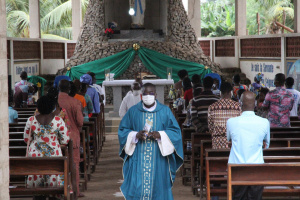
In Togo, the government decided on February 22, 2022, to ease some of its measures that aimed at containing the pandemic.
Among others, those who test positive for Covid-19 will spend less time in self-isolation (7 days for the vaccinated and 10 for the non-vaccinated). Government-approved places of worship have been allowed to fully reopen, and people can now attend sports and cultural activities, as well as go to the beach.
However, only those vaccinated, and who have relevant proof, can benefit from the measures. In this framework, the authorities instructed the installation of vaccination areas near the places concerned.
The measures, it should be emphasized, were taken after getting advice from the scientific council set up in response to the pandemic.
The council noted a “decrease in the numbers of positive cases and new Covid-19 infections,” which it attributes to “the strong mobilization of the population around vaccination.” Indeed, the latest official data shows that over 2.6 million doses of vaccines have been administered to the Togolese population.
Esaïe Edoh
Cashew: the 2022-2023 marketing campaign begins
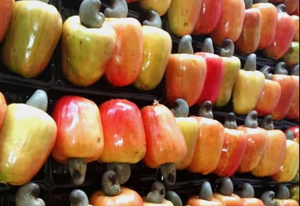
Key players of the cashew sector met last weekend in Sokodé (340 km north of Lomé) to discuss the regulation of the 2022-2023 marketing campaign. The recently-launched campaign will close on August 30, 2022.
From this year onward, anyone who wants to buy raw cashew nuts needs a buyer or sub-buyer card, paired with a purchase agreement and the transport slip.
As for exporters, they must present an export license before the purchase. They must also declare the export to the Council of Cashew Exporters (CEFA) and the Interprofessional Council of the Cashew Industry of Togo (CIFAT) to obtain an export permit.
For the account of the ongoing campaign, nearly 35,000 t - against 27,360 t in 2021- of cashew nut will be placed at the disposal of the buyers, at the price edge field of 340 FCFA/Kg against 320 FCFA/kg in 2021.
It should be noted that the cashew nut sector is expanding rapidly in Togo and its production has increased from 6,268 t in 2014 to 35,000 t in 2021, thus a more than 450% rise.
Esaïe Edoh