
Togo First
Togolese authorities plan to regulate cement exports as the country faces shortages
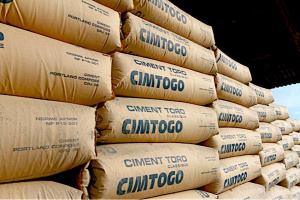
Due to the recent shortage in cement supply that Togo faces, in its northern region especially, price speculation is becoming recurrent. To tackle this issue, the government decided to “regulate cement export,” according to the minister of trade, Adédzé Kodjo recently.
The official, during a field visit to Dapaong (620 km north of Lomé) last week, argued that "it doesn’t make sense that we have a cement industry and yet have a shortage.”
Cement shortage caused the price of the commodity, in the northern region especially, to increase from CFA81,000 per ton to CFA85,000. The situation, which also brought construction at many project sites to a halt, was described by the minister of trade as abnormal. "It is a contradiction. We can not be shipping 65% of the output of Cimtogo-Kara, in the north of the country, and be facing shortages all the time.”
Adédzé Kodjo met with players of the sector and told producers to give priority to Togolese distributors.
Let’s recall that back in October 2021, after distributors decided, one-sidedly, to raise prices of cement, the ministry of trade warned them it would take appropriate measure and would “severely sanction any violator, per the law.”
Esaïe Edoh
Public Policies: Togo sustains its performances in the World Bank’s latest CPIA rankings
Togo is one of the four non-fragile countries where the quality of public policies and national institutions improved in 2020. This is according to the World Bank’s latest Country Policy and Institutional Assessment for Africa (CPIA) report covering the period from January to December 2020.
Indeed, "the non-fragile countries that recorded an increase in their overall score are Côte d'Ivoire, Guinea, Rwanda, and Togo. Rwanda solidified its position at the top of the ranking, with its overall score rising to 4.1 from 4.0 in 2019, and Togo continued to perform well overall on the CPIA, with a 0.2 point increase in its overall score to 3.5," the Bretton Woods institution said.
Togo’s overall score is both above the average in West Africa and the overall average in all 39 sub-Saharan African countries eligible for assistance from the International Development Association (IDA).
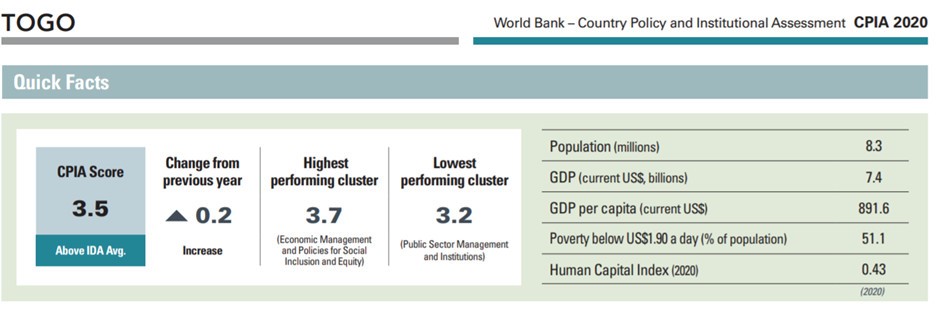
In detail, Togo's most important area of progress in 2020 is in Economic and Policy Management for Social Inclusion and Equity, with a score of 3.7, compared to 3.2 for its worst-performing area (Public Sector Management and Institutions).
"Togo has emerged as a strong reformer among IDA countries in the region in recent years," the World Bank indicates. "Before COVID-19, the government had taken a series of measures to maintain macroeconomic stability," it adds, emphasizing the positive impact of measures such as the Program-Budget approach, a "rapid and effective response to the COVID-19 shock to mitigate the economic and social impact of the pandemic," and the digitization of tax administration, which "helped contain the negative impact of the crisis on revenues, which would have been greater in the absence of these budget measures."
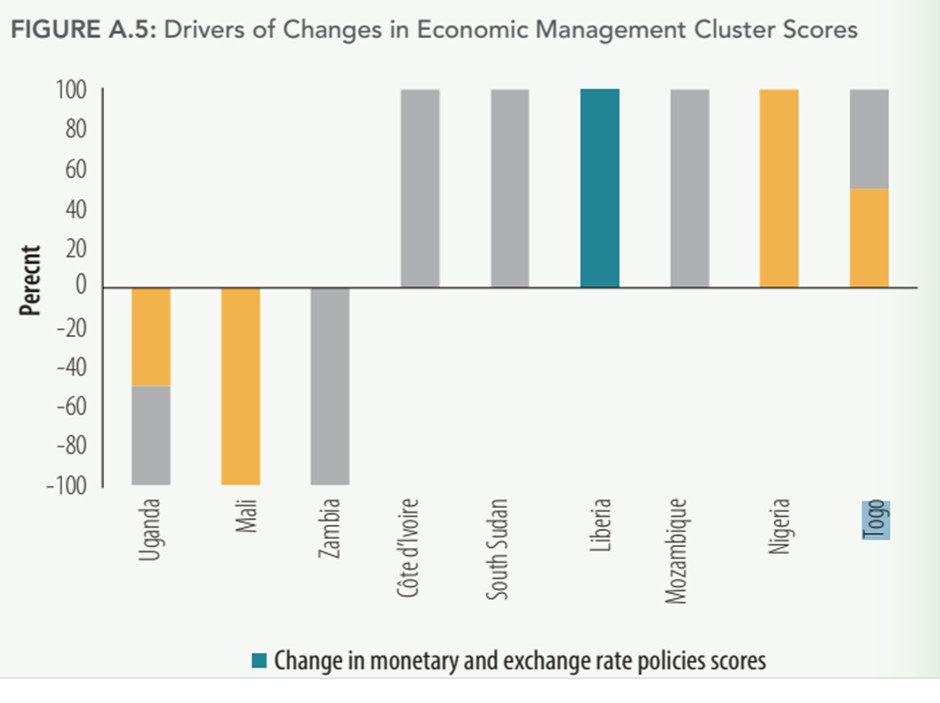
Overall, the country’s scores were above the averages of the IDA and the sub-region in the four main categories included in the CPIA (Economic Management, Structural Policies, Social Inclusion, and Equity Policies, Public Sector Management, and Institutions).
In these respective categories, Togo scored the following: 3.7 in economic management (against respective averages of 3.4 and 3.2 for West and Central Africa and the IDA), 3.3 in structural policies (against respective averages of 3.2 and 3.2 for West and Central Africa and the IDA), 3.7 in financial inclusion and social equity (still above average compared to the West and Central Africa average and the IDA average, both at 3.3), and 3.5 for gender equality (the IDA average is 3.3).
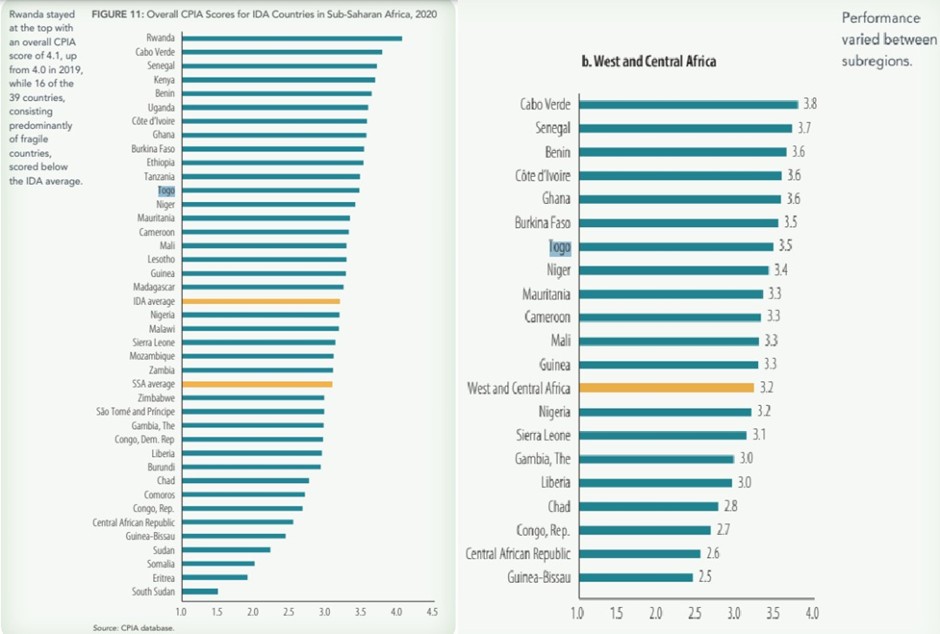
At the sub-Saharan Africa (SSA) level, Togo ranked 12th out of 39, while it came 7th out of 20 in West and Central Africa. In SSA, Rwanda topped the ranking (with a score of 4.1) and Cabo Verde came first in West and Central Africa (with a score of 3.8).
Ayi Renaud Dossavi
Sanlam Insurance opens three new offices in Lomé
Sanlam Insurance opened three new branches in Lomé last Thursday. The new offices are located in Kégué-Zogbédji, Agoè-Démakpoè, and Djidjolé-Totsi.
According to Sanlam’s country manager, opening the new offices is part of the company’s “proximity policy” which aims at enabling the population to access its products and services (automobile, fire accidents, miscellaneous risks, transport) more easily.
Sanlam Togo changed its name from Saham Assurance Togo in 2021. The firm has been under South African control for a while. Sanlam Togo has the largest network of offices in the country.
U.S. aid to Togo reaches new peak in 2021
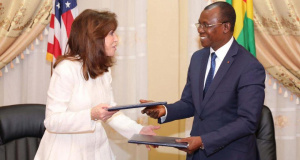
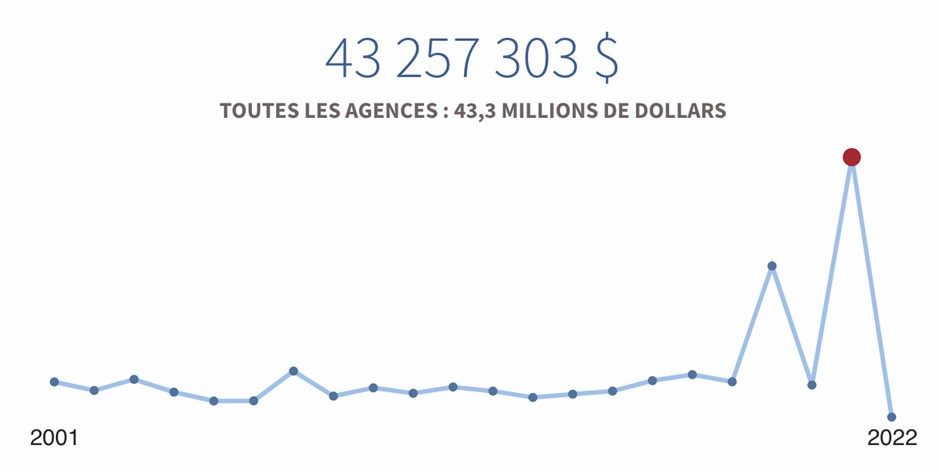
New commitments from U.S. agencies rebounded in 2021, reaching their highest in two decades, according to ForeignAssistance.gov, the State Department platform that compiles data on U.S. foreign assistance. This record follows a drop in 2020, amid tensions between Lomé and Washington following the presidential election in Togo.
As of April 2, 2021, the date of the last update of foreign aid data, U.S. agencies had already committed $43 million (CFAF 24.7 billion) to Togo. This amount is well above the $25 million (14 billion FCFA) pledged in 2019, the second most prolific year for the African country since 2001.
An increase driven by the MCC
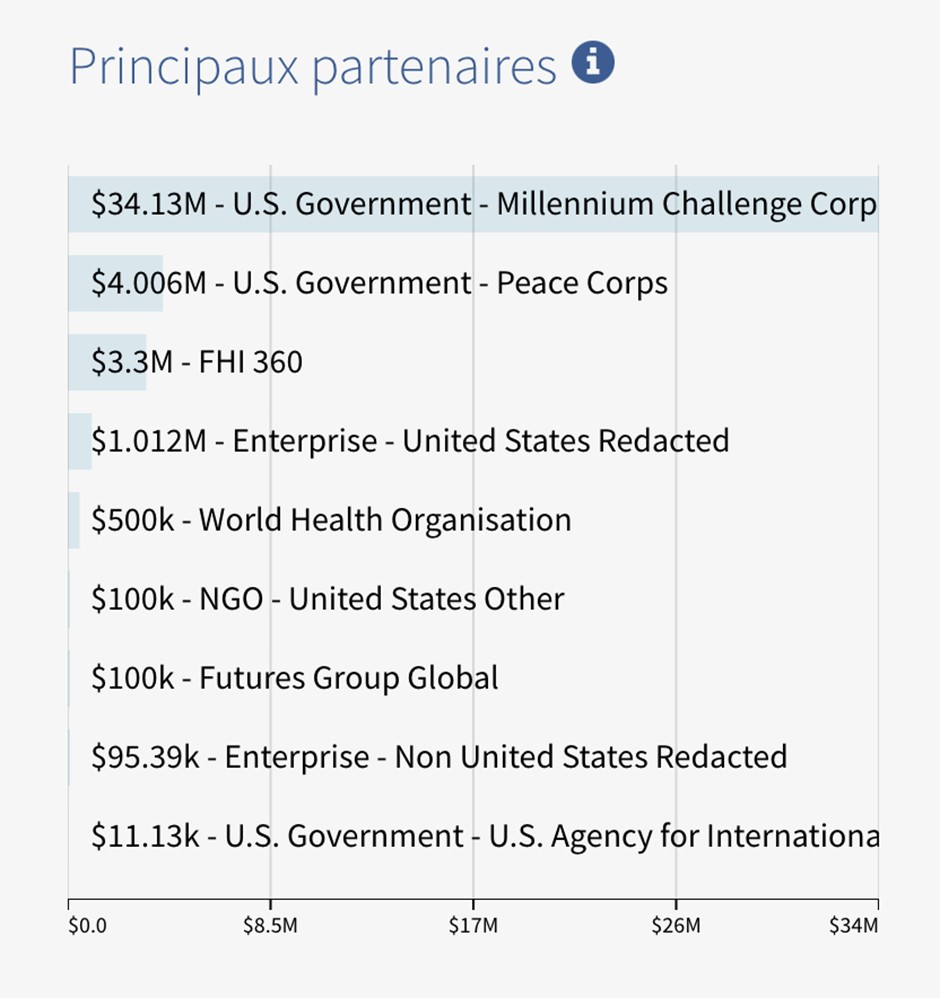
In 2021, U.S. commitments were driven primarily by the final financial approvals of the MCC under the Threshold program with the Togolese authorities. The program, which entered its operational phase last year, has a budget of $34 million (CFAF 19.5 billion), spread over several sectors including ICT and land.
$20 million for ICT
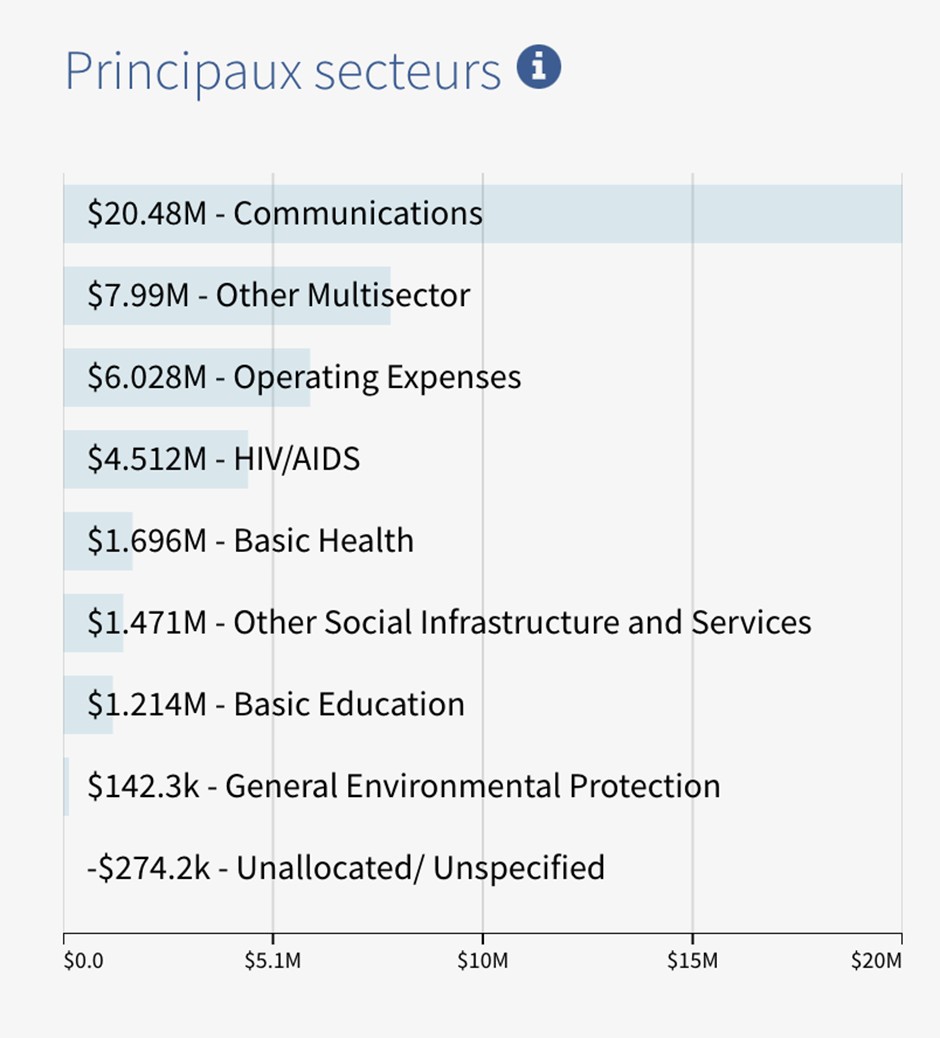
Unlike previous years when U.S. aid focused on the basic education and health sectors, in 2021, Uncle Sam's grants went largely to the ICT sector, especially to finance public policies in telecommunications and administrative management. More than $20 million (11 billion FCFA) in new commitments have been made by the MCC, to improve people's access to quality and affordable services. Ultimately, the commitments were aimed at attracting more private investments in the sector.
27% of commitments already disbursed
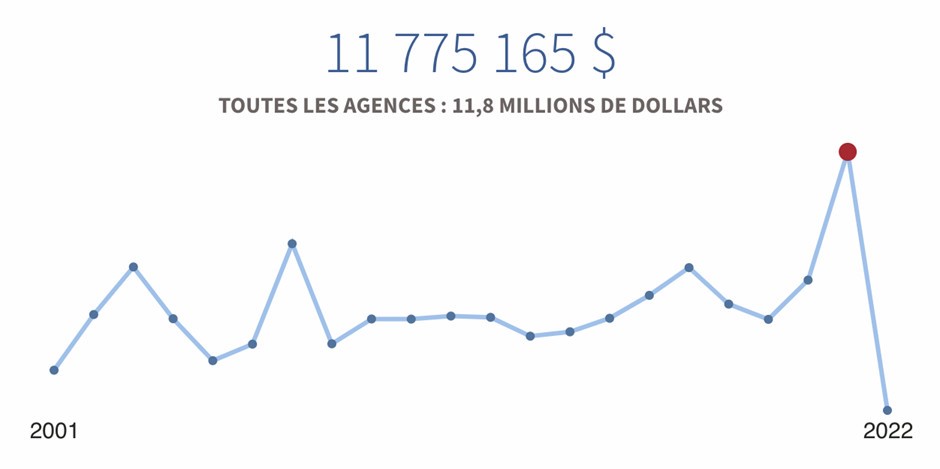
Of the $43 million in commitments, some of which are to be spread over several years, 27%, or about $12 million (CFAF 7 billion), has already been disbursed, in 2021. This is the highest amount disbursed that year, Togo First noted.
These disbursements were mainly in the health sector, through Family Health International (FHI 360), and in the education sector, notably through Catholic Relief Services and the Peace Corps, the leading U.S. development assistance agency in Togo, ahead of the U.S. Department of Agriculture (USDA), with more than $115 million in commitments.
Position in Africa
At the continental level (sub-Saharan Africa), the aid Togo received is well below the regional average estimated at $220 million. Togo ranked 31st in the list of U.S. aid destinations. The ranking is dominated by Ethiopia with $1.3 billion.
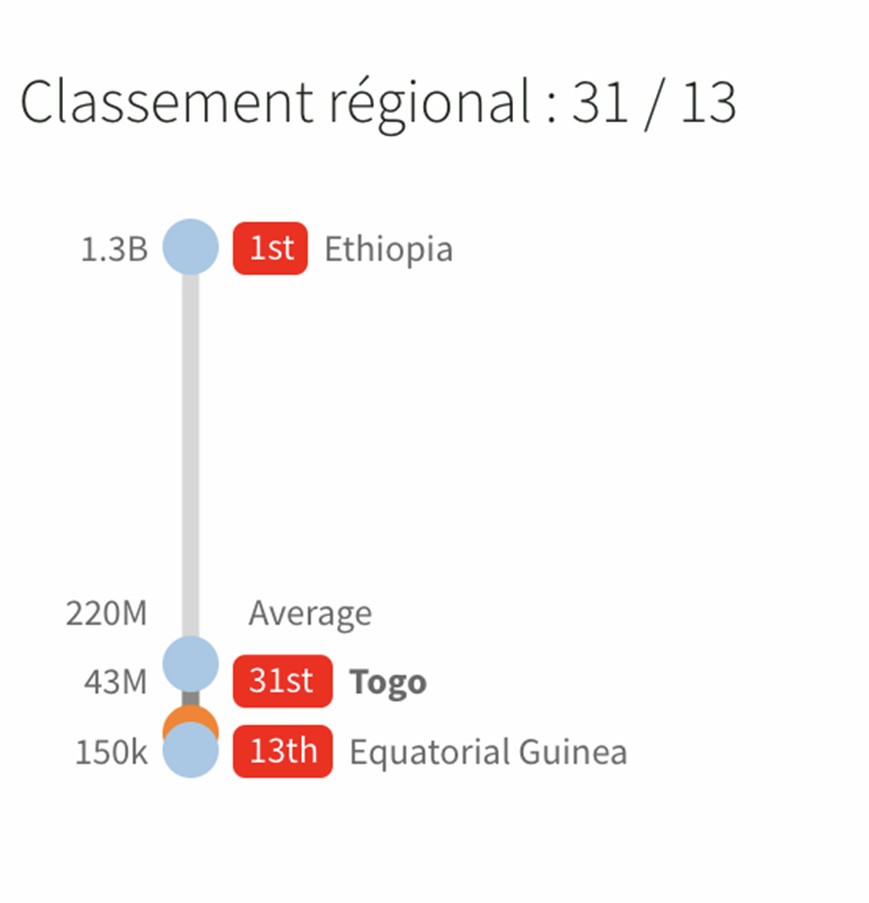
Since 1946, Togo has received over $380 million in aid from the U.S., including only $11 million in military grants. This total amount does not include loans given by the US Exim bank and the Overseas Private Investment Corporation (OPIC), which total more than $150 million.
Fiacre E. Kakpo
EU-backed fund Investors & Partners supports the digital transformation of Lomé Business School
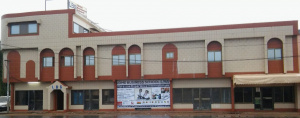
The European investment fund, Investors and Partners (I&P), will help Lomé Business School (LBS) create an e-learning platform. The financial support, I&P’s first in a private business in Togo, was announced by the fund last week, via a statement.
Under the partnership, LBS will also get equipment and be supported in implementing an educational engineering process involving digitalization aspects.
I&P’s investment is part of its I&P Acceleration in the Sahel scheme. The latter is aimed at West African start-ups and SMEs.
"Our model is based on training by national and international experts and personalized support, as well as practical internships in companies each year and student entrepreneurship to guarantee 100% professional integration," said Fulgence Amani, telecommunications engineer, and co-founder of LBS. "We also emphasize access to digital technology and equipment for all students, international exposure, and exchange programs with European business schools.”
Launched 20 years ago, the I&P fund mainly finances and supports start-ups and small and medium-sized enterprises in Sub-Saharan Africa. It is backed by the European Union (EU).
"We are delighted that the I&P Acceleration program in the Sahel has begun operations in Togo with the financing of the first company in the vocational training sector," said Joaquín Tasso Vilallonga, Ambassador of the European Union to Togo. "This is a good start for this program, in which the EU injected €15 million to support small businesses with high growth and job creation potential. This is an ambition that the EU shares with the Togolese government, in line with its 2025 roadmap in support of MSMEs - a great contributor to the country's economy," he added.
Founded in 2013, LBS is an international college based in Lomé. It offers business management and IT courses. The school aims to offer courses that meet international standards, especially big French universities.
Lomé to host the next WAEMU Banks and SMEs Fair
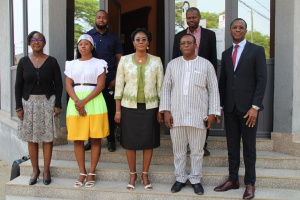
The 8th edition of the WAEMU Banks and SMEs Fair (SBPME-UEMOA) will be held in the Togolese capital, next November. The information comes from Hermann Naglo, Permanent Secretary of the show, who communicated on this event at the end of a meeting with the President of the Special Delegation of the Chamber of Commerce and Industry of Togo (CCIT), Nathalie Bitho.
During this meeting in Lomé, cooperation between financial institutions active in the West African Economic and Monetary Union will be discussed, to improve intra-community trade in the context of continental free trade. Also, just like in the previous years, SMEs will have the chance to establish new partnerships with banks.
This week, Hermann Naglo provided the President of the Special Delegation of the Chamber of Commerce and Industry of Togo (CCIT) a summary of preparatory activities and asked for its support for the event.
The fair is held in all eight member states of the WAEMU, on a rotational basis. Besides fostering partnership creation between SMEs and banks, the SBPME-UEMOA helps assess how much these businesses contribute to the Union’s economic transformation.
Esaïe Edoh
Togo to host a top-class conference on anti-terrorism in West Africa next April
Next April, Lomé will host a high-level conference on political transitions and the fight against terrorism in the Sahel and West Africa. This was disclosed by the Ministry of Foreign Affairs which is behind the project. The related press release further notes that Robert Dussey, the Togolese Minister of Foreign Affairs, presented the project to Antonio Gutierrez, the UN Secretary-General, on Thursday 10 February 2022 in New York.
The meeting will allow the various stakeholders to examine recent trends and developments in the Sahel region and West African countries in the face of violent extremism and terrorism, and to reflect on strategies and means to help contain the terrorist threat.
Amid rising tensions and growing security issues in the sub-region, the planned conference will also be an opportunity to reflect on possible reforms to the actions and mandates of peacekeeping operations, to make sure that they better match needs in the field.
The conference "not only responds to an urgent concern but is also part of Togo's sub-regional and inter-regional strategy to fight terrorism and preserve peace in the Sahel," according to Robert Dussey.
In response to the Togolese official’s presentation, the UN’s SG "welcomed Togo's proactivity on this topical issue and reassured him of the support of the United Nations, which is increasingly concerned about the serious issues of terrorism, crime and coups d'état that are shaking the West African region and some Sahelian countries," the ministry of foreign affairs reported.
Back in September 2021, Togo, let’s recall, presented its strategy for the Sahel, which revolves around levers such as multilateral cooperation, the export of peace, or support for the process of political normalization and democratic transitions.
Togo: Government will disburse CFA5 billion to pay exceptional bonuses to teachers
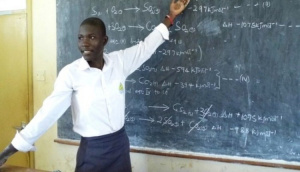
The government of Togo will spend CFA5 billion on exceptional bonuses for teachers, covering the period from January 2021 to December 31, 2025. The news was announced via a press release issued on Feb 9, 2022, after a meeting between education stakeholders and Togolese officials.
A large portion of the funds will be provided to public teachers as annual allowances, not "indexable" over the period concerned. The remaining part should help volunteer teachers in public schools, based on "criteria that are to be defined by the government", and improve the state subsidy to confessional schools.
The announcement should at last settle an old dispute between the teachers' unions and the government, which led to a strike in November 2021 that was deemed illegal.
Besides paying bonuses, the government is planning "other measures in favor of the education sector.” For example, it intends to recruit around 3,000 teachers, 250 student teachers of scientific disciplines this year, as well as build 5,000 classrooms as part of a project aimed at increasing school accommodation capacities.
Let it be recalled that for this year, Lomé said it would allocate a CFA151 billion budget to the ministry of education.
Esaïe Edoh
Togolese ministers of health and universal access to health care assess progress made on major infrastructure projects in the northern region
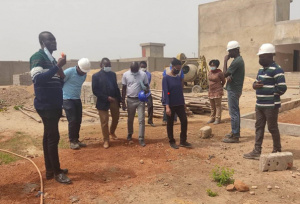
Last Tuesday, Feb 8, the minister of health and the minister of universal access to health care, Moustafa Mijiyawa, and Agba-Assih Mamessilé, were in northern Togo to visit some health infrastructure under construction.
Notably, the two Togolese officials were in Kara to evaluate construction works for the Center for Medical Specialties (CMS) and the Center for Infectious Diseases (CID), and in Sarakawa where the Center for Epidemic Treatment (CTE) is being built. The ministers concluded that the work was progressing well but still urged contractors involved to move faster.
The health infrastructures that are being built should, “increase the capacities of the health care and services system in terms of infrastructure and equipment, improve the quality of services, in remote areas especially, as well as bolster health security and the response to epidemics and other public health emergencies.”
The health infrastructure project is consistent with the Togolese authorities' desire to guarantee access to health care for all. Among other projects launched in line with this same objective, the most recent is the "Wezou" project, in support of pregnant women and newborns. There is also the universal health insurance project which should come online soon as a law was recently adopted in this regard.
Esaïe Edoh
Togo: Ministry of trade holds workshop on trade development policy update
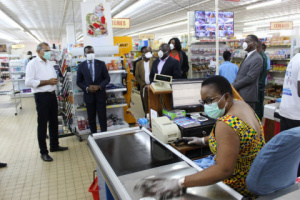
"Faced with new issues and challenges, it is important to update the national policy for the development of Togolese trade to make Togolese companies more competitive on the international market, in a context where, as we all know, Covid hinders imports and exports," said Dr. Ayira Korem, an economist and researcher at the University of Lomé, in charge of the project. "So it is essential to understand what the major issues are so that the national policy for the development of Togolese trade can guide companies, and so that they can be competitive internationally," he added.
The revision’s goal is to improve the supply of goods and services and meet the needs of Togolese consumers.
According to Raoul Bassolawè Koka, finance administrator at the ministry of trade, Togo needs to adapt to new trends in the global trade industry, especially amidst the current globalization.
"The current PNDC dates from 2011, and we know that there have been many changes since then: globalization, regionalization, the launch of the AfCFTA, and its implementation in January 2021," he said. Faced with these changes, the government wants to "change the paradigm" by assessing the old policy and defining areas for improvement.
Regarding the update, the ministry of trade announced the project in August 2021 and launched at the same time a tender to hire a firm that would carry it out.