
Togo First
Togo jumps six places in the 2021 Corruption Perceptions Index

Togo jumped six places in the 2021 Corruption Perceptions Index (CPI) released last Tuesday by Transparency International. The West African nation which was 134th out of 180 countries in 2019 and 2020 ranked 128th last year, with a score of 30 over 100 (+1).
Lomé was 29th in Africa and its score was above the average recorded across the sub-Saharan African region - a region which made “no significant improvement” in the 2021 CPI.
Worldwide, the average score stagnated (43/100) for the tenth consecutive year, reflecting "stalled levels of corruption," according to the Berlin-based NGO. The index notes that "two-thirds of countries scored below 50."
As usual, Denmark, Finland, and New Zealand topped the ranking, each with a score of 88.
Meanwhile, in Africa, the top three performers are Seychelles (23rd in the world with a score of 70), Cabo Verde (39th, 58), and Botswana (45th, 55). At the bottom of the index (both in Africa and the world) are South Sudan (180th, 11), Somalia (178th, 13), and Equatorial Guinea (172th, 17). Libya shares Equatorial Guinea’s score and rank.
Nigeria, Africa’s biggest economy, was 154th worldwide with a score of 24 over 100.
Ayi Renaud Dossavi
GuarantCo provides Orabank Togo CFA14.55B guarantee to finance telecom and road projects

GuarantCo has granted Orabank-Togo a CFA14.55 billion guarantee to finance road and telecom development projects in Togo. This is the second time that the subsidiary of the Private Infrastructure Development Group (PDG) is providing a guarantee to support infrastructure development in Togo. The first time was in 2019 when the fund helped Togo’s commercial banks support the Kekeli Efficient Power project.
Commenting on the new facility, GuarantCo said in a statement obtained by Togo First on Jan 27, 2022: "The guarantee provides Orabank with capital relief, allowing it to expand its infrastructure portfolio while remaining within the limits of a single debtor. The projects supported include telecommunications and road projects in Togo."
Moreover, "This portfolio guarantee improves Orabank's prudential ratios by 742 basis points and 837 basis points for Tier 1 capital and solvency ratios respectively," the fund said. This, it added, should allow Orabank to better support the government’s 2025 roadmap.
Guy Martial Awona, CEO of Orabank Togo, welcomed "GuarantCo's support for [Orabank's] portfolio guarantee, which increases its ability to finance business growth in the telecommunications, energy and infrastructure sectors. Once again, the bank is proud to contribute to the government's efforts in implementing the National Development Plan (NDP) launched in 2018."
GuarantCo is backed by several western governments as well as the World Bank Group.
Ayi Renaud Dossavi
Togo undertakes its third issue on the WAEMU money market this year, seeks CFA35 billion
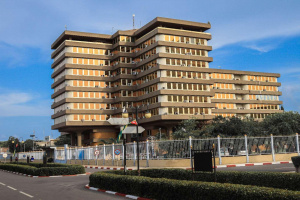
For its third issue on the WAEMU market this year, Togo will seek CFA35 billion. The first two were successful.
The issue - of fungible Treasury bonds - is scheduled to close on Feb 4, according to WAEMU-securities. It is set to mature over 120 months (10 years), has a nominal value of CFA10,000 and an interest rate of 5.9%.
So far into the year, Togo has raised CFA64 billion on the regional money market, out of the CFA533 billion it aims at for the whole of 2022.
Esaïe Edoh
Iran unveils plans to invest in health, energy, and agriculture in Togo
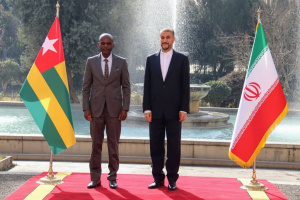
Togo and Iran are looking to reinforce their cooperation in the health, agriculture, and energy sectors. The matter was discussed in a recent meeting between some Iranian authorities and a delegation led by the Togolese Minister of foreign affairs, Robert Dussey, who ended a working visit in the middle eastern country last Wednesday.
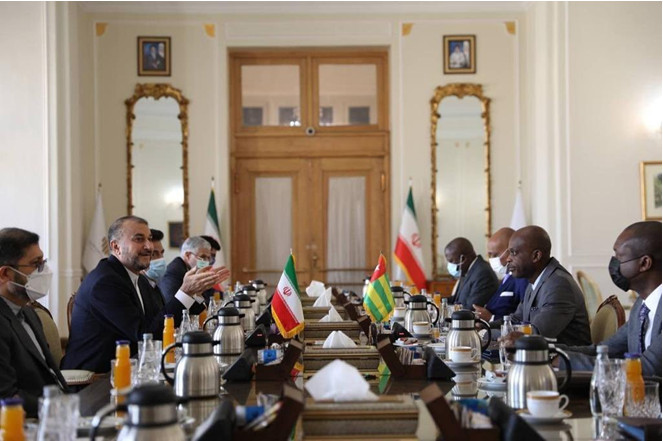
Concretely, the two countries agreed to hold medical training programs and proceed to a mutual exchange of professionals in the health sector. Iran also mentioned the possibility of setting up a pharmaceutical plant in Togo, at the Industrial Platform of Adétikopé (PIA) to be precise.
Relative to energy, Iran said it is committed to helping Togo successfully implement its national electrification strategy and back its efforts to achieve universal access to electricity by 2030.
On the agricultural front, the Togolese and Iranian delegations reviewed the Togo irrigation support project. The latter should be further discussed by both parties in an upcoming meeting.
During the recent roundtable, Minister Dussey’s delegation presented Iranian economic operators with business opportunities available in Togo. Subsequently, both nations decided to promote collaboration between their respective private sectors, via business meetings and exchange trips.
According to sources close to the matter, these various projects should be discussed in-depth during the upcoming trip of Iran’s Minister of foreign affairs, Hossein Amir-Abdollahian, to Lomé.
Back in 2010, Togo and Iran signed two visa exemption agreements for diplomatic passport holders. Lomé also granted a prospecting license to Iranian mining firms. These moves were also aimed at bolstering cooperation between the two countries.
Esaïe Edoh
Amidst growing terrorist threats, Togo ramps up spending in defense, but still below initial expectations of Military Programming Law
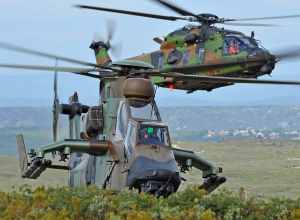
Forecast at 58 billion CFA francs at the beginning of 2021, and scaled up to 110 billion CFA francs in October of the same year, the Togolese army budget should reach 105 billion CFA francs in 2022, according to official forecasts.
The forecasts are released in a context where terrorists’ presence keeps growing in the sub-region, nearing the coast. Last year, Togo lost seven peacekeepers during a mission in Minusma, Mali. The country also recently reported the first terrorist attack on its soil, near the border with Burkina Faso.
In detail, Lomé plans to allocate CFA43.4 billion for the strategic endowment of the army, CFA21.9 billion for the preparation and use of military forces, and CFA38.5 billion for logistics equipment and joint support. Veterans are also supposed to receive CFA140.2 million.
A higher budget
The budget that the army recently announced – compared to that announced in early 2021 – is closer to that suggested under the 2021-2025 military programming law (LPM). This plan, adopted in December 2020, had set army spending at 129 billion for the year that ended (up 10% compared to the 110 billion expected by the government), and over 700 billion throughout the period it covers.
"Preserving peace and security is more crucial than ever given the threats that are emerging here and there, especially in our sub-region," President Faure Gnassingbé had said in his end-of-year address (in 2020). "The recent military programming law gives the defense and security forces the appropriate tools to carry out their protection and defense mission, in cohesion with all the living forces of the nation," the Head of State added at the time and this was shortly after the adoption of the military programming law.
Still below initial projections…
For this year, the LPM’s projection for military expenses is put at 152 billion, 30% above the government’s expectation (CFA105 billion).
Concretely, Lomé plans to invest in new military equipment, fatten the army’s ranks by about 30%, from 5,000 soldiers in 2021 to 22,000 soldiers in 2025. Part of the projected expenditures will also go into ramping up numbers in the gendarmerie corps, from 3,000 to 8,000 in 2025.
Military spending not neglected despite Covid crisis
Though the Covid-19 pandemic has adversely affected the Togolese economy, especially in terms of budget allocation, funds allocated to the army in the past few years were quite significant, at least compared to the last decade.
Two years ago, at the pandemic’s pinnacle, Togo managed to keep its defense spending above 2% of GDP, according to Country Economy.
According to the Stockholm International Peace Research Institute (SIPRI), Togo ranks 31st in Africa in terms of military spending, ahead of neighbors such as Côte d'Ivoire, Mali, Senegal, Burkina Faso, and Niger, in a subregion plagued by the jihadist threat.
Ayi Renaud Dossavi
Togo: Government to spend over CFA20bn this year to enable more people to get access to drinking water
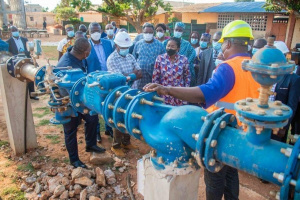
In line with its 2022 budget law, the government of Togo plans to spend CFA23 billion on clean water supply this year. This is more than it allocated for the same purpose last year, CFA17 billion; this is in a context where the service rate in rural and urban areas are currently estimated at 68% and 58%, respectively.
In the coming months, several drinking water supply projects started in 2021 are expected to reach cruising speed. Among these, there is the national drinking water supply plan launched in February 2021. Under this project, over 300 hydraulic pumps are to be installed in the north and they should improve sanitary conditions in schools and rural areas in the Kara and Savanes regions (PASSCO). The national drinking water supply plan is backed by France, through its Development Agency (AFD) which disbursed CFA6.5 billion to this end.
Another project is the master plan for the supply of Greater Lomé, which the government started working on in September 2021. The program aims to meet the demand for drinking water in the capital and its outskirts over the next 30 years.
After announcing last year that boosting access to clean water was one of its priorities, the government said it wanted to ensure that 85% of the country gets clean water by 2025, and 100% by 2030. With these deadlines set, the country initiated major projects such as the Support Program for Vulnerable Populations (PAPV). The latter is backed by the EU and China, among others.
Esaïe Edoh
Decentralization: Togolese people are not close enough to local elected officials, Afrobarometer study reveals
Since the last local elections held in June 2019, Togo has been actively engaged in its decentralization process. And while Lomé’s efforts resulted in greater involvement of citizens, many of whom are now ready to take part in their municipalities’ activities and strongly adhere to the principles of good governance, some bridges still need to be built between local elected officials and populations. This is the conclusion of an Afrobarometer survey on decentralization and control of public action published in December 2021. The study was based on a sample population of 1,200 adult citizens interviewed between December 2020 and January 2021.
To participate or not in municipal activities, that is the question
According to the study, three-quarters of Togolese (74%) say they are somewhat willing to participate in municipality-related activities, and more than half (58%) of the sample pool have done so at least once in the past 12 months.
As for actually participating in community meetings, about six in 10 Togolese (58%) say they have done so at least once in the past 12 months, including 23% who claim to have taken part in the meetings "often", 26% said they did "a few times" and only 8% attended "once or twice”. In comparison, only 6% said they would never participate in a community meeting.
Based on the study’s results, people in rural areas are as involved in community meetings as those living in cities. The same evidence stands between the less and more educated people, as well as for people living in the north and south.
Kara stands as an example regarding municipal involvement
Nationwide, across all 117 municipalities of the country, "rural residents (79%), the less educated (78%) and the people of the Kara region (88%) are more willing to perform this civic act - men (77%) and women (73%) support it", the study reveals.
In contrast to Kara, interest is lower in the Maritime region, especially in the capital Lomé. Indeed, "the lack of initiative to discuss matters concerning the management of the municipality is much more accentuated in Lomé (55%) and the Maritime region (57%), in urban areas (53%), among women (52%) and the less affluent (51%)," the report points out, although few reasons were advanced to explain these differences.
Little interaction between local elected officials and populations
At the same time, while the Togolese say they are interested in the activities of their municipalities, there is still a gap between the population and local elected officials. "An overwhelming majority (81%) of Togolese say they have never reached out to a local elected official in the last 12 months," the pan-African pollster points out.
Moreover, "the same proportion believes that local leaders "never" listen (52%) or listen "only a few times" (31%) to what ordinary citizens have to say."
In this regard, Afrobarometer suggests "strengthening initiatives at both the central and local levels" to "increase awareness about good governance principles and participation mechanisms" to get people more involved.
The Togolese value good governance (above all)
The survey also shows that citizens are overwhelmingly attached to the principles of good governance. Thus, three-quarters (74%) of respondents are in favor of the accountability of the President of the Republic to the National Assembly and affirm that the Head of State must always obey the laws and court decisions...even if he thinks they are wrong (77% believe that). A large majority (85%) believe that any government, no matter how popular, must always abide by the law.
In the same vein, more than half (56%) of the population believe that the President of the Republic "never" or "rarely" ignores parliament and the laws of the land (53%), according to Afrobarometer.
Ayi Renaud Dossavi
WAEMU: The implementation rate of community reforms was stable in Togo from 2020 to 2021
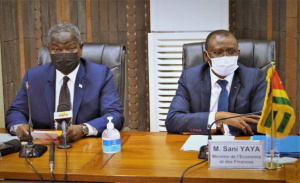
Last year, Togo’s implementation rate for WAEMU reforms and policies stood at 78.2%, almost the same as in 2020 when the figure was 78%. Regarding programs and projects, the related implementation rate registered by the country was 89.28%, up from 78.15% in 2020.
The figures were disclosed during the 7th annual review of WAEMU reforms, policies, and programs held on Jan 25th, in Lomé. The review was headed by the President of the WAEMU Commission, Abdoulaye Diop, and the Togolese Minister of Economy and Finance, Sani Yaya.
For Yaya, Togo’s performances are the culmination of its government’s efforts. Among others, these include adopting laws relating to public procurement and public-private partnerships (PPP), elaborating and publishing assessment reports on tax expenditures for the years 2019 and 2020, and launching the Togo Digital Agency (ATD) whose goal is to help institutions and ministries dematerialize their processes and services.
Between 2018 and 2021, the rate of implementation of WAEMU reforms rose from 64% to 78.2%, respectively, thus corresponding to an average increase of 7% per annum. The implementation rate of programs for its part rose from 57% to 89.3%, over the same period.
"Over the past three years, Togo has distinguished itself as one of the WAEMU countries that have recorded encouraging results. These results confirm the sustained commitment of the Togolese authorities to implement these reforms, although some laws are yet to be transposed or applied," the Minister of Finance declared.
Abdoulaye Diop, for his part, lauded the "significant" progress made relative to the implementation of the reforms. The improvement, he added, is "the result of the multifaceted support of the Technical and Financial Partners who trust Togo in its determined march towards progress and economic development for the benefit of its people.”
Esaïe Edoh
Togo: Association of Large Enterprises and National Coalition for Youth Employment ink partnership agreement
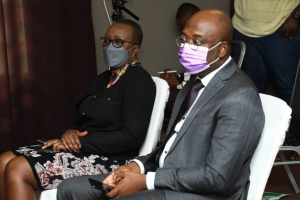
The Association of Large Enterprises of Togo (AGET) signed a partnership agreement with the National Coalition for Youth Employment (CNEJ) last weekend. This happened during a grand gathering of the AGET in Lomé.
The agreement provides mainly the establishment of a mentoring program for young entrepreneurs - an initiative that will, according to the government, help "bolster international cooperation and the regional position of Togo in trade." Myriam Dossou-d'Almeida, Minister for Grassroots Development and Youth Employment, represented the government at the event.
For its part, the AGET believes that the partnership will help increase support to the country's entrepreneurial ecosystem.
The AGET regroups limited companies under Togolese law, and private firms operating in the customs, industry, and services sectors. Its members have a turnover greater than or equal to 2 billion CFA francs for manufacturers, and greater than or equal to 500 million CFA francs for those in the service sector. The Association is estimated to contribute respectively 20% and 30% of Togo's GDP and its tax and customs earnings.
In November 2020, as the COVID-19 caused economic activities to slow down, the AGET made various suggestions to revive Togo's economic machine after the crisis.
Esaïe Edoh
Togo: Mediator of the Republic declares property and assets
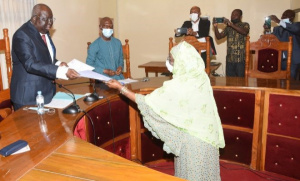
The Togolese Mediator of the Republic, Awa Nana-Daboya, declared on Monday, her property and assets before the Constitutional Court. This is a formality that she accomplished in line with the organic law setting the conditions for the declaration of assets and property of high-ranking personalities, senior officials, and other public servants.
Nominated on October 25, 2021, for a second term as Mediator of the Republic, Nana-Daboya had to declare her assets within the time limit provided by law, i.e. a maximum period of 90 days after taking office.
Charged with receiving the declaration of the property and assets of the high-ranking personalities subject to the law and of any other assimilated agent, she will now be able to assume this responsibility.
It should be noted that the declaration, provided for in the Togolese constitution, is aimed at boosting transparency in the handling of public funds and preventing illicit enrichment.
The law, amended in June 2021, simplifies the declaration procedure. The latter presently involves only filling and sending a form to the Mediator of the Republic. This declaration can be made physically or online.
Esaïe Edoh