
Togo First
Togo: Covid-19 pushed up the number of new e-money accounts by 20.85% in 2020, y/y

More than 5.7 million new e-money accounts were created in Togo in 2020, up 20.85% compared to 4.71 million accounts in 2019. This was recently disclosed by the Central Bank of West African States (BCEAO) in its annual report on digital financial services in the WAEMU.
Over the same period, users of digital financial services, which allow the storage and transfer of funds through digital tools, carried out 144.47 million transactions, amounting to around CFA1,500 billion (exactly CFA1,488.69 billion). Compared to 2019, these figures were respectively up by 55.42% and 63.47%.
Regarding the number of service outlets, it rose from 17,214 (in 2019) to 31,173 at the end of December 2020, up 81.09%, according to the BCEAO. The upward trend was observed in other WAEMU countries. In all of them, the number of newly-opened accounts was up (except in Côte d’Ivoire), data from the Central Bank shows.
Covid-19 and digitalization
The growth was recorded amidst the persistent Covid crisis, with several health restrictions implemented. According to the BCEAO, some of these measures are responsible for accelerated digitization and the adoption of digital financial services (especially Mobile money) both in Togo and the WAEMU region.
"The year 2020 was marked by the Covid-19 pandemic which impacted several sectors of economic activity," the report notes. In the period, which was characterized by travel restrictions and physical distancing," authorities were prompted to adopt, "during the second quarter of the year under review, a battery of measures – in collaboration with actors of the payment ecosystem – aimed at fostering the use of digital payment modes," the BCEAO added.
These measures, the document highlights, led to "a significant evolution" of digital financial services in 2020 "relative to their supply, access, distribution, and use, both at the national and regional levels.”
Ayi Renaud Dossavi
Togo: road accidents claimed more than 600 lives in 2021
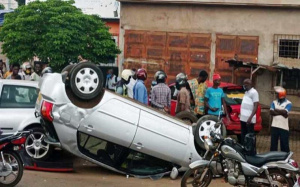
In Togo, more than 600 people died in road accidents in 2021, up from 556 in 2020. The figure was recently reported by the Minister of Security and Civil Protection Gal Yark Damehane.
According to the official, the causes of these accidents were the same as in previous years: recklessness, drunk driving, non-respect of the highway code, overloading, speeding.
These causes persist "despite the government’s awareness campaign and efforts," Damehane lamented while announcing new safety measures for this year. The latter include urging both bike passengers and drivers to wear helmets. He also said existing measures would be intensified, the category A driving license would be reintroduced, and awareness and repressive actions would be sustained.
Toward the same goal, improving road safety, Affoh Atcha-Dedji, the Minister of transport, launched in December 2021 the pilot phase of the Road Safety Strengthening Project (PPRSR). Expiring in 2025, this project aims to improve road safety through the organization of driving tests throughout the country for more than 7,000 drivers of two- and three-wheeled vehicles and awareness-raising campaigns on the highway code and the dangers associated with certain behaviors in traffic.
Esaïe Edoh
Afreximbank to support Togo’s industrialization
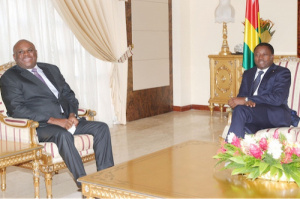
In addition to backing the second construction phase of the PIA, the African Export-Import Bank (Afreximbank) said last Thursday it would help Togo develop its industrialization projects. The commitment came from Benedict Okey Oramah, chairman of Afreximbank’s board of directors, during a meeting with the Togolese Head of State, Faure Gnassingbé.
"We are planning other projects, especially the development of integrated industrial parks...,” announced Benedict Okey Oramah.
The announcement follows Togo's adhesion to the Agreement establishing the Fund for Export Development in Africa (FEDA), last August. The FEDA is an Afreximbank platform that allows its members to foster the development of industrial infrastructure.
Moreover, Afreximbank added that it is ready to help Togo implement social projects. "We have also discussed with the President of the Republic of our bank’s contribution to the realization of the government's roadmap so that at least 75% of the Togolese population gets access to electricity and drinking water in the coming years. We have also agreed to collaborate in the health sector," Oramah said.
So far, the executive added, Afreximbank’s ongoing projects in Togo are valued at 500 million euros.
Esaïe Edoh
Coffee-Cocoa: Togo’s output and sales down in 2020-2021 campaign

Togo produced and sold less coffee and cocoa in the 2020-2021 campaign than it did the campaign before. This is what data from the Coffee-Cocoa Coordination Committee reveals.
In detail, the country’s coffee output fell by 4%, from 2,500 t in 2019-2020 to 2,400 t in 2020-2021. As for cocoa production, it plunged by over 70% over the two periods concerned - from 10,600 t to 6,100 t.
Regarding sales, coffee sales were down more than 23%; 2,000 t against 2,600 t. The drop in cocoa sales was more significant. They fell from 10,600 t in 2019-2020 to 5,400 t last year; thus about 50%.
It should be recalled that in June last year, the ICAT or Institute for Consulting and Technical Support said it would provide respectively 635,000 and 560,000 of coffee and cocoa seeds to help boost yields in the sector.
Cocoa and coffee are respectively Togo’s second and third agricultural exports.
Esaïe Edoh
Togo raises CFA27.5B for its first issue on the UMOA market in 2022
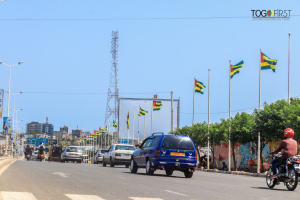
Togo successfully raised CFA27.5 billion on the regional money market - UMOA securities market - last Friday. This was the country’s first issue on the market for the year. It issued fungible treasury bills.
Lomé, it should be highlighted, was initially seeking CFA25 billion but retained 27.5 billion out of over 77 billion mobilized. The latter figure translates to a subscription rate of 308.75% for the securities.
With CFA1 million as minimum value, the operation matures over 182 days or 6 months. The country's last intervention on this maturity dates back to January 8, 2021, also its first issue that year.
The recent issue’s success shows that the country is well seen by regional investors.
Last year, Togo raised a total of CFA557 billion on the UMOA market, thus 11% less than it did in 2020, knowingly CFA623 billion.
Esaïe Edoh
Togo: Tax authority collected CFA720 billion in 2021
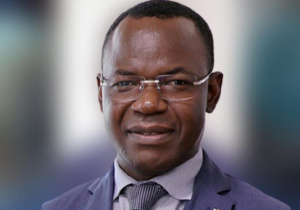
The Togolese Tax Authority (OTR) collected around CFA720 billion throughout the past year, up 9% against the amount it mobilized in 2020 – CFA652 billion – and 13% compared to 2019’s 624 billion.
Philippe Tchodie, Commissioner-General of the OTR, lauded the result recorded amidst the Covid-19-induced health and economic crises. He said 2021 was “an exceptional year, regarding the mobilization of tax and customs revenues.”
Tchodie attributed the outstanding evolution of Togo’s tax earnings over the past three years to several measures employed, among others, to promote tax compliance, accelerate procedures’ dematerialization and digitization. These, he noted, helped limit tax fraud.
Last December, the OTR and its Commissioner-General received two awards during the 5th Gala Dinner of the African Observatory for the Promotion of Good Governance (OAPBG) which was held in Abidjan. These awards are the "Prize for the Best Public Administration in Togo" and the "Pan-African Prize for the Best Manager of a Financial Authority in Togo."
Esaïe Edoh
Housing: Security deposit and guarantee now capped at six months of rent
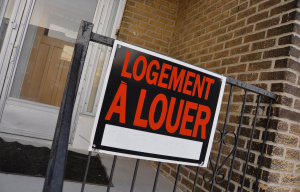
In Togo, the security deposit to be paid by tenants living in the Grand Lomé region (covering the Gulf and Agoè-Nyivè prefectures) has been capped to 6 months of rent. A bill was adopted in this framework yesterday during the ministers’ council.
"This cap aims to mitigate speculation practiced in our country, especially in the Grand Lomé region, while trying to preserve investments made by people who help improve housing supply," the ministers explained.
It should be recalled that a preliminary draft concerning the measure was assessed last April, on the 29th, also by the council of ministers.
At the moment, no information regarding how the measure will be made effective on the ground was disclosed. Up till now, landlords were left to set security deposits and guarantees that should be paid by their tenants.
According to the government, the new measure could be extended to other parts of the country, “if deemed relevant.”
Togolese govt. looks to establish a regulation covering the usage of drones by civilians

Forty (40) Togolese civil servants will end today a 3-day workshop aimed at drawing rules to regulate the use of drones by civilians across the country. The event, held in Lomé, regroups some employees of the institutions in charge of implementing State decisions and laws covering the usage of drones.
"We want to adhere to the rules set by the ICAO [International Civil Aviation Organization, editor's note] relative to drones. We need regulation, rigorous management, and control of everything related to drones," said Col. Dokisime Gnama Latta, Chairman of the steering committee of drones in Togo, and Director-General of the National Civil Aviation Agency (ANAC).
The workshop looks at what drone technology entails, its use in everyday life, the risks, and challenges posed by drones, especially concerning the management and protection of public space.
It should be highlighted that the government has already prohibited drone flying in the airport area and other sensitive facilities. The ANAC also said that to fly the devices, civilians need the approval of the ministry of transports (MTRAF) or authorization from the ministry of defense.
Togolese government to pay one-month salary advance to its agents amid soaring inflation
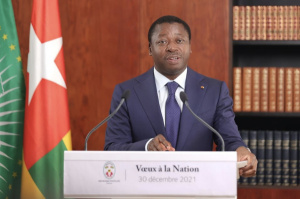
In Togo, civil servants in the public and parapublic sectors, as well as pensioners, will get a one-month salary advance this week. The wage will be reimbursed in monthly installments throughout the rest of the year.
The instruction was given by President Gnassingbé who announced it last Thursday during his new year address to the nation. The measure aims to help public servants cope with the inflation that persisted in 2021 and increased in November.
This is a breath of fresh air that should be accompanied by another battery of "vigorous price control actions" after the measures taken since the beginning of the second half of 2021 to curb the negative impacts of soaring prices, said the Head of State; a galloping inflation felt globally, and particularly at the regional level, attributed to the Covid-19.
"In response to this phenomenon [the persistence of inflation induced by the Covid, editor's note], the government took urgent measures since the start of the school year, which consisted of making school fees free in secondary education and taking charge of one month's electricity bill for the social classes," Faure Gnassingbé said.
"We have also maintained price subsidies, particularly for fertilizer, agricultural equipment, and wheat. The government has continued to reduce the cost of connection to drinking water for the most vulnerable households," he added.
Another social measure announced by the Togolese leader concerns retirement. In effect, for all those who retired from 2020, "the expected payment of allowances equivalent to three months' salaries will be made from January," Gnassingbé declared.
Fiacre E. Kakpo
Togo: Fire breaks out at Kara's new market
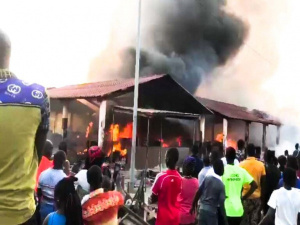
A fire broke out in Kara's new market last Saturday. So far, its cause is unknown according to local authorities.
Initial reports state that the fire destroyed several buildings and facilities, devouring goods and equipment.
This is not the first time a fire is breaking out in one of Togo's markets. In 2013, on the night of January 9 to 10, an arson swept away the old market. The same happened on the night of January 11 to 12 in Lomé that year.
At the time, 3,106 sellers were affected in both markets, according to official reports. Coincidentally, damages incurred were estimated at around CFA 6 billion.