

Togo First
Togolese incubator CUBE launches its innovation fund to finance local SMEs

The Urban Center for Business and Entrepreneurship (CUBE), an innovative business incubator based in Lomé, recently launched its private equity fund "KI U-INVEST" with the support of E-agribusiness, an agro-technology company.
The CFA10 million fund will finance Togolese and African SMEs. Projects backed must have passed the pilot phase and have been rolled out for at least six months. They must have well-defined customers, have validated a few sales, have existing contracts or clients that have letters of intent.
SMEs meeting these criteria can apply latest by March 31, 2022. Two to five applicants will be selected.
"This will mainly be an Equity fund, providing credits of loans of honor with the support of business angels, local and international technical and financial partners,” CUBE indicated. "In addition to financing, SMEs picked for the KI U-INVEST Fund will benefit from an incubation program (managerial, technical, legal ...) that will help them meet the expectations of partners and capitalize on the funding that will be released,” the incubator revealed.
Preferred applicants must operate in the following sectors: agriculture and food chains, health, construction and public works, energy, financial services and fintech, biotechnology, education, and traditional industries (free zone: cosmetics, building materials, packaging, trade and marketing, import-export, telecoms, transport and logistics, wicks).
Apply here
Ayi Renaud Dossavi
Decentralization: Ministry of housing launches World Bank-backed program to modernize Togolese municipalities

Togolese authorities are working on a project to make municipalities, especially in the outskirts of Grand Lomé, more attractive and modern. The project, Local Urbanism Plan (PLU), was launched last Friday in Noépé, the chief town of the Avé 2 municipality.
Backed by the World Bank and steered by the ministry of urban planning, housing, and land reform, the project specifically aims to help local communities better regulate the use of their lands, in addition to bolstering their housing stock to meet the growing demand. Land reserves will be mobilized to this end.
"The launch of this Local Urbanism Plan (PLU) project reflects the paradigm shift that we usually adopt in the development of urban and spatial planning tools," said the minister of urban planning, Koffi Tsolenyanu, who presided the launch.
The PLU, the ministry believes, will ease the development of public investment projects, make the two pilot municipalities (Avé 2 and Zio 2) it will cover more attractive, but also improve the living standards of people concerned and people living in the Greater Lomé area.
"Indeed, the goal of the initial urban development program was always to provide all towns with more than 5,000 inhabitants with a Master Plan for Urban Development and Planning (SDAU). But, in the era of full decentralization of our country, we need to change our approach, to cover all of our municipalities leveraging local urbanism plans,” Tsolenyanu added.
The project’s launching ceremony was an opportunity to present expected results to actors of the urban planning and land sector, as well as to people who will benefit from it.
In the long run, the PLU should expand to all 117 municipalities of Togo.
Local governance: Togo to host its first interprofessional dialogue on taxation this week

Togo will host the first edition of the Interprofessional Dialogue on Taxation (DIF) on January 20-21, 2022. According to the commissioner-general of the tax authority (OTR), Philippe Tchodié, who announced the event, it will focus on the means and ways to improve local governance with enough tax resources. The theme for the upcoming dialogue is “decentralization and local fiscality.”
The dialogue will lay the foundations for establishing “a concerted governance framework to improve taxation locally.” Ultimately, it will provide local elected officials with opportunities to benefit from sufficient resources to finance the development of their municipality per the 2019 law on decentralization and local freedoms.
To this end, the meeting will regroup local elected officials, partners from the European Union, the GIZ, the French cooperation, and economic operators. Together, they will address issues relating to the fiscal autonomy of local elected officials, the autonomy of regions in fiscal matters, and the role of donors.
Furthermore, decentralization-related experiences of Burkina Faso, Ghana, and Côte d'Ivoire, among others, will be shared with the local authorities at the roundtable.
The OTR, it should be highlighted, has undertaken several initiatives in favor of local elected officials to improve tax governance in Togolese municipalities. Such initiatives include awareness and training sessions.
Esaïe Edoh
Togo: Dry port of Adétikopé now operational
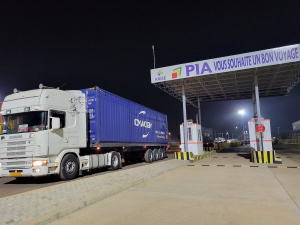
Operations at the dry port of the Adetikopé industrial platform (PIA) began on January 16, 2022. According to the maritime economy ministry which revealed the news, the port which spans 20 ha can host 12,500 containers and serve as a relay-point for containers, pending their delivery to landlocked countries.
The infrastructure should help free space at Lomé’s main port. It will be used for the handling and transshipment of goods that are coming from or being sent to landlocked nations in the region.
"The dry port of Adétikopé is OPERATIONAL today! CMA CGM will deliver its unloaded containers on-site pending their transfer to hinterland countries. Togo is on the way to becoming a leading logistics hub in the sub-region," said the ministry.
By commissioning the new platform, Togo aims to strengthen its position, in line with its goal of becoming a first-class logistics hub at the regional level.
Togo to seek CFA35 billion on the UMOA-securities market next Friday
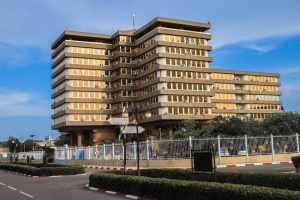
Togo will carry out its second issue on the UMAO-securities market on January 21, 2021. The country will seek CFA35 billion by issuing fungible treasury bonds. With a nominal value of CFA10,000 per unit and an interest rate of 5.8%, the bonds will mature over 84 months (7 years).
The upcoming issue follows that carried out on January 7th. The first issue of 2022 helped Lomé raise CFA27.5 billion. It has a maturity of 182 days or 6 months.
Throughout 2021, Togo raised CFA557 billion on the UMAO-securities market, against CFA623 billion in 2020.
Esaïe Edoh
UMOA-Securities: Togo to reimburse CFA9 billion to regional investors this month
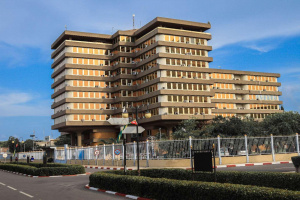
Togo plans to repay, this month, CFA29 billion to clear part of its debt on the UMOA-securities market. The information was disclosed in the cumulative balance sheet of this market.
The payment breaks down into CFA22 billion as principal and CFA6.99 billion as interest.
It should be noted that throughout 2021 the country reimbursed nearly 60% of the funds it borrowed on the regional money market that year. The exact amount is 334 billion out of 557 billion raised. The repaid amount included 72 billion of interest.
About a week ago, Togo carried out its first issue on the UMOA-securities market and retained CFA27.5 billion (while seeking CFA25 billion) out of CFA77 billion raised.
Lire aussi:
Togo’s tax earnings surged 70% since 2014
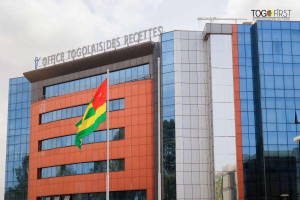
Between 2014 and 2021, taxes collected by the Togolese tax office (OTR) surged by 70% - from 458.2 billion to 780 billion CFA, respectively. This represents an average increase of 6.87% per annum.
Overall, though there was an increase in 2017 and 2018, the OTR performed less. The institution collected CFA563.2 billion in 2017 (around 5 billion less than it did in 2016) and 560.5 billion the following year. The reason for the drop was political and social unrest.
There was however a rebound amid the Covid-19 pandemic with 780 billion mobilized last year, compared to 655 billion in 2020.
Overall, the year 2021 was “exceptional regarding the mobilization of tax and customs revenues,” according to Philippe Kokou Tchodie, commissioner-general of the OTR. The country, he added, recorded a good performance amidst a health and economic crisis, challenges facing businesses, especially MSMEs and public companies - a prowess owed to several efforts made by the government. However, there was a hike in the prices of consumption goods near the end of 2021.
Regarding expectations for this year, the government hopes to collect CFA814 billion to finance its budget.
Ayi Renaud Dossavi
Lire aussi:
Financial inclusion must be a priority for Africa in 2022, Mazamesso Assih says

This year, Africa must make financial inclusion a priority. Mazamesso Assih, Togo’s minister for financial inclusion and the informal sector, claimed in a recent statement.
According to the official, there are three main reasons African nations must focus on financial inclusion. First, making financial services more accessible fosters the empowerment of the most vulnerable people, women especially. “Women,” Assih said, “are disproportionately affected by financial exclusion.” “Including them requires specific measures and greatly benefits society,” she added.
The second thing financial inclusion can help tackle are criminal networks. "Moving from an exclusively monetary economy to a digital financial infrastructure makes it easier for authorities to trace transactions and deal with smugglers and traffickers, most of whom thrive by exploiting the monetary economy," the Togolese minister stressed.
Lastly, financial inclusion will boost private and public sector connectivity for sustainable growth. In this regard, Mazamesso Assih urged African governments to "support African fintech entrepreneurs whose start-ups can transform the economy and society, especially if they have the right channels to collaborate with telecom giants and big banks."
In her statement, the minister pointed the example of Togo, saying it took various steps to improve inclusion nationwide. These include microcredit programs, digital banking, entrepreneurship incentives, and financial education.
Esaïe Edoh
Fish output was up 18% at Lomé’s artisanal port in 2021, y/y
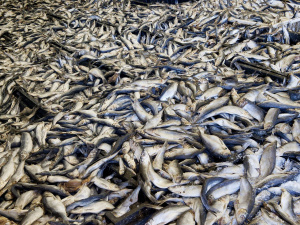
The Artisanal fishing port of Lomé (POPEL) caught over 4,000 tons of fish in 2021, up around 18% from 3,450 t in 2020. The figure was recently disclosed by the Ministry of Maritime Economy and Fisheries.
"The growth can be explained by the attractiveness of the new port, inaugurated in 2019, which offers a modern framework to the actors of the fishery," said the Minister in charge, Edem Kokou Tengue.
In detail, the port recorded its biggest catches in July (511 tons), November (465), and June (430), while March and February recorded the lowest numbers, 166 and 191 tons respectively.
The POPEL was built two years ago, in Gbetsogbe-Baguida, an industrial zone. The infrastructure which was established to boost fishing in the country can host up to 300 pirogues and employ 8,000 people including fishermen, processors, and fishmongers.
In Togo, over 20,000 people work in the fishing industry and the latter contributes nearly 4.5% of GDP, according to the latest data available.
Togo: Almost 14,000 new businesses were formally set up in 2021, up 9% y/y

Over the past year, 13,770 new businesses were established. The figure, a new record, is up 9% compared to 12,500 businesses created in 2020, according to data from the Centre de formalités des Entreprises or CFE (Center for Business Formalities) compiled by Togo First.
In detail, in Q1 2021, 4,087 companies were created against 3,224 in Q2, 3,495 in Q3, and 2,964 in Q4. January was the month where the most businesses were created – 1,390 – and December was the month to record the least registrations: 817
Also, out of the 13,770 that were registered at the CFE in 2021, 11,629 are owned by Togolese. This is 16% more than the number recorded the year before, knowingly 9,701. While Togolese-owned businesses rose, foreigners opened fewer businesses in the country last year. From 2,831 in 2020, the number of businesses created by them slumped by about 24% to stand at 2,141 in 2021.
Another remarkable fact is that more women officially started businesses last year than in 2020. Indeed, the CFE data indicates that in 2021, women created 3,793 rbusinesses, against 3,426 the year before (+10%).
However, it appears that men registered far more businesses than women in the last 12 months, exactly 9,977 or 72% of the total recorded.
In addition, the number of businesses registered by natural persons stood at 8,327, against 5,443 for legal entities.
The positive performance recorded amid the Covid-induced economic and health crisis is attributable to several reforms introduced by the government to improve the business climate. Such reforms include notably reducing the time and cost needed to set up a business as well as digitization of formalities.
Esaïe Edoh