

Togo First
Where does Togo ship its cotton to?

Due to a lack of plants to process the crop, Togo massively exports its cotton output, to Southeast Asia mostly.
Cotton is Togo’s primary source of foreign currency. In 2020 and 2019, the country raked in $64 million (about 36 billion CFA francs) and $98 million, respectively, from its white gold exports. These figures were obtained from the UN Comtrade database, an aggregator that compiles detailed annual and monthly statistics on international trade.
Togo's largest customers are based in Malaysia, Vietnam, India, and China.
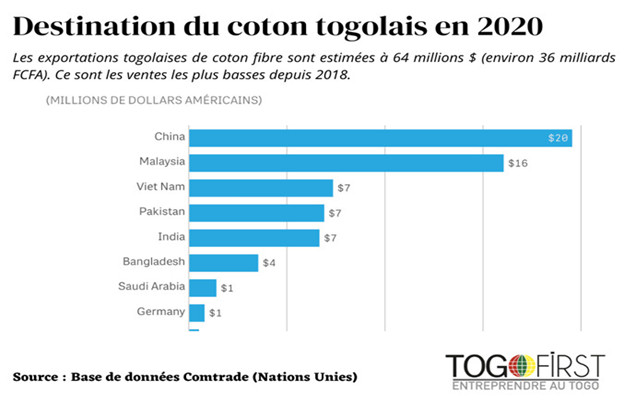
Countries where most of Togo's cotton output went to, in 2020
Togolese exports of cotton were estimated at USD64 million (around CFA36 billion) in 2020, the lowest since 2018
*Measuring unit: US Dollar (mln)
Source: UN Comtrade
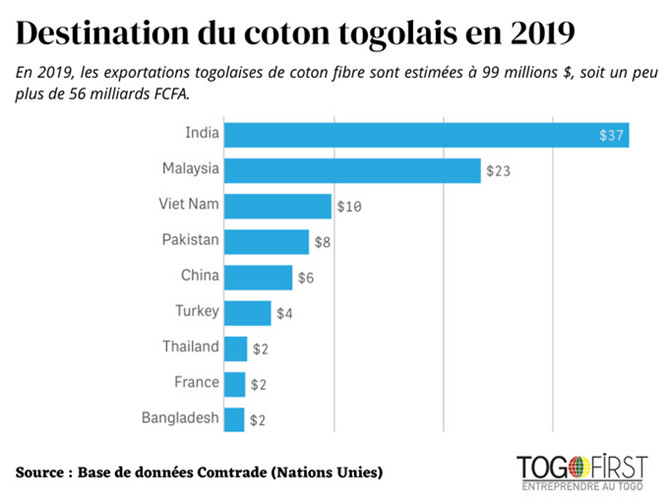
Countries where most of Togo's cotton output went to, in 2019
Togolese exports of cotton were estimated at USD99 million (a little over CFA56 billion) in 2019
*Measuring unit: US Dollar (mln)
Source: UN Comtrade
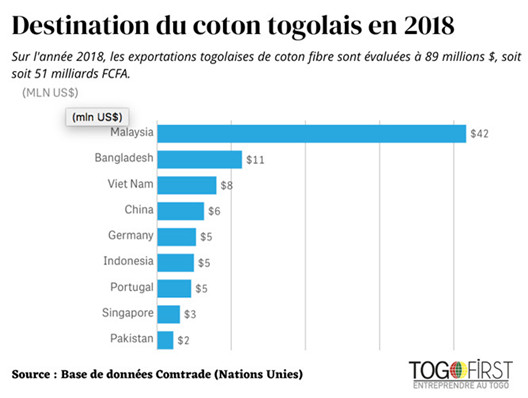
Countries where most of Togo's cotton output went to, in 2018
Togolese exports of cotton were estimated at USD89 million (CFA51 billion) in 2018
*Measuring unit: US Dollar (mln)
Source: UN Comtrade
Fiacre E. Kakpo
Togolese Ministry of Economy reviews all the reforms it launched in recent years

The physical and financial rates of completion of reforms that the Togolese Ministry of Economy and Finance initiated in recent years are 80.02% and 67.8%, respectively.
The figures were disclosed during a recent videoconference on the National Review of Reforms underway in ministerial departments and state institutions through to the end of December 2021.
During the meeting, participants, from the public administration, the private sector, civil society, as well as technical and financial partners, assessed the progress made in implementing reforms and talked about steps to take to bolster the process in the future.
"The main operational reforms achieved in 2021 include: effectively starting to execute the state budget in program form in January 2021, digitizing criminal record issuance, producing and publishing the first report assessing tax expenditures in 2019, and that of 2020 which was paired with the 2022 finance act submitted to the National Assembly; the adoption of the 2016, 2017, 2018, and 2019 budget settlement bills by the National Assembly," reads a statement sanctioning the videoconference.
There is also the publication, on www.togoreforme.com, of budgetary risks for 2021, 2022-2024. They were released alongside the 2022 draft budget law. Laws relating to trust accounts were also reviewed; a draft decree on the general principles of trust accounts was drawn, and the Parliament adopted laws covering public-private partnership (PPP) contracts and public procurement.
Besides these, added Kpobié Tchasso Akaya, the permanent secretary in charge of monitoring reform policies and financial programs, a platform to monitor reforms is in the pipeline.
Still during the meeting, major reforms planned for 2022 were presented. One of them is the evaluation of the public financial management system, based on the Public Expenditure and Financial Accountability (PEFA) methodology.
Togo: Social Nets and Basic Services Project extended to June 2023, 900 more villages to benefit
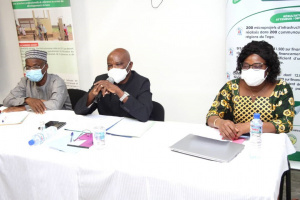
Last Friday, the National Agency for Support to Grassroots Development (Anadeb) identified and selected 900 villages that will receive additional funds as part of the Social Nets and Basic Services Project (FSB). They were selected after regional meetings that gathered communal authorities and civil society organizations.
The randomly-picked villages come from 100 of the poorest districts of the country. This list was drawn by the ANADEB which steers the project. In detail, 125,000 households living in these villages will get CFA15,000 each, per quarter, over six quarters ending in June 2023. Another 15,000 households will get business support, thus boosting economic inclusion.
Overall, the additional funding allocated to the FSB project amounts to CFA18 billion with 10 billion from the World Bank, 6.5 billion from Agence de Développement Francaise (AFDB), and 1.5 billion from the Togolese State. This funding enabled Lomé to extend the project, which was set to end last December, to June 2023. Last year, 937 villages benefited from the initiative.
Esaïe Edoh
The Pan-African Federation of Accountants holds its third conference in Lomé
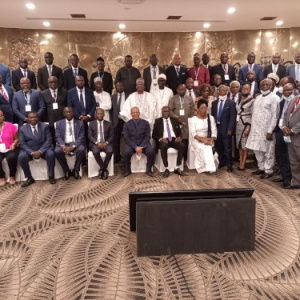
Lomé hosted on Feb, 8, the 3rd Conference of the Pan-African Federation of Accountants (PAFA). This year, the event focused on public finance management in French-speaking African countries and gathered about thirty chartered accountants. The theme of the conference was: "Public Finance Management Reforms, the Agenda of Francophone Countries."
Participants present -public accountants and representatives of Courts of Accounts from PAFA member countries - assessed and discussed key reforms in public financial management as well as the long-term implications of government responses to the Covid-19. According to the Director of Cabinet of the Minister of Economy, Kossi Tofio, this was necessary as it helps to find ways "to adapt actions to the new global data through reforms that match the challenges imposed" by the health crisis that have "disrupted all the habits and budgetary expectations of States."
The first and second editions of the PAFA took place in 2015 and 2016 and were held in Dakar and Antananarivo, respectively. They focused on finding ways to boost the transparency and efficiency of public bodies that handle governments’ finances.
Esaïe Edoh
Land tenure: Togo to soon have a land advisory council
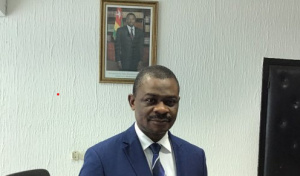
In line with its ambition to improve land tenure, the Togolese council government, via its council of ministers, has adopted on Feb 7, 2022, a draft decree to set up a Land Advisory Council.
"This decree, taken in application of the land and property code, aims to set up a framework for exchanges and consultations on actions to be taken in the field of land and property," the government wrote in the press release sanctioning the council.
In short, the framework should bring together all the stakeholders of land tenure. This should, on the one hand, review key aspects of land policies, and on the other, improve intervention on land issues.
"When there are difficulties in enforcing court decisions, the Advisory Council can be called upon to assist in resolving disputes," said the government’s spokesman, Minister Akodah Ayewouadan.
In further detail, the land advisory council should help the country better tackle speculation, expropriation, rural land sell-offs, but also better appropriate land legislation.
Togo adopts draft bill to help SMEs thrive by easily resorting to invoice factoring
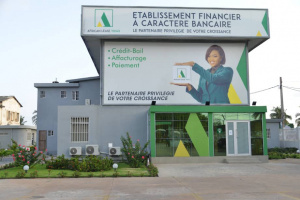
Invoice factoring could soon become more accessible to businesses in Togo. Indeed, the country’s council of ministers adopted last Monday a uniform draft bill covering this activity in the West African Monetary Union member states.
Factoring is a transaction whereby businesses fund their cash flow by transferring their receivables to a third party (the factor). The Togolese government believes it can help SMEs thrive.
"This draft bill is part of the reforms undertaken by the government to support micro, small and medium enterprises (SMEs) and it aims to promote factoring as a financing offer that tackles cash flow issues of businesses, SMEs especially," the council wrote in a statement.
"With this law, we give MSMEs the tools to rapidly auto-finance and sustain their activities. (...) it is a major economic tool for SMEs, providing these businesses with market flexibility and agility," said Prof. Akodah Ayewouadan, minister of communication, and the spokesperson of the government.
In effect, the bill should allow microfinance institutions, which are closer to SMEs, to practice invoice factoring. This is in a context where "only specialized financial services were previously covered by the factoring system,” said Ayewouadan. “Now, this system is being extended to decentralized financial systems, meaning that even microfinance institutions can offer factoring services,” he added.
At present, one of the main players positioned in this segment in the country is the African Lease Togo, a subsidiary of the African Lease Group. It specializes in leasing and factoring.
Ayi Renaud Dossavi
In Togo, the government is working on digitizing visa and residence permit application processes
Last Monday, Feb 7, Togo's Council of Ministers adopted a draft bill aimed at accelerating the digitization of visa and resident permit applications and issuance. The meeting was held in Kara (412 km north, from Lomé).
"The main purpose of this draft bill is to update the general rules applicable to the entry, stay, movement, and settlement of foreigners on Togolese territory. In particular, it provides for the digitization of the process of applying for and issuing visas and residence permits," said the Council's statement.
The adoption aligns with the third axis of the government's roadmap, which aims at "modernizing the country and strengthening its structures."
Pending the bill's implementation, foreigners can still get their visas (tourist, diplomatic, business) at Togolese consulates and embassies (which can also issue immigrant visas for Togo).
On the territory, visas on arrival are issued by immigration services at the borders, and at the Gnassingbé Eyadéma International Airport. They are valid for a maximum period of 7 days, according to available information, but can be extended to a month at the Foreigners and Passports Office. For other types of visas, it is the Direction générale de la Documentation Nationale (DGDN) that handles related procedures.
Ayi Renaud Dossavi
Togo’s government calls for more impacting actions of UN agencies in the country
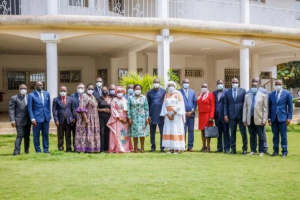
The government recently encouraged UN bodies in Togo to increase their actions, those that will greatly impact the people and accelerate inclusive development. In this framework, following a meeting to review the UN’s activities in the country, representatives from both sides picked some key areas where these actions can be carried out. They include health, education, and digitalization.
Specifically, these interventions should focus on “accelerating the inclusion of the people,” while ensuring that “no one is left out”, said Fatoumata Binta Diallo, WHO Resident Representative in Togo, and spokesperson for UN agencies.
The Togolese government, for its part, believes that providing financial and technical support to key sectors defined by its development roadmap will help produce more tangible results for the benefit of the population.
Back in December 2019, let’s recall, both parties renewed their cooperation framework for the period 2019-2023, and defined the action strategy of the entire UN system in Togo, a strategy focused on SDGs and the country's development priorities.
Esaïe Edoh
PAIEJ-SP: CFA17.2 billion distributed and more than 55,000 jobs created since 2016
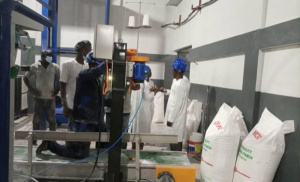
Between its launch in 2016 and the end of December 2021, the Support Project for Youth Employability and Integration in Growth Sectors (PAEIJ-SP), distributed CFA17.2 billion to young Togolese agripreneurs, according to data provided by this program.
The sum is twice the CFA7.5 billion the institution planned to share over the period under review. It was raised through 15 financial partner institutions (including microfinance institutions). These donors have financially supported a total of 669 young people against 780 planned, 1,457 SCOOPS (Cooperative Societies) against 1,000 initially planned, and 23 SMEs / SMIs, against 12 planned.
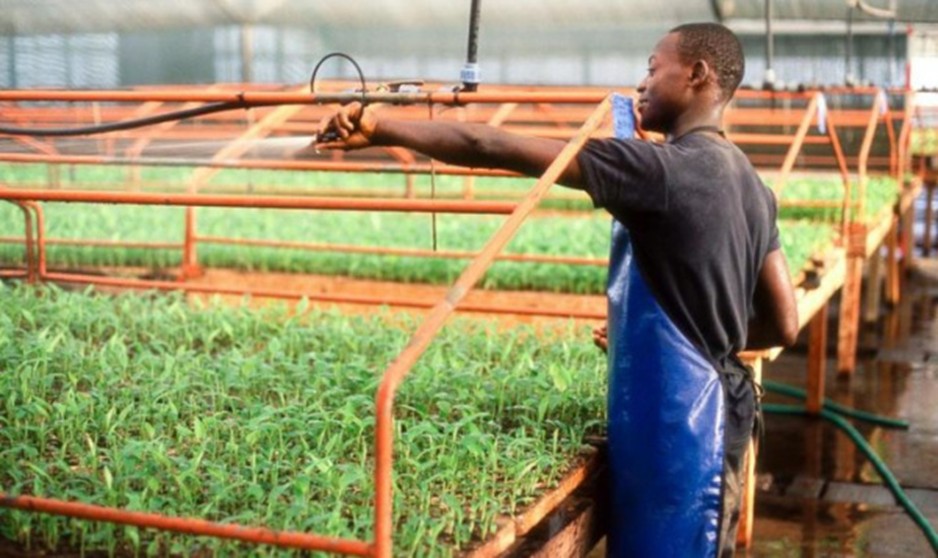
Regarding technical support, the PAEIJ-SP said it supported 31 SMEs, against 12 planned; trained 1,420 young people (against 1200 initially planned) on the development of business plans and business creation, and supported 3,178 agricultural groups, against 1,000 planned.
The various initiatives led to the creation of more than 55,000 direct jobs, of which 27% were allotted to women, and nearly 750,000 seasonal jobs (of which 38% were for women). This is as a result of its technical support to the 31 SMEs/SMIs.
The PAIEJ-SP is co-financed by the government of Togo and the African Development Bank (AfDB). Deployed across the whole country, the program covers the following sectors: corn, cassava, soybeans, small ruminants, and poultry. Earlier this month, donors and agricultural actors involved in the project met to talk about the financing of the upcoming 2022-2023 agricultural campaign, with a focus on sustainability.
Togo: the Economic and Social Council to finally come online this year, over a decade after its announcement
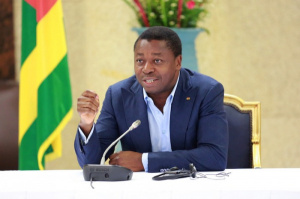
It’s been over 10 years since the Economic and Social Council (ESC) was approved by the Togolese Parliament. At last, the country plans to launch it this year.
In this framework, the government allocated a budget of CFA500 million (payment credit) to the body which will advise public institutions, especially the Presidency and the Parliament, and take part in the elaboration of economic and social policies.
The ESC’s launch was reiterated on April 26, 2019, by President Faure Gnassingbé during his message to the nation. However, it took longer than expected, due to undisclosed reasons.
With the help of Morocco, Togo started recruiting the ESC’s staff in 2020. In all, the institution is to have 57 workers, including four officials picked by the President himself, two by the National Assembly, and one by the Prime Minister’s office. Other staff members will come from different socio-economic sectors. They will all be Togolese, be at least 30, and must have been working in their respective fields for a minimum of 10 years.
The Economic and Social Council will be located in Aného, near the southern border with the Benin Republic.
Fiacre E. Kakpo