

Togo First
Togo plans to dedicate CFA518 billion to public investment projects in 2022
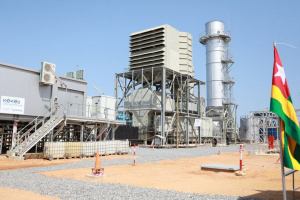
Under the finance law drawn for the 2022 fiscal year, the Togolese government intends to devote CFA518 billion to investment projects that are part of its Public Investment Program (PIP). The forecast is well above last year's projections which were revised to CFA392 billion following the October collective.
The projected public investment spending should make up about 40% of the overall budget expenditures forecast for 2022. The country plans to finance CFA194 billion or 37% of the amount from internal resources. Regarding the remaining CFA324 billion, it is expected to come from donors (CFA178 billion) and lenders (CFA145 billion).
Overall, in addition to non-PIP expenditures, estimated at CFA17 billion, capital expenditures could reach CFA535 billion by 2022. These funds will especially serve to support the "Togo 2025" roadmap, which prioritizes social inclusion and employment. Projects falling under this roadmap span a wide range of areas, from the digital economy to coastal protection, energy, access to drinking water, strengthening the urban and rural road network, and education.
According to the Minister of Economy and Finance, Sani Yaya, "nearly 61% of the projects and reforms" contained in the roadmap "have been started" and are "in their implementation phases."
Novissi: the French Development Agency injects CFA6 billion into the project
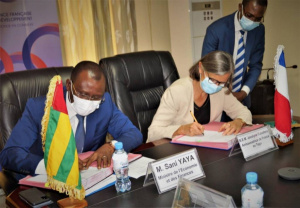
The French Development Agency (AFD) and the Togolese government inked a second €10 million financing agreement (about CFA6.5 billion) for vulnerable populations at the end of last week. The agreement was signed by the Togolese Minister of Economy and Finance, Sani Yaya, the French Ambassador, Jocelyne Caballero and François Jacquier-Pélissier, Director of AFD Togo.
The new facility will allow the Togolese authorities to extend access to cash transfers to 45,000 new beneficiaries. These beneficiaries, precisely the most vulnerable, will receive 15,000 CFA francs per quarter for 18 months. Of the target population, 75% are from rural areas and the remaining 25% are from urban areas. They will be identified in the 100 poorest rural cantons of Togo and precarious urban areas.
The new financing adds up to another CFA2 billion allocated in 2020 to support the NOVISSI Universal Solidarity Income Program. In the medium term, it will help address the economic impacts of the health crisis on the most vulnerable.
"This new project perfectly aligns with the government's 2020-2025 Togo Roadmap, which focuses greatly on fostering social inclusion. The materialization of this financing for poor and vulnerable people is a happy event that we must welcome," said Sani Yaya.
According to the French Ambassador, through this project, France, "includes social policies in the wide range of its commitments to boost access to basic services in Togo."
To date, the AFD’s investments in Togolese projects total CFA136,57 billion, including last week’s financing.
Esaïe Edoh
Novissi initiative to represent Africa at the 2022 SXSW Innovation Awards in the US
Togo’s Novissi cash transfer program is one of the finalists nominated for the 2022 SXSW awards. The latter recognizes innovative programs in the connected world, as part of its conference series held in Austin, Texas, USA.

The Togolese project is the fruit of a collaboration between the government and Give Directly, an NGO. It is one of five finalists falling under the "AI & Machine Learning" category. The other four finalist projects in this category were implemented in Israel, Colorado (USA), California, and Australia.
“Delighted to have Togo represent Africa at SXSW with the Novissi initiative!” said Cina Lawson, the Togolese Minister of the digital economy and technological innovation.
“Each 2022 finalist is pushing the envelope with the new ideas, new technologies, and new processes that they are bringing to the table,” said Hugh Forrest, SXSW’s Chief Programming Officer.
The Novissi initiative, let’s recall, reached 138,000 people across Togo. Also, it won a Paris Peace Forum award, according to Give Directly.
Winning finalists for all categories will be announced on the evening of March 14th, at the 24th annual SXSW Innovation Awards Ceremony.
Togo reaches significant milestone towards regional elections
Togolese ministers adopted last Thursday, Jan 20, a new draft decree relative to the creation of administrative subdivisions across the country.
"This draft law aims to create in the territorial communities "regions" managed by elected regional councilors who will, in turn, appoint regional executives who will play an important role in local development," reads the communiqué sanctioning the Council of Ministers held that day.
For the authorities, this is an important step toward regional elections. "The creation of these regional territorial authorities is crucial in the preparation of the upcoming regional elections," the communiqué notes.
In effect, the bill will turn Togo’s five regions into "territorial communities", just like its municipalities which are defined as "legal persons of public law with financial autonomy." The move falls under recent efforts to accelerate decentralization and strengthen local freedoms.
Besides the draft decree, the ministers, during the same council, adopted a new charter for political parties, after consultations between political actors, aimed at adapting this framework "to current realities."
Ayi Renaud Dossavi
Togo bags CFA37 billion in latest bond issue on the WAMU-securities market
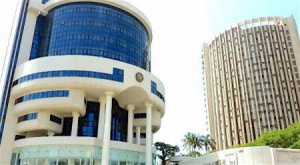
Togo successfully closed an issue of fungible Treasury bonds on the WAMU-securities market last Friday. The country retained CFA37 billion via the operation which matures over seven (7) years and has an interest rate of 5.80%.
Lomé was looking for CFA35 billion but mobilized a total of CFA84 billion, through 29 subscriptions from investors based in Côte d'Ivoire, Benin, Senegal, Niger, Burkina-Faso, and Togo itself. Comparing the total amount raised to that retained, the issue recorded a coverage rate of 240%.
It should be highlighted that this is Togo’s second issue on the regional market in 2022. It secured CFA27.5 billion from the first issue and eyes CFA533 billion for the whole year.
Esaïe Edoh
Togolese Tax Authority eyes CFA814 billion of revenues this year
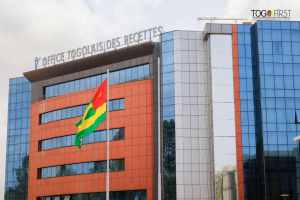
Togo expects CFA814 billion of tax earnings this year. The target, set in the 2022 budget law passed at the end of December 2021, will be used to finance its expenditures.
Compared to 2021 when CFA780 billion was raised, earnings that the country’s tax authority hopes to mobilize in 2022 are 4.5% higher.
Out of the CFA814 billion expected, CFA420 billion should be mobilized by the Tax Office, and CFA397 billion by the Customs and Excise Office.
It should be recalled that the OTR recently initiated various steps to achieve its objective. These include broadening the tax base, strengthening control measures, fighting tax fraud and evasion, and simplifying tax procedures.
For 2022, budget revenues are forecast at CFA1,330 billion, compared to CFA1,219.3 billion in 2021, up 9.1% year-on-year. To achieve this objective, the government plans to collect CFA58.3 billion in non-tax revenues and nearly CFA200 billion in grants from its partners. The remainder will be financed by debt, the bulk of which should be mobilized on the UMOA-titres public securities market.
Minister of security offers free police escort to business people who want to withdraw large sums at the bank
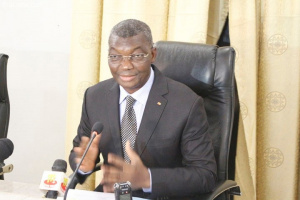
In Togo, any person, business people especially, who wants to withdraw an important sum of money at the bank or similar financial institution can request a police escort, free of charge. Yark Damehane, minister for security and civil protection, said this on the TVT, a public TV station, last Wednesday - a day after a new heist had occurred in Lomé.
Requesting a police escort had always been possible but only a few citizens and economic operators did so. "It is inconceivable that an economic operator who is going to withdraw large sums of money cannot ask the police, the brigade, or the local gendarmerie to assist him," Damehane said while deploring the increase in the number of robberies in the country, and the capital Lomé especially.
The minister of security stressed that police assistance is the best protection against robbers who target people after they have withdrawn their cash from the bank. "Day and night, ask for the support of the regalian forces,” he insisted, adding that "a new robbery is one too many."
Throughout the second half of 2021, more than CFA108 million were stolen in 24 bank robberies.
Esaïe Edoh
Togo: Importing agricultural equipment is tax-free, under the 2022 finance law

Under the 2022 Finance Law, the import of agricultural equipment in Togo is exempt from duties and taxes. “From January 1 to December 31, 2022, the import of agricultural equipment is exempt from duties and taxes, with the exception of community levies," reads the bill forecasting revenue and expenditure for the year.
Introduced in 2020, as the pandemic broke out, the measure has been renewed this year, to support agricultural policies in place. It (the measure) was part of Togo’s "Covid-19 Agricultural Response Plan," which included several emergency measures, aimed at consolidating food and nutritional security, improving the income of farmers, and coping with pressures induced by health restrictions.
It should be noted that the import relief also concerns medical equipment and products used exclusively to tackle Covid-19, according to the government.
Ayi Renaud Dossavi
Togo: Civil servants’ wages forecast at CFA253 billion in 2022

Togolese civil servants should be paid about 253 billion CFA this year, the same as the amount forecast in 2021. The projection was set in the 2022 Finance Law. Voted on December 29, 2021, the latter totals CFA1,779 billion CFA.
Wages for public workers will thus stand below 20% of the budget for 2022, in a context where the government plans to recruit 2,725 new agents throughout the year.
While no up-to-date public data is yet available on the number of civil servants in Togo, the last census of civil servants dating from November 2011 put the number between 54,000 and 60,000.
Esaïe Edoh
Togo moves up two places in the Human Freedom Index 2021

Togo moved up two places in the latest Human Freedom Index 2021, a report that measures the level of individual, civil, and economic freedom in 165 jurisdictions and states around the world. The ranking was released in December 2021.
The seventh edition of this assessment, produced by American and Canadian think tanks, Cato Institute and Fraser Institute, rates countries on 82 separate indicators of freedom (including the rule of law, safety and security, freedom of movement, religion, association, assembly and civil society, expression and information, and freedom of international trade), with scores on a scale of 0 to 10.
In this edition, Togo ranked 23rd in Africa and 113th in the world, with an overall score of 6.50. In detail, the West African country scored 6.6 on "individual freedom", 6.35 on "economic freedom", and 6.5 on the "human freedom" indicator.
In the sub-region, the country performed relatively less well than its neighbors, notably Ghana (70th in the world), Benin (76th in the world), Côte d'Ivoire (95th in the world), and Burkina Faso (100th in the world).
At the continental level, the top three are Cape Verde (36th in the world, with a score of 8.26 out of 10), Mauritius (46th in the world, with a score of 8.07), and Botswana (53rd, with a score of 7.90). The three least "free" countries in Africa, according to the authors of the ranking are Burundi, Somalia, and Sudan, with scores of 5.02, 4.93, and 4.48 respectively.