
Togo First
Togo: Startups raised $6 million in 2021, up 57% YoY

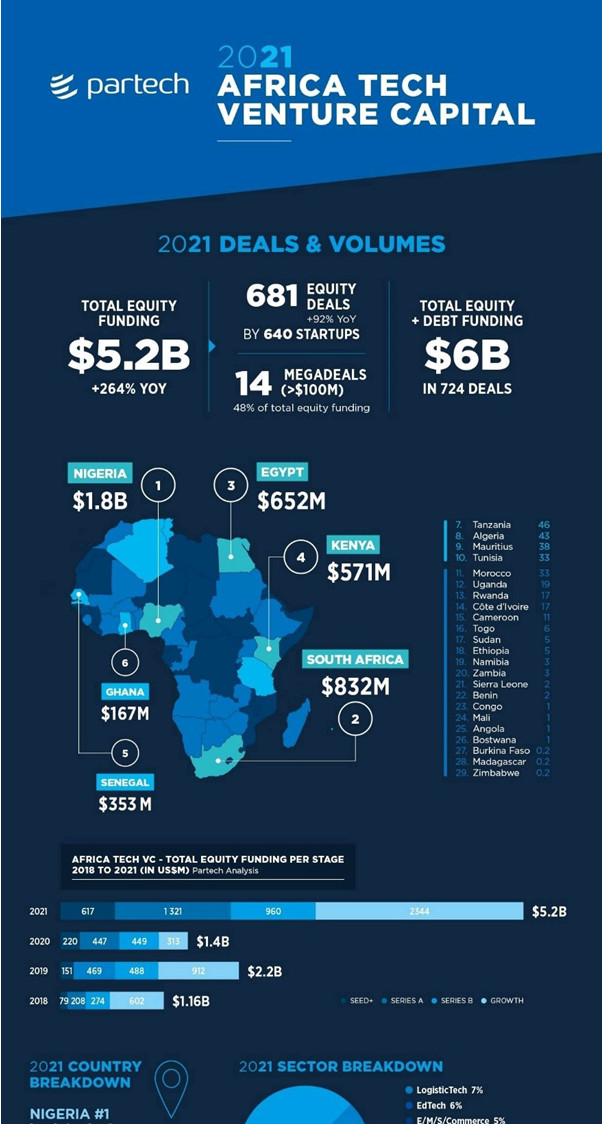
In its latest report, venture capitalist Partech estimated that the Togolese startup ecosystem raised about $6 million in 2021, mostly through equity investments. The figure is up by 57% compared to that recorded in 2020 – $3.8 million.
Togo ranked 16th in Africa, among countries whose startups raised the most funds last year. At the top of the ranking are Nigeria ($1.8 billion), South Africa ($832 million), and Egypt.
In French-speaking sub-Saharan Africa, Togo is 4th, just behind Cameroon, where start-ups have raised $11 million. Senegal came first with more than $353 million in funding, mostly in fintech. Côte d'Ivoire came right after, with $17 million.
Togo owes its place to the two deals in March and December of Gozem, the super app whose operational base is in Lomé and which offers its users transport and delivery services.
Fiacre E. Kakpo
UMOA-Securities: Togo raised CFA35 billion last Friday
Togo’s Treasury successfully closed, last Friday, its latest fundraising on the UMOA-securities. The country secured CFA35 billion by issuing fungible treasury bonds, with a 10-year maturity period and an interest rate of 5.90%.
This was Lomé’s third issue on the regional money market this year and according to the UMOA-Titres Agency, 22 regional investors subscribed, raising CFA69 billion, in total. That is twice the amount the country was seeking.
Including Friday’s round, Togo raised so far into the year CFA99 billion on the regional market, out of CFA550 billion it will attempt to raise throughout 2022. A target that is slightly above the CFA530 billion fixed in the 2022 Finance Act.
Esaïe Edoh
This is how Togo plans to spend CFA150 billion in its education system in 2022
Togo’s government plans to pump around CFA150 billion into its education system this year. The figure was set in the 2022 Finance Act.
The amount is almost the same as that set in 2021 (CFA154 billion) before it was scaled down (to CFA137 billion) by the rectifying bill adopted at the end of the year. Most of the funds will be shared among the four departments of the ministry of education.
In detail, preschool education, which is the least financed segment of the Togolese education system, will get, along with primary education, a budget of CFA85 billion this year.
The issue of preschool education is important because it is the education segment in which we invest the least.
In #Togo, although education takes up about 25% of the national budget, the share we devote to it is low. pic.twitter.com/7fivmOvN8U
—Faure E. Gnassingbé (@FEGnassingbe) July 29, 2021
Secondary education will receive CFA44 billion, while technical and vocational education is to get CFA9 billion. As for the handicraft sector, to which a delegated ministry has been dedicated in the government, CFA711 million was set aside for it.
Thinking of Tomorrow’s Education
In the past 15 years, the budget allocated to education in Togo has increased sevenfold. More importantly, a wave of modernization projects washed over the sector over the last 15 months. They were aimed at improving the access to education, its quality, as well as governance and management in the sector.
The projects were launched to support key players and populations, provide equipment, supply resources to staff, and also recruit and train teachers.
The most recent is the construction of 30,000 classrooms all over the country. It is set to be completed in 2025.
“What matters is thinking about the state of education in 2030, 2040, and 2050, set some order in what is being taught and the ambitions of public authorities for future generations,” said the minister of education, Dodzi Kokoroko, last month.
While “improving the education system remains at the heart of the political agenda,” the government plans to focus on “governance, digitalization, and pedagogy” next.
According to the latest data available, the schooling rate in Togo currently exceeds 94%, while completion rates in primary and secondary schools stand at 89% and 51%, respectively.
Octave Bruce
Togo: CFA18.8 billion spent on grassroots development projects in 2021, down 25% YoY
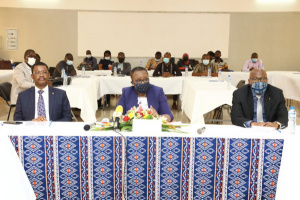
Last year, the Togolese state, its partners, and the private sector mobilized about CFA18.8 billion for the Ministry of Grassroots Development. The figure was recently disclosed by Myriam Dossou-D’almeida, who heads this ministry, during its last annual performance review.
Compared to 2020, the funds were down by 24.81%, mainly because a number of projects and programs were halted or completed, according to the ministry.
Still, this money was used to finance several projects, such as a school canteen program, a cash transfer scheme for the poor, road and track maintenance works. A part was also used to bolster grassroots development communities (CDB). Overall, these initiatives revolved around “improving populations’ access to basic social services, and boosting youth employment and growth”.
Focusing on the 2020–2025 Togo Roadmap
In detail, a billion CFA was sent in the form of cash transfers to more than 60,000 households across the country, around 95,000 pupils received 14 million hot meals under the school canteen project, and 26,223 jobs were created for the youth, among others.
Aligning with the government’s “Togo 2025” roadmap
While lauding these achievements, the Ministry of Grassroots Development wants to do more, in line with the government’s 2020–2025 roadmap. It is especially determined to boost the capacities of communities at the grassroots level and promote municipal development strategies.
It also plans to expand its school canteen project, set up 164 socio-community and economic infrastructure, extend its cash transfer scheme to 125,000 more households, install 28 multipurpose platforms (PTFM), support structured cooperatives, etc.
Togo plans to raise around CFA550 billion to finance its economy this year
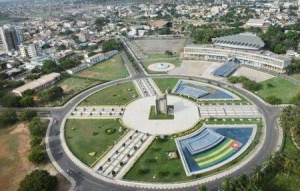
As in recent years, Togo will rely heavily on the regional financial market to fund a large part of its 2022 budget. The country will mainly rely on long-dated bonds, based on a successful issue of a 15-year bond at the end of 2021.
While the amount set in Finance Act for the issues it plans to carry out on the regional money market in 2022 stands at CFA533 billion, the Togolese treasury will attempt to seek more. Scheduled dates for the bond issues were unveiled last week at the 4th edition of the Public Securities Market Meetings, organized by the UMOA-securities Agency.
Five hundred and fifty billion CFA. That’s the actual amount the treasury hopes to secure from regional investors throughout the year. While significant, the figure, which was revealed by Kname Bouaré, Head of the Forecasting Division at the General Directorate of the Treasury and Public Accounts, is lower than the CFA570 billion Lomé raised on the same market last year.
Last month alone, the country, let’s recall, closed two successful rounds on this market, in a context where its target for Q1 2022 is CFA180 billion.
Out of the CFA550 billion targeted, Togo intends to secure CFA450 billion or 81% of the total by issuing fungible treasury bonds. Half of this amount should come from 7, 10, and 15-year bonds. This is in line with the country’s debt strategy which aims to reduce its financing risk related to its domestic debt, by favoring long maturities.”
“With UMOA-securities, this year, we are going to carry out one, or more, large operations to absorb the amounts to be mobilized […] a systematic replenishment of securities to reduce the fragmentation of securities issued to constitute deposits of CFA70 to 80 billion,” Bouaré said.
For 2022, Togo’s financing needs amount to CFA697 billion and over 70% of this sum—CFA533 billion—is expected to come from the regional financial market. At the moment, the country is negotiating with IMF for the remainder, and if they strike an agreement, Togo could issue a Eurobond to achieve its goal.
Fiacre E. Kakpo
The Thione Niang Group is looking to invest in Togo
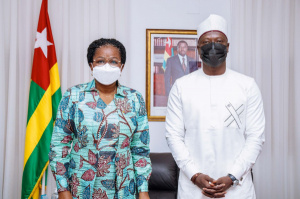
Already active in Senegal, the Thione Niang Group now eyes Togo’s agricultural industry, among others. On Feb 4, 2022, Thione Niang, executive director of the company, met with Victoire Tomégah-Dogbé, the Togolese Prime Minister, to discuss the matter.
Specializing in agriculture and digital services, the group plans to expand to Togo, leveraging new technologies. "The specificity is that we can use robots, connected tractors, or sensors that allow remote control to avoid moving across large farms, for example. We will see to what extent this can be done in Togo," said the African-American of Senegalese origin, who has opened some schools that specialize in this field in Senegal.
Besides agriculture, the Thione Niang Group will also look at education, training, and everything related to ICT and digital technologies.
For her part, Togo’s PM believes that the group’s projects will "help young people, especially, thrive," in line with President Gnassingbe’s ambitions.
Esaïe Edoh
Faure Gnassingbe, other Affrican leaders talk about the paradigm shift in African education at the latest NEPAD
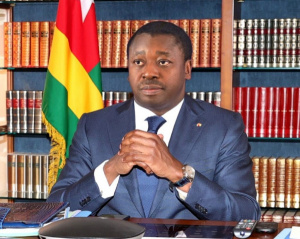
African leaders, including Togo’s President, Faure Gnassingbe, are working to give a new impulse to education on the continent. This was disclosed on Feb 1, 2022, during the 39th Session of the NEPAD Heads of State and Government Orientation Committee (HSGOC) held via videoconference.
After watching a presentation on the "link between education and development: a paradigm shift," the leaders agreed that the heart of the matter was to match the education system to the continent’s needs for adequate human capital.
Also, President Paul Kagame from Rwanda and Chairperson of the HSGOC, during the meeting, gave his peers an update on Africa's partnership commitments, to mobilize resources necessary for achieving NEPAD’s goals.
It should be highlighted that the meeting coincided with NEPAD’s 20th anniversary, and was an opportunity for the Heads of State to assess the level of implementation of the organization's 2063 Agenda.
NEPAD’s mission is to tackle Africa’s major challenges, notably ending poverty, as well as fostering its growth and sustainable development.
Esaïe Edoh
The board of directors of the Bank of Africa Group will hold a roundtable in Lomé this week
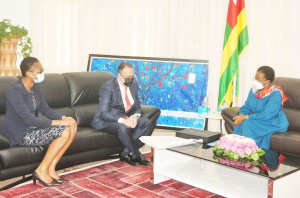
The Board of Directors of the Bank of Africa (BOA) will host a meeting in Lomé this week, on the 6th and 7th. The news was announced Tuesday, Feb 1, by the group’s MD, Youssef Ibrahim, during an audience with Togo’s Prime Minister, Victoire Tomégah-Dogbé,
Ibrahim told the PM that leaders from all 19 subsidiaries of BOA, including Togo’s, would attend the meeting. He said they would discuss the Bank’s support to the Togolese economy, among other things. "During the council, we will talk about financial inclusion, support, and how to support some promoters’ projects for the economy," said Youssef Ibrahim.
The roundtable’s announcement comes a few weeks after the BOA committed to supporting the activities of Togolese economic operators as part of efforts to restart the country’s economy post-Covid. The lender made this promise in December while presenting the findings of a study on Covid’s impact on Togo’s private sector.
Further back, in 2020, the BOA inked a CFA412 million deal with the Togolese government to support three local SMEs picked during the Togo-EU Economic Forum (FETUE).
The BOA opened its Togolese subsidiary in 2013.
Esaïe Edoh
Government of Togo works on new public investment plan
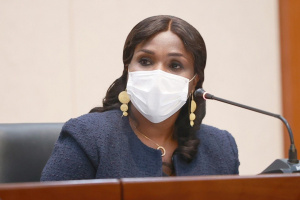
The Togolese government is currently working on its 2023-2025 Public Investment Program (PIP). A workshop, chaired by Sandra Ablamba Johnson, Minister, Secretary-General of the Presidency of the Republic, was launched last Monday in Lomé in this framework.
The new program should align with reforms introduced by the public investment programming (in July 2021), and even more with the government’s 2020-2025 Togo roadmap, the Presidency noted. The upcoming PIP should in effect take into account certain investment planning guidelines introduced by these reforms. This especially includes Lomé’s ambition to rely more on the private sector, thus lowering pressure on public finances. The government also wants to improve coordination between ministries and expand the PIP to local authorities, public enterprises, and public-private partnerships.
Let’s recall that Togo has allocated over CFA500 billion to investments in its 2022 appropriation bill; 37% of this amount (CFA194 billion) will be internal resources while the remaining CFA324 billion should be grants (CFA178 billion) and loans (CFA145 billion).
School Canteen Program: over 14 million hot meals were distributed to about 95,000 school pupils in 2021
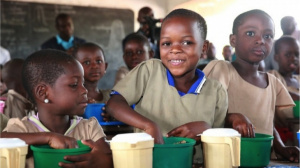
In Togo, nearly 95,000 pupils (94,712) received over 14 million hot meals in 2021, as part of the government’s school canteen program. The figure was recently reported in the annual performance review of the Ministry of Grassroots Development. The document adds that the meals were shared among 337 preschool and primary schools, which is 8% of these school categories in Togo.
Steered by the Grassroots Development Agency (ANADEB), the school canteen program should soon be extended to Togo’s poorest areas, in the Savanes region notably. According to grassroots development experts, this focus aims to tackle current security issues facing this part of the country.
"We want to focus our actions in the Savanes region," said Wanata Adisso, Secretary-General of the Ministry of Grassroots Development. "In this region, we will expand the school canteens, compared to previous years. We plan to cover all border villages with social canteens," he added.
Latest data available shows that since 2008, more than 75 million hot meals have been distributed in Togo, thanks to the support of various partners (notably the World Bank). This cost more than CFA22 billion.
Ayi Renaud Dossavi