

Togo First
Togo Seeks Digital Health Mentors For Tech Santé Challenge

The Togolese government is seeking mentors to coach project teams selected during the incubation phase of the Tech Santé Challenge.
The initiative aims to strengthen Togo’s digital health innovation ecosystem, the ministries in charge of digital transformation and health said in a statement, with support from the Togo Data Lab.
Mentors will work from Feb. 1 to March 15, 2026. Their role will be to help teams develop and refine digital solutions to address key challenges in the healthcare system, including secure and interoperable medical records, access to care for uninsured and underserved communities, hospital overcrowding, the monitoring of patients with chronic diseases and early detection of health crises.
The Tech Santé Challenge is open to multidisciplinary Togolese teams combining skills in health, software development, data and design. Selected projects will receive workshops, conferences and tailored support ahead of a final pitch scheduled for March 2026.
Backed by GIZ through the ProDIGIT project and the RASNuT network, the programme is part of Togo’s national digital transformation strategy. Officials say it aims to embed innovation in health policy, with a focus on real-world impact and long-term viability. Applications close on Jan. 22, 2026.
R.E.D
Togo Seeks Suppliers For CFA 245 Mln Cooperative Equipment Contract
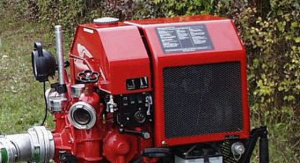
Togo plans to supply equipment to youth and women’s cooperatives in the Savanes region. SP-EAU, the Urban and Semi-Urban Water and Sanitation Asset Company, has issued an open tender to procure production and processing equipment kits.
The procurement is part of the Social Cohesion Strengthening Project and is financed by a grant from the African Development Fund (ADF), part of the African Development Bank Group.
The contract is valued at 245.44 million CFA francs (excluding tax) and is divided into four lots. Lot 1 includes agricultural equipment for rice and vegetable farming worth 112.57 million CFA francs. Lot 2 covers processing kits for agricultural products, including African locust bean, soybean, shea and rice parboiling, worth 78.68 million CFA francs. Lot 3 includes the purchase of cargo tricycles valued at 29.7 million CFA francs, while Lot 4 covers livestock equipment and inputs worth 24.5 million CFA francs.
Eligible bidders must demonstrate recent experience supplying similar equipment, adequate financial capacity and valid administrative compliance. Bids must be submitted by Feb. 6, 2026 at 10:00 a.m. and will remain valid for 120 days, according to AfDB tender documents.
SP-EAU is a state-owned company created in 2011 under reforms in the water sector. Alongside TdE, it serves as a public concessionaire responsible for planning, financing and building drinking water and sanitation infrastructure, including boreholes, treatment plants and distribution networks.
Ayi Renaud Dossavi
Togo Earmarks CFA 1.2 Bln For Lome Roadworks In 2026
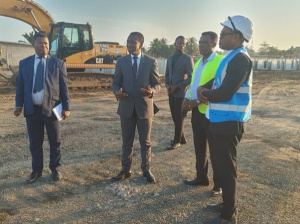
Togo’s Ministry of Urban Planning, Housing and Land Reform plans to begin road upgrading, drainage and paving works on several urban streets in Lome in 2026. The projects have been allocated a budget of 1.2 billion CFA francs, according to budget estimates.
The ministry, now led by Kodjo Adedze, completed detailed preliminary designs in October 2025 for two priority roads, covering a total length of 10.2 km.
The sections include the 2-km Carrefour Y-Adidogome Massalassi stretch along the RN5, and a 7.2-km section of CEDEAO Street between Grand Contournement, Entreprise de l’Union and RN5 Adidogome. The roads are located in the southwest of the capital, Lome.
The ministry said the works should help improve urban mobility and strengthen connectivity between neighbourhoods. They are also expected to reduce transport costs and improve road safety, while supporting the capital’s economic development. While financing has been identified, implementation has yet to begin.
Esaïe Edoh
Togo Plans To Raise 463.5 Billion CFA Francs On Regional Debt Market In 2026
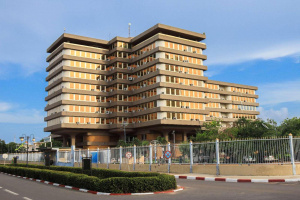
Togo plans to raise 463.5 billion CFA francs on the WAEMU regional debt market to finance its 2026 budget. The budget is balanced, with revenue and expenditure set at 2,751.5 billion CFA francs.
The planned borrowing represents about 17% of the total budget and will be a key pillar of the government’s financing strategy.
The amount is a sharp increase of nearly 40% from 2025, when the planned figure stood at 332 billion CFA francs. By the end of the 2025 fiscal year, the country had raised 325 billion CFA francs, meeting 97% of its initial target, according to calculations by Togo First.
The government plans to raise the funds in 2026 through the issuance of Treasury bills (BAT) and Treasury bonds (OAT) over a 12-month period. A provisional issuance calendar will be published to give investors clearer visibility on the programme.
In recent years, Togo’s borrowing on the regional market has attracted strong demand from WAEMU investors, allowing the country to generally exceed its fundraising targets.
Esaïe Edoh
Togo Projects 10.8% Rise In 2026 Tax Revenue To 1.34 Trillion CFA Francs
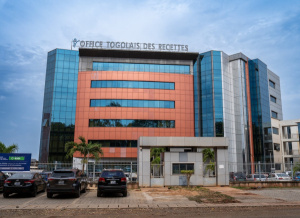
Togo expects a further increase in tax revenue in 2026. Under the finance law, tax revenue is projected at 1,338.9 billion CFA francs, compared with an initial forecast of 1,208.3 billion CFA francs in 2025.
This represents an increase of about 10.8% year on year. The government is making taxation its main lever for financing the budget.
In the breakdown of budget revenue, tax receipts remain the main component. They account for more than 82% of budget revenue, ahead of non-tax revenue, expected at 109.6 billion CFA francs, and project grants, estimated at 166.9 billion CFA francs.
More broadly, total state resources are estimated at 2,751.5 billion CFA francs in 2026, according to budget data. The general budget accounts for most of this, at 2,702.9 billion CFA francs, including 1,615.4 billion CFA francs in budget revenue and 1,087.5 billion CFA francs in treasury resources. Special Treasury accounts are expected to raise 48.7 billion CFA francs.
In comparison, in 2025, the Togolese Revenue Authority set a revenue mobilization target of 1,208.3 billion CFA francs for the state, up 8% from 2024. Taxes were expected to contribute 595.7 billion CFA francs, and customs and indirect duties 612.6 billion CFA francs.
Ayi Renaud Dossavi
Togo Sets CFA 8.75 Bln For 2026 Butane Gas Subsidy

The Togolese government plans to allocate 8.75 billion CFA francs in 2026 to subsidize butane gas, according to figures in the state budget. The measure is intended to keep household gas prices affordable amid volatile international energy prices.
The allocation is slightly lower than the 9.6 billion CFA francs planned for 2025, according to the Ministry of Commerce. The reduction reflects a budget adjustment while maintaining consumer support.
The subsidy aims to protect household purchasing power and help contain living costs. It is also intended to encourage the use of gas for cooking as an alternative to traditional fuels, as part of efforts to reduce environmental pressure.
Butane gas is currently sold at 790 CFA francs per kilogram, compared with an estimated unsubsidized price of 892 CFA francs. The 102 CFA francs difference per kilogram is covered by the state.
Esaïe Edoh
Togo Continues Biometric ID Rollout in Maritime Region, Adds Zio
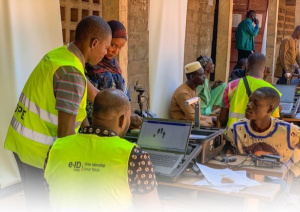
Togo’s biometric ID card registration drive is continuing in the Maritime region, with enrollment starting in Zio prefecture on Jan. 19, 2026. The launch follows a workshop held earlier this week in Tsévié on the grievance redress mechanism, organized by the Ministry of Public Service Efficiency and Digital Transformation and carried out by the National Identification Agency (ANID).
As in other prefectures where the programme has already been rolled out, the initiative aims to issue each resident a Unique Identification Number (NIU). The NIU will eventually be used to access public, private and social services, including education, social security, pensions, finance, health, vaccination and cash transfers. The system is also expected to support the creation of a centralized, secure and reliable national database.
ANID is implementing the programme under the e-ID Togo biometric identification project, with support from the National Institute of Statistics and Economic and Demographic Studies (INSEED), which is responsible for staffing registration teams on the ground.
All residents are eligible to register, including children aged 0 to 5, who can be enrolled using a parent’s NIU. The move comes as fewer than 15% of Togolese hold a national identity card. Funded by the World Bank, the biometric registration drive is part of the WURI-Togo project, supported by $72 million in financing.
Togo Accounts for 16.2% of WAEMU Cross-Border Lending to Top Firms
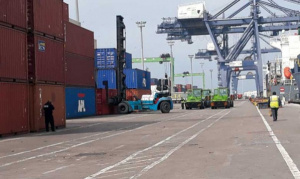
Togolese credit institutions accounted for 16.2% of cross-border financing extended to the 400 largest corporate borrowers in the West African Monetary Union (WAMU) at the end of September 2025, according to data from the BCEAO, the regional central bank.
Togo ranks among the leading contributors, behind Burkina Faso at 33.1%, Benin at 21.0%, and Niger at 17.2%. These countries share a similar trade configuration, shaped by import flows moving from the coast, notably Togo and Benin, toward inland markets, particularly the AES countries of Burkina Faso, Niger, and Mali, or toward neighboring Nigeria, which is not a member of WAMU.
Cross-border bank lending to large companies has been increasing across the union. At the end of September 2025, outstanding cross-border loans totaled 405.6 billion CFA francs, representing 4.1% of total large exposures. This compares with 400.9 billion CFA francs three months earlier and 295.1 billion CFA francs a year earlier.
The rise highlights the active and growing role of several national banking systems, including that of Togo, in financing international economic activity within the sub-region.
At the same time, credit concentration remains a concern. In Togo, the 50 largest companies account for 38.1% of bank lending to the economy, according to central bank data. While cross-border financing supports the operations of large groups and regional trade, it also raises the issue of how to balance support for major players with access to credit for SMEs, which remain largely dependent on domestic markets.
Ayi Renaud Dossavi
ECOWAS Urges Grid Interconnection and Regulatory Alignment for Energy Transition
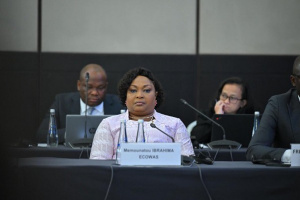
ECOWAS Parliament Speaker Memounatou Ibrahima outlined West Africa’s priorities on electricity access and the energy transition at the 16th Assembly of the International Renewable Energy Agency (IRENA) in Abu Dhabi on Jan. 10-12.
Speaking at IRENA’s Legislators and Regulators Forum, the Togolese official pointed to a regional mismatch between strong renewable potential and limited electricity access, with nearly 43% of the population still without power.
Ibrahima said closing the gap would require deeper regional cooperation, including interconnecting national grids through the West African Power Pool, harmonising regulatory frameworks and adopting a regional renewable energy policy.
The goal is to raise renewables to 48% of the region’s energy mix by 2030, strengthening energy security and improving investor appeal.
She also noted the ECOWAS Parliament’s role in monitoring energy policies, reviewing implementation and reflecting citizens’ concerns.
Separately, Lomé hosted a two-day meeting of the Women in Energy Network-Africa focused on tackling gender inequality in the energy sector under the theme “Addressing Gender Inequalities in Energy: Partnerships for Sustainability.”
R.E.D
Togo Launches Study to Map Agroecological Practices in Plateaux-Ouest

Togo’s National Institute of Agricultural Training (INFA) in Tove and the NGO Young Volunteers for the Environment (JVE-Togo) have begun a study aimed at improving the sustainability of farming systems in the Plateaux-Ouest area.
The partners signed a scientific cooperation agreement on Jan. 14 in Tove, near Kpalime.
The study will focus on four prefectures, Danyi, Kpele, Kloto and Agou, and will involve a sample of 200 farmers and institutional stakeholders. It aims to map existing agroecological practices, identify technical and organisational challenges, and propose practical measures tailored to local conditions as climate patterns become more variable.
Project officials said the work will follow a participatory approach, involving farmers, extension officers and community organisations in data collection and analysis to encourage local uptake of the findings and support implementation on the ground.
INFA will develop the research methodology, analyse the data and draft the final report, while JVE will organise a workshop to validate the findings with local stakeholders. The work is expected to be completed by the end of March 2026.
The study aims to generate evidence to guide local policies supporting the shift to agroecological farming and strengthen farm resilience in Plateaux-Ouest.
The Plateaux region is widely regarded as Togo’s breadbasket, producing major food and cash crops including rice, soybeans, maize, chilli peppers, coffee and cocoa.
R.E.D