
Togo First
Togo and UNDP Showcase UniPod Innovation Hub to Congolese Delegation
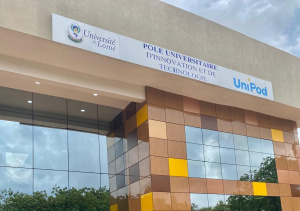
Congo’s Minister of Scientific Research and Technological Innovation, Rigobert Maboundou, paid a working visit to Lomé on Jan. 20, 2026, as part of a mission to study Togo’s university innovation model.
The visit was part of a fact-finding mission focused on UniPod-Togo, the University Innovation and Development Hub established at the University of Lomé with support from the United Nations Development Programme (UNDP).
During meetings with UNDP Resident Representative in Togo Binta Sanneh, Maboundou discussed the governance, financing and partnership arrangements underpinning UniPod-Togo, as Congo considers setting up a National Innovation Centre based on the Togolese experience.
Inaugurated in February 2025 under the Timbuktoo Africa initiative, UniPod-Togo involved an investment of about $1.6 million, or more than 1 billion CFA francs, funded by the UNDP and the University of Lomé. The 1,200-square-metre facility includes eight laboratories, a lecture hall, incubation spaces and a technology transfer office. It supports students and entrepreneurs through mentoring, training and access to financing.
R.E.D
Togo Launches Tender to Restructure State-Owned Power Utility
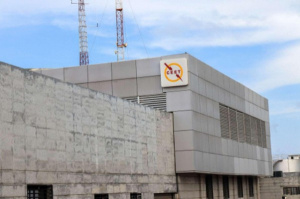
Togo is stepping up reforms in its electricity sector, with authorities seeking consultants to support an organisational overhaul of the state-owned utility CEET, according to a January 2026 notice.
Through a call for expressions of interest published that month, the government said it wants to hire a consulting firm to support the organisational transformation and strengthen governance at Compagnie Énergie Électrique du Togo (CEET), the country’s public electricity provider.
The initiative is part of the Inclusive Development through Electricity Access (IDEA) Project, funded by a credit from the World Bank’s International Development Association (IDA).
The assignment will help design a more modern and agile organisational structure, strengthen internal governance mechanisms, and improve the utility’s institutional, technical and managerial capabilities. The work follows a comprehensive organisational diagnostic, an analysis of governance and operational processes, an audit of the company’s financial and budgetary situation, and a review of information systems, including billing, commercial management and human resources.
The process will also assess medium-term reorganisation options for CEET, including the possible creation of subsidiaries for certain activities.
The call follows reforms launched last year in response to a deteriorating financial and operational situation. Authorities estimate technical and commercial losses at 16% a year, representing about 30 billion CFA francs in lost revenue. They said the losses stem from distribution failures, billing weaknesses and recurring fraud, including illegal connections and meter tampering.
Interested firms have until Feb. 15, 2026, to submit expressions of interest.
Ayi Renaud Dossavi
Togo Launches National Biodiversity Finance Programme with UNDP Support
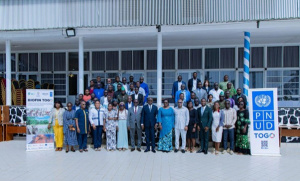
Togo has joined the list of countries with a Biodiversity Finance Initiative (BIOFIN) programme. The West African nation launched its national programme on Wednesday, Jan. 21, 2026, in Lomé, with support from the United Nations Development Programme (UNDP).
Launched by the UNDP in 2012, BIOFIN helps countries develop and implement biodiversity financing plans. In Togo, the programme is expected to mobilise sustainable funding to protect natural capital, a key sustainable development priority.
The programme will be rolled out in several stages, starting with an assessment of public policies and institutions involved in biodiversity conservation to identify gaps and propose improvements. The second phase will review biodiversity-related spending, including funding that supports conservation as well as activities that harm ecosystems. The third step will estimate the funding required to implement the priorities identified.
BIOFIN will build on existing UNDP support in Togo, including projects to promote sustainable land and ecosystem management in the country’s semi-arid north. UNDP support also covers low-carbon village initiatives, the preparation of National Communications, and implementation of Togo’s Nationally Determined Contributions (NDCs).
According to Abiziou Tchninguilou, an environment programme officer at the UNDP, BIOFIN’s launch in Togo aligns with the agency’s global strategy. “In its 2026-2029 strategic plan, the UNDP includes a focus area titled ‘A Healthy Planet’, which links sustainable development to prosperity,” he said.
During its pilot phase, BIOFIN was implemented in 41 countries, helping them develop and carry out national financing plans. Globally, the initiative has helped mobilise about $2.7 billion for biodiversity conservation.
Esaïe Edoh
Togo Mining Revenue Jumps More Than Sixfold in 2023 on Debt Offsetting
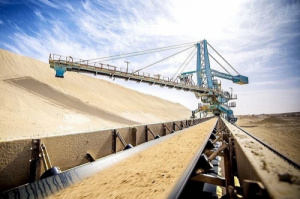
Togo’s extractive sector generated about 124.25 billion CFA francs in 2023, up from 19 billion a year earlier, according to the EITI Togo 2023 Report published in late December.
While this suggests a year-on-year increase of 553.8%, the report says it does not reflect higher mining output. The jump is mainly due to debt-clearing operations involving Société Nouvelle des Phosphates du Togo (SNPT), worth 102.99 billion CFA francs.
With nominal GDP estimated at 5,563 billion CFA francs in 2023 (up 9% year on year), the extractive sector accounted for just 1.1% of GDP. It represented 15.6% of exports and 10.9% of public revenue, making it central to foreign exchange earnings and fiscal stability.
Total government revenue from extractive industries rose to 119.4 billion CFA francs in 2023. The bulk came from corporate income tax and customs duties, with additional non-tax revenue, notably dividends and mining royalties.
The sector remains highly concentrated, with SNPT and SCANTOGO MINES accounting for more than 97% of total recorded contributions.
This concentration highlights several vulnerabilities cited in the EITI report, including heavy reliance on a small number of operators, limited transparency due to offsetting mechanisms, and implicit subsidies, particularly for electricity.
For example, SNPT, WACEM and SCANTOGO MINES have benefited from preferential electricity rates since July 2022, according to ARSE’s 2023 activity report. These preferential rates reduce the utility’s revenue, effectively functioning as an implicit public subsidy and a quasi-fiscal cost, estimated at about 9.98 billion CFA francs in 2023.
The report, produced under the EITI framework, recommends a consolidated view of revenues, offsets and quasi-budgetary support to better assess the sector’s net impact on public finances and guide economic policy. It notes, for instance, that royalties alone are expected to exceed 10 billion CFA francs in 2026, while the sector’s overall contribution to the state budget is projected to be significantly higher, notably through corporate tax estimated at 201.1 billion CFA francs, with a substantial share coming from extractive companies.
Ayi Renaud Dossavi
Italy's Naos Investimenti Eyes Expansion into Togo Financial Market

Italian firm Naos Investimenti S.p.A., in partnership with Christian Dominici S.p.A., is considering expanding its operations in Togo. A delegation from the financial institution met on Tuesday, Jan. 20, 2026, in Lomé with the Chamber of Commerce and Industry of Togo (CCI-Togo) to discuss potential areas of intervention in the country.
Based in Lomé, the Italian financial firm and its partner specialise in integrated solutions for the transfer and valuation of tax credits. The firm aims to help mobilise financing and also plans to offer simple, secure financial solutions tailored to local needs.
The initiative aims to improve access to financial services for women, young people, and micro, small, and medium-sized enterprises (MSMEs/SMEs). It also targets participants in the informal economy who are excluded from traditional financing channels.
The project involves setting up a multidisciplinary team of experts, particularly in economics and artificial intelligence. This team will be responsible for supporting the rollout of activities and adapting financial tools to the Togolese context.
Ultimately, the planned presence of this entity could help improve access to liquidity, which remains one of the main obstacles to the growth of Togolese companies. Specialising in financial structuring and debt mobilisation, the company could offer mechanisms allowing economic operators to transform future rights into immediate liquidity, thereby strengthening their investment capacity.
Esaïe Edoh
Togo’s Oti 1 Commune Adopts 2025-2035 Development Plan
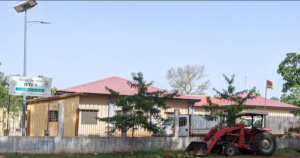
The Oti 1 commune in northern Togo recently approved its development plan for the 2025-2035 period during a meeting in Mango. The document was adopted during a plenary session and establishes priorities for investment and public action over the next decade.
The local Communal Development Plan (PDC) has an estimated program cost of more than 995 million CFA francs. It covers several sectors, including health, education, energy, drinking water, sanitation, security, local governance, trade, and infrastructure.
The plan is based on a vision for 2035. It aims for an Oti 1 commune that is better governed, peaceful, and more economically resilient.
The meeting was organized by the mayor's office with support from the ministry responsible for local development. It is part of the fourth phase of the Development and Good Governance Program (ProDeG IV). This program is implemented by GIZ with the support of the German Federal Ministry for Economic Cooperation and Development.
The PDC is expected to cover three cantons in the commune. These include Mango, Sadori, and Faré.
R.E.D
Togo Forecasts Sharp Drop In Project Grants Through 2028
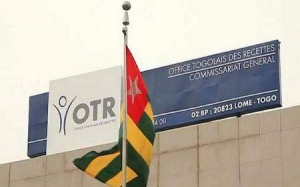
The Togolese government anticipates a sharp decline in project grants between 2026 and 2028. According to revenue forecasts for the period, grants from international institutions are expected to fall from 166.9 billion CFA francs in 2026 to 70.9 billion CFA francs in 2027, and then to 31.6 billion CFA francs in 2028.
In two years, these financing flows would shrink by more than fivefold. In nominal terms, the loss would reach nearly 135 billion CFA francs between 2026 and 2028.
These project grants consist of external aid, sometimes classified as non-tax resources in a broad sense. They mainly come from grants from international institutions, notably the World Bank and the International Monetary Fund, within the framework of their various programs.
For the 2026 fiscal year, the Togolese State has planned special allocation accounts to channel financing from the Bretton Woods institutions for a total amount set at 48.68 billion CFA francs. These funds are intended for three programs. The first is the National Non-Contributory Social Protection Program, which is to finance the Transformative Social Assistance for Resilience in Togo (ASTRE), covering cash transfers to vulnerable households. The second is the Administration Capacity Building and Modernization for Service Delivery Program (PMADS), focused on improving administrative performance, public service quality, and governance. The third is the Sustainable Agricultural Transformation Program in Togo (PTDAT), which supports the implementation of the Togo Agricultural Modernization Program (ProMAT) 2025-2034.
Regarding the IMF, the country benefits from a 42-month Extended Credit Facility (ECF) approved in March 2024 for a total amount of approximately 240 billion CFA francs, or some $400 million.
All together, project grants still represent more than 10% of budgetary revenue in 2026. They would fall to less than 2% in 2028 according to current projections, barring a major change by then.
At the same time, alongside the anticipated drop in project grants, tax revenues are forecast to rise slightly. They are expected to represent 1,338 billion CFA francs in 2026, then 1,474 billion CFA francs in 2027, and 1,620 billion CFA francs in 2028.
Such a trajectory raises the question of the State's capacity to finance public investment without massive external support. It also raises the question of the social sustainability of an increased fiscal effort on households and businesses.
In any case, the coming months and future budget projections will indicate whether these developments reflect the end of project cycles without equivalent renewal, or if the government is assuming a progressive refocusing toward budgetary autonomy.
Ayi Renaud Dossavi
Lomé Municipal Officials Trained on Budgeting and Council Operations
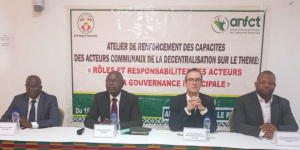
Local officials from the Golfe 1 and Golfe 4 municipalities in Lomé are wrapping up a training session on Tuesday on their roles under decentralisation.
The programme is organised by the National Training Agency for Territorial Collectivities (ANFCT), with support from the French Embassy in Togo.
The session, which began on Monday, included mayors, deputy mayors, municipal councillors, secretaries-general and prefectural authorities. It comes after new municipal councils took office following the July 2025 local elections.
The programme covers decentralisation principles, municipal and mayoral powers, the functioning of municipal councils and coordination between elected officials, municipal administrations and decentralised state services. Other topics include municipal budget preparation, civil registration and legal compliance oversight.
ANFCT Director General Komi Dodzi Denyo said the aim is to equip officials with the foundations needed to carry out their duties effectively.
36 prefectural workshops since December
Before Lomé, the training, launched on Dec. 8, 2025, was held in Kara, Dapaong and Cinkassé. Nationwide, 36 prefectural workshops have already been organised to support the 1,527 municipal councils installed after the 2025 elections.
“From the moment they take office, it is crucial to provide elected officials with the fundamentals on their roles, responsibilities, how councils operate and how they work with other local development actors,” he said.
French Ambassador Augustin Favereau said the initiative is part of a territorial governance support project funded by France over 2025-2027. He added that a partnership between ANFCT and France’s National Centre for Territorial Civil Service supports trainer training and the development of materials adapted to the Togolese context.
For the municipalities involved, key challenges include improving budget management, strengthening local revenue collection and coordinating with state services. The training is expected to strengthen local public action and improve service delivery.
R.E.D
Sotouboua 2 Approves 2.26 Billion CFA Franc Five-Year Development Plan
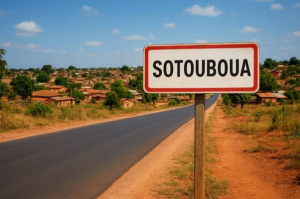
The Sotouboua 2 municipality in Togo has adopted a Municipal Development Plan (PDC). The document, which covers the 2026-2030 period, was validated late last week in Adjengré, the municipal capital, during a workshop involving municipal councillors and local stakeholders.
The implementation of this five-year plan will require a significant resource mobilization effort, with an estimated total cost of 2.26 billion CFA francs. The PDC is structured around four programmes and fourteen projects aimed at sustainably improving the living conditions of the population.
Planned interventions target several priority sectors, including health, education, rural infrastructure, access to drinking water, and electrification. Through these actions, municipal authorities intend to stimulate inclusive economic and social development while strengthening local governance and environmental protection.
With the validation of the document, the municipality now enters the operational phase. The mobilization of financing and the execution of projects should be carried out in a participatory manner with the involvement of all social groups. According to the first deputy mayor of Sotouboua 2, Akata Atchozou, this inclusive approach is essential to guarantee the ownership and success of the plan over the next five years.
Esaïe Edoh
Togo Raises Local Government Support Fund to 12 Billion CFA Francs in 2026
Togo plans to step up support for local development in 2026. Under the 2026 budget, the Support Fund for Local Authorities (FACT) will rise to 12 billion CFA francs, up 20% from 10 billion CFA francs in 2025.
The increase aligns with the decentralization policy pursued in recent years and is intended to strengthen the financial capacity of municipalities and regions. FACT funding is mainly used to finance investment projects, particularly in basic infrastructure, education, health and sanitation.
Over the past five years, a total of 41.8 billion CFA francs has been allocated to local authorities. Authorities have also been urged to improve budget planning and execution.
The higher FACT allocation comes as municipalities develop or update their local development plans, which help define investment priorities and attract additional financing. The fund is expected to act as a catalyst, enabling local governments to launch projects and strengthen their credibility with development partners.
Togo has 117 municipalities, the basic units of local governance and territorial development. They are grouped into 39 prefectures and five regions.
R.E.D