
Togo First
Togolese Early-Stage Projects Eligible for EU Global Gateway Grants of Up to €2 mln
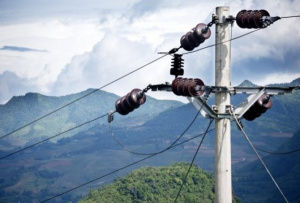
Infrastructure developers in Togo with early-stage projects are invited to apply for EU funding under the Global Gateway Early-Stage Investment Mechanism.
The programme supports early-stage infrastructure projects in EU partner countries, including Togo, and is part of the bloc’s Global Gateway strategy to boost sustainable long-term investment in partner economies.
Priority sectors include transport, artificial intelligence, energy and urban development. Successful applicants can receive grants of 500,000 to 2 million euros, with EU co-financing of up to 90%. Projects can run for 12 to 36 months.
The mechanism targets projects still in the planning stage and aims to help turn promising ideas into bankable projects. The non-repayable funding can cover feasibility studies, pilot projects and other preparatory work often needed to attract later public or private investment.
EU-based companies, including startups, SMEs and large groups, are eligible. Consortia, public-sector bodies, universities and research institutes can also apply, particularly for AI-related projects. Partnerships with Togolese public authorities are encouraged. Applications close on March 16, 2026.
Sambiani Yobe Takes Over As Head Of Togo Bar Association
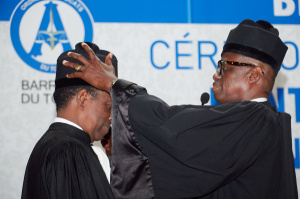
The Togo Bar Association has elected Sambiani Yobe as its new president. He took office late last week, succeeding Claude Folly Adama, whose term ended. Yobe is the 15th president in the Bar’s history.
He will lead the association for the next three years, with a mandate to protect the profession’s interests and uphold the rule of law. He will be supported by 12 advisers.
The inauguration was held under the theme “The defence of the defence” and focused on the role of lawyers in strengthening the rule of law.
Justice Minister Pacome Adjourouvi said defending the right to counsel was “not a slogan” but a commitment to fair trials. “No one can be judged fairly if their defence is weakened, hindered or treated with suspicion,” he said.
He added that “the defence is not an obstacle to the truth, it is a path to it,” and described legal representation as a fundamental right for all, regardless of status, wealth or political views.
Yobe takes office as Togo pursues reforms aimed at modernising its justice system and improving its efficiency, credibility and accessibility.
Togo Concludes AFRISTAT Presidency, Marks 12 Billion CFA Budget Approval
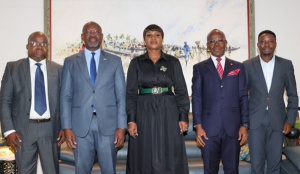
Togo ended its term as rotating chair of the Council of Ministers of the Economic and Statistical Observatory for Sub-Saharan Africa (AFRISTAT) on Dec. 31, 2025, and Equatorial Guinea took over on Jan. 1, 2026.
Sandra Ablamba Johnson, minister and secretary-general of the presidency of the Council, presented a report on Togo’s tenure on Tuesday, Jan. 13, 2026. After talks with AFRISTAT Director General Paul-Henri Nguema Meye, she said major progress was made in 2024-2025, including the renewal of the institution’s funding mechanism, which lapsed in 2025, and the approval of AFRISTAT’s vision and strategic priorities for 2026-2035.
Other achievements included training programmes and progress on rebasing national accounts. The strategic framework is backed by a 12 billion CFA franc budget to support the development of economic, social and environmental statistics in AFRISTAT’s 22 member states.
Togo said it completed 70% of planned activities over the 2024-2025 period, despite challenging conditions, including difficulties securing resources from member states and development partners.
As the outgoing chair, Togo said it remains available to support AFRISTAT during the handover to Equatorial Guinea, which will chair the Council in 2026-2027.
AFRISTAT was created to coordinate statistical efforts and mobilize resources to support national and regional statistical systems, and plays a key role in harmonizing data.
Esaïe Edoh
CCI-Togo Plans Agri-Tech Complex To Modernise Farming

The Chamber of Commerce and Industry of Togo (CCI-Togo) plans to set up an agri-tech complex focused on smart farming training in 2026, it said in the December 2025 issue of its quarterly magazine, Entrepreneurs Mag.
The centre will be located in Agbélouvé in the Maritime region and is one of the chamber’s flagship projects for 2026. CCI-Togo said the site will serve as both a training centre and an innovation lab aimed at modernising the agricultural sector.
The complex is expected to offer young agri-entrepreneurs a facility for pilot projects, applied research and networking with investors and partners. It will also run specialised courses for farmers, covering modern and sustainable techniques such as precision agriculture, smart irrigation and drone use.
“The objective is to boost productivity, encourage sustainable practices and build more resilient agriculture in the face of climate challenges,” the chamber said. It expects the training to improve the use of digital tools and agricultural data, raise and stabilise yields, and cut post-harvest losses through better storage and logistics.
CCI-Togo said the project would support the modernisation of Togolese agriculture in line with government priorities and contribute to food security.
Esaïe Edoh
Togo Hosts WEN-Africa Conference on Gender Inequalities in Energy
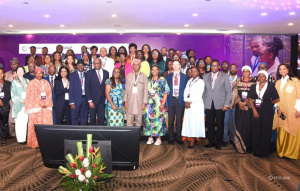
The Women in Energy Network-Africa (WEN-Africa) is holding a meeting in Lomé this week focused on reducing gender inequalities in the energy sector. The event brings together institutional partners under the theme “Addressing Gender Inequalities in Energy: Partnerships for Sustainability.”
The conference, which ends on Wednesday, includes panel discussions led by partner institutions and energy sector representatives from several African countries. Speakers are expected to outline WEN-Africa’s mission and progress since its launch, and to share partner experiences.
Participants are also reviewing the benefits of joining the platform, existing best practices, and the impact of partnerships in narrowing gender gaps in the energy sector in sub-Saharan Africa.
Attendees include Kwawu Gaba, the World Bank’s energy sector manager, and Robert Koffi Messan Eklo, Togo’s minister delegate for energy and mineral resources.
Gaba said the platform aims to strengthen women’s participation in energy policy, planning and operations, build technical and leadership skills, and foster partnerships that support inclusive and sustainable energy development. He added that the initiative also seeks to help women and young people use energy access to develop economic activities, support education, improve health outcomes and drive innovation in their communities.
Eklo welcomed the Lomé meeting as a step toward greater equality in the sector. “By gathering here in Lomé, we are taking a collective step to ensure that Africa’s energy transition is not only clean and resilient, but also inclusive and gives women their full place,” he said.
Launched in February 2024, WEN-Africa is supported by the World Bank and aims to increase women’s participation and employment in Africa’s energy sector in partnership with international institutions.
Esaïe Edoh
Togo Trade Turnover Index Rises 2.8% in October 2025, Services Jump
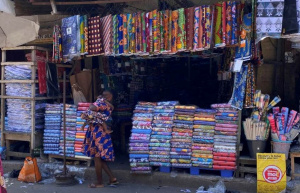
Commercial activity in Togo rebounded in October 2025 after a decline the previous month. The trade turnover index rose 2.8% month-on-month after falling 1% in September, BCEAO data showed.
The rebound was driven mainly by retail trade, which added 3 percentage points to monthly growth. However, auto and motorcycle trade and repairs, wholesale trade and intermediation slightly offset gains. Turnover was up 3.5% from a year earlier, improving in September and pointing to a modest upward trend.
Non-financial market services also rose sharply in October, up 5.3% month-on-month after a 0.3% decline in September. Year-on-year growth reached 3.7%. This was below Benin, Côte d’Ivoire and Niger, but above Senegal.
Financial services expanded more strongly, with turnover up 4.0% on the month and 15.4% year-on-year. The figures put Togo among the bloc’s stronger performers for the indicator, broadly in line with Senegal and Benin.
Ayi Renaud Dossavi
Togo Microfinance Deposits Rise 2.7% in Q2 2025, Lending Falls
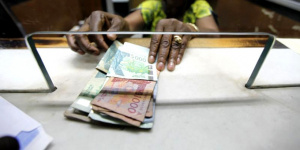
Deposits at Togo’s microfinance institutions rose by 11.9 billion CFA francs in the quarter, up 2.7%, according to BCEAO data. Growth lagged Burkina Faso and Senegal but outpaced Benin and Niger.
Lending, however, slowed. Loans outstanding fell by 7 billion CFA francs, a 1.9% quarterly decline, as financing conditions tightened and lenders grew more cautious. Togo and Mali were the only countries in the bloc to record contractions, while Côte d’Ivoire, Senegal and Benin posted increases of 1.6% to 3.4%.
Caution has also been reinforced by worsening asset quality across the region. The gross non-performing loan ratio reached 10.9% at end-June 2025, well above the bloc’s 3% benchmark. Togo also has one institution under temporary administration, out of 10 in the Union.
Microfinance remains key to financial inclusion in Togo, supported by rising savings and a growing client base. But lending momentum and risk management will remain key areas to watch in the second half of the year.
The figures extend a trend seen since early 2025. Deposits had climbed to 436 billion CFA francs in the first quarter, while outstanding loans fell sharply. Between March and June, the contraction in lending eased to -1.9% from -5.2%, while deposits continued to rise.
Togo’s microfinance sector includes nearly 70 institutions that provide financing to households and small businesses. Across WAEMU, there are 527 microfinance institutions serving nearly 19.9 million clients.
Ayi Renaud Dossavi
Togo Creates National Forest Seed Centre to Strengthen Reforestation Policy

Togo has set up a National Forest Seed Centre (CNSF) to support forest development and climate change mitigation. The Ministry of Environment, Forest Resources, Coastal Protection and Climate Change officially launched the facility last week.
The centre will distribute high-quality planting material with strong genetic and physiological characteristics, adapted to the country’s different agro-ecological zones.
Operating under the technical oversight of the Office of Forest Development and Exploitation (ODEF), the CNSF will also contribute to reforestation efforts and the conservation of forest species.
It will support research on endangered species and certify seeds intended for commercial use and national reforestation programmes. As part of this mandate, the centre will identify natural seed production areas and conduct phenological studies to optimise harvest periods.
By supplying certified seeds, the CNSF is expected to play a role in restoring forest cover and improving vegetation nationwide. The initiative is also expected to create skilled jobs, including positions for forestry technicians and seed specialists.
With the launch of the CNSF, Togo joins other West African countries with similar facilities, such as Burkina Faso and Senegal, as it strengthens its approach to environmental protection.
Esaïe Edoh
Nathalie Kouassi Akon on How IFC Plans to Scale Up Investment in Togo | Interview

Making her first official visit to Togo since her appointment, Nathalie Kouassi Akon, IFC Regional Director for the Gulf of Guinea, arrived in Lomé to meet government officials and private sector leaders. The visit comes as Togo seeks to scale up private investment, amid persistent challenges related to industrial development, SME access to finance, and long-term capital mobilization.
In this interview with Togo First, the IFC regional director discusses the growth of the institution’s portfolio in Togo and its sectoral priorities in energy, agriculture, infrastructure, and digital technology. She also outlines strategies to mobilize private capital in a tightening global financial environment, the role of local champions and SMEs, and the outlook for cooperation between Togo and the World Bank Group through 2030.
Togo First: Togo First: How is the IFC’s portfolio in Togo performing today in terms of size, sector coverage, and overall results?
Nathalie Kouassi Akon: Over the past five years, from 2020 to 2025, the International Finance Corporation has invested and mobilized a record amount of around $320 million in Togo. This is a significant volume and reflects the country’s strategic importance for the institution.
These investments span several key sectors, notably energy, industry, and telecommunications. This diversification aligns with a priority clearly shared today by both the World Bank Group and the Togolese authorities: job creation through private sector development. In this respect, Togo holds an important position within the region I oversee, particularly given its employment potential.
Historically, IFC’s engagement in Togo began with port and energy infrastructure. We financed the container terminals at the port of Lomé and later supported the country’s first independent power producer through the construction of a 100-megawatt thermal power plant in Lomé. These are structural investments that are essential to the competitiveness and long-term growth of the Togolese economy.
Over the past five years, I would highlight three investments with particularly strong development impact.
The first is TogoCom, where our support aims to expand access to connectivity and high-speed internet. Digital technology is a key driver of economic transformation, and this investment fits squarely within that objective.
The second is Star Garments in the textile sector. This project is expected to generate around 4,500 direct and indirect jobs, mainly for women, representing a significant social impact for Togo’s economy.
More recently, we supported Zener to strengthen access to cleaner energy, notably by expanding its storage capacity for propane and butane gas.
Financing for SMEs also remains central to our strategy. We mainly operate through financial intermediaries, supporting institutions such as Ecobank, the NSIA Group, and Bank of Africa, notably through guarantee mechanisms. These arrangements enable our partners to extend financing to Togolese SMEs.
Togo First: What lessons can be drawn from the evolution of the IFC’s portfolio in a context of tightening financial conditions and growing security and geopolitical challenges?
Nathalie Kouassi Akon: You are pointing to two major trends, financial and geopolitical, that are reshaping our economies and influencing how we operate. In this context, the IFC’s Vision 2030 strategy has proved particularly forward-looking.
One of its core pillars is the mobilization of private capital. Since the arrival of World Bank Group President Ajay Banga and under the leadership of IFC Managing Director Makhtar Diop, it has become clear that official development assistance alone will no longer be sufficient to finance growth. Mobilizing private capital has therefore become essential.
Our performance is no longer assessed solely on the volume of our investments, but increasingly on our ability to catalyze private capital. Internally, we refer to this as an “originate-to-distribute” approach, under which IFC acts as a catalytic investor with the objective of attracting other investors alongside us.
We pursue this approach through our traditional instruments, such as syndicated loans, as well as through more advanced tools, including bond issuances and public-private partnerships.
In Togo, this strategy is fully reflected in our operations. Over the past five years, for every dollar invested by IFC, nearly three additional dollars have been mobilized from private investors, mostly from abroad. This demonstrates the catalytic impact of our interventions.
This mobilization is achieved not only through our financing, but also through our advisory work with the government, particularly in structuring public-private partnership projects.
Togo First: Which sectors do you currently see as the most promising, and which are receiving particular attention from the IFC?
Nathalie Kouassi Akon: The sectors we see as the most promising are those identified, at the World Bank Group level and in close consultation with the Togolese authorities, as having the strongest potential for job creation, particularly for young people.
At the Group level, five priority sectors have been defined: infrastructure, health, agriculture, tourism, and value-added manufacturing. These sectors are expected to generate significant employment in the years ahead.
In Togo specifically, our partnership with the government, as set out in the Country Partnership Framework, is structured around three main pillars.
The first is energy. Togo was among the first countries to join the World Bank Group’s Mission 300 initiative, which aims to connect 300 million people to electricity by 2030. The government has set an ambitious target of raising the electricity access rate from around 70 percent today to 90 percent by 2030. This objective relies in particular on solar energy, as well as several projects supported and accompanied by the IFC.
The second pillar is agriculture, notably through the AgriConnect initiative. In Togo, our approach in this sector is built around three levers.
The first is agribusiness financing, through risk-sharing mechanisms developed in partnership with commercial banks.
The second focuses on capacity building, through programs such as Africa Agricultural Leadership, which aim to train and support small-scale producers.
The third, which is expected to expand further, is agri-tech. The objective is to support digital platforms capable of structuring value chains and improving access to financing, markets, and agricultural information.
The third priority sector, in agreement with the government, remains logistics and transport, which is a core pillar of Togo’s economic development.
Togo First: How important are local champions in the IFC’s strategy for Togo?
Nathalie Kouassi Akon: Supporting the emergence of local champions has become a central pillar of our strategy in Togo. By local champions, we mean Togolese companies with strong growth potential and a capacity to generate significant economic and social impact.
In this context, the IFC has launched a dedicated initiative targeting Togolese local champions. We carried out a screening of around 300 SMEs, from which eight companies were identified as eligible for the program. At this stage, two have formally joined the initiative.
These companies receive structured support, with a strong focus on financial management and compliance with environmental and social standards, in preparation for direct IFC financing. The objective is to help them reach a level of maturity that is compatible with long-term investment.
One concrete example is Zener, a company active in the distribution of liquefied petroleum gas, which received $16 million in financing. Its operations cover the entire LPG value chain. Another example is Yatt & Co, also operating in gas distribution, which recently signed a technical assistance agreement with the IFC. Discussions are under way regarding potential financing, which we expect to materialize in the near term.
Togo First: A recent IFC report on Togo points to a high concentration in the productive sector. Just 0.4 percent of companies account for 77 percent of total revenue, while nearly 90 percent are micro or small enterprises, often undercapitalized. How does this finding translate concretely into your strategy for Togo?
Nathalie Kouassi Akon: This finding is central to our strategic thinking. Under the IFC’s Vision 2030 framework, we have decided to double the share of our portfolio dedicated to financing SMEs.
That said, it is important to be precise about definitions. The term “SME” covers a wide range of realities, from micro-enterprises to mid-sized companies.
Micro-enterprises account for the vast majority of the economic fabric, in Togo as in many African countries. This represents both a vulnerability and an opportunity. To address this effectively, IFC has recognized that it cannot act alone and that stronger partnerships are required.
For example, we work with innovation ecosystems and incubators, including those supported by UNDP, to help build a pipeline of companies that could eventually become financeable. Today, some start-ups or very small businesses are not yet eligible for direct IFC financing, but that does not mean they fall outside our scope. The objective is to support them progressively, either directly or indirectly, along their entire value chain.
Togo First: More concretely, how is this approach reflected in the IFC’s financing instruments?
Nathalie Kouassi Akon: Historically, IFC’s support for SMEs has been delivered mainly through financial institutions. For many years, we worked primarily with large international banks, using instruments such as credit lines and guarantees. Over time, we gradually extended this approach to mid-sized banks.
Today, our strategy is evolving further. As part of our effort to scale up SME financing, we are placing particular emphasis on microfinance institutions and fintechs. The guarantees and financing facilities we provide enable them to expand their loan portfolios, while complying with clearly defined conditions.
We also complement this with technical assistance to help these institutions better structure their products, refine their targeting of SMEs, and better assess both the attractiveness and the risks of this market segment. It is a demanding market, but a critical one if we are to respond effectively to the realities of Togo’s economic landscape.
In addition, we have created a dedicated department, known as Upstream, whose role is to prepare companies ahead of time, before they become bankable. It is within this framework that we are supporting, for example, Gozem, a start-up that we are currently financing in Togo.
Togo First: Despite the guarantees, including those provided by the IFC, some SMEs say the cost of credit has not declined, suggesting that risk reduction is not being passed on in financing terms. How do you explain this gap, and how does the IFC ensure that its guarantees have a tangible impact for businesses?
Nathalie Kouassi Akon: It is a legitimate question and one that requires close and ongoing monitoring. The cost of a loan is determined not only by credit risk, but also by the cost of liquidity, which remains high in our economies and is often available only at short maturities.
That said, this does not mean that all outcomes are justified. We work closely with our financial partners to ensure that our instruments deliver real impact. Today, our partnerships with banks are governed by clearly defined impact criteria, including the number of SMEs financed, attention to women-led businesses, and compliance with consumer protection standards.
In practical terms, we require transparency in how interest rates are set, as well as mechanisms designed to prevent abusive practices. These requirements form part of the regular reporting obligations of our banking partners. It is a demanding process, but one that is essential to ensure the credibility and effectiveness of our interventions.
Togo First: Over the past decade, Togo has attracted foreign direct investment, notably in banking, logistics, and certain industries. Can we speak of a genuine economic upgrade, or do structural bottlenecks still limit the ability of Togolese companies to scale up and attract more investment?
Nathalie Kouassi Akon: First, it is important to acknowledge the progress that has been made. In Africa, expectations are often high, and rightly so, but it is also important to recognize tangible improvements.
In this respect, Togo has delivered notable results. In the latest Business Ready, or B-READY, assessment, the country ranked as the third-best reformer in Sub-Saharan Africa. It is also among the few low- and middle-income countries to feature among the leading performers in most of the areas assessed, including business entry, business location, financial services, international trade, taxation, dispute resolution, and competition.
At the continental level, only a small number of countries, such as Rwanda, show a comparable reform trajectory. This is a very positive signal that now needs to be consolidated.
These reforms have already helped mobilize significant volumes of private capital. As mentioned earlier, IFC has invested and mobilized around $320 million in Togo. This momentum reflects close cooperation with the government under targeted, sector-specific initiatives.
In the energy sector, for example, the objective is to raise the electricity access rate to 90 percent by 2030, which will require mobilizing around $1.4 billion in private capital. In agriculture, investment needs are also estimated at around $1 billion. Meeting these targets will require further reforms, carried out in consultation with the private sector, to identify remaining bottlenecks and accelerate their removal.
A sector-by-sector approach allows reforms to be better targeted, in coordination with our World Bank colleagues. It also helps distinguish more clearly between the needs of large firms and those of small and micro-enterprises, which are very different.
In this context, initiatives such as the Local Champions Initiative are essential. They are not only about financing volumes, but also about better understanding the ecosystem, structuring needs, and reform priorities of local companies, so that they can play a larger and more formal role in the economy.
Togo First: Looking ahead to 2030, what are the IFC’s financing objectives in Togo, and under what conditions can the country further scale up its relationship with the IFC and the World Bank Group, including MIGA?
Nathalie Kouassi Akon: In close coordination with the World Bank and MIGA, we have identified the sectors that will remain our focus in the coming years. These are primarily agriculture, transport and logistics, digital development, and energy, which will continue to sit at the core of our priorities.
A key feature of this next phase is stronger coordination within the World Bank Group. For the past two years, we have been rolling out a joint representation model in several countries, under which a single representative covers the World Bank, IFC, and MIGA. The objective is for all countries to have a unified Group representative by 2026, in order to ensure a more coherent and integrated approach.
In Togo, this joint representation will come into effect in February, further strengthening coordination between public and private sector interventions.
More concretely, IFC has already contributed to SME financing in Togo, notably through a $25 million securitization transaction led by NSIA in partnership with BOAD. We have also supported the agricultural sector through risk-sharing mechanisms, as well as by financing a leading leasing company in the market, which facilitates access to agricultural equipment for small-scale farmers.
Our approach is to intervene across the full value chain, supporting SMEs primarily through indirect channels, while also backing large international investors capable of driving public-private partnerships and major structural projects for the State.
Togo First: Any closing remarks?
Nathalie Kouassi Akon: Togo remains an important partner for the IFC. We have been present in the country for many years, and we are seeing steady and encouraging progress, with growing investor interest despite a more challenging regional and global environment. Our commitment to Togo is long-term, and we will continue to support this transformation in the years ahead.
Interview by Fiacre E. Kakpo
University of Kara, Business Chamber Seek Closer Links to Improve Employability

The Chamber of Commerce and Industry of Togo (CCI-Togo) and the University of Kara are preparing to formalise a partnership, the two institutions said after talks held on Monday in Lomé.
The discussions brought together University of Kara president Prénam Houzou-Mouzou and CCI-Togo’s commissioner for the services sector, Péyébinesso Limazié, and focused on cooperation in training and youth employment.
The planned partnership aims to better align university programmes with private-sector needs by developing courses tailored to labour market demand.
The University of Kara said it has created and strengthened polytechnic and innovation institutes, staffed with qualified personnel, to deliver training aligned with current professional requirements.
CCI-Togo said it intends to act as a link between the university and businesses by facilitating student internships, promoting partnerships with the private sector and contributing to curriculum updates in line with changing skills needs.
The initiative builds on similar cooperation between CCI-Togo and the University of Lomé, including the establishment of a language training centre to help businesses overcome language barriers in international trade and partnerships.
Esaïe Edoh