

Togo First
Kozah 2 Allocates Nearly 30% Of 2026 Budget To Communal Investments

The Kozah 2 commune held its first ordinary session of 2026 last week in Pya, during which it presented an initial budget of 176.7 million CFA francs.
The budget is balanced at just over 176 million CFA francs. Operating expenditure totals 123.2 million CFA francs, nearly 70% of the budget, while investment spending amounts to 53.5 million CFA francs, or 30.3%.
In addition to budget discussions, municipal councilors reviewed several issues related to the day-to-day management of the commune, including waste collection, the status of transfers from the Local Authorities Support Fund for the 2021 to 2023 period, the harmonization of certain administrative fees, and efforts to mobilize additional revenue. Councilors also authorized the commune to apply for funding for school construction projects.
The communal executive said 2026 should be a year of “consolidation of achievements” and continued development, with priorities focused on infrastructure, education, health, water, sanitation, and security.
Located in the Kara region in northern Togo, Kozah 2 covers about 295 square kilometers and is one of four communes in Kozah prefecture. It comprises seven cantons, namely Bohou, Yadè, Tchitchao, Pya, Tcharè, Kouméa, and Sarakawa, and borders several neighboring communes, including Kozah 1 and Kozah 4.
New Risk Management Association, AMRAT, Established in Togo

Insurance and banking professionals in Togo have established a new body to formalize risk management in the country. The Association for Risk and Insurance Management in Togo (AMRAT) gained official legal recognition on Dec. 16, 2025, after receiving approval from the Ministry of Territorial Administration.
Led by industry professionals, the association aims to foster a structured risk management culture in Togo. The initiative comes as companies and public institutions face growing financial, operational, climate and technological risks. These challenges directly affect financial institutions, which are heavily exposed to compliance, solvency, cybersecurity and business continuity risks.
AMRAT is headed by founding president Khalid Yacoubou-Boukhari. He said the association seeks to bring together risk management practitioners and strengthen ties between insurers, banks, corporations and government agencies.
According to its founders, AMRAT intends to promote best practices in risk and insurance governance, raise professional standards and facilitate dialogue between practitioners, policymakers, businesses and international partners. The organization plans to offer training programs, industry monitoring and strategic analysis on risk management issues.
The launch of AMRAT comes as risk management advances on the regulatory front across the West African Economic and Monetary Union (WAEMU), though it has yet to be fully integrated into the strategies of businesses and institutions. While banks report an average solvency ratio of 14.7%, above the 11.5% regulatory requirement, their high exposure to sovereign debt—nearly 38% of assets—continues to pose systemic risks.
Although credit portfolios have improved, with a default rate of 8.5%, capitalization remains a challenge, with a capital ratio of around 13%. Yacoubou-Boukhari said this shows the challenge is no longer purely regulatory, but also cultural, operational and related to decision-making.
AMRAT is also part of an international network. It is a founding member of the Federation of African Risk Management Associations (FARMA) and receives support from the Francophone Risk and Insurance Management Club, a key partner in the Francophone region.
Following its official recognition, the association is preparing for its inaugural launch in Lomé next March. The event is expected to bring together national and international public- and private-sector stakeholders from the insurance, finance, governance and organizational resilience fields, with a particular focus on risk management in the banking sector.
The project’s initiators said the launch will mark the start of closer cooperation among stakeholders, with the aim of better integrating risk management into the strategies of Togolese companies and institutions and supporting ongoing economic transformation.
AMRAT ultimately aims to establish itself as a reference point for debate, training and expertise in risk management in Togo, while contributing to the development of risk management practices across Francophone Africa.
Fiacre E. Kakpo
Togo Reviews Emergency Water Supply Projects in the North

Initial steps to shore up drinking water supplies in northern Togo are starting to show results, government officials said.
Nine high-yield boreholes have so far been connected to the national water network in the Kara and Savanes regions, improving distribution in several areas previously hit by shortages. Field teams report that additional boreholes currently under construction are delivering adequate flow rates.
Officials announced the progress during a ministerial visit to the northern regions from Jan. 7 to Jan. 10, led by Sévon-Tépé Adedzé, the minister of territorial development and urban planning. The mission reviewed emergency projects launched to ease pressure on water supplies and assess the effectiveness of government measures. Representatives from several ministries, the Togolese Water Company and the Water and Sanitation Heritage Company took part.
Authorities have also deployed temporary solutions. In some neighbourhoods, water is being supplied by tanker trucks, with the army assisting deliveries to strategic sites. Residents said these measures have improved supply in several areas.
Supply constraints persist, however. The Kozah dam, the main source of water for the city of Kara and surrounding areas, is at critically low levels. Water levels have fallen to 8 metres from 16 metres a year earlier, cutting daily production to around 3,000 cubic metres from 11,000. The shortfall affects Kara as well as nearby towns including Niamtougou, Pagouda and Pya.
In the Savanes region, inspections covered production and treatment facilities in Mango and Dapaong.
The government launched emergency measures late last year to reinforce borehole capacity and distribution in northern Togo. The plan includes connecting 50 boreholes with adequate output to the network and building new ones. The project is expected to be completed by the end of January.
R.E.D
Togo Hosts DRC President For Talks On Regional Cooperation

Faure Gnassingbé, President of the Council of Ministers of Togo, met Democratic Republic of Congo (DRC) President Felix Tshisekedi in Lomé on Monday for talks.
During the meeting, the two leaders reviewed cooperation between Lomé and Kinshasa and discussed interregional integration. Tshisekedi praised Gnassingbé’s role after the Togolese leader was appointed African Union mediator in April 2025. That mediation helped lead to the signing of a peace agreement between the DRC and Rwanda in Washington in November 2025.
The talks were held at Gnassingbé’s invitation as part of efforts to follow up on commitments aimed at stabilising eastern DRC. They came ahead of a technical coordination meeting scheduled for Jan. 17 in the Togolese capital.
The meeting will bring together key stakeholders to determine how the agreement will be implemented, with a focus on military de-escalation and humanitarian assistance. Togolese authorities say they want to turn diplomatic progress into stability on the ground.
As the African Union’s mediator, Gnassingbé is pursuing political talks while calling for reform of development aid, building on initiatives launched with France in October 2025.
African Architecture School Reviews Reforms at Lomé Meeting as It Marks 50 Years
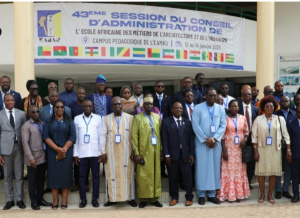
The 43rd meeting of the Board of Directors of the African School of Architecture and Urban Planning (EAMAU) opened on Monday in Lomé. The three-day session is focused on a series of reforms under way at the intergovernmental higher education and research institution.
Board members are reviewing proposed changes to EAMAU’s statutes, plans to strengthen research through the creation of a doctoral school, and measures to improve student welfare and the academic environment.
The meeting coincides with the institution’s 50th anniversary. The board is taking stock of EAMAU’s five decades of activity while outlining its future direction, including the preparation of a strategic plan for the coming years.
In this context, EAMAU Director General Malam Boukar Awa Krou said the ongoing work would help consolidate the school’s transformation. He said EAMAU would continue to position itself as a strategic tool supporting urban, architectural and territorial development across Africa.
Togo’s Minister Delegate for Higher Education and Scientific Research, Gado Tchangbedji, reaffirmed his country’s commitment to the institution. He said Africa needed more architects, urban planners and spatial planning specialists capable of designing resilient, sustainable and inclusive cities adapted to African realities and global change.
Founded in 1975, EAMAU has trained nearly 2,000 professionals in architecture, urban planning and regional planning.
Esaïe Edoh
Togo Inflation Falls to 0.4% in 2025, Lowest in Three Years
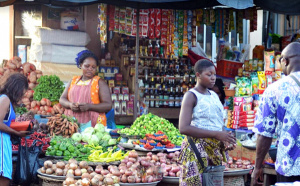
Togo’s annual inflation rate fell to 0.4% in 2025 from 2.9% in 2024, a decline of 2.5 percentage points, according to data released by the National Institute of Statistics and Economic and Demographic Studies (INSEED) in its December 2025 inflation report.
The Harmonized Index of Consumer Prices (HICP) stood at 102.2 in December 2025, virtually unchanged from its level a year earlier. This overall stability reflected diverging price trends across sectors. Housing, water, electricity, gas, and other fuels rose 9.4% year on year, while prices for food and non-alcoholic beverages, which account for a large share of household spending, fell 2.0%.
On a monthly basis, consumer prices edged up 0.3% between November and December 2025. The increase was driven mainly by higher prices in restaurants and accommodation services, which rose 1.3%, and by food products, up 0.4%. The rise was particularly noticeable for prepared meals and staple goods such as maize, which increased 5.2%, and traditional palm oil, up 5.5%.
Prices also varied significantly across regions. In the capital, Lomé, imported rice sold for an average of 654 CFA francs per kilogram in December, compared with 457 CFA francs in the Savanes region. By contrast, palm oil prices ranged from 1,855 CFA francs per liter in Lomé to 2,197 CFA francs in Kara.
Compared with September 2025, the overall price level in December rose 0.2%. This quarterly increase was largely driven by a 4.2% rise in the housing, water, electricity, gas, and other fuels category.
Ayi Renaud Dossavi
ISOC Togo Appoints New Board, Re-Elects Agbenonwossi As President

The Togo chapter of the Internet Society (ISOC Togo) appointed its new Board of Directors on Saturday, Jan. 10, 2026, at a regular General Assembly.
Emmanuel Elolo Agbenonwossi was re-elected president for the 2025-2027 term. He heads an organization whose membership rose to 602 in 2025 from 435 in 2023, driven by broader participation from young people, women and technical specialists.
Operationally, ISOC Togo rolled out the country’s first community network in 2025 in Atti Akakpé. The project, implemented under the Beyond the Net programme, seeks to improve local internet access and build technical skills within the surrounding communities. The network now serves five villages.
The organization also expanded its training and consultation activities, notably through the National School on Internet Governance and the 10th and 11th Internet Governance Forums, which focused on artificial intelligence, cybersecurity and public policy.
“It is now time to accelerate development and position Internet Society Togo as a leading technical and strategic partner,” Agbenonwossi said at the ceremony, adding that internet conditions in Togo were improving.
Priorities for the new mandate include extending network coverage to the northern regions, producing data on internet service quality and increasing the number of innovation hubs for young entrepreneurs.
ISOC Togo has been active in the country for 20 years. It is the national chapter of the Internet Society, a global non-profit organisation that promotes an open, secure and accessible internet.
R.E.D.
Togo Launches 8th Edition of National Quality Award

Togo’s High Authority for Quality and the Environment (HAUQE), with technical support from the Togolese Agency for the Promotion of Quality (ATOPROQ), has launched applications for the eighth edition of the Togolese Quality Prize.
The national competition is open to private companies and public organisations operating across all sectors of the economy, including those based in Greater Lomé and the country’s five regions.
Officially launched on Nov. 28, 2025, the prize aims to promote a culture of quality, encourage continuous improvement in management practices, and recognise high-performing organisations. Organisers say the initiative is a key tool for strengthening the competitiveness of Togolese companies as regional competition intensifies.
Applicants are grouped into three categories according to size: small businesses with between one and 20 employees, medium-sized enterprises employing 21 to 100 people, and large companies with over 100 employees.
Several awards will be presented, ranging from the Excellence Prize to the Quality Commitment Prize, depending on the maturity of the management systems assessed.
Beyond national recognition, the Togolese Quality Prize also provides access to regional competitions. Award-winning companies may qualify for the UEMOA and ECOWAS Quality Prizes, offering greater visibility on African and international markets.
Applications close on Feb. 27, 2026. Participation fees range from 150,000 to 400,000 CFA francs, depending on company size. Application forms are available from HAUQE and ATOPROQ.
Togo To Host Jan. 17 Talks On Eastern DRC Crisis

Lome will host another meeting on Jan. 17 focused on the crisis in eastern Democratic Republic of Congo (DRC), as efforts continue to ease tensions in the Great Lakes region.
The talks follow a peace agreement signed by Rwanda and the DRC in Washington in November 2025, brokered by U.S. President Donald Trump.
Discussions in Lome will cover political coordination, regional security, de-escalation mechanisms, humanitarian assistance and economic integration. Congolese media outlets said the meeting is expected to help revive the peace process, even as relations remain strained between Kinshasa and Kigali despite the agreement.
The meeting will be held under the leadership of Faure Gnassingbe, head of Togo’s Council and the African Union’s designated mediator for the Great Lakes crisis. For Lome, the summit offers another opportunity to bolster its standing as a diplomatic actor in regional conflict resolution.
Togo had previously played a role in October 2025, when it co-organized a similar meeting with France in Paris focused on addressing the region’s prolonged humanitarian crisis and exploring pathways toward lasting peace. At the time, Gnassingbe called for an integrated African-led approach centered on development and the rebuilding of aid mechanisms.
Esaïe Edoh
Togo aquaponics startup turns to soilless farming to face climate risks
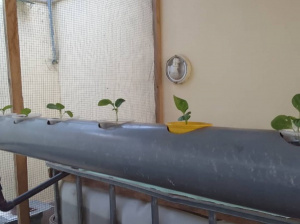
Recognized at the Blue Invest Forum in Lomé, the company led by Dr. Ahama Kplolali and Kokoevi Agbevenou-Dovi (MSc) is developing a technology that combines fish farming with vegetable production. Through this model, known as aquaponics, the promoters aim to establish a 3,000-square-meter commercial farm in the Togolese capital.
Climate disruption as the starting point for an entrepreneurial project
In 2020, a late-season drought destroyed the tomato crops of the Ahama family in the municipality of Noepe. In response to this loss, Dr. Ahama Kplolali, a plant physiologist and biotechnologist, was tasked by her father with finding an agricultural solution that would not depend on climatic conditions.
According to the co-founder of Aquaponie du Togo, the objective was to identify a viable crop system independent of seasons and rainfall. This search led her toward soilless farming technologies, and more specifically aquaponics, a system that combines aquaculture and hydroponics.
A scientific partnership built around an emerging technology

Ahama Kplolali then reached out to Kokoevi Agbevenou, her former classmate at the Faculty of Sciences of the University of Lomé, who later specialized in plant biosciences after completing a master’s degree in France with a focus on microbiology and agrobioscience. Agbevenou says she quickly joined the project given the importance of the technology, at a time when aquaponics was still relatively under-documented, even at the international level.
The two researchers devoted three years to studying the concept before moving toward implementation. According to Agbevenou, they started from scratch due to the limited availability of technical references. The system is based on a closed-loop ecosystem in which fish waste serves as a natural fertilizer for plants, while the plants filter the water before it is returned to the fish tanks.
A self-financed operational prototype
In November 2023, Aquaponie du Togo installed its first operational system on a 40-square-meter site in Adidogomé-Yokoe, a neighborhood in Lomé. The project was financed through three sources: the founders’ personal savings, support from the French NGO KYNAROU, and backing from Apromafriq Pharma.
The prototype demonstrated its commercial viability through a short supply chain model.
“People come to buy directly from us,” Agbevenou says. Demand has even exceeded available production, both for fish and for vegetables, according to the founders. This early market validation encouraged the entrepreneurs to consider scaling up to an industrial level.
The company currently offers three services: producing and selling fish and vegetables, designing and installing aquaponics kits, and providing training in the technology.
International recognition at the Blue Invest Forum

In October 2025, Aquaponie du Togo presented its 3,000-square-meter commercial farm project at the Blue Invest Forum organized in Lomé by the European Union. The Togolese initiative stood out in the aquaculture category and won the award for best pitch.
“I was the only one selected in Togo,” Ahama Kplolali said, noting that she represented the company at the event. She added that both the initiative itself and the training program that preceded the forum “opened doors.”
“It gave us credibility. People realized this was not a hobby, but a serious project that really provides solutions,” the researcher and entrepreneur said.
This recognition has drawn the attention of institutional stakeholders, including the supervising ministry…
Persistent structural obstacles
Despite these advances, the transition from a prototype to a commercial-scale farm faces several constraints. Financing remains the main challenge. “We are still struggling to secure funding, partnerships, and technical support to launch this 3,000-square-meter commercial aquaponics farm project,” Ahama Kplolali says.
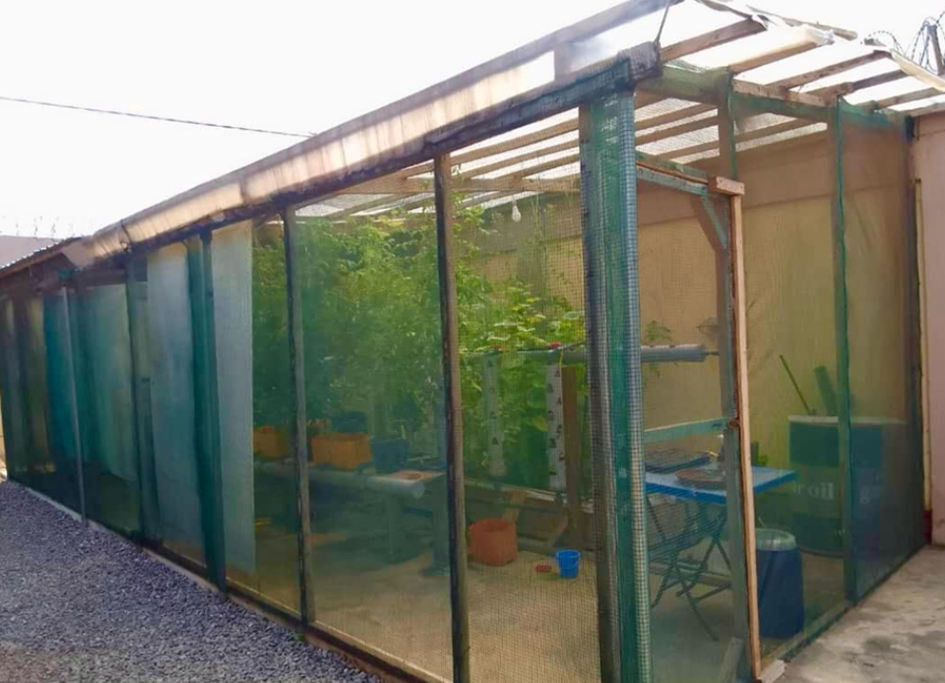
Access to urban land is another major constraint. In Lomé, real estate pressure and high land prices make it difficult to identify sites suitable for a large-scale aquaponics installation. The founders are looking for a location that can accommodate their infrastructure while maintaining proximity to urban consumers.
The regulatory environment adds another layer of complexity. Aquaponics, a hybrid technology at the crossroads of agriculture and aquaculture, does not fit easily into existing regulatory frameworks. “Authorities need to understand this technology better in order to regulate it more effectively,” Kokoevi notes.
A final logistical challenge lies in sourcing specialized inputs. Some of the equipment and materials required for aquaponics are not available locally, making imports necessary and increasing initial investment costs.
A regional expansion strategy
Beyond the Lomé project, Aquaponie du Togo is pursuing broader expansion ambitions. “We are considering not only expanding within Togo’s regions, but also establishing operations in the sub-region. We could start with Benin or Burkina Faso,” one of the co-founders says, targeting areas facing similar climate-related challenges.
This vision is paired with an educational component. The entrepreneurs plan to organize awareness sessions in Togolese schools. “Our children in Togo need to be familiar with this innovative agricultural technology, which directly addresses the climate challenges we are facing,” Kokoevi argues.
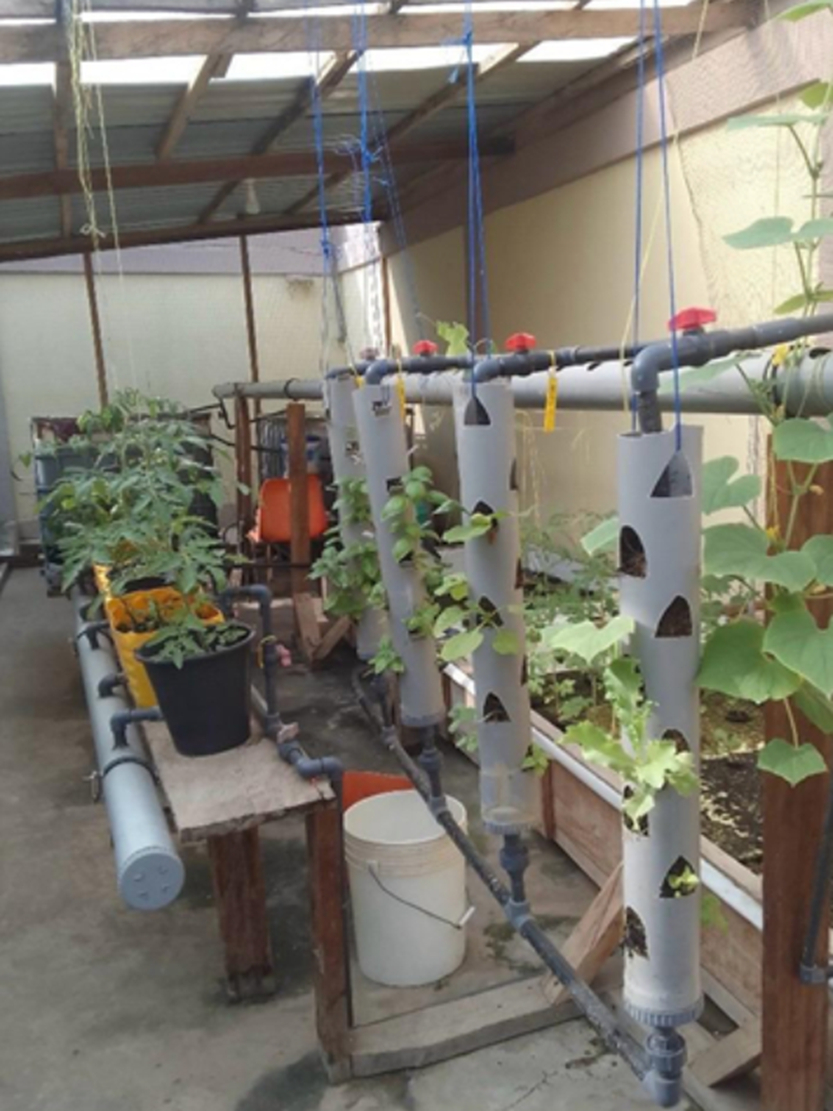
The proposed business model combines commercial production with technology transfer. The objective is to make aquaponics accessible to urban households while developing a supply of fresh, organic products through short distribution channels.
Call for financial and institutional partners
“It should not stop here. We are really calling on all organizations, public institutions, NGOs, and even the government to support us so that the project can come to life,” Ahama Kplolali says, as the two co-founders issue a direct appeal to public institutions, NGOs, and private investors.
The symbolic dimension of the project is not lost on them. “We are two women entrepreneurs in the green sector,” Ahama Kplolali notes, in an entrepreneurial ecosystem where female-led initiatives in agritech remain in the minority.
The financial needs, which have not been publicly quantified, relate to core infrastructure, including greenhouses, fish tanks, filtration systems, climate control equipment, and hydraulic installations. The investment must also cover the initial working capital required to support the production cycle before the first sales are generated.
Development outlook and stakes
The aquaponics model developed by the Togolese company fits into a broader global search for agricultural alternatives in response to climate constraints. In West Africa, where rainfall variability affects food security, such systems offer significant adaptation potential, according to the founders.
The competitive advantage of the model rests on several factors: water savings estimated at 90% compared with conventional agriculture, year-round production independent of seasons, the absence of chemical pesticides, and optimized land use in dense urban environments.
That said, commercial success will depend on Aquaponie du Togo’s ability to structure its supply chain, standardize production processes, and build a recognized brand in the Togolese market. The company will also need to address the challenge of training qualified staff to operate the technical installations, alongside a growing base of private users.
“This is not an impossible model. It is truly achievable, and we know where we are going,” Dr. Ahama Kplolali concludes. The coming months will determine whether this scientific conviction can secure the financial and institutional backing needed for industrial-scale deployment in Lomé.
Ayi Renaud Dossavi