
Togo First
Togo’s Lacs 1 municipality adopts 2026 budget up 25% year on year
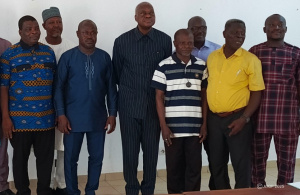
The Lacs 1 municipality in Togo adopted its draft budget for the FY2026 over the weekend in Aného. The budget, which is balanced in terms of revenue and expenditure, will be submitted for final approval to the minister of territorial administration.
The total allocation stands at CFA744.8 million, marking an increase of 25.6% compared with the previous year. The higher envelope reflects the identification of new local tax sources and improved revenue collection, particularly during the third quarter of 2025, according to officials.
From a budgetary breakdown, operating expenditure is set at CFA398.8 million, 53.5% of total resources, while investment spending amounts to CFA346.1 million, or 46.4% of the budget.
The municipal executive, led by Mayor Alexis Coffi Aquereburu, has outlined a budget strategy centered on strengthening local infrastructure. Priority projects include expanding the water supply network, installing public lighting systems in five localities, developing agricultural land, and completing construction of a police station.
Beyond infrastructure, the municipal council also approved several structural reforms. These include the creation of a dedicated office for the diaspora and the adoption of new regulations governing the management of plastic waste.
The Lacs 1 municipality is home to about 53,000 residents. It is located in the Lacs district in southeastern Togo and includes the historic city of Aného. It covers an area of around 54 square kilometers, making it one of the most densely populated municipalities in the Maritime region. Between 2020 and 2024, the municipality mobilized a cumulative budget of more than CFA5.4 billion, invested mainly in infrastructure, education, health, and sanitation.
Ayi Renaud Dossavi
Togo revenue authority raises CFA830.5bn in Jan-Sep 2025, up 5.6% YoY
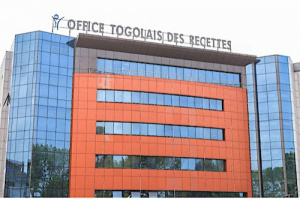
Togo’s revenue authority collected CFA830.52 billion in public revenues during the first nine months of 2025, data from the Directorate General of Finance and Budget show. In its third-quarter budget execution report, the body noted that this performance represents 68.73% of the annual target of CFA1,208.4 billion.
Revenue mobilization increased by 5.6% compared with the same period in 2024, when collections totaled CFA786.32 billion. The year-on-year rise was largely driven by stronger tax receipts, particularly corporate income tax. Collections from this segment climbed 9.75% to CFA127.24 billion. Customs duties also contributed to the upward trend, rising 6.46% to CFA141.3 billion.
Another factor supporting revenue growth was the introduction of the Tax on Telecommunications and Information and Communication Technology Companies (TETTIC). The levy generated more than CFA5 billion over the January–September period, adding a new source of fiscal income.
The performance reflects a combination of policy and operational measures implemented by the Office togolais des recettes (OTR). These included broader taxation of individuals, the extension of the tax base to digital platforms, intensified action against customs fraud and smuggling, and the rollout of a new governance framework following amendments adopted in 2025.
Looking ahead, the tax authority plans to adopt a strategic plan covering the 2026–2030 period. The roadmap is expected to strengthen efficiency and further improve the mobilization of public resources.
Esaïe Edoh
Togo allocates nearly CFA30bn to reparations under transitional justice program
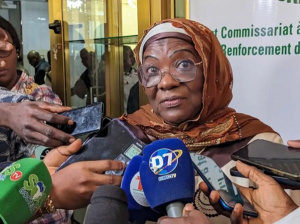
Togo has mobilized nearly CFA30 billion over the past ten years to finance compensation and reparations under its transitional justice process, according to data presented in Lomé last week.
The special compensation fund managed by the High Commission for Reconciliation and Strengthening of National Unity (HCRRUN) mobilized about CFA29.6 billion across eight phases, of which CFA24.8 billion was allocated directly to compensation payments.
Financial compensation accounted for CFA23.6 billion of the total. Community reparations reached CFA832 million, while CFA203 million was allocated to memorial reparations. Scholarships granted to orphans totaled CFA144 million. Operating expenses over the period amounted to CFA4.8 billion.
Since the program became operational in 2017, a total of 33,331 victims of sociopolitical violence that occurred between 1958 and 2015 have received compensation.
During the eighth phase alone, covering 2024 and 2025, 2,838 victims received compensation through fourteen sessions held in Guérin-Kouka, Lomé, and Sotouboua.
In parallel, 209 orphaned children were enrolled as scholarship beneficiaries, including 183 in 2024 and 26 in 2025.
Established following recommendations of the Truth, Justice and Reconciliation Commission (CVJR), the reparations program now extends beyond individual compensation. HCRRUN also carries out asset restitution, psycho-medical support, and collective and memorial reparations.
Ayi Renaud Dossavi
BOAD financing nears CFA10,000 billion across WAEMU economies
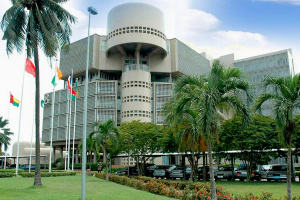
The West African Development Bank (BOAD) ended 2025 with cumulative financing commitments of CFA9,916.6 billion since the start of its operational activities in 1976, the institution said after a board meeting held on December 18 in Lomé, Togo.
The figure was confirmed at the close of the bank’s 149th ordinary session of the Board of Directors, which also approved six new operations totaling CFA75 billion for implementation in 2026.
The newly approved portfolio covers a wide range of sectors, including infrastructure, industry, agriculture, energy, vocational training, and financing for small and medium-sized enterprises. Projects cleared by the board include an agro-industrial cashew processing complex in Guinea-Bissau, major road works in Burkina Faso, an electronic equipment assembly plant in Benin, and agricultural training infrastructure in Senegal.
The approvals also include guarantee operations in the energy sector in Côte d’Ivoire and an additional equity investment in the Cauris IV fund, which focuses on financing SMEs and mid-sized companies across the WAEMU region.
In Togo, BOAD also approved the reallocation of resources under the Emergency Program to Strengthen Resilience in the Savanes Region (PURS), although no further details were provided. In 2023, the bank had approved CFA30 billion in financing for the program, which targets social and economic development in the country’s northern region.
That funding was intended to improve access to isolated communities through rural road development and the delivery of basic infrastructure, including electricity, drinking water, and agricultural processing facilities.
Ayi Renaud Dossavi
Togo tax authority and business groups seek closer cooperation
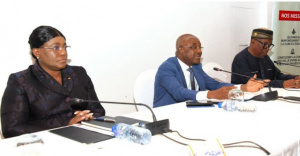
- OTR and private sector leaders met in Lomé to reset relations
- Talks focused on tax rules, audits, and revenue collection reforms
- Dialogue follows concerns raised by large companies over tax practices
In Togo, business operators and the tax administration held talks in Lomé late last week to establish a more constructive partnership based on dialog.
The initiative, led by Finance and Budget Minister Georges Barcola, brought together the commissioner general of the Togolese Revenue Office (OTR), Yawa Tségan, as well as the heads of the National Employers’ Council (CNP) and the Association of Large Enterprises (AGET), Laurent Tamégnon and Jonas Daou.
Discussions covered the current tax framework, audit and reassessment procedures, the overall tax burden, and recently adopted measures intended to improve the efficiency of the tax administration and strengthen public revenue collection. According to the finance ministry, the objective was to help both sides gain a clearer understanding of several key tax provisions.
“The main objective is to hold exchanges with the private sector, to try to clear up misunderstandings and move forward. We need to find a way to build a partnership between the private sector and the tax administration,” Barcola said.
The meeting followed recommendations set out in the fifth edition of AGET’s White Paper, which pointed to persistent disagreements over the interpretation of tax laws and to the adoption of certain reforms without prior consultation with economic operators. The current initiative is presented as a first step toward a more structured and permanent dialogue between the tax authority and the private sector.
Acknowledging that disagreements have existed for several years, the finance minister said he hopes to open a new phase of cooperation from 2026. He reiterated that the private sector remains a key driver of economic growth and a major contributor to national wealth creation.
Esaïe Edoh
Inside Togo’s Agreement With PFO for the Lomé Ministerial Complex
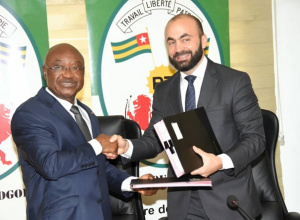
Togo has reached a key milestone in the construction of a new government administrative complex in Lomé, following the signing of an agreement between the state and the PFO Group, officials said.
The deal was signed on Dec. 17 in the Togolese capital between the government and the Ivorian-Lebanese construction group PFO (Pierre Fakhoury Operator), marking the transition of the project into its implementation phase.
“The ceremony that brings us together today marks an important step in the realization of the Lomé administrative real estate project, known as the Ministerial City, which is designed to support the modernization of public administration in a context of rapid urban growth,” Finance and Budget Minister Georges Essowè Barcola said at the signing ceremony.
Public-private partnership structure
Unlike traditional public procurement, the project will be implemented through a public-private partnership (PPP) structured as a construction lease. The arrangement involves the Togolese state, the PFO Group and its subsidiary, the Ministerial City Construction Company (SOCOCIM).
Under this legal framework, the state provides the land, while the private partner finances, builds and operates the infrastructure before transferring it back to public ownership at the end of the contract, according to a source familiar with the agreement.
The land, an undeveloped plot located in Bè-Klévé in Lomé’s Golfe 3 commune, will remain the property of the state. PFO is granted the right to use the site for the agreed purposes for the duration of the lease, which the state undertakes to respect.
While construction lease agreements can legally run from 18 to 99 years, they are typically set for periods ranging from 25 to 40 years or 30 to 50 years. The exact duration of the lease signed with PFO has not been disclosed.
Financing and scope
As part of the agreement, PFO and SOCOCIM will finance the project directly or mobilize external funding. Financing discussions involve several banks, including Société Générale, Ecobank, Banque Atlantique, Coris Bank and NSIA Bank. The West African Development Bank (BOAD) has already approved financing of 20 billion CFA francs.
With the mobilized funding, PFO-SOCOCIM will develop an integrated administrative complex intended to serve as a central hub for government ministries in Lomé.
The complex will comprise 18 buildings within a single secured site, combining eight towers of varying heights and ten low-rise buildings. The towers will feature square designs and uniform façades, arranged in pairs according to height and architectural features.
The project will offer around 90,000 square metres of office space and more than 900 parking spaces. Once completed, it is expected to accommodate several ministerial departments and more than 4,500 public officials.
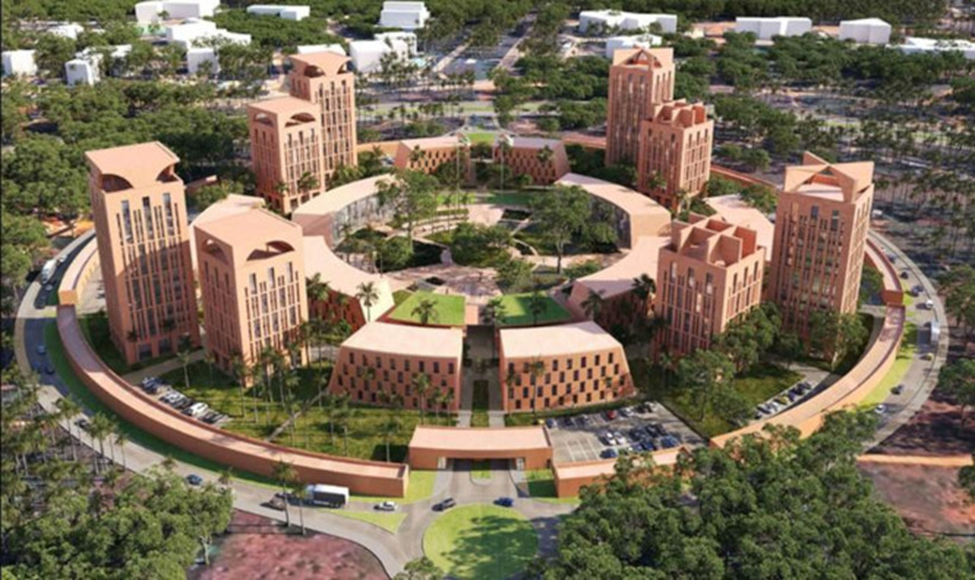
Construction is scheduled to be completed within 36 months from the laying of the foundation stone. PFO-SOCOCIM will bear the technical and financial risks associated with the project.
Operation and transfer
The construction lease also governs the operation of the complex once completed. PFO-SOCOCIM will be responsible for operating and maintaining the facilities throughout the lease period and for transferring them to the state in good condition at the end of the contract.
Although the operational details have not been made public, it is widely expected that the Togolese state will be the primary tenant of the complex and its associated facilities for the duration of the lease.
“This project demonstrates the ability of the Togolese state, its financial partners and the private sector to jointly design, structure and deliver large-scale, useful and sustainable infrastructure,” Clyde Fakhoury, a board member of the PFO Group, said after the ceremony. He said the project would generate more than 1,000 direct and indirect jobs.
Budgetary impact
The use of a construction lease is intended to allow the state to develop strategic infrastructure without immediately drawing on budgetary resources. The state retains ownership of the land and will recover full ownership of the buildings at the end of the contract.
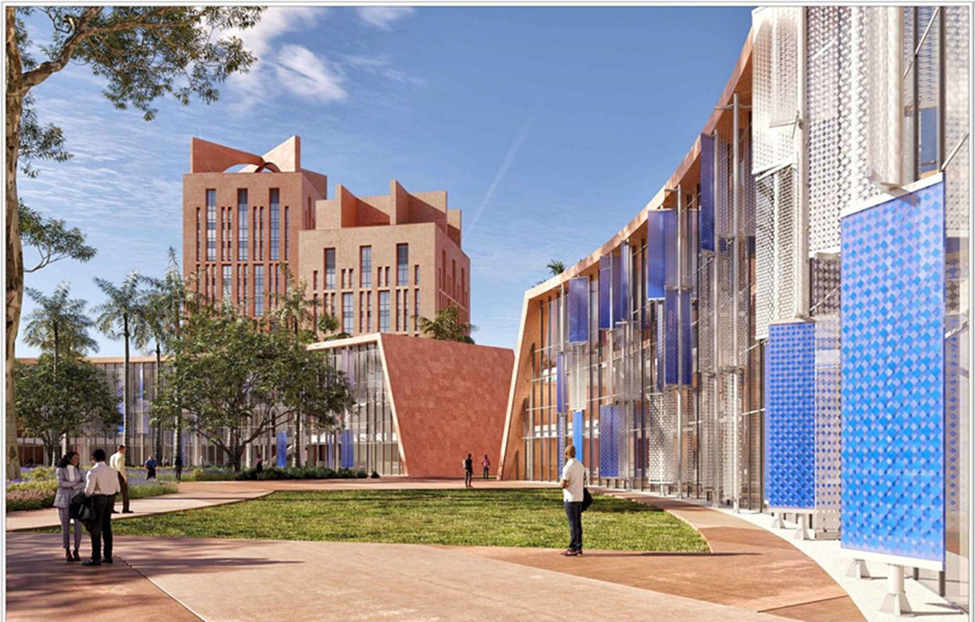
From a budgetary perspective, the arrangement eases pressure on public finances at a time of fiscal constraints. Unlike conventional procurement, the state does not advance construction costs or provide upfront payments. Investment costs are borne by PFO-SOCOCIM, while public expenditure is spread over time through lease payments or contractual fees.
The structure is also expected to accelerate project delivery, as the private partner has a financial incentive to complete construction quickly in order to begin operations, reducing delays commonly associated with public budgetary procedures and improving control over execution timelines.
S.A & Esaïe Edoh
Lomé’s Golfe 4 Commune Cuts 2026 Budget by 22%
The Golfe 4 commune in the Greater Lomé area adopted its draft budget for the 2026 fiscal year on Thursday, Dec. 18, 2025. The budget is set at 3.6 billion CFA francs.
This provisional budget represents a decrease of approximately 22% compared with the 4.6 billion CFA francs budgeted for 2025.
According to estimates from municipal authorities under Mayor Jean-Pierre Fabre, nearly 79% of the budget, or about 2.8 billion CFA francs, will be dedicated to operating expenditure. These funds are intended to ensure the continuity of public services and the proper functioning of the communal administration. The remaining 21%, corresponding to approximately 765 million CFA francs, will be allocated to investment, specifically to finance development projects and local infrastructure.
The reasons for this budgetary contraction were not specified. However, Mayor Jean-Pierre Fabre said the budget “constitutes a development tool that will help consolidate achievements and launch new projects for the benefit of local residents.”
Adopted by the municipal council, the budget will be submitted for approval to the ministry responsible for territorial administration, in line with Togo’s decentralization regulations.
Esaïe Edoh
Togo Launches Training to Prevent Disputes in Agricultural Projects

Two agricultural development programmes in Togo backed by the International Fund for Agricultural Development (IFAD) are moving into an implementation phase focused on improving local governance and ensuring effective project delivery.
The programmes, PRIMA and ProMIFA, are strengthening their grievance-handling systems ahead of this phase. Training sessions for grievance committee members are being held through Dec. 20 in several prefectures, including Kozah and Tchamba, to help prevent and resolve disputes linked to project delivery.
Implemented by Togo’s agriculture ministry, the two programmes involve a broad range of public authorities, community groups and private-sector actors, increasing the risk of social, land and operational tensions.
To address these risks, a joint grievance mechanism spanning cantonal and central levels has been set up in line with IFAD requirements.
An assessment carried out by a joint PRIMA and ProMIFA mission in late November 2024 reviewed how these bodies operate at all levels. The review identified gaps in skills, tools and reporting channels, which informed the design of the training modules now being rolled out.
ProMIFA entered its investment phase in June 2023, supported by $15.6 million in additional funding approved by IFAD in December 2022. The project aims to expand access to agricultural credit nationwide, targeting 50,000 households, or around 300,000 people, through a risk-sharing mechanism.
PRIMA, a regional project, focuses on integrating agricultural markets along cross-border corridors between Togo and Benin, with plans for broader regional expansion.
Nearly 450 actors from government agencies, local authorities and community organisations are involved. Authorities and development partners expect the strengthened grievance system to improve transparency, reduce disputes and create a more predictable investment environment in a sector critical to jobs and food security.
Ayi Renaud Dossavi
Togo Begins Nationwide Cash Transfer Scheme for 700,000 Vulnerable Households
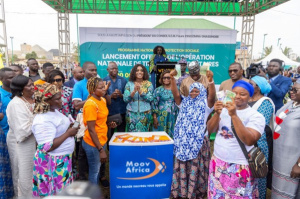
Togo on Thursday launched a nationwide cash transfer programme aimed at more than 700,000 vulnerable households, as authorities seek to cushion the impact of rising living costs.
The programme forms part of the government’s social protection strategy and targets households facing economic hardship, officials said.
The launch ceremony was held at the Kotokoli-Zongo sports complex in the Agoe-Nyive 4 district of Lomé and was attended by government officials, traditional leaders and members of the security forces.
The scheme has a budget of 3.5 billion CFA francs. It was inaugurated by Sandra Ablamba Johnson, Minister and Secretary-General of the Presidency, representing Council President Faure Gnassingbé.
Under the programme, eligible households will receive an unconditional cash payment of 25,000 CFA francs. Authorities said the funds are expected to help cover basic short-term needs while supporting local economic activity.
Payments will be made through secure digital channels, using mobile money services Mixx by Yas and Flooz, to ensure transparency and efficient delivery.
The programme has three components: direct cash transfers to vulnerable households; job creation initiatives targeting young people; and measures to strengthen household income, with a focus on women.
“This programme aims to improve living conditions for vulnerable households and help them better withstand economic shocks, while supporting employment and financial autonomy,” Johnson said.
Beneficiaries were identified using a Proxy Means Test methodology, a targeting approach widely used in social protection programmes, according to officials.
The identification process was carried out by the National Institute of Statistics and Economic and Demographic Studies (INSEED) and the National Agency for Support to Grassroots Development (ANADEB), based on monetary and non-monetary poverty indicators.
“This method ensures transparent and equitable targeting,” Johnson said.
ANADEB Director-General Katanga Mazalo said the system would allow authorities to objectively support households meeting vulnerability criteria, while integrating specific measures for youth employment and women’s empowerment.
The programme is supported by several development partners, including the World Bank, the United Nations system, the French Development Agency (AFD) and the African Development Bank. It builds on similar schemes implemented in recent years, including Novissi, which reached more than 142,000 people in 2024-2025.
Ayi Renaud Dossavi
Togo Approves Policy to Extend Social Safety Net
Togo has approved a national social protection policy aimed at strengthening the fight against poverty and reducing vulnerability, according to a statement issued after a cabinet meeting held on Wednesday.
The policy seeks to provide a structured response to high household exposure to economic and social risks, particularly in rural areas. It is designed to support the most vulnerable groups, including those affected by illness, unemployment, old age or natural disasters, by ensuring a minimum level of income security and improved access to basic social services.
The government said the policy is expected to consolidate existing social protection mechanisms, improve coordination among public programmes and support inclusive and sustainable economic development.
As part of this effort, the framework aims to provide clearer guidance for public action in key sectors such as health, education, nutrition and child protection. It also seeks to extend coverage to groups traditionally excluded from formal social security systems, notably informal sector workers, women and young people.
Authorities noted that Togo has invested for several years in strengthening its social protection system, resulting in measurable progress in poverty reduction and vulnerability mitigation. However, persistent structural challenges prompted the adoption of a more coherent and comprehensive strategic framework.
The policy is set to become a central pillar of the country’s national strategy to reduce poverty and promote social cohesion.
Esaïe Edoh