Togo Begins Nationwide Cash Transfer Scheme for 700,000 Vulnerable Households
 Friday, 19 December 2025 11:06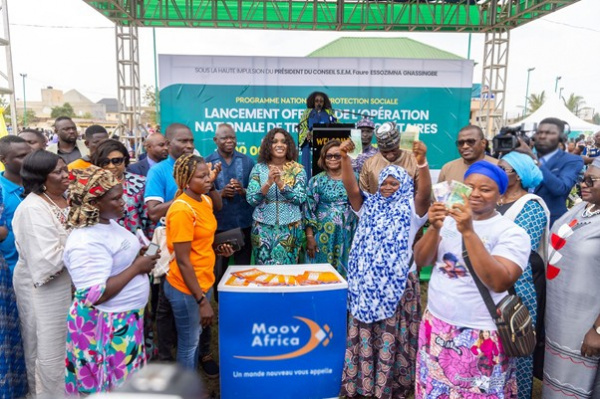
(Togo First) - Togo on Thursday launched a nationwide cash transfer programme aimed at more than 700,000 vulnerable households, as authorities seek to cushion the impact of rising living costs.
The programme forms part of the government’s social protection strategy and targets households facing economic hardship, officials said.
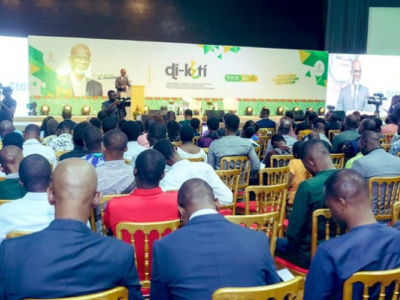
The launch ceremony was held at the Kotokoli-Zongo sports complex in the Agoe-Nyive 4 district of Lomé and was attended by government officials, traditional leaders and members of the security forces.
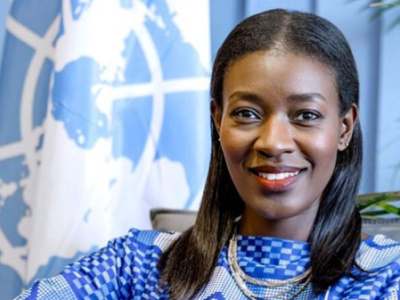
The scheme has a budget of 3.5 billion CFA francs. It was inaugurated by Sandra Ablamba Johnson, Minister and Secretary-General of the Presidency, representing Council President Faure Gnassingbé.
Under the programme, eligible households will receive an unconditional cash payment of 25,000 CFA francs. Authorities said the funds are expected to help cover basic short-term needs while supporting local economic activity.
Payments will be made through secure digital channels, using mobile money services Mixx by Yas and Flooz, to ensure transparency and efficient delivery.
The programme has three components: direct cash transfers to vulnerable households; job creation initiatives targeting young people; and measures to strengthen household income, with a focus on women.
“This programme aims to improve living conditions for vulnerable households and help them better withstand economic shocks, while supporting employment and financial autonomy,” Johnson said.
Beneficiaries were identified using a Proxy Means Test methodology, a targeting approach widely used in social protection programmes, according to officials.
The identification process was carried out by the National Institute of Statistics and Economic and Demographic Studies (INSEED) and the National Agency for Support to Grassroots Development (ANADEB), based on monetary and non-monetary poverty indicators.
“This method ensures transparent and equitable targeting,” Johnson said.
ANADEB Director-General Katanga Mazalo said the system would allow authorities to objectively support households meeting vulnerability criteria, while integrating specific measures for youth employment and women’s empowerment.
The programme is supported by several development partners, including the World Bank, the United Nations system, the French Development Agency (AFD) and the African Development Bank. It builds on similar schemes implemented in recent years, including Novissi, which reached more than 142,000 people in 2024-2025.
Ayi Renaud Dossavi