Togo approves bill updating environmental law and introducing carbon tax
 Friday, 06 March 2026 12:21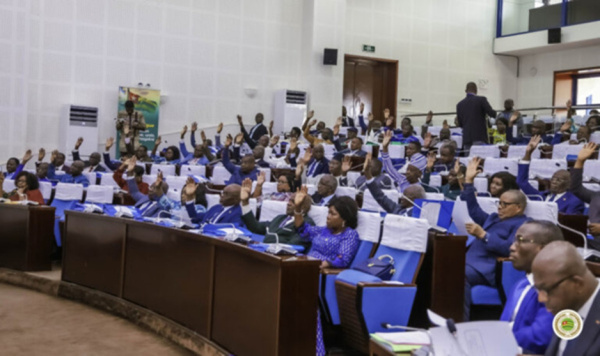
(Togo First) - Togo’s National Assembly has approved at first reading a bill amending the May 30, 2008 framework environmental law. Lawmakers passed the text on Thursday, March 5, 2026, during the third plenary sitting of the year’s first extraordinary session.
The government-backed reform aims to update the country’s legislative framework in response to growing environmental challenges. The move comes as Togo faces the effects of climate change, coastal erosion, pressure on forest resources and soil degradation.
According to Aklesso Atcholé, president of the Union for the Republic (UNIR) parliamentary group, the initiative seeks to address evolving environmental issues and align national legislation with the country’s international commitments.
The bill introduces several new policy tools, including the concepts of the green economy, circular economy and green mobility, as well as a carbon tax.
“The text establishes new paradigms and reinforces the need to better protect the environment and prepare for climate challenges,” Environment Minister Dodzi Kokoroko told lawmakers.
“It introduces new economic models such as the green economy, green mobility and the circular economy. It also provides a mechanism to mobilize climate finance through the creation of a carbon tax and the operationalization of the National Environment Fund,” he added.
The bill must still be approved by the Senate. The reform forms part of a broader effort by the government to strengthen the country’s climate policy framework.
In 2023, authorities adopted a decree regulating carbon management mechanisms aimed at promoting carbon storage and reducing greenhouse gas emissions.
In 2024, the government also launched work on a national strategy to reduce greenhouse gas emissions by 2030 as part of the country’s commitments under the Paris Agreement.
During the same session, lawmakers also approved a law extending the security state of emergency in the Savanes region. They also passed legislation amending the harmonized legal and fiscal regime governing the West African Gas Pipeline project in Togo.
R.E.D