

Togo First
Unified Data Seen as Key to Improving Performance at African Ports

African ports handle the bulk of the continent’s trade but continue to face a structural lack of harmonised, comparable data. This gap drives up logistics costs, deters investment and complicates regional integration.
To address these challenges, the African Development Bank (AfDB) has launched the African Ports Connectivity Project (APC-PP), a multilateral initiative aimed at harmonising port data standards. Manuel Ntumba, a Togolese national recently appointed project coordinator and regional data lead, described the programme as strategically important.
“For more than two decades, weak data governance has limited the ability of African ports to cut costs and support more competitive financing structures,” Ntumba said.
The project is financed by the Multilateral Cooperation Center for Development Finance (MCDF), hosted by the Asian Infrastructure Investment Bank (AIIB), and is being implemented by the AfDB in partnership with S&P Global Market Intelligence and consulting firm CPCS.
Its goal is to develop an interoperable, auditable data framework covering more than 60 African ports. Ntumba said persistent data fragmentation, the absence of common benchmarks and limited auditability have long skewed assessments of port performance and increased the risk premiums applied to African assets.
The programme will deliver a continental Port Data Book, a secure digital platform and an Africa Port Index. The index will draw on methodologies developed by S&P Global, including those used in the Container Port Performance Index produced with the World Bank.
Ntumba said the challenge extends beyond technical considerations. The aim is to make port data comparable, well documented and actionable, enabling credible risk analysis and more rational investment decisions.
In the near term, the AfDB plans to release an initial auditable version of the Port Data Book, roll out a platform compliant with international cybersecurity standards and publish an index enabling objective comparisons of port performance. These tools are intended to reduce information gaps that currently complicate due diligence for lenders and institutional investors.
The expected impact extends beyond the port sector. On a continent where 80% to 90% of trade moves through ports, unified data could transform supply chains. A harmonised data framework would allow congestion to be anticipated, flows to be optimised and the competitiveness of regional corridors to be strengthened. Ntumba said logistics cost savings of 20% to 30% are possible on certain routes.
Beyond the numbers, the project seeks to mark a fundamental shift by positioning data as a strategic asset. Ntumba said harmonisation would reduce uncertainty, rebuild confidence and enhance the attractiveness of African infrastructure.
Fiacre Enagnon Kakpo
Sanlam Rebrands Togo Operations as SanlamAllianz
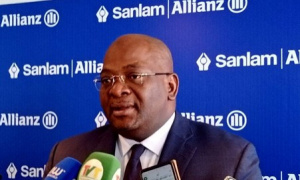
Sanlam, formerly known as Saham, has rebranded its operations in Togo as SanlamAllianz, completing the rollout of the group’s new identity in the country.
The rebranding follows the creation in September 2023 of a joint venture between South Africa’s Sanlam and Germany’s Allianz, two major players in insurance and non-banking financial services. The combination of their African operations resulted in a group active in more than 25 countries, serving nearly 30 million customers and employing hundreds of thousands of people.
Owned 60% by Sanlam and 40% by Allianz, the joint venture aims to strengthen the groups’ presence in high-growth African markets while pooling technical expertise, financial resources and governance standards.
In Togo, the transition was relatively simple. Unlike other markets where both brands operated in parallel, the country had a single entity, historically known as Saham, which later came under Sanlam’s control.
“It was not a merger of local subsidiaries but a name change to align the brand with the group’s identity across Africa,” said Bikiry Makanguilé, chairman of SanlamAllianz Togo. Management outlined the new brand identity at a press briefing in Lomé on Thursday.
Simon Pierre Gouem, managing director of SanlamAllianz Togo, said operations would continue without disruption. While the brand has changed, teams, contractual commitments and service quality remain unchanged, he said. The rebranding is expected to enhance financial capacity and provide greater access to the group’s operational standards and best practices.
SanlamAllianz says it holds a dominant position in the Togolese insurance market, accounting for around 36% of national activity, and that it has led the sector since 2017.
The company reported turnover of about 16 billion CFA francs and claims payments exceeding 7 billion CFA francs in 2024, figures that Gouem said reflect its financial strength and ability to meet obligations.
Abdellatif Mouad, regional director for West and Central Africa, said the rebranding should be seen in a broader context. He described SanlamAllianz as the leading provider of non-banking financial services on the continent, noting that its scale allows it to better support companies and individuals facing increasingly complex risks.
Growth prospects will depend largely on the expansion of the domestic market. In Togo, insurance penetration is estimated at around 1.7%, according to the Togo Insurers Committee, well below African and global averages.
Makanguilé said the success of the rebranding would depend on the company’s ability to expand its customer base, improve satisfaction levels and accelerate the adoption of digital tools. He added that management is targeting double-digit growth and plans to conduct regular customer satisfaction surveys.
Despite low penetration, the insurance sector in Togo has shown steady growth in recent years. Industry turnover reached 87 billion CFA francs in 2022, up from 60 billion CFA francs in 2019, according to data from 2023.
Ayi Renaud Dossavi
Tourism Ministry Begins Digital Transformation Of Services
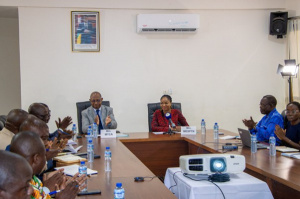
Togo’s Ministry of Tourism, Culture and Arts will become the country’s second government department, after the Ministry of Energy, to digitise its administrative processes. The initiative was launched on Tuesday, December 16, 2025, in Lome.
The launch was attended by Minister of the Digital Economy and Transformation Cina Lawson and Minister of Tourism, Culture and Arts Isaac Tchiakpe. Part of the Public Administration Digitisation Programme (PDAAP), the initiative includes the rollout of collaborative work tools and the adoption of open-source solutions for electronic document and correspondence management. It also covers the digitisation of procedures for issuing various administrative authorisations.
According to the Ministry of the Digital Economy, which is overseeing the project’s implementation, the process will take four weeks. Once completed, the digitisation is expected to improve staff productivity and shorten processing times, while also cutting operating costs and improving the quality of services delivered to the public.
Other ministries are expected to follow the Ministry of Tourism in rolling out similar initiatives, as the government seeks to progressively digitise services across all departments.
Esaïe Edoh
Haho 1 Municipality Adopts 2026 Budget, Up 1.8% Year On Year

The Haho 1 municipality has approved its 2026 budget, set at 431.8 million CFA francs, up about 1.8% from the 424 million CFA francs allocated in 2025.
The budget was approved during the fourth ordinary session of the municipal council held on December 12 in Notse and now requires validation by the Ministry of Territorial Administration.
With the projected resources, municipal authorities plan to roll out several projects for local communities. A total of 22 projects are planned, including the rehabilitation of a storage warehouse in Atchave, the upgrading of market sheds at Notse’s main market, and the construction of livestock markets and school buildings. Projects to establish civil registry services in villages are also included.
In 2026, the municipality also plans to focus on implementing its Master Plan for Development and Urban Planning (SDAU) and its Communal Development Plan (PDC), which includes projects aimed at improving sanitation and developing commercial infrastructure.
To mobilize resources, local authorities are counting on taxpayer contributions within the municipality, alongside support from the state and development partners. They also plan to use the existing municipal taxpayer database to improve local revenue collection.
Esaïe Edoh
Togo Kicks Off National Tour To Promote MSME Support Framework

Togo’s Agency for the Development of Micro, Small and Medium-Sized Enterprises (ADTPME) launched a nationwide outreach tour on Tuesday, December 16, 2025, aimed at promoting its MSME support framework. The initiative began in Kara and will run through December 23, covering six other cities, including Dapaong, Sokode, Atakpame, Tsevie, Kpalime and Lome.
During the tour, the agency plans to gather feedback from micro, small and medium-sized enterprises to better identify their needs and develop recommendations tailored to local conditions. The goal is to improve the effectiveness of public policies supporting entrepreneurship at the local level.
The tour will also be used to present the MSME support framework developed by the agency, which seeks to shift business support toward services with higher economic and sustainable impact. The framework aims to help MSMEs access national and international markets in line with the Togo MSME Charter.
Participants will also receive information on the MSME support platform (SIPA) and the platform dedicated to joining the MSME Charter. These digital tools are designed to facilitate entrepreneurs’ access to support mechanisms put in place by the state and its partners.
A total of 302 MSMEs are expected to take part in the meetings nationwide, with at least 70 exhibitors in each of the seven cities on the tour.
Esaïe Edoh
Togo Begins Ratification Of UN High Seas Biodiversity Treaty

Togo is taking steps to strengthen its environmental commitments by launching the ratification process for the BBNJ Agreement, a legally binding United Nations treaty adopted on June 19, 2023, aimed at the conservation and sustainable use of marine biodiversity in areas beyond national jurisdiction.
At a cabinet meeting on Wednesday, December 17, 2025, the government approved a draft bill to ratify the agreement, which is linked to the United Nations Convention on the Law of the Sea.
According to the Council of Ministers, the draft adopts a “prudent and cooperative approach” intended to reinforce international governance of maritime spaces. It will be submitted to Parliament for review and a vote before the remaining stages of the ratification process.
Ratification is expected to open up new funding opportunities for Togo, following its participation in the COP30 climate negotiations held in Belém, Brazil, a few weeks earlier. The process would enable the country to access international financing mechanisms, including the Global Environment Facility, to support marine conservation efforts and combat marine pollution.
Beyond environmental considerations, the agreement also supports the development of the blue economy, which plays an important role in West Africa’s coastal region. It предусматриes the creation of marine protected areas, equitable access to marine genetic resources, and mandatory environmental impact assessments for activities carried out on the high seas.
For Togo, the agreement represents an opportunity to position itself in line with international standards of maritime governance, with potential long-term benefits for fisheries, maritime transport, and international cooperation.
Ayi Renaud Dossavi
Togo Appoints Mila Aziable As Head Of Public Procurement Oversight

The Togolese government has appointed Mila Aziable as Director of Public Procurement Control at the Ministry of Finance and Budget, it said after a cabinet meeting on Wednesday, December 17, 2025.
Aziable, a former minister for mines and energy and later minister for water, will now head a key body responsible for overseeing public procurement.
Operating under the Ministry of Finance and Budget, the directorate is responsible for procurement oversight policy, verifying the legality of public contracts, ensuring budgetary compliance, preventing irregularities, and supporting contracting authorities. It also coordinates control services and reports to the minister, with the aim of improving the efficiency of public spending and strengthening confidence in public finances.
The government also appointed members to the board of directors of the National Meteorological Agency (ANAMET), under the Ministry of Transport, the statement said.
Togo To Fund Revised 2025 Budget Deficit From Cash Reserves
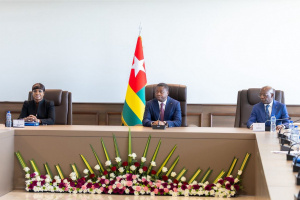
The Togolese government on Wednesday, December 17, approved a supplementary budget for the 2025 fiscal year, revising its initial financial projections, according to a statement issued after a Cabinet meeting.
The government said the revision was driven by persistent international and domestic uncertainties, making it necessary to update earlier budget assumptions to ensure transparency and credibility in the management of public finances.
Under the revised framework, projected budget revenues have been cut to 1,472 billion CFA francs, down 1% from the initial forecast. At the same time, total spending has been raised to 1,717.1 billion CFA francs, an increase of 2.3%.
The supplementary budget totals 2,436 billion CFA francs and includes a deficit of 245.1 billion CFA francs. The shortfall will be fully covered by existing cash reserves, the government said, ruling out additional borrowing or new debt issuance on the financial markets.
Economists said the move reflects short-term fiscal discipline and the government’s capacity to absorb economic shocks without immediately increasing its debt burden. However, they cautioned that reliance on cash reserves may not be sustainable if deficits persist, forcing the authorities over time to either boost revenues, curb spending, or turn to borrowing.
Looking ahead to 2026, Togo is planning a budget of 2,751 billion CFA francs for both revenues and expenditures, nearly 15% higher than the revised 2025 level. The draft finance law, which prioritises social spending in areas such as education, health and social protection, while supporting economic transformation, has been approved at first reading by the National Assembly and will now be submitted to the Senate.
Ayi Renaud Dossavi
ECOWAS Development Bank Rolls Out Gender Equality Framework GES-PI
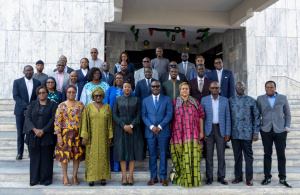
The ECOWAS Bank for Investment and Development (EBID) on Wednesday launched the rollout of the Gender Equality Seal for Public Institutions (GES-PI), an initiative aimed at strengthening inclusive governance and equity within regional institutions.
The launch was held at the bank’s headquarters in Lomé, Togo, during a coordination meeting of ECOWAS institutions on the implementation of the Gender Equality Seal.
The meeting was convened by the ECOWAS Commission and chaired by its Vice President, Damtien Larbli Tchintchibidja. Participants included EBID senior management, led by the bank’s president, George Agyekum Donkor, as well as representatives of the ECOWAS Commission, the ECOWAS Centre for Gender Development, and the United Nations Development Programme (UNDP).
In her opening remarks, the Vice President of the ECOWAS Commission said gender equality was not merely a social objective but a strategic requirement for governance and sustainable development, in line with ECOWAS Vision 2050. The framework places people at the center of development and aims to build a stable, prosperous, and inclusive region.
She said the vision could not be achieved if women remained underrepresented in leadership and decision-making roles.
According to her, the introduction of the Gender Equality Seal at EBID sends a strong governance signal, given the bank’s central role in financing regional integration, sustainable growth, and economic empowerment. The seal provides a structured framework to translate political commitments into concrete institutional reforms.
Binta Sanneh, UNDP resident representative in Togo, described the initiative as timely and transformative, noting that significant gaps persist despite progress made in West Africa.
She said that in 2023 women accounted for around 18% of seats in national parliaments across the sub-region, compared with a continental average of 26.5%, while their representation in governments and local authorities remained below 15%.
UNDP stressed that the GES-PI is an operational tool rather than a symbolic label, relying on data-driven assessments and measurable evaluation mechanisms to drive institutional change.
So far, 17 public institutions in nine African countries, including four in West Africa, have committed to the process, delivering measurable improvements in organisational culture, performance, and innovation.
By joining the initiative, EBID aims to strengthen its internal governance and enhance its appeal to international donors and investors, who are increasingly attentive to inclusion and equal-opportunity standards. The bank also seeks to align its practices with international frameworks, including the UN 2030 Agenda, the African Union’s Agenda 2063, and ECOWAS Vision 2050.
S.A
Greater Lomé To Modernize Street Naming And Address Numbering
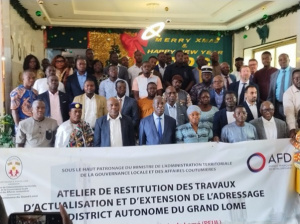
Togo’s capital, Lomé, will update and expand its addressing system in the coming months. A feasibility study for the project was presented on Wednesday, Dec. 17, 2025, in Lomé during a meeting organized by the Autonomous District of Greater Lomé (DAGL).
The initiative aims to update street names and the numbering of land parcels and buildings, including residential properties, businesses, and public services, while incorporating newly developed areas across the metropolitan region. Technical teams from the DAGL will develop a computerized database integrating named and coded roads, as well as geolocated data for each address point. Each address will be based on a metric system linked to a unique entry number.
Once completed, the project will provide physical addresses for all residents of Greater Lomé. It will also assign an address to every entrance opening onto a public road and integrate physical addressing into Togo’s ongoing digital identity initiatives.
The operation will cover approximately 5,000 kilometers of road networks and 538,000 entrances. Of these, 110,000 existing addresses will be updated, while 428,000 new addresses will be created.
The project will then move into a field implementation phase involving the installation of signage displaying door numbers and street names or codes. This stage will be followed by a certification, identification, and official registration phase, during which door numbers will be validated and integrated into the database based on field surveys.
This update comes nearly ten years after the last addressing operation carried out in 2014. According to the DAGL, it is driven by Lomé’s strong population growth, which has led to the development of new infrastructure, as well as by the expansion of digital services, particularly e-commerce, which require a reliable and functional addressing system.
Bassimsouwé Edjam-Etchaki, director of statistical planning at the DAGL, said the updated addressing system will benefit the entire population, notably by simplifying procedures related to access to public services.
The process will actively involve residents, who will be invited to submit their address information through a dedicated digital platform to be established for this purpose.
Since Togo’s independence, three addressing projects have been implemented. The first was carried out in 1998, followed by a second in 2008. The current project began with preparatory work launched in 2022.
Esaïe Edoh