
Togo First
Togo Pitches Reforms at Ongoing Diaspora Investment Forum
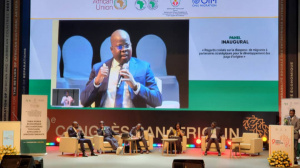
An economic roundtable for Togolese, African and Afro-descendant diaspora communities is taking place from Tuesday to Friday in Lomé, on the sidelines of the ninth Pan-African Congress that opened on Monday.
Togo’s foreign ministry is hosting the event with support from the International Organization for Migration and the African Development Bank. It aims to steer diaspora resources toward investment and productive activity.
The Togolese diaspora, estimated at about one million people in 2022, sent home roughly 405 billion CFA francs that year, up 16.7% from 2021.
Although most remittances still go to household spending and property, the government wants to redirect a share toward business creation, infrastructure and job generation.
The roundtable will showcase the business environment, growth sectors and available financing tools. Five panels are scheduled on themes including reframing the diaspora as strategic partners rather than migrants, fostering diaspora-led entrepreneurship, tailored financial products and potential legal changes.
The programme features B2B meetings and company visits. Authorities plan to set up a technical committee to monitor partnerships and maintain an updated pipeline of investment-ready projects.
R.E.D
Togo, French Business Community Set to Deepen Cooperation on Urban Projects

Togo hosted a delegation from France’s main employers’ association, MEDEF International, last Thursday for talks aimed at deepening economic cooperation. The delegation included about 20 French companies active in sustainable cities, energy, water, sanitation, waste management, logistics and finance.
The meeting, chaired by Minister Delegate for Investment Promotion and Economic Sovereignty Arthur Trimua, reviewed several areas of cooperation. MEDEF International announced the launch of the “Sustainable City-Togo Club,” a platform designed to support urban planning and infrastructure projects.
Togolese authorities outlined a list of strategic projects, including the Lomé-Cinkassé highway, efforts to revive the railway system, and the 161 kV Lomé-Togokomé-Anfoin-Momé Hagou transmission line. The government also highlighted agro-industrial priorities such as agropoles, fish farming and the modernization of agricultural mechanization, with particular attention to the Kara agropole.
With more than 7,200 member companies, MEDEF International plays a key role in helping French firms expand internationally. The discussions and the new cooperation platform follow a series of structured engagements between Togolese stakeholders and French companies, especially in support of long-term urban and economic development.
Ayi Renaud Dossavi
Moyen-Mono 2, French Metropolitan Authority Sign Agreement to Support Urban Services
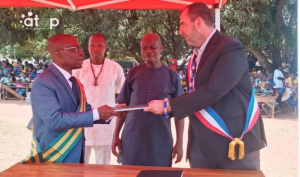
The commune of Moyen-Mono 2 in Togo and France’s Eurometropole of Metz have signed a decentralised cooperation agreement, officials said.
The agreement, signed in Kpékplémé, the commune’s capital, provides financial and technical support for the socio-economic development of Moyen-Mono 2.
Under the agreement, the French local authority will offer assistance in areas such as urban planning, water and sanitation services, and waste management. The Eurometropole of Metz has extensive experience in urban development, sustainable planning and environmental transition.
It will share technical expertise and best practices with its Togolese counterpart. According to the agreement, this support is expected to strengthen local planning and improve the resilience of infrastructure in Moyen-Mono 2.
“This partnership demonstrates the Eurometropole of Metz’s commitment to supporting the development projects of Moyen-Mono 2,” said Philippe Glesser, the mayor of Metz.
Edou Koffi Zomblewouh, mayor of Moyen-Mono 2, described the agreement as essential for advancing local initiatives, particularly those aimed at youth and women.
Moyen-Mono 2 has a population of more than 101,000 people, according to the 2022 General Census of Population and Housing. The commune’s economy is driven by agriculture, artisan activities and trade.
African Union and Togo Launch Congress to Renew Pan-African Ties
- Lomé hosts the 9th Pan-African Congress co-organized by the African Union from December 8 to 12.
- Delegates aim to redefine Africa's role in reforming global multilateral institutions.
- President Faure Gnassingbé framed the event as a strategic "reconquest" rather than a commemoration.
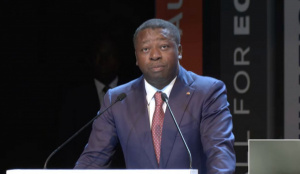
The Togolese capital began hosting the 9th Pan-African Congress on Monday, December 8, 2025. Togo and the African Union (AU) co-organized this strategic meeting. President of the Council Faure Gnassingbé launched the proceedings in the presence of numerous African and Afro-descendant delegations.
The event brings together nearly 1,000 participants until Friday, December 12, 2025. The attendee list includes ministers, diplomats, academics, and civil society representatives. Leaders of the diaspora and experts from various African regions also joined the sessions.
Discussions center on the theme: "Renewal of Pan-Africanism and Africa’s role in the reform of multilateral institutions." Togolese Foreign Minister Robert Dussey outlined the objectives of the meeting. The sessions address critical issues regarding African sovereignty. Delegates analyze the continent's evolving position in global governance structures.
[LIVE] Cérémonie d'Ouverture du 9e Congrès Panafricain https://t.co/WIYJ8rZfZ2
— Diplomatie Togolaise (@DiplomatieTogo) December 8, 2025
President of the Council Gnassingbé called for a collective awakening during his opening address. He highlighted the historical challenges facing the continent. "For centuries, our peoples were dispersed, silenced, orphans of their own voice in the concert of nations," Gnassingbé stated. He urged delegates to view the 9th Pan-African Congress as a forward-looking initiative. "It is not a commemoration. It is a reaffirmation. It is a reconquest. It is a turning point," he declared.
Lomé positions this continental meeting within a dynamic of reconstruction. The organizers seek a closer rapprochement between African populations and Afro-descendants. The initiative targets a renewed Pan-Africanism adapted to meet contemporary challenges.
Togo Showcases Volunteer Growth and 2026 Priorities on International Volunteer Day
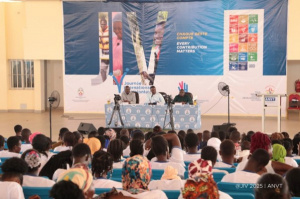
Since its creation in 2011, Togo’s National Volunteer Agency (ANVT) has engaged 80,694 volunteers across the country. More than 2,500 international volunteers have also taken part in community missions, according to figures presented on Friday in Lomé during International Volunteer Day events.
The ANVT had already reported in 2022 that it had passed 65,000 volunteers since the program was launched. That same year, nearly 8,000 volunteers joined in the first quarter alone, underscoring steady growth in participation.
The program includes several forms of volunteering, including skills-based volunteering, civic engagement, senior volunteer programs and reciprocal international volunteering. These initiatives support sectors such as education, health, agriculture, local development and data collection.
During this year’s International Volunteer Day, authorities said volunteer missions help improve access to basic social services, support the inclusion of young people and contribute to delivering public programs.
Discussions at the 2025 event also looked ahead to the 2026 International Year of Volunteers, which aims to reinforce the visibility, organization and long-term structure of volunteering efforts in Togo.
R.E.D
Togo Reviews 2025 Reforms With Private Sector Partners
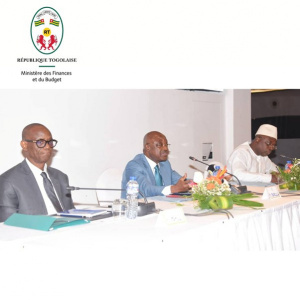
Togo’s State-Private Sector Consultation Committee (CCESP) reviewed its progress on Friday during its second technical dialogue meeting of the year, chaired by Finance Minister Georges Barcola. Economy and Strategic Foresight Minister Badanam Patoki also took part in the session.
Committee officials said the CCESP continues to play an important role in advancing economic reforms and supporting policies aimed at strengthening the private sector. They highlighted several measures adopted during the year.
These include the temporary suspension of customs duties on software imports, in effect since January 1, 2025, and a revision of the tax base for the levy applied to telecommunications and IT companies (TETTIC).
Additional measures were introduced to support key productive sectors. Value-added tax (VAT) was removed from inputs used in fishing, aquaculture and livestock activities, and reforms were launched to speed up VAT credit refunds in order to ease cash-flow pressure on businesses.
The committee also noted the introduction of a phased schedule for public procurement registration fees, intended to benefit small and medium-sized enterprises and micro-enterprises.
Finance Minister Barcola said these results reflect the constructive fiscal dialogue established between the state and the private sector. “This achievement must be preserved and strengthened,” he said.
Jonas Daou, president of the Association of Large Enterprises of Togo (AGET), emphasized the importance of collective action at a time when the country is entering a new political era. Referring to a recent address by President Faure Gnassingbé to Congress, he said cooperation between the public and private sectors is essential for promoting a development model that is both dynamic and socially inclusive.
During the meeting, participants also discussed measures to improve transparency, combat corruption and strengthen the business environment in order to stimulate investment and enhance competitiveness in Togo.
Created in 2017, the CCESP aims to foster dialogue and improve cooperation between public and private sector actors.
Esaïe Edoh
Gozem Brings In Belife Insurance as Strategic Investor in Series B Funding

Togo-based startup Gozem has taken a new step in its expansion with Belife Insurance acquiring an equity stake as part of its Series B funding round.
Belife, which operates in Togo, Côte d’Ivoire and Cameroon, is seeking to expand its presence in digital services and reach a broader customer base in Francophone Africa. Formed after the acquisition of Prudential’s regional operations, the insurer focuses on simple, accessible products. Its investment in Gozem is expected to speed up the rollout of insurance solutions for drivers, merchants and informal-sector workers, according to sources familiar with the matter. Gozem’s super-app, active in Togo, Benin, Gabon and Cameroon, is viewed as an effective distribution channel for this strategy.
Since its launch in 2018, Gozem has evolved from a transport platform into a broader ecosystem offering payments, delivery services, ticketing and vehicle financing. The arrival of an investor from the insurance sector is expected to add a new service layer to the platform, expanding access to offerings that remain limited across the region.
Gozem’s management described the investment as a “strategic partnership” rather than a purely financial commitment. The company says the new shareholder will help strengthen its ability to deliver essential services tailored to local needs as part of its broader scale-up plan.
Côte d’Ivoire, Benin, Togo Agree on Regional Gas Coordination Mechanism
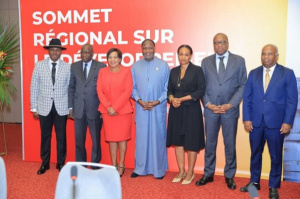
Côte d’Ivoire, Benin and Togo agreed on Sunday to establish a joint framework to strengthen regional access to natural gas, following a meeting of the three countries’ energy ministers in Abidjan. The initiative, backed by the World Bank Group, aims to address shared supply challenges as the three coastal states rely increasingly on gas-fired power generation.
Togo, which was represented at the meeting by Energy Minister Robert Koffi Eklo, faces rising pressure on its power system because production costs remain high when liquid fuels are used. Eklo said deeper cooperation with regional partners is essential and noted that the eventual creation of a regional gas institution similar to the West African Power Pool (WAPP) could be considered.
World Bank Vice President for West and Central Africa Ousmane Diagana said coordinated action among the three states would help consolidate demand and improve their negotiating position with international gas suppliers. The World Bank, including IFC and MIGA, indicated its readiness to support the project.
The final declaration identifies three priorities: pooling imports of liquefied natural gas (LNG), creating a technical working group within one month to design an operating model, and developing a bankable project structure with World Bank assistance. The objective is to reduce supply costs, improve energy security and support a transition toward lower-emission fuels.
Côte d’Ivoire Strengthens Its Position as a Potential Regional Gas Hub
The initiative comes as Côte d’Ivoire accelerates its gas development and builds on significant proven reserves. The Baleine field, which contains about 3.3 trillion cubic feet of gas and entered production in 2023, already supplies the country’s power plants. A new exploration phase is under way, with the Deepwater Skyros vessel drilling three additional wells in the Civette, Calao and Caracal areas.
A separate bidirectional pipeline project linking Côte d’Ivoire and Ghana is still under consideration. Both governments have reaffirmed their intention to move forward with a gas interconnection to serve power generation, fertilizer production and industry. Over time, this link could also reinforce supply to the West African Gas Pipeline, which serves Ghana, Togo and Benin.
A second regional gas hub could help reduce long-standing dependence on Nigerian gas and diversify supply sources for Togo and Benin.
Ayi Renaud Dossavi
Togo-China Trade Reaches $4bn After Jump of 56% in Nine Months
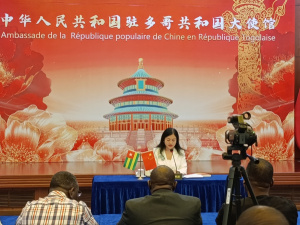
Trade between China and Togo posted “unprecedented” growth in 2025, rising 56.4% in the first nine months of the year, Chinese Ambassador to Togo Wang Min said at a year-end press conference on Friday.
Bilateral trade reached a record $4 billion from January to September, she said. “This progress reflects greater confidence between our two countries and the strengthening of our comprehensive strategic partnership,” she added.
Togolese exports to China grew even faster, rising fivefold year-on-year, an increase of nearly 400%. The ambassador described this as evidence of “Togo’s renewed place in regional and global value chains,” supported by China’s gradual opening to African products.
This trend follows China’s zero-tariff policy on all eligible African product categories, announced at the 2024 Beijing Summit of the Forum on China-Africa Cooperation (FOCAC). “Togo is among the countries benefiting fully from this measure,” Wang said.
One key development now concerns access for Togolese soybeans to the Chinese market, a process she said is in its final stages. Once health approvals and technical protocols are completed, Togo could become one of China’s new suppliers in a major global market.
Such a breakthrough would “create a major opportunity for Togolese producers,” the ambassador said, with potential to reshape the country’s agricultural export sector.
For Beijing, these results underscore Togo’s growing role in its West African engagement. “Our relations reached an important milestone in 2025,” Wang concluded, adding that the two countries still have “substantial untapped potential” for the years ahead.
Fiacre E. Kakpo
Togo, Chinese Investors Discuss Plans for Kara Industrial Park

Togo’s northern Kara region may soon host an industrial park backed by China, officials said, following talks in Lomé between Togolese authorities and a delegation of Chinese investors.
The planned park would house operations in agribusiness, renewable energy, agricultural machinery assembly and the production of electrical equipment. Chairing the meeting, the Secretary-General to the Presidency, Sandra Johnson, said the initiative would help drive the country’s industrialization, create skilled jobs and support local processing of domestic resources.
During the talks, the Chinese delegation reviewed the project’s framework. The initiative is expected to be finalized through a later partnership agreement between Lomé and Beijing, in line with both countries’ stated aim to deepen their cooperation, a direction reaffirmed at the 2024 Forum on China-Africa Cooperation (FOCAC).
The proposal adds to the many programs China already supports in Togo across social and economic sectors.
While Togo already hosts the Adétikopé Industrial Park (PIA), the planned facility in Kara is intended to act as a new driver of industrialization. The announcement comes days after Togo signed an agreement with the United Nations Industrial Development Organization (UNIDO) to implement a Country Partnership Program for 2026-2030, which focuses on strengthening agribusiness value chains and developing a future industrial park in Agbélouvé.
Esaïe Edoh