

Togo First
Urban Pigeons Found to Harbor Drug-Resistant Bacteria in Togo

A study in Togo has identified an unexpected contributor to antimicrobial resistance: urban pigeons.
Research led by Siliadin Akuele, a biological engineer and PhD candidate at the University of Lomé’s ESTIS Doctoral School, found that more than half of the pigeon-dropping samples collected in Lomé carried Escherichia coli (E. coli) resistant to extended-spectrum cephalosporins, a class of antibiotics widely used in human healthcare.
“Of the 96 samples taken from pigeon coops in the capital, 54 percent contained ESBL-producing E. coli,” Akuele told Togo First. E. coli is commonly found in the intestines of humans and animals.
The proportion of resistant strains identified in the study is far higher than what has been reported elsewhere. Comparable studies in France and Bangladesh recorded positivity rates between 1 and 5 percent, suggesting that pigeons may serve as a significant reservoir for multidrug-resistant bacteria in Lomé’s urban environment. According to Akuele, “These bacteria, selected through the intensive use of antibiotics in livestock, can be passed on to humans through simple contact with droppings.”
Seasonal Spike and Livestock’s Influence
The research also found a strong seasonal effect. During the dry season, 30 percent of samples tested positive for ESBL-producing E. coli; this figure rose to 78 percent during the rainy season. “Humidity likely helps these bacteria spread,” Akuele said, calling for broader studies in Togo and across West Africa. She urged closer examination of livestock practices that promote antibiotic resistance.
Akuele warned that the heavy, often uncontrolled use of antibiotics in livestock farming is fueling the problem. “This leads microbes to develop resistance we never imagined,” she said. She added that urban pigeon keeping, combined with antibiotic use to protect birds from infections, exposes communities to increasingly resistant bacterial strains, a growing public health concern.
A Wider AMR Crisis
The findings come against the backdrop of World Antimicrobial Awareness Week, held in Lomé from November 18 to 22, 2025.
“AMR is essentially a silent pandemic, because resistant bacteria travel easily across continents,” said Professor Mounerou Salou, Togo’s AMR focal point.
WHO’s 2025 GLASS report estimated that one in six bacterial infections worldwide in 2023 was resistant to first-line antibiotics.
National data also reflects the severity of the issue. In 2023, 6.3 percent of newly diagnosed HIV patients in Togo already carried resistant mutations, while 17.8 percent showed mutations associated with potential resistance to integrase inhibitors, a key class of antiretrovirals. “This makes it urgent to invest in laboratory capacity, microbial surveillance and better prescription practices,” Salou said.
‘One Health’ Approach Seen as Essential
Akuele stressed the importance of research in tackling AMR. “To preserve the effectiveness of our antibiotics, we need to understand every link in the chain –from animals and humans to the environment.”
Experts reiterated that a One Health approach, which considers human, animal and environmental health together, is essential to prevent the emergence and spread of resistant bacteria.
They also highlighted the economic impact: the misuse of antibiotics in animal health encourages the development of resistant bacteria, which can lead to losses for livestock farmers and weaken food supply chains.
Togo has a National Action Plan against AMR, implemented through a cross-sector working group, according to WHO’s 2022 review. But more progress is needed, particularly in strengthening national surveillance, improving coordination between health and animal sectors, and collecting reliable data on antibiotic consumption.
Following the awareness week, experts called for a coordinated response to limit AMR’s future impact on healthcare costs, productivity and household health. The challenge is urgent: Africa has the highest mortality rate from antibiotic resistance, at an estimated 23.7 deaths per 100,000 people, according to data from Gavi.
Akuele’s work on urban pigeons – chosen for their mobility and ability to travel long distances– highlights the need for action on all fronts.
Ayi Renaud Dossavi
CHR Lomé-Commune Commissions New Medical Scanner

Togo’s Lomé-Commune Regional Hospital Centre (CHR) has put a new scanner into service to expand its medical imaging capacity, the hospital administration said in a statement on Thursday.
The purchase is part of a government program to modernize equipment at CHR Lomé-Commune and the Kara University Hospital Centre (CHU Kara), both of which are slated to receive new scanners this year. The acquisition was funded under the Covid-19 Project (C19RM), supported by the Global Fund with €112.8 million for the 2024–2026 period.
With the installation, CHR Lomé-Commune becomes the second public hospital in Togo to operate such equipment, after the Sylvanus-Olympio University Hospital (CHU S.O.) in Lomé, which received an advanced scanner in July 2023. The new device offers up to 128-slice imaging, enabling rapid detection of abnormalities and supporting examinations in neurology, thoracic care, abdominal and pelvic imaging, and cardiology.
The scanner is expected to ease pressure on CHU S.O., which had so far handled most complex imaging needs. CHU Kara is set to become the third public facility in the country to be equipped with a scanner.
Esaïe Edoh
ASKY Expands Fleet With New Boeing 737 MAX

Pan-African airline ASKY, based in Lomé, has reinforced its fleet with the arrival of a new Boeing 737 MAX. The aircraft, the 15th in the carrier's fleet, was received on the tarmac of Lomé–Tokoin International Airport on Thursday.
This Boeing 737 MAX is the second brand-new aircraft delivered to the pan-African carrier in 2025. It is expected to support the ambitions of both ASKY Airlines and Lomé, which aims to strengthen its position as an air hub in West Africa.
"This aircraft marks a strategic step for ASKY," said Esayas Woldemariam Hailu, the Chief Executive Officer of ASKY. "Thanks to the commitment of our teams and the unwavering support of the authorities, we are continuing our growth with determination. This investment is fully in line with the government's Vision 2030 to make Lomé a key hub for mobility in West Africa."
Yawa Kouigan, Togo's Minister of Communication, said that "the arrival of this aircraft demonstrates the seriousness of the airline ASKY and the support the government provides for its growth to make Lomé a true regional hub. The government will continue to support this development, as demonstrated by the aircraft parking extension completed in June and the ongoing passenger terminal expansion work."
The reception of this new aircraft comes as the airline began construction of a B737 MAX flight simulator in early November to optimize internal crew training.
The ASKY company now operates a fleet of fifteen aircraft: nine Boeing 737-800s and six Boeing 737 MAX 8s, serving thirty cities in twenty-seven countries on the continent.
Esaïe Edoh
Togo Approves $6.65M Climate Resilience Project for Central Region

Togo has validated a $6.65 million environmental project for its Central region under the Global Environment Facility's (GEF) eighth funding cycle, the Togolese press agency ATOP reported.
The project document was approved during a workshop on Tuesday and Wednesday in Sokodé, coordinated by the Ministry of Environment with technical and financial support from the United Nations Development Programme (UNDP).
In detail, the five-year project aims to strengthen the resilience of natural ecosystems, agroecosystems, and rural communities to climate change effects. It plans to restore 7,500 hectares of degraded land, promote regenerative agriculture practices on 35,000 hectares, and improve integrated land management across 270,000 hectares in the region's five prefectures.
Activities will also focus on strengthening governance frameworks, establishing planning platforms, conducting ecological restoration, and promoting climate-resilient agricultural value chains. The initiative will emphasize women's empowerment and the dissemination of sustainable practices through private sector involvement.
Lt-Col. Afoda Chamsoudine, a representative of the Directorate of Forest Resources, said the project will help address persistent pressures on soils, biodiversity, and ecosystem services. The UNDP representative, Abizou Tchinguilou, reaffirmed the U.N. agency's commitment to land restoration and climate resilience.
The consolidated project document will be submitted to the GEF board for final approval in December.
Ayi Renaud Dossavi
Togo Road Deaths Fell Between 2022 and 2024, Data Show

Road deaths in Togo have declined from levels seen in 2021 and 2022, according to data presented on Wednesday at the 14th African Road Safety Day.
Between 2022 and 2024, the country recorded 1,826 fatalities, an annual average of about 608, down from the roughly 700 deaths seen in earlier years.
The 2022-2024 period also saw nearly 21,000 accidents and 28,501 injuries. Officials say part of the drop in deaths stems from tougher enforcement, including mandatory helmet use for motorcyclists, who account for most crashes.
But major challenges remain. Speeding, fatigue, alcohol use, improper lane changes and reckless driving continue to be the main causes of accidents. Officials also stressed the need for safer road behavior.
Awareness campaigns, tighter enforcement and the rollout of new technology form part of the current strategy.
“The national ambition is to build an ecosystem where people are backed by technology,” said Michel Tindano, secretary general of the transport ministry. Driving simulators, speed radars and automated ticketing systems will be rolled out more broadly, said Dermane Tadjudini, director of road and rail transport.
R.E.D
Togo: Savanes Authorities Move to Curb Cement Prices After Reports of Overcharging

Authorities in Togo’s Savanes region are moving to address repeated year-end cement price hikes. Governor Atcha-Dédji Affoh met distributors on Wednesday and restated that the official price remains 81,000 CFA francs per ton, after reports of sales at 100,000 francs.
The meeting came during the November-April period, which is often marked by supply strains and speculative practices. Market operators cited logistical bottlenecks and higher transport costs.
Affoh said the official price must be enforced and warned that any overcharging will be penalized. Officials said checks will be stepped up across the affected prefectures.
Tône prefect Ouro Gouroungou Horoumim said shortages do not justify charging above the approved rate. Further discussions will aim to pinpoint underlying factors and prevent new price spikes.
The regional trade directorate has already recorded 55 consumer complaints, including from construction firms. Authorities urged buyers to always request receipts to support price-verification efforts.
R.E.D
Togo Business Chamber, IMF Discuss Better Targeting of Private-Sector Financing

The Togo Chamber of Commerce and Industry (CCI-Togo) is calling for International Monetary Fund financing to be more effectively directed toward the private sector. The issue was discussed on Wednesday in Lomé during a meeting between CCI-Togo president José Syménouh and Racheeda Boukezia, the IMF’s resident representative in Togo.
The two delegations reviewed the chamber’s initiatives that support government priorities in economic development, job creation and business growth. The IMF office is assessing these programs to determine how to better support the national economy.
Syménouh said stronger support for the private sector would play a key role in the country’s economic stability and development. Both parties agreed to intensify dialogue in order to strengthen this support and help CCI-Togo carry out its projects over the coming years.
The IMF already provides broad support to Togo. Since March 2024, the country has been benefiting from a 42-month program approved under the Extended Credit Facility, totaling 293.6 million Special Drawing Rights, or about $400 million. The program aims to advance structural reforms and sound macroeconomic policies to maintain fiscal stability, promote inclusive growth and reinforce the resilience of Togo’s economy.
Esaïe Edoh
Work On Togo’s Grid Expansion Hits 34% Completion In Kara
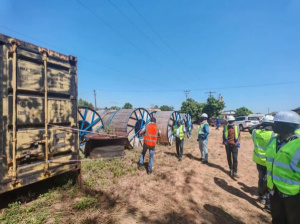
Work to expand electricity grids in Togo’s urban centers is 34% complete in the Kara region as of Nov. 24. The update followed a field visit by Benjamin Neumann, country director for the French Development Agency (AFD), one of the project’s financiers.
The visit to the Kozah, Kéran and Assoli prefectures gave AFD teams, accompanied by officials from the Electric Power Company of Togo (CEET), an opportunity to assess progress.
Contractors have been urged to speed up the work so that additional initiatives can move forward to meet growing demand. “On the ground, I observed that major needs remain, and the challenge is to address them as quickly as possible to support the government’s vision of universal electrification,” Neumann said.
The project, known as PERECUT, is scheduled for completion by mid-2026. It covers 53 localities across the country, including nine in the Kara region—Bafilo, Bassar, Guérin-Kouka, Kabou, Kandé, Kara, Kétao, Niamtougou and Pagouda—and includes more than 6,500 new connections.
It also involves the construction of 1,681 km of low-voltage lines, 200 km of medium-voltage lines and 371 transformer stations, at a total cost of 46 billion CFA francs.
Funded by AFD, KfW and the European Union, PERECUT aims to expand electricity access in inland urban centers and support Togo’s goal of universal electrification by 2030.
Esaïe Edoh
Togo Reviews 42 New Standards For Key Agri-Food Sectors
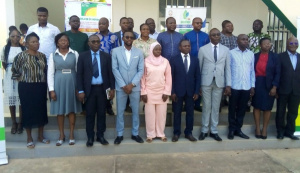
Togo is preparing to adopt 42 priority standards for its agri-food sector. A five-day workshop began on Tuesday in Lomé to move the process forward.
The workshop brings together experts from the Togolese Standardization Agency (ATN), the High Authority for Quality and the Environment, specialized partners, NGOs and research institutes.
The standards cover four key areas: rice, soy, poultry and related products, and horticulture. Technical committees will review and finalize the 42 standards, which have already undergone public consultation and external assessment.
Essot’na Héyou Bodjona, director general of the ATN, said the aim is to incorporate the feedback received and ensure the standards are grounded in science. “Three technical committees are involved: one on cereals and legumes, another on meat products, and a third dedicated to horticulture,” he said.
The standards are designed to structure value chains and strengthen the competitiveness of local products.
International standardization expert Ndeye Maguette Diop said they help secure market access. “They define quality requirements for rice, soy, meat and horticultural products. They also protect consumers, since producers remain responsible for ensuring that products placed on the market comply with the standards,” she said.
Once validated, the standards will be integrated into the national system and serve as benchmarks for industry stakeholders. They are intended to support quality improvements across agricultural value chains and help regulate the domestic market.
Ayi Renaud Dossavi
Togo Launches Regional Consultations To Review Draft 2026-2030 Transhumance Management Plan

Togo is moving forward with the revision of its national transhumance strategy. Two workshops were held this week in Dapaong and Tsévié to support the process, state news agency ATOP reported.
The meetings brought together local stakeholders, administrative authorities, technical departments and representatives of the U.N.’s Food and Agriculture Organization (FAO) to review the draft 2026-2030 Transhumance Management Plan (PGT).
This preliminary review phase is part of the FAO’s Technical Cooperation Program, which supports the country in sustainably managing pastoralism and land security. The work focuses on updating the PGT adopted in 2014 to reflect rising farmer-herder tensions, climate pressures and new socio-economic constraints.
In Dapaong, participants examined local conditions and proposed amendments to strengthen the document. Dr. Lamboni Matéyendou, representing the Ministry of Agriculture, outlined ongoing reforms, including the development of pastoral areas, the demarcation of transhumance corridors and the creation of land-use zones for cattle production.
“These efforts aim to strengthen coexistence between farmers and herders and reduce recurring tensions,” he said.
In Tsévié, FAO animal production expert Kohoe Yawovi stressed the need to update the framework. “The plan must reflect current institutional and environmental challenges. The objective is to achieve peaceful and sustainable transhumance,” he said.
The FAO is also supporting the drafting of a national land declaration policy and a project to develop a cattle-production zone in Namiélé.
Consultations will continue in Kara, Sokodé, Atakpamé and Kpalimé to capture conditions across the country. The final document will guide the organization of pastoral movements, help prevent conflicts and strengthen the security of rural communities.
R.E.D