
Togo First
Togo's 'Women And Finance' Program Launches Fourth Cohort For Women Entrepreneurs
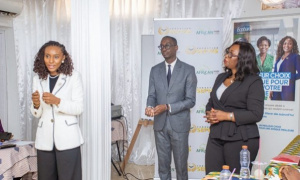
The "Women And Finance" program launched its fourth cohort of 31 women entrepreneurs in Lomé recently.
The initiative, run by the SEPHIS Foundation in partnership with African Guarantee Fund (AGF) and Ecobank Togo, aims to support a total of 125 women business leaders through capacity building and preparation for access to credit.
Since its introduction in Togo in May 2025, the program has combined technical training, financial structuring and networking with banking institutions. The goal is to improve the quality of business projects and facilitate their financing. This effort addresses a context where access to funding remains a major constraint for female-led small and medium enterprises (SMEs).
Sefora Kodjo, President of the Board of the SEPHIS Foundation, reminded participants of the importance of maintaining high standards in their activities. "Your credibility relies on the consistent quality of your product or service," she said, emphasizing the critical role of entrepreneurial discipline.
Ecobank Togo, the program's financial partner, aims to strengthen credit access for women-led SMEs. "We want to support structures that actively contribute to the national economy," said Laurinda Amevor, head of the Ellever program.
African Guarantee Fund completes the program by providing guarantee solutions to reduce the risks associated with business financing. Since 2016, its partnership with SEPHIS and Ecobank has mobilized over one billion CFA francs in credits in other countries.
A fifth and final cohort for the program in Togo is planned for January 2026. Applications are open until December 20, 2025.
Ayi Renaud Dossavi
Togo Elected to UNESCO World Heritage Committee for 2025-2029
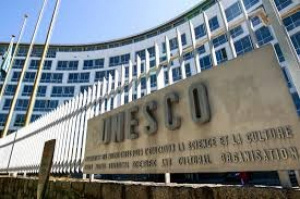
Togo was elected on Monday to join UNESCO’s World Heritage Committee, where it will serve for the 2025-2029 term.
As a member of the committee, the West African nation will take part in annual meetings on the use of the World Heritage Fund and on the allocation of financial assistance requested by member states. It will also help decide which new sites are added to the World Heritage List and, when necessary, which sites are removed.
“Togo is committed to being Africa’s voice and to working for better geographical and thematic representation on the World Heritage List, as well as promoting innovative approaches to site conservation and management,” Foreign Minister Robert Dussey said after the vote.
The election comes as Togo steps up efforts to develop its tourism and cultural sectors. Several initiatives are under way to protect historical sites, including Koutammakou, which is on UNESCO’s World Heritage List.
Togo Sets Up National Framework for Developing Green Climate Fund Projects
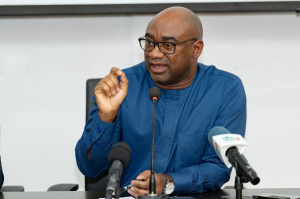
Togo has established a national framework for developing and submitting projects to the Green Climate Fund (GCF), the Ministry of Environment, Forest Resources, Coastal Protection and Climate Change announced following a meeting with national stakeholders in Lome last week.
The framework brings together actors from several entities, including the Presidency of the Council, the High Council for the Sea, sectoral ministries, civil society organizations and public university research structures. It aims to structure, harmonize and secure the entire project development process for GCF submissions.
It will implement a standardized procedure for analyzing, selecting and prioritizing initiatives, and for evaluating results in climate change adaptation and greenhouse gas emission reduction.
The mechanism will also support project developers in preparing concept notes and detailed proposals that meet the requirements, norms and standards of the GCF's climate finance mechanisms.
Minister Dodzi Kokoroko said the approach will strengthen coordination of public-private partnership (PPP) initiatives for more effective implementation on the ground. He said better structuring of PPPs will also help optimize Togo's participation in international climate conferences, particularly the COPs.
Esaïe Edoh
Togo Hosts First China-Africa Governance Forum Focusing on Cooperation, Research
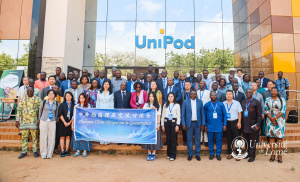
The University of Lomé hosted the first China-Africa Dialogue on Governance on Monday and Tuesday, in partnership with the Chinese Embassy. The meeting brought together around 60 participants, including a 15-member delegation of experts from several Chinese institutions, to discuss governance, development, and academic cooperation.
Talks centered on two main themes. The first was cooperation opportunities linked to the fourth session of the 20th Central Committee of the Communist Party of China, particularly in infrastructure, science, and technology. The second focused on the Global Governance Initiative and how it aligns with the strategic partnership between China and Togo. Participants noted areas of alignment between Beijing and Lomé on security, institutional stability, and multilateral cooperation.
Opening the event, Chinese Ambassador Wang Min highlighted the two countries’ demographic weight and the priorities of China’s 15th Five-Year Plan, centered on innovation and openness.
The Togolese side emphasized the value of a dialogue that connects academic research, diplomacy, and public policy. According to Professor Gado Tchangbedji, the meeting should help define new research avenues on Sino-Togolese relations.
Sino-Togolese cooperation is underpinned by academic ties dating back to 2009, with more than 5,000 learners trained by the Confucius Institute at the University of Lomé. In 2024, the university created a dedicated unit to coordinate its partnerships with Chinese institutions. This effort is part of a diplomatic relationship established in 1972 and supported by multiple projects in education, research, and infrastructure. The China-Africa Dialogue in Lomé builds on this foundation, with the aim of creating new opportunities for scientific cooperation.
R.E.D.
Togo Brings 15 African States Together to Review Climate Finance in Aného

- Fifteen West and Central African countries meet in Aného to review projects funded by the Green Climate Fund and the Global Environment Facility.
- FAO warns that no country in the region has fully used its allocated climate-finance resources.
- The workshop aims to validate a regional agro-pastoral resilience project and strengthen access to international climate funds.
Togo gathers fifteen West and Central African countries in the city of Aného, located 40 km east of Lomé, for a six-day technical review of their climate-finance projects. Delegations opened discussions on Tuesday, November 25, 2025, to assess initiatives funded by vertical climate funds, mainly the Green Climate Fund (GCF) and the Global Environment Facility (GEF).
The FAO organized the workshop to help countries improve access to these funding mechanisms and to strengthen the efficiency of climate investments already underway.
National representatives review their performance, identify bottlenecks and draft proposals to optimize climate-finance management. According to Dr. Zohende Henri-Noël Bouda, Forestry Officer for West Africa, the region faces a persistent paradox. “No country has fully utilised the allocations set aside for it. The resources exist, but the challenge is knowing how to access them. Our role is to provide technical support to countries so that they can mobilise these funds and structure their programmes.”
The meeting proceeds under the supervision of Togo’s Environment Ministry. Minister Prof. Dodzi Kokoroko stresses the need to align international funding with domestic financial commitments. "Vertical funds will only have an impact if horizontal funds, which reflect the will of our States, are in place. Climate action must be based on this articulation."
Participants focus heavily on agro-pastoral resilience, a central issue in a region where climate change weakens livestock systems and rural production. Countries plan to validate a regional agro-pastoral resilience project at the end of the workshop with the goal of improving adaptation for local communities, herders and smallholder farmers.
The FAO has led several vertical-fund programmes in Togo since 2020. These projects include sustainable mangrove management in the Maritime region, community-forest restoration, fragile-ecosystem protection and income-generating activities that strengthen climate adaptation for rural households.
Diwa Oyetunde, Programme Officer at FAO Togo, outlines the results achieved so far. "We have reached nearly 38,000 students through awareness-raising activities. We have supported more than 300 women in snail farming, assisted beekeeping groups and supported adaptation activities on the island of Aného. The aim is to integrate environmental protection into agricultural and community practices. "
Access to vertical funds remains a major challenge for African countries due to technical requirements, complex procedures and limited national capacities. The Aného workshop seeks to close this gap by strengthening expertise and improving the structuring of project proposals.
The FAO considers this effort crucial because climate-finance access determines the region’s ability to address the escalating effects of climate change on agriculture, forestry and pastoral resources. The UN agency notes that resources exist but warns that effective mobilisation depends on stronger institutional coordination and consistent planning.
The final report expected at the end of the workshop will guide future funding requests and support the implementation of national adaptation strategies.
This article was initially published in French by Ayi Renaud Dossavi
Adapted in English by Ange Jason Quenum
Togo's New Senate Forms Committees, Prepares for First Budget Review
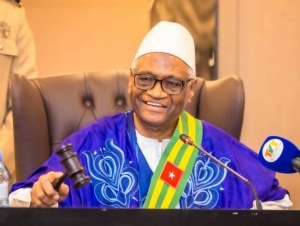
Togo’s newly established Senate has formed its standing committees, completing the final step before it begins examining the 2026 budget, the first since its creation.
The upper chamber held its second plenary meeting on Tuesday to approve its seven standing committees. This marks the last phase of internal organization before reviewing the 2026 finance bill, which is currently under examination in the National Assembly.
Meeting at the Palace of Congress, senators unanimously approved the committees’ composition in line with articles 32 and 35 of their internal rules.
Senate President Barry Moussa Barqué said the committees are “the core of parliamentary activity” and will ensure the quality of legislative work. Committee leadership has also been appointed, enabling the chamber to start reviewing bills sent to it.
The development comes as the National Assembly is already studying the 2026 budget, projected at 2,740.5 billion CFA francs, an increase of 14.4 percent from the previous fiscal year. Lawmakers have begun a detailed review of spending lines and priorities with the ministers of Budget, Finance and Economy in attendance.
Once adopted by the lower house, the bill will be transmitted to the Senate for a second reading, under the equal bicameral system set out in the Constitution.
The Senate will be responsible for ensuring that the budget’s priorities align with the needs of the population and with economic and security goals.
R.E.D.
CBI Togo Becomes Shareholder in West African Mortgage Fund CRRH-UEMOA

Coris Bank International (CBI) Togo has become a shareholder in the West African Economic and Monetary Union’s Regional Mortgage Refinancing Fund (CRRH-UEMOA).
The institution has confirmed the addition of three new Coris Group subsidiaries, CBI Togo, Benin, and Senegal, to its shareholder base. This brings the number of Coris entities participating in the fund to five, alongside its subsidiaries in Burkina Faso and Côte d’Ivoire.
With this stake, Coris Group now holds 3.5 percent of CRRH-UEMOA’s capital, making it the sixth banking group in the Union to join the institution.
CRRH-UEMOA now counts 64 commercial banks across the eight member states among its shareholders, in addition to several institutional partners including BOAD, IFC, EBID and Shelter Afrique.
According to the institution, CBI Togo’s entry is expected to strengthen its refinancing capacity in the mortgage lending market. The partnership between CRRH-UEMOA and Coris Group has already helped provide housing loans in several countries in the zone since 2016.
Created in 2010, CRRH-UEMOA has raised more than 475 billion CFA francs, financing nearly 100,000 households. For CBI Togo, the new stake provides access to refinancing tools that support financial inclusion and expand the availability of mortgage lending in Togo.
Ayi Renaud Dossavi
Faure Gnassingbé: “Africa’s Stability Is a Precondition for Global Stability”
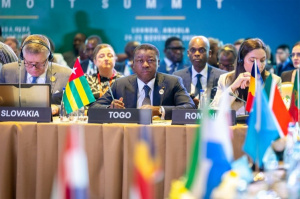
Togo’s council president, Faure Gnassingbé, called for a stronger Africa-Europe partnership to tackle shared security and economic challenges at the 7th African Union-European Union Summit on Monday and Tuesday.
In his address, he outlined three priorities: peace as a global public good, reforming multilateralism, and building a shared framework for stability.
Gnassingbé said African states bear “the primary responsibility for peace and security on the continent,” adding that “Africa’s stability is a precondition for global stability.”
“In a world marked by distrust and fragmentation, peace has once again become a global issue. It is no longer a given but a daily struggle,” he said.
He also stressed the need to reform the international order. “Multilateralism must not be abandoned, but it must be renewed,” he said, calling for a “fairer and more representative” system to ensure cooperation does not give way to power politics.
Operationally, he urged the creation of a joint EU-AU peace framework designed to address hybrid threats such as terrorism, cybercrime, and disinformation. “Africa and Europe must build a comprehensive and common peace framework together,” he said, adding that African youth “will be at the heart of this architecture, because lasting peace cannot be proclaimed; it must be learned and passed on.”
Gnassingbé concluded by highlighting shared interests between the two continents: “A sovereign and stable Africa reduces European vulnerabilities. A pragmatic and committed Europe strengthens African security and sovereignty.”
The 7th African Union-European Union Summit in Luanda laid the foundations for a renewed partnership centered on implementing the EU’s 150-billion-euro Global Gateway investment plan for Africa.
Key decisions aim to rebalance economic relations by promoting local processing of raw materials and strategic minerals, strengthening security cooperation and migration management, and supporting sustainable development in response to climate pressures, establishing a joint roadmap for the two continents.
R.E.D
West Africa Rice Program Launches in Togo's Sotouboua Cluster
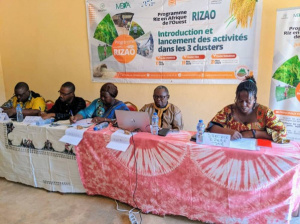
The Rice Program for West Africa (RIZAO) has been launched in Togo's Sotouboua cluster, led by INADES-Formation and Mennonite Economic Development Associates (MEDA).
The program is part of a regional consortium that includes AfricaRice, MEDA, and 35° Nord, with funding from the Mastercard Foundation.
Launched in 2024, the program aims to strengthen the capacities of rice producers, particularly young women, young men, and people with disabilities working in the sector. A launch workshop held on Friday presented the project's objectives, technical support modalities, and planned actions to improve productivity and market orientation for farms.
The initiative will structure the Sotouboua cluster around a common framework to coordinate the efforts of local stakeholders. Organizers emphasized the need to share field data, adapt interventions, and strengthen local governance to ensure the continuity of activities.
As part of the launch, the Sotouboua municipality expressed its support for the initiative, stating that it supports agricultural entrepreneurship in the area. Involved stakeholders expect the program to improve yields, increase incomes, and better organize the rice value chain.
Three clusters in Togo are part of the RIZAO project: the Tône rice mill in the Savanes region, the Sotouboua mill in the Centrale region, and the Apéssito mill in the Maritime region.
The broader RIZAO program is a sub-regional initiative also being implemented in Benin, Côte d’Ivoire, and Senegal. It is funded by the Mastercard Foundation with $50 million as part of its Young Africa Works strategy.
Ayi Renaud Dossavi
University of Lomé to Establish Training Center for Prestigious Agrégation Exams
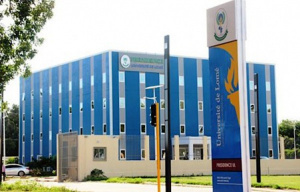
The University of Lome will open a new center to train candidates for agrégation competitive examinations its president said on Monday.
Kossivi Hounake made the announcement during a ceremony honoring 11 Togolese candidates admitted to the 22nd agrégation competition of the African and Malagasy Council for Higher Education (CAMES) in legal, political, economic and management sciences.
University officials said the new center will focus on preparing candidates for the agrégation exam, working with national and international partners. It will offer a structured program with tailored study materials and academic supervision from experienced faculty.
Hounake said the initiative also aims to improve teaching quality and draw on African expertise to make Lome a leading center for training the continent’s academic elite.
“Lome must become an African capital of knowledge,” he said. “Lome is not just a place of teaching; it is a hub of talent and a crossroads of African excellence.”
The center is expected to reduce Togo’s reliance on external training programs, which are often based in other countries in the region or in Europe. By offering high-quality preparation locally, it aims to improve success rates in the CAMES competition and raise the University of Lome’s international profile.
Esaïe Edoh