
Togo First
Togo Launches National Challenge to Bridge Technology and Healthcare
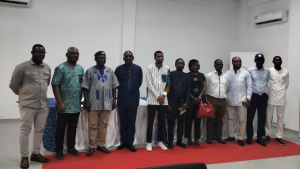
A national technology competition called the Tech x Health Challenge was launched on Friday, November 14, 2025, at the Innovation and Technology Hub (UniPod) of the University of Lomé. The initiative is jointly organized by the Ministry of Public Service Efficiency and Digital Transformation and the Ministry of Health, with support from the ProDigiT project implemented by GIZ Togo. Its guiding idea is that digital tools can improve healthcare and save lives.
Speaking at the launch, Kwamivi Hodouto, representing the Minister of Digital Transformation, reaffirmed the government’s commitment to digital technology as a central pillar of Togo’s development under the Togo Digital 2025 strategy. He said the health sector is a priority within this wider effort. “With this competition, we are taking a new step by putting Artificial Intelligence and Data Science at the service of healthcare,” he said.
Nassirou Ouro-Nile, speaking for the Ministry of Health, said the challenge aligns with the government’s push to modernize the health system through digital innovation.
Competition Targets Key Weaknesses in the Health System
According to Farook Sanni, Data Scientist at Togo Data Lab, the competition aims to mobilize participants to design digital solutions addressing several major weaknesses in the system. These include the lack of secure and interoperable medical records, inadequate patient follow-up, errors in medication management, limited access to affordable and high-quality care, overcrowding in health facilities, unreliable data flows and inconsistent monitoring of patients. Sanni said the winning project will be incubated within the Ministry of Health and developed toward implementation.
The competition is open to all Togo residents aged 18 or older who want to apply digital innovation to healthcare. This includes students in computer science, health sciences, data science, design and social innovation; doctors, nurses, pharmacists and other health workers; developers, data scientists, entrepreneurs and researchers working on AI for health; and individuals leading social-impact projects.
Organizers say the goal is to spur innovation in the health sector, encourage collaboration among professionals and researchers, expand the use of data and AI in socially impactful solutions and identify viable projects that can be supported through deployment.
Professional Backing and Need for Regulatory Compliance
Dr. Anthony Békéti, President of the National Order of Physicians of Togo, welcomed the initiative. “This challenge comes at the right time. We are at a turning point where digital tools are becoming essential,” he said. He added that new digital solutions could improve patient care, enhance diagnostic accuracy and reduce the daily workload of health workers.
He also described the challenge as an opportunity for health professionals to work closely with digital experts to build a more responsive, secure and patient-centred system. But he stressed that all projects must comply fully with existing medical laws and regulations.
Registration runs until December 14, 2025. Four awards will be presented: the Excellence in Tech & Health Award, the Applied Research Award, the Best Pitch Award and the Audience Award. Details and registration information are available on the official platform.
S.A
Togo Reviews FAO-Supported Rural Projects on Restoration and Agroecology
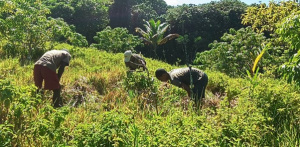
Representatives of rural organizations in Togo met in Lomé on November 13-14 for a national review workshop on the Forest and Farm Facility (FFF), an FAO-backed programme that supports landscape restoration and agroecology initiatives.
The FFF, launched in Togo in 2024, provides direct funding to 20 farmers’ groups for projects that promote sustainable management of natural resources. The projects cover all five regions of the country and support Togo’s commitments on forest landscape restoration and climate-resilient agriculture.
Colonel Aoufoh Dimizou, Secretary General of the Ministry of Forest Resources, said the FFF is “not a standalone project but a long-term mechanism that links grassroots farming organizations to national development priorities.” FAO officials said the review was important for assessing progress in the field and strengthening how rural groups are managed.
One of the initiatives highlighted during the workshop was the SCOOPS Pro Mangues cooperative in the Vo region, which has planted 20 hectares of mango trees and set up a facility to produce dried mango and liqueurs. Programme managers said the FFF is helping to create jobs, diversify farmers’ incomes, and improve food security.
R.E.D
Togo, UNDP, WHO Take Stock of Health Sector Progress
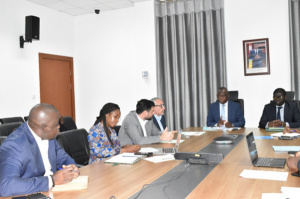
Togo is in talks with international partners to step up support for its health sector, the health ministry said. The effort follows a series of meetings in Lomé this week with the UN Development Programme (UNDP), the World Health Organization (WHO), and the ELLIPSE project team.
The discussions reviewed ongoing cooperation and ways to speed up the delivery of projects, especially those involving health infrastructure.
Talks with UNDP, led by Resident Representative Binta Sanneh, covered several projects already underway, including the construction of a Digital Health Center in Lomé, the creation of a hemodialysis unit at the Kara University Hospital (CHU Kara), and the deployment of mobile clinics to expand access to care in rural areas. Minister Jean-Marie Tessi and the UN agency assessed progress on each initiative and looked at options to accelerate completion.
In a separate meeting, WHO officials discussed support for Togo’s push toward Universal Health Coverage, efforts to combat infectious diseases, and programmes aimed at improving the quality of care and strengthening community health. The agency reiterated its commitment to helping the country advance health reforms.
The minister also met the team behind the ELLIPSE project, which focuses on upgrading hospital infrastructure at the Lomé Campus University Hospital and CHU Kara through construction, rehabilitation, and the installation of new equipment. Both sides agreed to tighten project oversight and move faster to meet deadlines.
The meetings follow an earlier exchange last week with the German Embassy in Togo. The health ministry said it aims to mobilize greater international backing for national health priorities as the government seeks to expand access to quality care.
Esaïe Edoh
Togo Sets Draft 2026 Budget at 2.74 Trillion CFA Francs, Up 14% From 2025
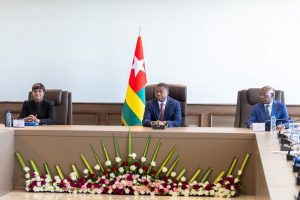
Togo has approved a draft 2026 budget of 2,740.5 billion CFA francs. The figure is up 14.4 percent from the previous year’s, which stood at 2,397 billion CFA francs.
The draft finance bill was approved Friday, November 14, 2025, during the first Council of Ministers under the country's Fifth Republic government.
According to the post-meeting communiqué, the projected budget will prioritize social sectors while incorporating an effort to consolidate public finances. Nearly 48% of the budget is earmarked for social sectors, specifically health, education, and social protection. A significant portion will also be allocated to economic transformation and productive sectors such as agriculture, industry, and digital technology, to stimulate private investment and create sustainable jobs for youth and women.
The budget further includes reinforced allocations for security and defense, targeting national protection and guaranteed stability.
Officials stated the 2026 budget was prepared using a prudent approach and relies heavily on the state's own internal resources. Regarding economic forecasts, the government projects a GDP growth rate of 6.5% in 2026, up from the 6.2% expected for the current year.
The draft finance bill will now be transmitted to the National Assembly for review before being submitted to the Senate, in line with the constitutional provisions of the Fifth Republic.
Esaïe Edoh
Togo Prepares First National Governance Report

-
Togo has launched the drafting of its first National Governance Report under the African Peer Review Mechanism (APRM).
-
The process aims to evaluate political, economic and social governance and to align national policies with AU Agenda 2063 and the UN SDGs.
-
APRM officials say Togolese institutions will lead the entire evaluation to strengthen national analytical and reporting capacities.
Togo has started preparing its first National Governance Report (NGR) under the African Peer Review Mechanism (APRM). Authorities opened a training workshop on 13 November 2025 in Lomé to define the methodological framework and strengthen the drafting teams.
The initiative, supported by the APRM Continental Secretariat, aims to help Togolese institutions take ownership of the evaluation process and analyse national performance in political, economic and social governance.
Clémentine Ninaoumoutou, the APRM continental representative, says: “The process will be entirely led by Togolese actors, with the objective of assessing how institutions achieve their goals and serve citizens.”
Victor Womitso, president of the APRM-Togo commission, welcomed the launch and said it will “strengthen national capacities in governance analysis and reporting.”
The APRM, an African Union body created in 2003, promotes good governance and sustainable development through a voluntary self-assessment system.
The Togolese report will be the first of its kind and will focus on the theme: “Citizens’ access to justice and communal services.” Authorities plan to use the document to measure governance progress and align national policy with the AU’s Agenda 2063 and the UN Sustainable Development Goals.
This article was initially published in French by R.E.D
Adapted in English by Ange Jason Quenum
Togo, UK Advance Economic Ties After Francophone Africa Forum
-
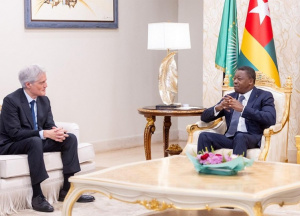
Faure Gnassingbé met UK Trade Envoy Ben Coleman to advance economic and commercial ties.
-
The UK aims to expand investment and financing projects tailored to regional priorities.
-
The forum gathered 1,500 participants from ten African countries and UK companies, according to Coleman.
Togo and the United Kingdom strengthened their economic partnership on the sidelines of the 4th UK–Francophone West and Central Africa Forum. President of the Council Faure Gnassingbé held talks on Thursday, 13 November 2025, with Ben Coleman, the UK Trade Envoy for Francophone West Africa. The meeting extended discussions launched during the forum and focused on ways to deepen economic and commercial cooperation.
Ben Coleman said the objective of the meeting was to “deepen relations between the United Kingdom and Francophone West Africa on the commercial level.” He praised the involvement of the Togolese president and the quality of the conference, which gathered 1,500 participants from ten African countries and British companies, according to him.
Coleman emphasised the UK’s intention to broaden its partnerships in the region through investment and financing projects aligned with local priorities. The talks also addressed the implementation of the forum’s conclusions, particularly regarding access to capital, support for SMEs and measures to ease trade flows.
The Togolese side seeks to position the country as an anchor point for the UK in its cooperation with Francophone Africa. Lomé relies on its role as a regional logistics platform to strengthen its attractiveness and to serve as a bridge for British engagement in the region.
This article was initially published in French by R.E.D
Adapted in English by Ange Jason Quenum
Togo Launches Nationwide Measles and Rubella Vaccination Campaign
-
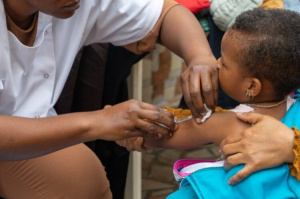
The campaign will run from 24–30 November 2025 and will target children from nine months old nationwide.
-
Health authorities warn that measles remains highly contagious and rubella poses major risks for pregnant women.
-
The operation includes additional child health interventions and vaccines for pregnant women.
Togo will conduct a nationwide vaccination campaign against measles and rubella from 24 to 30 November 2025. Authorities will target children from the age of nine months as part of the national strategy to eliminate both diseases by 2030. The Ministry of Health aims to strengthen herd immunity across the country as infection risks persist.
The regional health directorate of Greater Lomé announced the initiative during a media briefing on Thursday, 13 November. Officials used the meeting to mobilise community health workers and reinforce public communication ahead of the campaign.
Dr. Tchilalou Maryse Tagba-Pelei, Regional Health Director of Greater Lomé, said measles remains a “highly contagious viral infection capable of causing serious or even fatal complications.” She noted that rubella poses a significant threat to pregnant women because it can cause congenital malformations in the fetus.
The government will complement the vaccination drive with additional child-health interventions. Children will receive vitamin A supplements and albendazole antiparasitic treatment to reinforce overall immunity.
Pregnant women will also receive vaccines against human papillomavirus and cervical cancer as part of the broader maternal health programme.
This article was initially published in French by R.E.D
Adapted in English by Ange Jason Quenum
ASKY to Launch West Africa’s First Boeing 737 Flight Simulator in 2026
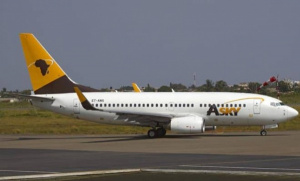
ASKY Airlines, the pan-African carrier based in Lomé, will have its own Boeing 737 flight simulator in operation by June 2026. Construction of the facility began last week in the Togolese capital.
The simulator is designed to reproduce real flight conditions and is expected to be ready by the end of the first half of 2026. Once completed, it will enable the airline to train, certify and improve the proficiency of its pilots.
The installation will allow crews to train in a safe, controlled environment and sharpen their reactions and aircraft handling skills. Since ASKY operates a fleet of Boeing 737s on regional routes across West and Central Africa, having a simulator in Lomé will make it possible to train pilots locally rather than sending them to Europe or the Middle East, significantly reducing training and travel costs.
“This simulator is essential not only for training our own pilots but also for regional airlines that still have to travel abroad to train their crews. It will be the first of its kind in West Africa,” said ASKY CEO Esayas Woldemariam Hailu during a site visit.
The company said the project is being developed in close partnership with Togo’s National Civil Aviation Authority (ANAC-Togo), which is providing technical support. The installation is expected to strengthen Togo’s role as a regional aviation hub and position Lomé as a leading training center for ASKY, its partner airlines, and its main strategic shareholder, Ethiopian Airlines.
Esaïe Edoh
Gnassingbé to U.K. Investors: ‘Investing in Togo Opens Both Francophone and Anglophone Markets’
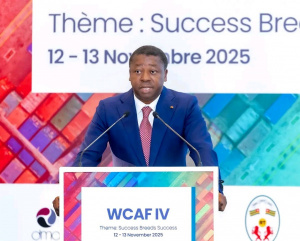
Togo’s Council President, Faure Gnassingbé, opened the fourth UK-West and Central Francophone Africa (UK-WCAF) trade and investment forum in Lomé on Wednesday, Nov. 12. The event, held for the first time on African soil, brought together nearly 700 participants, including policymakers, investors and business leaders from about ten countries.
The two-day program features country presentations, thematic panels, roundtables, B2B meetings and networking sessions. Discussions are focusing on investment opportunities, trade partnerships and financing tools aimed at strengthening economic cooperation between the United Kingdom and Francophone West and Central Africa. Participants are also highlighting national economic priorities and recent reforms designed to make their markets more attractive.
“We are opening a new chapter today in the partnership between the United Kingdom and Francophone Africa. Investing in Togo means entering the growth corridor linking Lagos, Cotonou, Lomé, Accra and Abidjan, and gaining access to both Francophone and Anglophone markets,” Gnassingbé said, referring to a regional market of more than 450 million people.
For Togo, which has stepped up efforts in recent years to improve its business climate and attract foreign investment, the forum offers an opportunity to showcase its strengths in trade and logistics, including its deep-water port and competitive fiscal reforms.
A memorandum of understanding covering several key sectors, including infrastructure, agriculture and agro-industry, was signed at the opening session between the Togolese government and British economic actors.
Gnassingbé urged participants to pursue long-term partnerships. “We encourage our British partners to look to the future with us, to invest not only in traditional infrastructure but also in Africa’s new growth frontiers: the green economy, the local processing of critical raw materials, digital finance and creative industries,” he said.
Since its inception in 2022, the UK-WCAF forum has generated more than £1 billion in trade. The Lomé edition is expected to solidify Togo’s position as a key economic gateway between Francophone Africa and the Commonwealth.
R.E.D
Germany Commits €50.3mln in New Development Funding for Togo
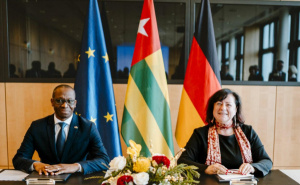
Germany announced new financial commitments totaling €50.3 million for Togo following the German-Togolese intergovernmental negotiations held on November 11, and November 12 in Berlin, the two parties said.
These discussions, dedicated to bilateral development cooperation, brought together the Togolese delegation led by Bèguèdouwè Paneto, secretary general of the Ministry of Planning, and the German delegation represented by Dr. Bärbel Kofler, parliamentary state secretary at the Federal Ministry for Economic Cooperation and Development.
The new commitments include €17.5 million for technical cooperation and €32.8 million for financial cooperation. They will focus on agriculture and food system transformation, good governance and territorial development, as well as health, social protection, and demographic policy.
With these announcements, Germany’s total cooperation portfolio in Togo reaches €567.46 million, confirming Berlin as the country’s leading bilateral donor, the two delegations noted in a joint statement.
The talks also addressed cross-cutting issues related to administrative management, security, maintenance of German-financed infrastructure, and long-term cooperation prospects, in a context of increased support for Togo’s national priorities outlined in its 2030 roadmap.
Both parties welcomed the strength of a partnership marked in recent years by deeper political dialogue and Togo’s 2018 accession to the Compact with Africa initiative supported by Germany. A new multi-donor trust fund to strengthen reforms and investments within this framework was launched last October in Washington.
The next round of intergovernmental negotiations between Berlin and Lomé is scheduled for 2028 in the Togolese capital.