
Togo First
Togo Launches National Drive to Provide Birth Certificates to Schoolchildren

In Togo, the government launched on Wednesday, November 12, 2025, in Badja (Avé prefecture), a national campaign to issue birth certificates to schoolchildren, in partnership with the Organisation internationale de la Francophonie (OIF).
The operation targets 5,000 children, who will receive an official civil status document across the national territory.
The campaign will unfold in two stages: the first consists of issuing the supplementary court rulings required for pupils without a birth certificate; the second involves transcribing these rulings into civil status registers to produce the final documents. Beneficiaries will receive their birth certificates directly, without administrative intermediaries.
According to Patchassi Kadanga, director of territorial administration and borders, between 22 % and 30 % of citizens do not obtain a birth certificate within the 45 days required by law. “Often, supplementary court rulings are not transcribed, which makes them unusable. This time, we want children to receive complete documents,” he said.
For the Togolese government, the project is part of the national policy for administrative and social inclusion, aiming to ensure every child has equitable access to education and public services.
The campaign will end on November 27, 2025.
Togo Receives 244 Tons of Local Food for School Feeding Under Bia Laafia
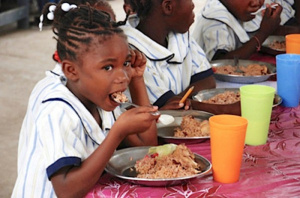
The Togolese government received on November 12 a shipment of 244 tons of local food products for public school canteens under the Bia Laafia Project (“Well-being of Children”).
The delivery includes 22 tons of smoked anchovies and 222 tons of enriched maize flour, produced by SITRAPAT, a company based in Tsévié.
Implemented in 202 public primary schools, the project aims to improve school nutrition and strengthen education quality in rural areas. It relies on local products to support national supply chains and promote the agricultural economy.
According to Badawi Pauline Chekpi, director of community development and chair of the interministerial committee on school canteens, this delivery “will ensure a sustainable food supply for beneficiary children in the schools supported by Catholic Relief Services.”
The Bia Laafia Project combines school feeding with efforts to strengthen teaching capacity.
“The ultimate goal is to improve students’ reading and writing skills,” said project coordinator Moussa Sangaré, adding that teachers, principals, and inspectors also receive training in coaching and supervision.
Financed by the U.S. Department of Agriculture (USDA) through the McGovern-Dole International Food for Education Program, in partnership with Catholic Relief Services and the Togolese government, the project covers the prefectures of Kéran, Oti-Sud, and Dankpen.
Kara to Host Second Togo–Benin Meeting on Strengthening Agribusiness Ties
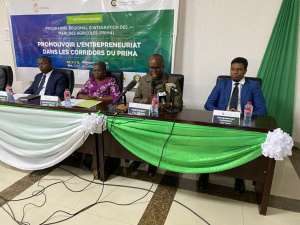
The city of Kara in northern Togo will host the second regional meeting between the Togo Chamber of Commerce and Industry (CCI-Togo) and the Benin Chamber of Commerce and Industry (CCI-Benin) from November 18 to 22, 2025. The event is part of the Regional Agricultural Market Integration Program (PRIMA).
The meeting aims to strengthen economic cooperation between the two countries by promoting agricultural trade. It will bring together public decision-makers, entrepreneurs, institutional representatives, and farmer organizations around the theme “Intercommunity Market and Agricultural Enterprise Development: Strengthening the Competitiveness of Companies in Togo and Benin.”
Participants will exchange views on several topics related to agricultural development and cross-border trade facilitation. Various panels are scheduled from November 19 to 22, focusing on the promotion of local products, value chain development, and enhanced competitiveness for sector actors.
Alongside the discussions, a trade fair will be held on the esplanade of the Kara Congress Palace from November 18 to 22. It will showcase agricultural and agri-food products from both countries and serve as a platform for networking between Togolese and Beninese economic operators.
This initiative follows the first meeting held in December 2024 in Grand-Popo, Benin, where the two chambers laid the foundations for bilateral cooperation in the agricultural sector. The Kara discussions are expected to deepen this momentum and identify new strategies to create an enabling environment for sustainable and inclusive development of family farming, a key sector in the economies of Togo and Benin.
Togo Raises CFA33bn on WAEMU Market, Above Its Target
Togo raised CFA33 billion on November 13 on the WAEMU public securities market through a simultaneous issue of Treasury Bonds (OAT) and Treasury Bills (BAT). The operation, initially targeting CFA30 billion, slightly exceeded its objective.
According to data published by Umoa-Titres, total bids reached CFA48.2 billion, representing a coverage rate of 160.86 %. Following the auctions, the Togolese Treasury retained CFA30 billion for the OATs issued with a three-year maturity at a fixed interest rate of 6.25 %, and CFA3 billion for the 346-day BATs.
This operation marks Togo’s second appearance on the regional financial market in the last quarter of 2025, a period during which financial authorities plan to raise CFA100 billion in total.
With this new issuance, the country’s cumulative fundraising since the start of the year now stands at CFA325 billion, or 97 % of the annual target set at CFA332 billion. The amount raised during the last quarter alone has reached CFA60.5 billion.
Togo Drafts Territorial Marketing Guide
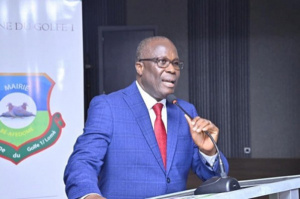
- Togo is finalizing a national territorial marketing guide to strengthen the attractiveness of municipalities.
- The initiative, backed by Germany’s GIZ, aims to help local governments design strategies to attract investors.
- The guide will be validated by December 2025 before nationwide rollout.
Togo has launched the validation process for a national territorial marketing strategy guide designed to help municipalities attract investment and enhance their visibility. The event took place on Nov. 11, 2025, in Aného.
The Ministry of Local Development is leading the initiative with technical and financial support from the German development agency GIZ.
As public funding becomes scarcer and competition between territories intensifies, the government aims to provide local authorities with a structured framework to promote their assets. The guide will serve as a reference for developing strategies tailored to each municipality’s economic, cultural, environmental, and human potential.
Deputy Minister Koamy Gomado said, “Territorial marketing goes beyond communication; it aims to strengthen a region’s image, build investor confidence, and foster lasting partnerships around a shared identity.”
The drafting process follows a participatory approach involving municipalities already implementing marketing strategies and those in early planning stages. Authorities are gathering feedback and experiences from local actors to ensure the guide aligns with the realities of each community.
Development expert Dr. Sonhaye Kondi Napo said the document will “offer practical tools to enhance territorial competitiveness and structure local communication.”
The guide’s validation is expected in December 2025, after which it will be disseminated nationwide. The government views the project as a key step toward empowering municipalities to position themselves as dynamic players in Togo’s local and regional development.
This article was initially published in French by R.E.D
Adapted in English by Ange Jason Quenum
Togo and Benin Join Forces to Protect Mono River Basin
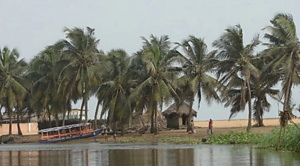
- Togo and Benin launched a joint process to develop a strategic plan for sustainable management of the Mono River Basin.
- The basin spans 24,300 km², supports over 3.5 million people, and faces threats from deforestation, soil degradation, and climate change.
- The process relies on a Cross-Border Diagnostic Analysis (ADT) to guide national and transboundary policies with pilot local projects.
Togo and Benin launched on Tuesday, November 11, 2025, a joint process to create a strategic plan for the sustainable management of the Mono River Basin. The initiative began at a workshop organized by the Mono Basin Authority (ABM) with support from the Sahara and Sahel Observatory (OSS) and will run until Saturday, November 15.
The process uses a Cross-Border Diagnostic Analysis (ADT) to identify environmental, socio-economic, and climate threats affecting the basin. It aims to clarify the causes of these challenges and propose shared solutions. Authorities seek coordinated and equitable use of water resources while preserving biodiversity and protecting local populations.
The Mono River Basin covers roughly 24,300 km², with nearly 88% located in Togo. It sustains more than 3.5 million residents and supports critical sectors including agriculture, fishing, hydroelectric energy, and drinking water supply. The region faces growing pressures from deforestation, soil degradation, and climate change effects.
Nicolas Dadja Gnakpaou, Executive Director of ABM, said the ADT will produce a reference document to guide the development of a strategic action program, shaping both national and transboundary policies.
Apolline Bambara, an OSS expert, highlighted that the process, rooted in long-standing bilateral cooperation, “will transform challenges into concrete solutions through local pilot projects.”
This article was initially published in French by R.E.D
Adapted in English by Ange Jason Quenum
Togo Hosts Landmark UK–Francophone Africa Trade Forum
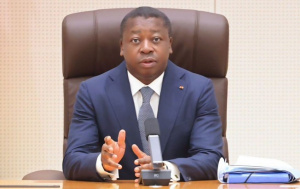
- The 4th UK–West and Central Francophone Africa Trade and Investment Forum opened in Lomé—the first time it has been held on African soil.
- Over 700 participants are attending to discuss infrastructure, SMEs, logistics, agribusiness, and energy transition.
- The forum has generated over £1 billion in trade since 2022, strengthening Togo’s role as a bridge between Francophone Africa and the Commonwealth.
Togo’s President Faure Gnassingbé on Wednesday, November 12, 2025, opened the 4th UK–West and Central Francophone Africa Trade and Investment Forum (UK–WCAF) in Lomé. It marks the first time the event—jointly organized by the Togolese government, the UK’s Foreign, Commonwealth & Development Office (FCDO), and UK Export Finance (UKEF)—takes place on the African continent.
The two-day forum gathers more than 700 participants from governments, private companies, and international financial institutions. Discussions focus on strengthening economic partnerships and fostering regional integration across sectors such as infrastructure financing, SME development, logistics, agribusiness, and the energy transition.
In his opening remarks, President Gnassingbé underscored Togo’s pivotal geographic and economic role in West Africa. “Investing in Togo means entering the growth corridor linking Lagos, Cotonou, Lomé, Accra, and Abidjan—and accessing both Francophone and Anglophone markets,” he said.
He called for stronger policy coordination and predictable investment frameworks. “To make integration a reality, we must harmonize regulations, facilitate trade, simplify procedures, and create predictable conditions for investors,” he added. “Administrative fluidity and regulatory transparency are now the invisible infrastructures of modern trade that our economies need.”
Since its launch in 2022, the UK–WCAF Forum has generated over £1 billion in trade. This year’s edition in Lomé aims to deepen economic cooperation and position Togo as a key commercial gateway between Francophone Africa and the Commonwealth.
This article was initially published in French by R.E.D
Adapted in English by Ange Jason Quenum
Togo and World Bank Review $1.5 Billion Partnership in Abu Dhabi
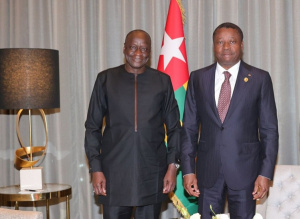
- President Faure Gnassingbé and World Bank Vice President Ousmane Diagana reviewed the Togo–World Bank cooperation in Abu Dhabi on November 10.
- The Bank plans to mobilize over $1.5 billion for Togo between 2025 and 2029.
- Ongoing projects in energy, agriculture, and human development are progressing “very satisfactorily,” according to Diagana.
Togo’s President of the Council Faure Gnassingbé met on Monday, November 10, with Ousmane Diagana, Vice President for Western and Central Africa at the World Bank Group, in Abu Dhabi. The meeting took place on the sidelines of the Chad Trade and Investment Forum and focused on reviewing the current state of cooperation between Togo and the Bretton Woods institution.
Discussions centered on evaluating ongoing World Bank–financed projects in Togo. “Our discussions showed that the programs underway are progressing very satisfactorily,” Diagana said after the meeting.
The projects span key sectors of the Togolese economy, aiming to foster development, create jobs, and improve living conditions.
Among the flagship initiatives is Mission 300, a regional program designed to accelerate electrification across Africa and make energy access more reliable, affordable, and sustainable.
Togo, which targets universal access to electricity by 2030, already benefits from strong World Bank support in implementing its national electrification strategy.
The agricultural sector remains a major focus of the partnership. Togo is among the main beneficiaries of agricultural value chain strengthening programs, notably through the Togolese Agricultural Modernisation Programme (ProMAT).
ProMAT helps farmers increase productivity, improve crop value, enhance food security, and boost income both locally and through exports.
Beyond agriculture and energy, the World Bank also supports Togo in human capital development, including education, health, and social protection.
Under the 2025–2029 Country Partnership Framework, the institution plans to mobilize more than $1.5 billion to fund structural projects in priority areas such as agriculture, energy, and the development of secondary cities.
This renewed commitment reflects the World Bank’s growing confidence in Togo’s reform agenda and its progress toward sustainable, inclusive growth.
This article was initially published in French by Esaie Edoh
Adapted in English by Ange Jason Quenum
Ecobank Reaffirms Its Role in Togo’s Economic Development
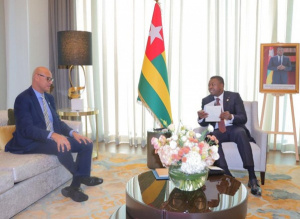
- Ecobank CEO Jeremy Awori met with President Faure Gnassingbé in Abu Dhabi to discuss strengthening the bank’s role in Togo’s economic development.
- The Lomé-based pan-African lender plans to deepen support for financial inclusion, industrialization, and cross-border trade.
- Ecobank co-financed the Adétikopé Industrial Platform (PIA) and promotes SME growth through the Ellevate by Ecobank program for women entrepreneurs.
Togo’s President of the Council Faure Gnassingbé and Jeremy Awori, CEO of Ecobank Transnational Incorporated (ETI), held talks on November 10 in Abu Dhabi to explore how the bank can expand its contribution to Togo’s economic development. The meeting occurred on the sidelines of the Chad Trade and Investment Forum.
Headquartered in Lomé, Ecobank is considered one of the key players supporting Togo’s economic transformation. Its strategy aligns with government priorities such as financial inclusion, industrialization, and regional trade integration.
The pan-African financial institution intends to intensify its activities in these areas to strengthen its impact on growth. “As a banker, I shared with the President our initiatives to support the growth of African countries and economies,” Awori said after the meeting.
En séjour à Abu Dhabi dans le cadre du Forum sur le commerce et l’investissement au Tchad, le Président du Conseil, Faure Essozimna Gnassingbé s’est entretenu ce 10 novembre 2025 avec le Directeur général de l’Ecobank Transnational Incorporated (ETI), Jérémy Awori.… pic.twitter.com/QbO229264Q
— Présidence du Conseil du Togo (@presidencecstg) November 11, 2025
Ecobank has been active in financing several strategic national projects, including the Adétikopé Industrial Platform (PIA), a 400-hectare industrial zone developed alongside Afreximbank and BIA Togo.
The bank also backs small and medium-sized enterprises (SMEs) through dedicated credit lines, with a special focus on women-led businesses under its Ellevate by Ecobank initiative.
In addition, Ecobank contributes to improving Togo’s business environment by digitizing banking services, which simplifies access to financial solutions for individuals and companies.
Present in 35 African countries and employing over 14,000 staff, Ecobank has maintained a strong presence in Togo’s financial landscape for four decades.
Over the past five years, its Togolese subsidiary has been named “Bank of the Year” by The Banker awards, reaffirming its market leadership and commitment to pan-African financial integration.
This article was initially published in French by Esaie Edoh
Adapted in English by Ange Jason Quenum
Cameroon’s Afriland First Holding Plans to Attract Investors to Togo
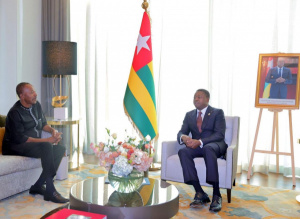
Afriland First Holding (AFH), the investment arm of Afriland First Group, plans to help attract investors to Togo. The announcement came from Group Chairman and Cameroonian entrepreneur Paul Kammogne Fokam after his meeting with President Faure Gnassingbé on Monday, Nov. 10, 2025, on the sidelines of the Trade and Investment Forum in Abu Dhabi.
“I believe that across sectors we can make progress by involving other partners, in line with the President’s vision and the population’s needs,” Fokam said after the discussions.
According to the Togolese Presidency, the initiative aligns with the government’s strategy to strengthen economic and financial partnerships with leading African banking groups in support of sustainable and inclusive growth.
New Investment Hub in West Africa
Afriland First Holding, which will soon be headquartered in Lomé, is expected to operate across West Africa. The company will focus on acquiring equity stakes in businesses and investment projects while providing consulting services in administration, accounting, business management, human resources, and technical operations, activities aimed at attracting more investors to Togo.
Registered with the Center for Enterprise Formalities (CFE) since September 2022 with capital of 100 million XOF, AFH will be Afriland First Group’s first subsidiary dedicated entirely to investment activities.
Esaïe Edoh