

Togo First
Togo, Egypt to Hold Economic Forum in Aného on November 24
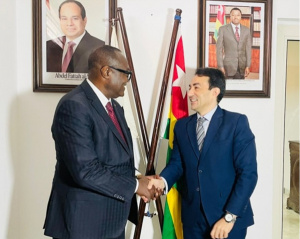
The city of Aného, Togo, will host an economic forum between Togo and Egypt on November 24, 2025. The event is scheduled to take place on the sidelines of the 2025 edition of the Aného International History Festival (FIHA).
Initiated by Togo’s Ministry Delegate for Investment Promotion, in collaboration with the Chamber of Commerce and Industry of Togo (CCI-Togo), the meeting aims to strengthen economic cooperation between the two nations. This follows a successful Togo-Turkey economic forum organized within the same framework in 2024.
Organizers stated the forum will focus on several key sectors, including agribusiness, textiles, healthcare, energy, infrastructure, and the pharmaceutical industry. It will bring together Togolese and Egyptian economic operators, along with representatives from public institutions in both countries.
Similar to the previous forum with Turkey, this meeting will serve as a platform for exchanges and partnerships to stimulate investment and foster new business opportunities. The event takes place amid a shared commitment by Lomé and Cairo to consolidate their economic relations.
In November 2024, Egypt’s Ambassador to Togo, Ahmed Mohamed Eid Moustapha Ahmed, expressed Egyptian companies' interest in the Togolese market, particularly in the agri-food, infrastructure, and textile sectors.
Togo and Egypt have recently signed several partnership agreements covering energy, urban planning, housing, sanitation, and culture as part of their bilateral cooperation, aiming to further strengthen economic and diplomatic ties.
Esaïe Edoh
UMOA Securities Depository Shortens Settlement Cycle to Two Days
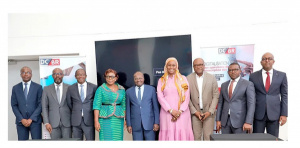
The Board of Directors of the Central Depository/Settlement Bank (DC/BR) has approved shortening the settlement and delivery period for securities transactions on the regional financial market from three to two days.
The change, which takes effect in December 2025, aims to enhance market liquidity and improve operational efficiency.
According to the DC/BR, shifting the settlement cycle from T+3 to T+2 will reduce transaction risks and align regional practices with international standards. The move forms part of broader efforts to modernize financial infrastructure across the West African Monetary Union (UMOA).
The Board, chaired by Faman Touré, also approved new procedures for handling late settlements in post-trade operations. The framework was cleared in advance by the WAMU Financial Markets Authority (AMF-UMOA).
Based in Abidjan,Côte d’Ivoire, the DC/BR manages securities custody for market participants and oversees post-trade settlements, helping to maintain the stability and security of the regional financial system.
R.E.D
Togo’s Guema Batama Wins Mali Innovation Prize for Squash-Harvesting Machine
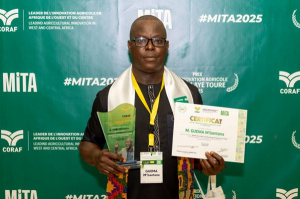
Togolese inventor Guema Batama, designer of a machine that harvests and shells squash, won the first prize in the category for innovations aimed at improving agricultural production and productivity at the Abdoulaye Touré Agricultural Innovation Prize. The distinction was awarded during the 5th edition of the Market for Agricultural Innovations and Technologies (MITA), held last week in Bamako, Mali.
Batama’s innovation was selected by the jury for its originality and practical utility. The machine notably reduces the manual labor involved in harvesting and post-harvest processing for squash producers, particularly for women, thereby improving the efficiency and profitability of the sector. The young inventor received a prize of $10,000, or nearly 6 million CFA francs.
Batama's initiative to resolve post-harvest difficulties was made possible with support from the West African Agricultural Productivity Program (WAAPP), launched by ECOWAS. According to the designer, the extractors have a capacity of between 7 and 10 cubic meters and can process squash without compromising seed quality.
The second prize in the competition was awarded to Faye Mariama of Senegal for her biostimulant, Silico Derma, an innovative product based on orthosilicic acid that effectively combats insects and pathogens. She received a reward of $5,000.
Kalifa Traoré, Chairman of the Board of Directors of CORAF, stressed that these innovations deserve sustained support from public authorities. He emphasized: "For technologies developed in laboratories and startups to reach producers on the ground, we must strengthen the linkages between research, extension, public policies, and the private sector."
Esaïe Edoh
West African municipalities meet in Lomé to improve crisis-time budgeting
A regional gathering opened yesterday in Lomé, bringing together representatives from several West African countries to discuss how municipalities can strengthen budget management and resilience during security, health, and climate crises.
The regional event, organized by the Faîtière des communes du Togo (FACT) with support from its partners, seeks to identify and share best practices in decentralization and local governance.
Discussions focus on the role of municipal budgets in maintaining essential services—such as water, sanitation, and health care—during periods of economic strain. According to Éric Talardia Kondia, permanent secretary of the WAEMU Council of Local Authorities, the meeting is expected to produce “a guide of best practices and a roadmap” to promote efficient budget governance models across the region.
For Togo, the workshop continues national efforts launched through the Local Authorities Support Fund (FACT), a mechanism that finances community projects in health, education, and infrastructure.
Delegates from Mali, Benin, Niger, Burkina Faso, Cameroon, Senegal, and Togo are set to conclude the meeting on Tuesday with a shared goal of improving local financial management during times of crisis.
Togo’s Ollo Africa Partners with Trades Union to Digitize Artisan Savings
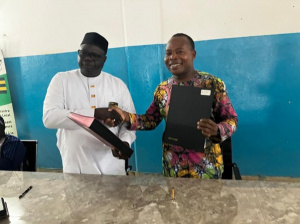
Togolese fintech Ollo Africa, which specializes in managing traditional savings circles known as tontines, has partnered with the Union of Regional Chambers of Trades (UCRM) in Togo. The agreement aims to modernize collective savings practices and progressively integrate artisans into the formal financial system.
The initiative, supported by Ecobank, which is already a partner of Ollo Africa, is initially projected to reach over one million artisans by 2027.
The project hinges on the Ohana Africa mobile platform, developed by Ollo Africa and recently approved by the Central Bank of West African States (BCEAO). Following a pilot phase, the application will provide a secure and transparent way to manage savings, withdrawals, and loans, while also helping artisan groups achieve legal compliance.
This collaboration is significant because the artisan sector accounts for nearly 18% of Togo’s GDP and employs more than one million people. However, the majority of these workers remain outside the banking system, still relying on informal tontines to finance their businesses.
The rollout will take place across the six Regional Chambers of Trades and will be preceded by training sessions to ensure platform adoption. Ecobank will be responsible for safeguarding the collected funds and providing the necessary banking infrastructure.
R.E.D
Togo’s Insurance Authority Moves to Streamline Claims Process
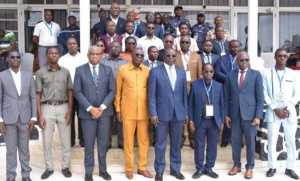
Togo's General Directorate of Insurance (DGA) convened a two-day seminar last week for medical and automotive experts, aiming to streamline the process of compensating traffic accident victims.
The meeting, held under the theme, "La contribution des experts dans le processus d’indemnisation (The Contribution of Experts in the Compensation Process)," sought to standardize appraisal practices and reduce the persistent delays in settling claims.
According to Assignon Koffi, the Director of Insurance, slow compensation times are often caused by divergent assessments among insurance companies, experts, and victims.
Hounou Dovene, Head of Claims at GTA Assurance, added that administrative and financial challenges also contribute significantly to the delays. Insurance premiums, which have remained unchanged since the 1980s despite economic shifts, have led to a structural deficit for insurance providers.
The seminar successfully identified these bottlenecks and facilitated the proposal of concerted solutions designed to ensure faster and more equitable compensation, in compliance with the regional CIMA insurance code.
Togo: Chinese-Funded Water Project Nears Completion in Plateaux Region
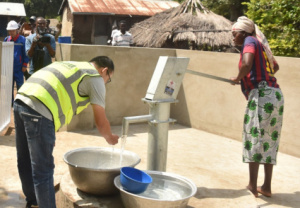
A Chinese-funded rural water project in Togo's Plateaux region is ahead of schedule, with key infrastructure already being handed over to local communities.
Of the 300 boreholes planned under the Village Water Supply Project, 230 have been completed, accounting for about 76.7% of the total, according to project director Huang Xianzhou. Of those completed, 113 boreholes have already been officially transferred to local communities.
Field visits conducted in late October across the Ogou and Haho prefectures confirmed the advanced state of the work. The two-year project is slightly ahead of its initial timeline and aims to provide sustainable access to potable water in 300 villages.
The Governor of the Plateaux region, Dadja Maganawé, praised the partnership, stating it supports the Togolese government’s social policies, particularly in rural areas. Chinese project officials noted that improved water access will also help strengthen local agricultural and economic activities.
In villages such as Donvé, Fodjouayé, and Kokoudavé, residents now have access to hand-pump-operated water points. Beneficiaries emphasized the tangible change in their daily lives, which eliminates the need to travel long distances for water.
The project is part of the ongoing Sino-Togolese economic cooperation and is being executed on the ground by a consortium including Zhongmei Engineering Group, China Railway Eryuan Engineering Group, and CREEC Consulting.
R.E.D
Togo Trains 3,000 Youth in Online Safety and Data Protection

Togo’s data protection authority and national cybersecurity agency have launched a campaign to educate young people on how to protect their personal data and stay safe online. The initiative, held late last week in Lomé, trained about 3,000 participants on responsible digital practices and basic cybersecurity measures.
Organized by the Personal Data Protection Authority (IPDCP) and the National Cybersecurity Agency (ANCy), the campaign is part of the government’s broader push to strengthen digital security awareness. Workshops focused on topics such as how to safeguard personal information on mobile phones and the internet, with an emphasis on prevention and personal responsibility in digital spaces.
“Regularly backing up data, checking messages before replying, and limiting what you share online can go a long way toward preventing online scams and data theft,” said Malik Arnold Geraldo, director of training and capacity building at ANCy.
Officials said the campaign supports Togo’s drive to strengthen digital sovereignty and public trust in its growing online economy. The country has launched several initiatives in recent years, including the creation of the National Cybersecurity Incident Response Center (CERT.tg) and the adoption of the 2024–2028 national cybersecurity strategy.
As more public and private services move online, authorities say cyber threats are increasing and increasingly affecting young users. Raising awareness, they argue, remains one of the most effective tools against cybercrime. “By teaching young people how to understand and manage their digital environment, we are helping to build a generation of responsible users who value the protection of their personal data,” ANCy said.
Esaïe Edoh
Togo Plans National Survey to Map Financial Access Gaps

Togo will launch a nationwide data collection campaign on November 6 to update its database on financial inclusion among households and businesses. The month-long campaign, running through December 6, 2025, is being carried out by the government in partnership with the Central Bank of West African States (BCEAO).
Authorities said the initiative aims to strengthen policy planning to expand access to financial services, particularly for vulnerable populations. The survey will provide updated indicators on both the supply and demand of financial products, whether formal or informal.
“The baseline survey on the demand and supply for financial services will measure access and usage levels, identify needs and obstacles, and highlight opportunities for improving financial inclusion across different user categories,” said a joint statement from Minister of Development Planning and Cooperation Sandra Johnson, Finance Minister Georges Barcola, Minister of Territorial Administration Hodabalo Awaté, and Minister of Economy and Strategic Foresight Badanam Patoki.
The National Institute of Statistics, Economic and Demographic Studies (INSEED) will oversee technical coordination and field operations across the country. Enumerators will gather data from households, businesses, and financial institutions to capture local economic realities.
The findings are expected to help the government assess progress in financial inclusion and design better-targeted policies to bring more citizens into the financial system. They will also help identify underserved regions or groups, supporting the creation of tailored strategies to improve access to banking, digital, and microfinance services.
According to the Ministry of Economy and Finance, 87.1 percent of Togolese used financial services in 2023, a level driven in part by government programs such as the National Inclusive Finance Fund (FNFI), launched in 2014, which has enabled hundreds of thousands of citizens to access credit suited to their activities.
Esaïe Edoh
Patient Pouwereou Bodjona Pioneers Recycled-Steel Boatbuilding in Togo
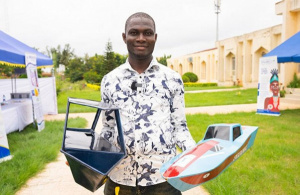
In a small workshop in Agoè, Patient Pouwereou Bodjona welds together the hull of a steel canoe for a new client. In a country where wooden boats dominate the waterways, the 30-something entrepreneur is betting on a different material, recycled steel. Since founding Bo-Bateaux in 2016, he has been trying to build a local boatmaking industry rooted in innovation, sustainability, and resilience, though financing and regulation remain major hurdles.
The idea was born of tragedy. In 2011, Bodjona learned of a boat accident on Lake Togo that killed 36 people when a wooden canoe capsized in strong winds. “I saw it on television and thought, why not design safer boats?” he recalls.
Though he holds a degree in German, Bodjona has no formal training in marine engineering. His path has been built through self-teaching, trial, and error. “As a kid, I made small cars, toys, and little robots,” he said. That curiosity eventually led him to explore boat construction after observing a nearby water basin. “These basins should make us money, not cost us money,” he said, envisioning new uses in tourism and recreation.
In 2014, his project won recognition at the Forum of Young Togolese Entrepreneurs (FJETS), securing funding to build his first prototype , a wooden canoe. “It worked, but not for long,” he said. The experience convinced him to switch to steel, which he began mastering in 2016. To work with his new material, Bodjona took a 41-day training in arc welding and earned a professional craftsman’s card. “That’s the only formal training I’ve had,” he said. The rest he learned by watching YouTube tutorials and practicing. “I even built my own welding machines,” he adds proudly.
His workshop, where three boats are currently under construction, is modest but busy. Working mostly alone slows production, yet since 2018, Bo-Bateaux has produced 12 vessels, including 10 steel canoes and two unsinkable prototypes. “You can flip them any way, and they’ll still float,” he said. Steel boats, he argues, offer greater durability than wood. “When a wooden canoe cracks, you have to pull it out of the water for a week to dry before repairs. With steel, a welder fixes it at sea.” In 2024, Bo-Bateaux generated 5 million CFA francs ($8,000) in revenue, mostly from service contracts with the National Agency for Sanitation and Public Hygiene (ANASAP), which uses its boats to clean and dredge urban water basins. “It’s a decent income when there are contracts,” he said, though the company remains unprofitable.
Selling the boats is harder. “Buyers want to see before they pay. It’s like a car, you test it first,” he explained. But building display models requires capital he doesn’t have. “If we don’t have money to make them, no one will buy,” he said.
Bureaucracy is another obstacle. Registering a single boat costs about 830,000 CFA francs, a heavy burden for a small business with limited turnover. “We come with an innovation, but the system doesn’t know how to handle it,” he said.
Funding is another challenge. “Grants helped us start, but they don’t make a business sustainable. We need to earn money from real products and services,” he said. A costly setback in 2018, when two boats were washed away during heavy rains, taught him to rethink design. That incident led him to develop the unsinkable model and even train in scuba diving to retrieve submerged vessels. “It wasn’t a failure, it was a lesson,” he said.
Bodjona now sees opportunities in tourism and artisanal fishing. “People dive in our coastal waters; there’s potential for leisure and marine tourism,” he said. Yet he laments the lack of awareness among young Togolese about the blue economy. “This sector is worth billions, but somehow we’ve been kept from seeing its potential,” he said, calling for more education and public support.
He hopes the government will ease regulations for young firms. “Authorities could test startups like ours for six months or a year, giving us some flexibility to grow,” he suggested. He also advocates for reserving certain market segments for local entrepreneurs. “Foreign investors have their place, but some niches should be protected for youth-led businesses,” he said.
For now, Bodjona continues to weld and assemble his steel boats in his small workshop, preparing new orders and seeking authorization for public demonstrations. His story reflects both the struggles and promise of industrial innovation in Togo, self-taught expertise, a growing market for local technology, and a drive to turn the blue economy into a source of national pride and opportunity.
Ayi Renaud Dossavi