

Togo First
Togo inflation slows to 0.8% in September as food prices decline
Prices in Togo continued to stabilize in September 2025. According to recent data from the National Institute of Statistics and Economic and Demographic Studies (INSEED), the inflation rate fell to 0.8%, down from 1.1% in August. This is seen as positive news for households, as price stability remains a priority for economic authorities.
The decline confirms a trend that began at the end of 2024. Over the first nine months of 2025, inflation has stayed below the 3% threshold set by the West African Economic and Monetary Union (WAEMU) as part of its convergence criteria. In December 2024, inflation stood at 2.9%, showing a steady decrease throughout the year.
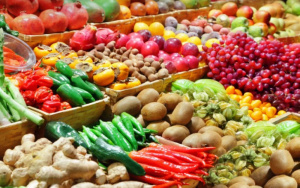
The easing is mainly due to falling food prices. September marks the start of the harvest season, particularly in agricultural areas in both the north and south. Markets recorded notable price drops for several staples, including yam, cassava, tomato, pepper, maize, and local rice.
According to INSEED, some price variations were substantial: yam for fufu dropped by more than 40% in one month, local tomatoes by nearly 20%, peppers by 25.2%, cassava by 15.3%, and white maize by 9.7%. Traditional dishes such as fufu and wokoumé, a maize paste, also saw price decreases of 5–7%.
This trend also reflects the Togolese government’s measures to curb consumer prices through agricultural production support, favorable tax policies, and targeted household assistance. The goal is to preserve purchasing power and prevent spikes in staple food prices, while several neighboring countries continue to face inflation rates above 5%.
With an average inflation rate below 3% since January, Lomé is reinforcing its economic stability, enhancing the country’s credibility with lenders and investors. The drop from 2.9% in December 2024 to 0.8% in September 2025 shows nearly continuous disinflation over nine months, following the peaks of 2022 and 2023.
It remains to be seen whether this trend will hold toward the end of the year, a period often marked by seasonal increases in demand and prices.
Togo, EBID Sign €50 M Deal to Build Six Vocational Training Centers
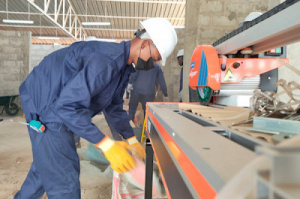
Togo has taken a major step toward strengthening technical and vocational training. The ECOWAS Bank for Investment and Development (EBID) and Planet One Education Togo signed a €50 million (32.79 billion XOF) financing agreement on Wednesday, Oct. 22, 2025, confirming a commitment initially announced in July.
The loan will finance the construction and outfitting of six new technical and vocational training centers in Tandjouaré, Danyi Akpéyémé, Kougnohou, Guérin-Kouka, Agoé-Nyivé, and Tsévié.
The centers aim to strengthen human capital by providing training for 3,481 students each year. Initial plans include laboratories, workshops, and student housing to support hands-on learning.
Dr. George Agyekum Donkor, EBID President, said the signing represented “a tangible step forward in the regional strategy to invest in human capital,” describing it as key to enhancing ECOWAS’s industrial competitiveness.
Deepak Balaji, Director of Planet One, called the agreement “a decisive partnership to train the skilled workforce driving Togo’s growth.”
With this agreement, EBID’s commitments in Togo now total nearly $362 million.
Ayi Renaud Dossavi
Togo Becomes First African Country to Launch Health Insurance for Informal Workers
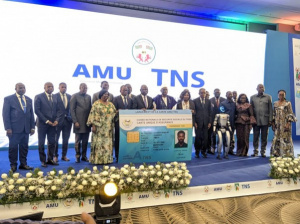
Togo became the first African country to launch health insurance specifically for self-employed and informal sector workers (TNS) on Thursday, Oct. 23, 2025. This initiative is a key component of the country’s Universal Health Coverage (AMU) program, which was fully rolled out in January 2024.
The official enrollment of this category was launched following the commissioning of a digital platform designed by the National Social Security Fund (CNSS). This online tool allows artisans, merchants, farmers, and other actors in the informal sector to join the CNSS-AMU insured base by submitting personal information and selecting a contribution plan.
Workers can contribute under various formulas: 10,000 XOF per month, 28,500 XOF per quarter, 54,000 XOF per semester, or 102,000 XOF per year.
Once enrolled, the insured will receive their card, granting them access to the benefits provided under the AMU across the entire national territory.
"This initiative will allow every non-salaried worker, regardless of their income or sector of activity, to benefit from basic care without fear of financial ruin," said Health Minister Jean-Marie Tessi.
According to Ingrid Awadé, CNSS Director General, the extension of the AMU to informal workers "marks the fulfillment of the promise of a supportive, equitable, and sustainable social security system." She assured that her organization would ensure that no independent worker is left out.
This stage follows the recent expansion of the AMU to include widows, widowers, and orphans. The CNSS plans to progressively extend the scheme to other socio-professional categories in the coming months.
Esaïe Edoh
Togo: 130 Young Entrepreneurs Trained Under ECOWAS Program
The Fund for Regional Stabilization and Development (FRSD), a regional program launched by the Economic Community of West African States (ECOWAS) in May 2024, has helped more than 130 young Togolese—men and women alike—gain hands-on skills in processing and marketing agricultural and livestock products over the past 18 months.
Among the beneficiaries, 65 received direct funding to expand their businesses in the dairy, horticulture, fisheries, and poultry sectors.
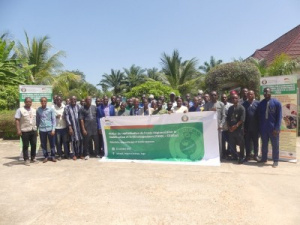
The FRSD operates in some of the country’s most vulnerable rural regions, including Kara, Savanes, and Centrale. The project’s outcomes were reviewed during a lessons-learned workshop held on Wednesday, Oct. 22, 2025, in Kara, where beneficiaries, local officials, and implementation partners assessed its impact.
Participants praised the program’s contribution to job creation, skills training, social cohesion, and reduced economic vulnerability in rural areas.
According to Francis Nadjombé, GIZ regional coordinator for Kara and Savanes, these results “show that economic stabilization and vocational training can serve as lasting tools for peace and development in West Africa.”
The FRSD is financed by the German Federal Ministry for Economic Cooperation and Development (BMZ) and implemented by GIZ in partnership with VSF-Suisse and GEVAPAF. The initiative also covers Benin and Guinea-Bissau, following a pilot phase in Gambia, with total funding of €25.2 million.
R.E.D
Togo Launches 2025-2026 Soybean Season, Sets Farm-Gate Price at 220 XOF per Kilo
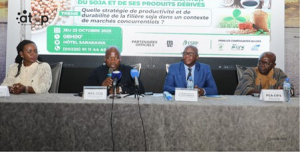
Togo officially launched the 2025-2026 soybean marketing season on Thursday, Oct. 23, 2025. The launch event in Lomé also featured the signing of new agreements among industry stakeholders on export conditions for Togolese soybeans.
The agreements were signed by the National Federation of Soybean Producer Cooperatives (FNCPS), the Togolese Association of Soybean Processors (ATTS), and the National Association of Soybean Traders-Exporters (ANCES). They cover marketing volumes, sales prices, transport procedures, inspection points, and technical measures to ensure a successful 2025–2026 season.
Stakeholders set the farm-gate price of soybeans at 220 XOF per kilogram, down from 250 XOF in the previous season. According to Koriko Mounirou, President of the Interprofessional Committee for the Togo Soybean Sector (CIFS-Togo), the reduction reflects recent declines in global soybean prices. The total volume set for commercialization this season is 200,000 tons.
With these new agreements, CIFS-Togo aims to bring long-term stability to the national soybean market through fair and transparent mechanisms. Key objectives include protecting farmers’ incomes, expanding access to financing for traders and processors, and improving sector governance through a more unified and proactive structure.
Togo’s national soybean production for the recently concluded 2024–2025 season was estimated at just over 260,000 tons. Industry players are now targeting an ambitious 500,000 tons for the upcoming agricultural cycle, aiming to strengthen Togo’s position as one of West Africa’s leading soybean producers.
Esaïe Edoh
Togo’s Treasury Auction Draws Strong Demand with 213% Coverage Rate
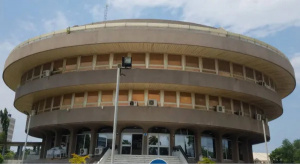
Togo raised 27.5 billion XOF on the UMOA public securities market on Friday, Oct. 24, 2025, after a dual auction of Treasury Bonds (OAT) and Treasury Bills (BAT). The issuance exceeded its initial target of 25 billion XOF.
According to a report from the UMOA-Titres Agency, total bids reached 53.3 billion XOF, translating into a bid-to-cover ratio of 213.31%.
After the selection process, the Togolese Treasury accepted 8.1 billion XOF out of 32.2 billion XOF in bids for the 364-day, multiple-rate Treasury Bills (BAT). For the three-year Treasury Bonds (OAT) carrying a fixed rate of 6.25%, Togo retained 19.4 billion XOF of the 20.1 billion XOF offered.
This was Togo’s first issuance on the regional market for the final quarter of 2025, during which the Treasury plans to raise a total of 100 billion XOF.
With this successful auction, Togo’s year-to-date issuance stands at 292 billion XOF, about 88% of its 332 billion XOF annual target. The result reflects continued investor confidence in Togo’s sovereign credit and sound debt management strategy.
Esaïe Edoh
Yawa Chantal Tségan Named Commissioner General of Togo Revenue Authority
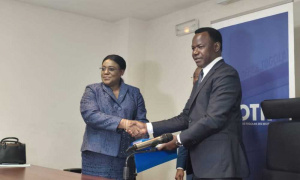
The Togo Revenue Authority (OTR) has appointed former Parliament Speaker Yawa Chantal Tségan as its new Commissioner General, succeeding Philippe Kokou Tchodié. The leadership change at the institution—which oversees tax, customs, and local revenue collection—took effect on Friday, Oct. 24, 2025.
Tségan combines technocratic expertise with political experience. Trained as a tax inspector at the École Nationale des Impôts in Clermont-Ferrand, she previously served in the Directorate of Large Enterprises and as Chief of Staff at the Ministry of Transport before entering Parliament in 2013.
She formally assumed her new role at a handover ceremony held at OTR headquarters, attended by Finance and Budget Minister Essowè Barcola. Tségan will now lead the OTR through a challenging period focused on improving collection, tackling fraud, and enhancing taxpayer services.
Outgoing Commissioner General Tchodié, appointed in February 2019, oversaw a period of strong performance. Budget revenues collected by the OTR totaled 779.6 billion XOF in 2021, rose to 865.3 billion XOF in 2022, and reached 990.1 billion XOF in 2023. This 2023 figure amounted to 108.6% of the target and a 14.5% increase over the previous year, according to OTR data. By the end of August 2025, the OTR had collected 737.2 billion XOF, or 61% of the annual target of just over 1.2 trillion XOF.
The leadership change comes at a pivotal moment, as Togo enters a new political era under a revised Constitution. Following the challenges of the COVID-19 pandemic, the country is prioritizing economic growth and fiscal consolidation, with the OTR acting as the key driver of domestic resource mobilization.
Tségan faces several fiscal challenges, including widening the tax base, strengthening customs oversight, digitizing services, and improving local revenue collection. She inherits a modernized institution but must maintain revenue growth and raise the share of direct taxes, which accounted for only about 25% of budget revenues in 2023, according to OTR reports.
Ayi Renaud Dossavi
20th Lomé International Fair to Host China as Guest of Honor

Togo will host the 20th Lomé International Fair from Nov. 28 to Dec. 14, 2025. The event, which attracts businesses and investors from across the region and beyond, will highlight cooperation between Togo and China, with China named the guest country of honor.
A delegation of Chinese companies is expected to showcase China’s industrial and technological strengths during a special China National Day on Nov. 29. The program will feature exhibitions, cultural events, and business meetings aimed at strengthening trade ties between the two countries.
The 2025 edition is especially significant as it marks the 40th anniversary of the Fair’s organizer, the Center for Exhibitions and Fairs of Togo (CETEF). More than 1,300 exhibitors and around 700,000 visitors are expected at the 90,000-square-meter venue.
New features this year include a reorganization of the pavilions, digitalized services, and upgraded visitor facilities. Training sessions are also being held for exhibitors to improve booth presentation and marketing skills.
Togolese music icon King Mensah has been chosen as the face of this year’s event.
Ayi Renaud Dossavi
Togo Establishes Inspectorate to Enforce Environmental Standards
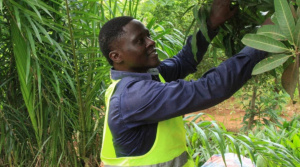
Togo has taken another step to modernize its environmental policy with the establishment of the General Inspectorate for the Environment, Forest Resources, and the Coastline. The decree, signed on Monday, Oct. 20, 2025, by Environment Minister Dodzi Kokoroko, places the new body under his direct supervision.
The Inspectorate will be responsible for overseeing, evaluating, and monitoring the compliance of economic and social activities with existing environmental standards. Its mandate covers the sustainable management of forests, protection of the coastline, and preservation of natural resources.
The new agency is tasked with strengthening national resilience to climate threats and ensuring rigorous monitoring of environmental policies. It will also oversee the implementation of Togo’s international commitments and coordinate the country’s participation in global climate conferences.
This will involve issuing periodic climate monitoring and alert reports to guide public policy and national planning.
The reform is part of a broader effort in Togo that recently included the creation of a National Climate Watch Cell and the launch of a project to update forestry data. These initiatives aim to provide the country with an integrated environmental governance framework that balances economic development, the green transition, and transparency in the management of natural resources.
Togo Returns to Regional Bond Market Seeking 25 Billion CFA Francs
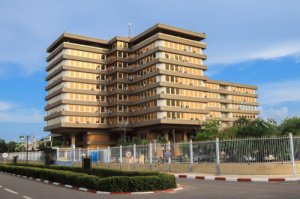
Togo is making a return to the West African Economic and Monetary Union (WAEMU) public securities market after nearly three months, seeking to raise 25 billion CFA francs. The operation will take place on Friday, Oct. 24, 2025, via a simultaneous issuance of fungible Treasury Bills (BAT) and Treasury Bonds (OAT).
According to Togo First, the Togolese Public Treasury plans to raise 8 billion CFA francs by issuing 364-day Treasury Bills at a nominal value of 1 million CFA francs, offered at multiple rates. The remaining 17 billion CFA francs will be raised through three-year and five-year Treasury Bonds with a nominal value of 10,000 CFA francs, offering interest rates of 6.25% and 6.50% respectively.
The proceeds will help finance the 2025 national budget, totaling 2,397 billion CFA francs.
Year to date, Togo has raised 264.5 billion CFA francs on the regional market, reaching about 79% of its annual target of 332 billion CFA francs. For the final quarter of 2025, the country plans to raise an additional 100 billion CFA francs.
Esaïe Edoh