

Togo First
Spiro, Formerly M-Auto Raises Record $100M for Expansion

Spiro, the two-wheel electric mobility company formerly known as M-Auto, which has operated in Togo since 2022, has closed a record funding round of $100 million (approximately 56.5 billion CFA francs). This is the largest fundraising round ever recorded in the African e-mobility sector.
The investment, led by the Fund for Export Development in Africa (FEDA), the impact investing subsidiary of Afreximbank, aims to strengthen Spiro's market position. The capital will be used to expand the company's activities, notably through an enlarged network of battery-swap stations.
Established in 2022, Spiro currently operates more than 60,000 electric motorbikes and 1,200 battery-swap stations across six African countries: Togo, Benin, Rwanda, Nigeria, Kenya, and Uganda.
The raise comes at a time when “Africa is at an inflection point in personal mobility.”
According to Kaushik Burman, CEO of Spiro, “Riders are rapidly shifting from internal combustion motorcycles to Spiro’s more affordable and accessible battery-swapping ecosystem and motorcycles.”
Spiro plans to accelerate the installation of new battery-swap stations in its key markets, including Togo. The company also intends to support the creation of skilled jobs related to the production, maintenance, and management of African-made electric vehicles.
Furthermore, with the new resources, Spiro projects deploying over 100,000 vehicles by the end of 2025 while developing clean, decentralized energy infrastructure across the continent.
In Togo, Spiro aligns with the national energy transition and sustainable mobility policy, which is supported by tax incentives written into the 2024 finance law, particularly the exemption on the importation of electric batteries.
R.E.D.
West African Countries Discuss Maritime Border Delimitation in Lomé
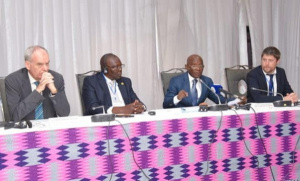
A regional workshop on maritime border delimitation and the joint management of marine spaces in West Africa began in Lomé on Tuesday, Oct. 21, 2025. Organized by the Togolese High Council for the Sea, in partnership with German Cooperation (GIZ) and the African Union's Border Programme (AUBP), the meeting brings together experts and representatives from the region’s coastal nations.
The goal is to establish a platform for sharing experiences on the challenges of maritime border delimitation and the sustainable management of shared marine areas. Participants aim to contribute to a comprehensive guide on maritime border delimitation and ocean governance. This document, currently under preparation, is intended to transform these sensitive zones from potential sources of tension into areas of cooperation, integration, and shared development.
Over four days, discussions will focus on the legal framework applicable to marine spaces, border delimitation procedures, and related technical aspects.
Stanislas Baba, Minister-Counsellor to the President’s Council for Maritime Affairs, described the initiative as addressing a continental urgency. "Africa has 39 coastal countries, but very few have delimited their maritime spaces. If we are not careful, the seas risk becoming major sources of conflict," he warned. Baba stressed the necessity to "talk, negotiate, and cooperate to avoid tensions."
Esaïe Edoh
Togo Trains 400 Hairdressers to Support Mental Health Awareness

- The Bluemind Foundation trained 400 hairdressers in Lomé to act as community mental health ambassadors.
- The initiative aims to reach one million Togolese women by the end of 2026, with expansion planned in Kara, Centrale, and Savanes regions.
- Togo faces a critical shortage of psychiatrists — only seven for eight million people — highlighting the need for community-based support models.
In Togo, 400 hairdressers have completed training as community mental health ambassadors under the Heal by Hair program, an initiative launched by the Bluemind Foundation. The four-day training, held in partnership with the University of Lomé, concluded on October 22 and focused on equipping women in the hairdressing sector to detect, support, and guide clients experiencing psychological distress.

The sessions covered early identification of mental health issues, empathetic communication, and crisis management techniques. Participants are now expected to serve as local advocates capable of connecting women to professional care.
Marie-Alix de Putter, founder of the Bluemind Foundation, said: “Each trained salon becomes a haven of dignity and support. Our hairdressers are now essential community relays to promote mental health and break the stigma surrounding these disorders.”
The initiative transforms beauty salons — traditionally safe and social spaces for women — into informal hubs for emotional support and awareness.
Launched in Lomé in 2022, Heal by Hair has already supported more than 100,000 women across Togo, Cameroon, and Côte d’Ivoire. The foundation plans to expand the program to the Kara region in July 2026, with a goal of reaching one million Togolese women by the end of that year, including 230,000 direct beneficiaries in Kara, Centrale, and Savanes.

The project comes amid alarming mental health statistics. According to data from the Bluemind Foundation, about 10% of Africa’s population suffers from mental health disorders. In Togo, only seven psychiatrists serve eight million people, and less than 20% of Africans have access to adequate care due to financial constraints.
By using hair salons as community contact points, the foundation aims to overcome these structural barriers and extend mental health support to women who would otherwise remain outside the formal healthcare system.
Togo’s Maritime Region launches hospital development plan
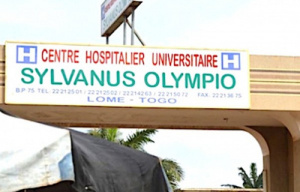
Togo’s Maritime Region is developing a hospital development plan as part of the country’s ongoing health system reform. On October 21–22, 2025, the Youth and Women’s Center in Tsévié hosted the launch workshop for the Hospital Establishment Project (PEH).
The initiative, led by the Ministry of Health with support from the Global Fund, seeks to provide each health facility with a strategic tool to enhance governance, quality of care, and hospital performance.
At the opening session, regional governor Taïrou Bagbiègue emphasized that the PEH will serve as a genuine hospital development plan tailored to local needs. “The hospital of tomorrow must be patient-centered and modern,” he said, stressing the importance of strategic planning for the 2026–2030 period.
Dr. Koffi Agbétiafa, regional director of health for the Maritime Region, explained that the initiative aligns with the government’s 2025 Roadmap, which aims to promote equitable and sustainable access to healthcare.
The project will strengthen hospital and peripheral care unit (USP2) management capacities and align practices with national hospital governance standards. Similar workshops will be held in all regions to ensure harmonized hospital planning across the country.
While the Maritime Region launched its PEH on October 21, 2025, the exercise had already been completed in the Grand Lomé Autonomous District in August.
Togo Sets Up Climate Watch Unit to Strengthen Resilience and Policy Coordination

Togo's Ministry of Environment, Forest Resources, Coastal Protection, and Climate Change has announced the creation of a National Climate Watch Unit. The initiative, led by the new minister, Dodzi Kokoroko, aims to strengthen national resilience and improve decision-making on climate issues.
The unit will monitor, analyze, and share information on climate phenomena and their impacts. It will also oversee the implementation of the Climate Convention and coordinate Togo’s participation in international climate forums.
The new entity will collect and analyze meteorological, climatic, and environmental data from technical agencies and partners. The data will help the country anticipate environmental events, shape policies for sustainable resource management, prevent disasters, and promote balanced land use.
By building national expertise on Togo’s climate, the unit is expected to strengthen the country’s credibility with technical and financial partners and improve access to international climate finance. The new unit complements ongoing government efforts such as the national reforestation program, which aims to plant one billion trees by 2030.
Esaïe Edoh
Togo to Launch Pilot Battery Energy Storage Program, Backed by AFD and GEAPP
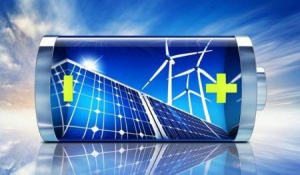
Togo is set to pilot a green energy storage program after the French Development Agency and the Global Energy Alliance for People and Planet (GEAPP) signed an agreement for 112 million CFA francs ($200,000) to finance feasibility studies. The announcement was made on the sidelines of the annual meetings of the IMF and the World Bank in Washington.
The project, which targets an initial capacity of 55 megawatts (MW), is part of the country's "Mission 300" National Energy Pact. The pact aims for universal electricity access by 2030, as Togo currently struggles to provide power to about 40% of its population. The country's target is to raise the share of renewable energy to 63% of its installed capacity by 2030, up from roughly 26% now.
Battery energy storage (BESS) will help stabilize the national grid and offset the intermittency of solar power, which is often supplemented by thermal sources or regional imports in the evenings. The project also includes developing a national roadmap for the progressive deployment of the technology, with an estimated capacity goal of 156 megawatt-hours (MWh) by 2030.
Rémy Rioux, CEO of the AFD Group, said the project "brings tangible benefits to the people: reliable electricity, energy security and new economic opportunities."
GEAPP CEO Woochong Um hailed the initiative as an example of Togo's leadership in Africa's energy transition, combining innovation with sustainable social impact. "Togo’s ambitious energy commitments will deliver clean power, clean air, jobs and opportunities for millions," Um said. "This is what true leadership looks like: setting bold national goals and practical pathways to reach them."
Togo is one of 17 African nations that adopted a "National Energy Pact" on Sept. 24, 2025, in New York, as part of the World Bank and African Development Bank-backed Mission 300 initiative. The wider goal is to connect 300 million Africans to electricity by 2030.
Ayi Renaud Dossavi
Lomé Port Climbs Lloyd’s List 2025, Solidifying Regional Lead
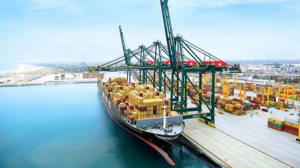
The Autonomous Port of Lomé (PAL) has solidified its standing among global port platforms, moving up one spot to rank 92nd in the 2025 classification by Lloyd’s List, the world reference for maritime transport.
With traffic of 2.06 million TEUs in 2024, an 8% increase from 1.9 million TEUs the previous year, Lomé remains the only port in sub-Saharan Africa to feature in the global Top 100. It ranks as the fifth-busiest port on the African continent, trailing only Tanger Med, Port Said, Durban, and Damietta.
Lloyd’s List analysts attributed the advance primarily to the growth of transshipment, a segment Lomé has successfully developed through strategic partnerships and efficient port logistics. The Lomé deepsea port benefits from a draft that allows it to accommodate the largest vessels operating on the continent, thereby enhancing its competitiveness against rivals such as Durban and Abidjan.
This progress comes amid a global environment marked by an 8.1% rebound in container traffic and the reorganization of international supply chains.
Separately, the Port of Lomé recently completed dredging work on its terminal for 7.5 million euros. The channel depth has been increased to 18.6 meters, enabling it to receive a greater number of mega-ships (those with a capacity ranging from 19,000 to 24,000 TEUs).
Further investments are expected from Lomé Container Terminal (LCT), one of the port's two operators, which has announced a 120 million euro investment program through 2027. This plan includes reinforcing quays, installing new cranes, and expanding the terminal's annual capacity to 2.5 million TEUs.
Ayi Renaud Dossavi
Togo Trains Hairdressers as Mental Health Ambassadors in 'Heal by Hair' Program
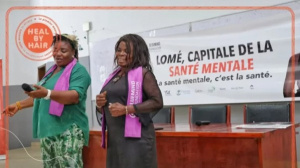
The fifth edition of the "Heal by Hair" program, a mental health initiative centered on haircare, began its operational phase in Lomé on Oct. 19, with training scheduled through Oct. 25, 2025.
The project is an initiative of the Bluemind Foundation in partnership with the University of Lomé and the Ministry of Health. Supported by the Innovation Fund for Development (FID), the current phase will train 400 hairdressers from Greater Lomé to become mental health ambassadors, transforming hair salons into centers for listening, prevention, and referral.
The program, which originated in Lomé, operates on the simple idea of enabling hairdressers to serve as community relays capable of identifying signs of psychological distress and directing clients toward appropriate care. At an estimated cost of 656 CFA francs per beneficiary, Heal by Hair has already assisted more than 100,000 women across Togo, Cameroon, and Ivory Coast.
This initiative addresses a continent-wide issue where nearly 10% of the population suffers from mental disorders. The economic losses related to depression and anxiety in Africa are estimated at $232 billion annually. In Togo alone, these disorders cost nearly 400 billion CFA francs each year, according to the Bluemind Foundation.
Marie-Alix de Putter, founder of the Bluemind Foundation, said, "Each trained salon becomes a haven of dignity and support."
Following the Lomé training, the foundation plans to expand the program to the city of Kara by July 2026 before covering other regions of the country. The goal is to reach 1 million supported women in Togo by the end of 2026, including 230,000 direct beneficiaries in the Kara, Centrale, and Savanes regions.
Ayi Renaud Dossavi
France, Togo to Co-Host Grand Lakes Conference to Aid Peace Efforts

France will host an international conference on Oct. 30 to support peace and prosperity in Africa’s Great Lakes region.
The meeting is co-organized with Togo, whose Council President, Faure Gnassingbé, serves as the African Union (AU) mediator in the crisis between the Democratic Republic of Congo (DRC) and Rwanda.
Paris and Lomé aim to rally international support to tackle the humanitarian crisis, particularly in eastern DRC and the wider Great Lakes region. France’s Foreign Ministry said talks would focus on “the urgent need for concrete responses to the needs of local populations.”
Organizers see the conference as a chance to renew international commitment to peace, stability, and development in the region. The event will also serve as a platform to back ongoing mediation efforts led by the African Union, the United States, and Qatar.
Talks on the sidelines of the Paris Peace Forum will also explore ways to deepen regional economic integration, seen as key to lasting peace.
For Togo, the conference coincides with the Council President’s intensified consultations in Lomé with stakeholders in the conflict. The event will enable Togo’s mediation team to present its proposals and collect input from partners as part of a collective peacebuilding approach.
Esaïe Edoh
TogoTech: Fifteen Startups Unite to Expand Togo’s Digital Economy

-
Fifteen Togolese startups formed the collective TogoTech to strengthen the national tech ecosystem and improve access to funding.
-
The group, representing over CFA2 billion ($3.2 million) in combined revenue and more than 100 direct jobs, will officially launch its platform on October 24 in Lomé.
-
TogoTech plans to advocate for a Startup Act, create an early-stage fund, and organize an annual national tech fair to foster innovation.
Fifteen Togolese startups united under the TogoTech banner will officially launch the country’s first collective digital platform on October 24 in Lomé. The initiative, called Synergy Days, aims to connect innovators, investors, and policymakers to accelerate Togo’s technology sector.
Born from a collaborative effort, TogoTech seeks to give Togolese startups a unified voice and raise the country’s profile on the African tech scene. The collective includes major players such as Gozem, a leading mobility platform in West Africa; Semoa, a fintech pioneer; Édolé, focused on digital solutions for construction; and others like Solimi, MiaPay, Kondjigbalé, Anaxar, and Clinicaa, active in health tech, logistics, and digital payments.
According to TogoTech, the collective already accounts for more than 100 direct jobs, CFA2 billion in cumulative revenue, and over 40 national and international awards. Its mission is to enhance visibility for local startups, ease access to financing, encourage strategic partnerships, and drive job creation in Togo’s digital economy.
“TogoTech aims to act as a catalyst for innovation and a partner to public authorities,” said Gaël Egbidji, the collective’s president.
The executive board also includes Edem Adjamagbo, vice-president, who emphasized that “TogoTech will play a key advocacy and lobbying role for Togolese startups with policymakers and institutional partners.” Yvon Koudam, secretary-general, oversees program coordination, while Kodjo Aïd Otou, treasurer, manages financial operations and partnership development.
This article was initially published in French by Fiacre E. Kakpo
Adapted in English by Ange Jason Quenum