

Togo First
Lomé to Host Regional Workshop on Improving Local Budget Management

Lomé will host a regional workshop on November 3-4 focused on sharing experiences and best practices in local government budget management to improve public access to basic services. The event is organized by the Association of Togolese Municipalities (FCT) and the Council of Local Governments of the West African Economic and Monetary Union (CCT-UEMOA), with financial support from German Cooperation (GIZ).
The meeting will center on innovative approaches to local budget management, aiming to promote the exchange of local and regional experiences and encourage the adoption of more effective financial governance mechanisms. Organizers say these tools can enhance service delivery and strengthen local administration.
Participants from several West African countries, including Benin, Burkina Faso, Cameroon, Mali, Mauritania, Niger, Senegal, and Togo, will take part. The program includes presentations on the fundamentals of local budget management and panel discussions comparing practices with both indirect and direct impacts on access to essential services.
According to the organizers, local budgets are a key tool for planning and managing territorial development. Sound financial management allows local governments to forecast, administer, and execute revenues and expenditures more efficiently, ultimately improving conditions for communities.
Togo showcases data-driven education management at ADEA 2025
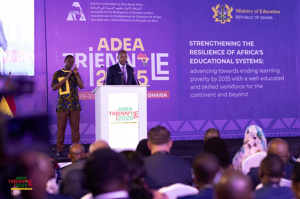
As African education ministers grapple with chronic financing shortfalls, Togo presented a practical approach to maximizing limited resources through data management at the Association for the Development of Education in Africa Triennale this week ( ADEA 2025, in Accra; Ghana).
Speaking at a panel on sustainable education financing (on Thursday 30 October 2025), Alex Gbeteglo, head of statistics at Togo's Ministry of Primary and Secondary Education, outlined how the country has positioned data at the center of its education planning strategy. "We need to better understand needs, guide public decisions, and optimize resources," he told participants at the three-day gathering that concludes Friday.
The West African nation has deployed an integrated information system linking schools, inspectorates, and regional directorates into a coherent network. "We can now act quickly and adjust policies based on real-time information," Gbeteglo said.
Teacher management goes digital
At the heart of Togo's approach is the CGRH application, a digital platform that centralizes teacher management nationwide. The system tracks deployment, performance, and field-level needs across the country's education workforce. "We can now determine where to deploy teachers and measure their pedagogical effectiveness," Gbeteglo explained.
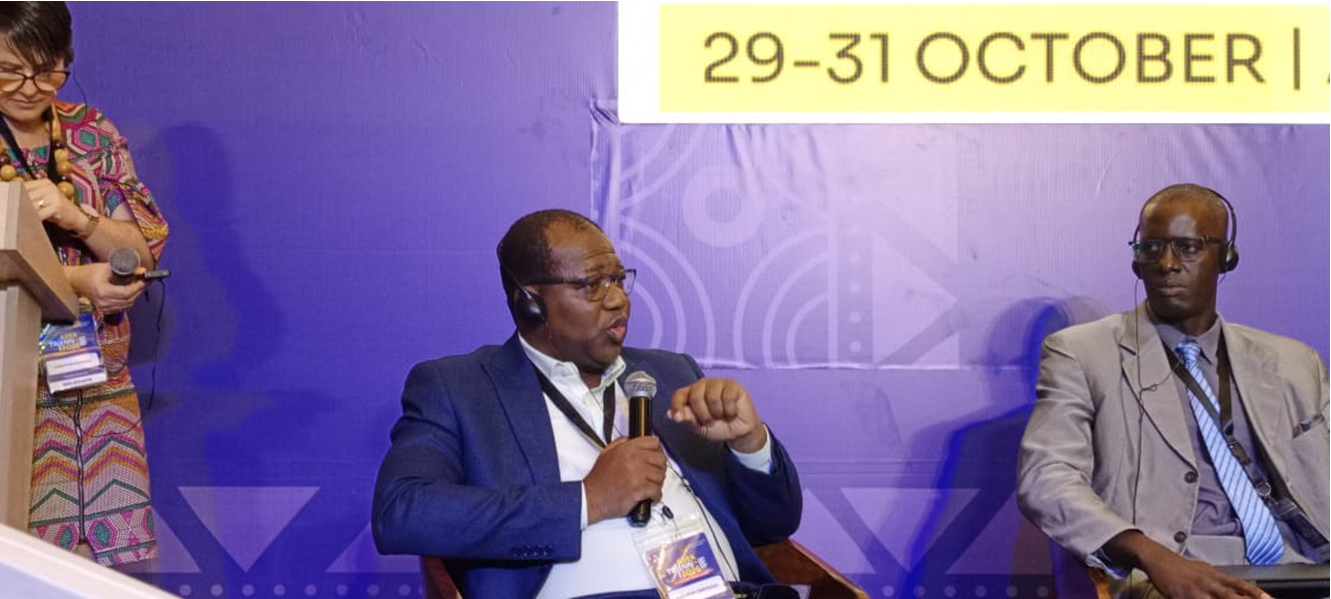
The Togolese official, who has been directly involved with the system, described its practical impact saying: "All inspectorates can now easily access data from our annual census and obtain real-time information on pedagogical monitoring. From my position at the ministry, this transformation is already improving data use and significantly raising data quality across our education system."
Building capacity with international support
The initiatives are backed by the Global Partnership for Education (GPE) and the KIX program, which have supported Togo in developing digital tools and training regional staff in information management.
The panel, which brought together education experts from across Africa, emphasized that reliable data remains essential for equitable resource allocation and rigorous performance monitoring ; challenges that have taken on greater urgency as external funding contracts.
Togo's presentation comes as African countries search for ways to do more with less, leveraging technology and improved governance to maintain educational progress despite tightening budgets.
Organized by ADEA, the triennial meeting is a pan-African forum that brings together African education ministers, experts, development partners, and stakeholders every three years. It aims to assess progress and shape policies for improving education systems across the continent. Founded to promote evidence-based dialogue and peer learning, the platform coordinates efforts to address Africa's educational challenges, from foundational learning to higher education and skills development.
R.E.D
Ecobank launches instant international payment service in Togo

Ecobank Group has launched a new instant cross-border transfer service in Togo, in partnership with Singaporean fintech Thunes. This innovation marks the start of a continental rollout that will eventually cover the banking group’s 35 markets.
The system enables Ecobank customers, both individuals and businesses, to send and receive money in real time from or to more than 130 countries. The service is powered by Thunes’ global Direct network, which connects over seven billion mobile wallets and bank accounts.
“This partnership aligns with Ecobank’s mission to provide borderless banking services and support financial inclusion in Africa,” said Jeremy Awori, CEO of the Lomé-based banking group.
According to Thunes CEO Peter De Caluwe, the collaboration aims to make payments across Africa faster and more efficient. “Together, we provide quicker and more reliable access to liquidity and open new growth opportunities,” he said.
The solution is expected to facilitate household and business transactions, including family remittances and cross-border trade payments. It also offers new opportunities for Togolese businesses as digital payments continue to grow, supported by regional institutions such as the Central Bank of West African States (BCEAO).
Togo will be the first market to implement the new system, allowing Ecobank clients to receive instant payments from global remittance providers. Ecobank is also among the three banks in Togo testing the BCEAO’s instant payment system, known as PI.
Gnassingbé Urges Africa to Fund Infrastructure with Its Own Capital
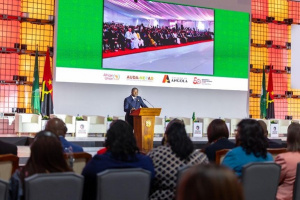
Council President Faure Gnassingbé urged African countries to develop frameworks to channel their substantial domestic financial resources into regional infrastructure, industrial, and energy projects. He spoke on October 28 at the third Luanda Summit on Financing African Infrastructure in Angola.
Gnassingbé noted that large pools of African capital, from pension and sovereign wealth funds to insurance and household savings, remain invested outside the continent, often in low-yield assets.
“Our continent has considerable financial resources,” he said. “Much of this capital is underused or invested abroad. We must turn this trend around. It is time to create instruments capable of channeling these African resources into regional, industrial, and energy infrastructure.”
For Togo, he added, mobilizing these resources will require bolder financial engineering, including public-private co-investment platforms, regional investment vehicles, and African credit guarantee schemes to strengthen investor confidence.
Gnassingbé emphasized that the continent’s banks and financial institutions have a central role to play in pooling risks, mobilizing capital, and reinforcing economic sovereignty.
“African institutions must take the lead,” he said. “Infrastructure financing will not come solely from external aid; it depends on our capacity to harness our own resources to build the Africa we want.”
The Togolese leader also underlined the strategic role of infrastructure, especially road networks, in enhancing competitiveness. “When a transport corridor functions properly, logistics costs drop and transit times fall. That’s how landlocked countries become true trading hubs,” he added.
African leaders at the summit also discussed strategic investment opportunities under the Program for Infrastructure Development in Africa (PIDA) and the African Union’s Master Plan for Regional and Continental Connectivity.
Food Security Project SAIRT 1 Reaches 25,000+ People in North Region
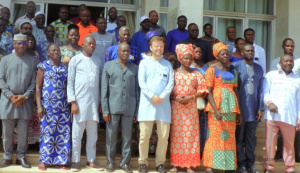
A food security and resilience project in Togo has reached over 25,000 direct and indirect beneficiaries in the Kara and Savanes regions since its launch in 2022, according to the final program evaluation released Tuesday in Kara.
The assessment highlighted "encouraging" results for local agricultural resilience under the Inclusive Food Security and Resilience Project (SAIRT 1), implemented by INADES-Formation Togo.
Financed by German partners CBM and BMZ as part of the Support Program for the Development of Family Farming (PADAF), the project aimed specifically at improving food security for farmers with disabilities.
Of the nearly 4,000 direct beneficiaries recorded, more than 1,700 were people with disabilities. Including indirect recipients, the project covered close to 10% of the population in the targeted municipalities.
The evaluation also identified key achievements, limitations, and areas for improvement to enhance the sustainability of field operations.
Beneficiary communes, including Kozah 1 and 2, Assoli 1, Oti Sud 1, Oti 2, and Tandjouaré 1, praised the project's impact on agricultural diversification and the promotion of inclusive production, according to the state-run ATOP news agency.
Local authorities are now calling for the gains to be consolidated through stronger technical support and better institutional integration of community-based initiatives.
Togo Cotton Sector Plots Five-Year Comeback Plan, Targets 200,000 Tons by 2030

Cotton sector stakeholders in Togo are moving to revitalize the industry, which has struggled with years of lackluster production, by drafting a new five-year roadmap for 2025 to 2030 aimed at a sustainable national production recovery.
Producers, experts, and institutional representatives have been gathered in Kara since Tuesday, October 28, 2025, for a planning workshop organized by the Nouvelle Société Cotonnière du Togo (NSCT) and the Fédération nationale des groupements de producteurs de coton (FNGPC). The meeting seeks to define new strategies to re-engage farmers in a crop once known as the country’s “white gold.”
The discussions, which include international experts, are expected to identify key bottlenecks, establish a precise sector diagnosis, and propose concrete solutions to relaunch production. A central focus is on coordinating institutional, private, and producer groups to strengthen governance across the value chain.
The forthcoming roadmap will serve as the strategic framework for the 2025-2030 period, detailing priority actions, clarifying the responsibilities of each stakeholder, and establishing a monitoring and evaluation mechanism. Participants are working in sub-groups on critical themes, including farmer re-mobilization, climate change resistant productivity, logistics and ginning, and sector commercialization and financing.
Based on projections discussed during the meeting, the effective implementation of the plan aims to achieve an annual seed cotton production of between 150,000 and 200,000 tons by 2030.
The initiative comes as the sector faces continued challenges since the Singapore-based Olam group took control in 2020. Since then, national output has struggled to surpass the 60,000-tonne mark, with the exception of the 2023-2024 campaign, which saw a modest rebound to 67,000 tons. Production for the most recent 2024-2025 season fell to 60,403 tons, missing initial forecasts by 8.4%.
For the upcoming 2025-2026 season, cotton growers have set an ambitious target of 92,500 tons, representing an increase of over 50% from the previous harvest. The new roadmap is designed to make this significant challenge achievable through the mobilization of all stakeholders and better support for farmers.
Esaïe Edoh
Ecobank Q3 2025 Net Profit Jumps 34%, Fueled by Robust Deposits

Ecobank Transnational Incorporated (ETI), the pan-African banking group headquartered in Lomé, reported strong results for the third quarter of 2025, driven by revenue growth across all business segments.
The bank's net profit for the nine months ended September reached $460.6 million, marking a 34% increase year-on-year. Pre-tax profit rose by 33% to $656.6 million.
Net banking income, or revenue, hit $1.75 billion, an 18% jump from the $1.48 billion recorded during the same period in 2024. Management attributed the strong performance to the success of its "growth, transformation, and returns-focused strategy."
The Corporate and Investment Bank (CIB) division saw revenue climb 18%, buoyed by what the bank described as improved origination discipline and account management. The Retail and SME Bank division grew by 13%, supported by an expanding customer base and higher deposits.
Total customer deposits increased 23% to $24.1 billion, while loans rose 17% to $11.3 billion. Consequently, the bank's total assets expanded by 22% year-on-year to $32.4 billion, with shareholders' equity surging 54% to $2.49 billion.
However, the bank's profitability momentum was tempered by a significant 38% rise in the cost of risk, which reached $254.7 million. This increase signals greater exposure to credit risk amid stressed credit markets across Africa.
The financial report did not provide a detailed breakdown of regional performance, notably in the key markets of Nigeria and Ghana, which are frequently affected by currency volatility.
Despite the lack of regional detail and the higher cost of risk, the Ecobank Group, which operates in 35 African markets, said its financial strength remains robust, underpinned by revenue diversification and ongoing modernization of its digital services.
R.E.D
Parliament Swears In 14 New Lawmakers
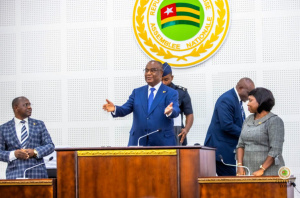
Togo’s National Assembly swore in 14 new lawmakers on Tuesday, Oct. 28, 2025, in a plenary session. The Constitutional Court appointed them to replace legislators who left their seats after taking up government or administrative positions, or who resigned voluntarily.
A court ruling on Oct. 25 confirmed that several prominent political figures had resigned their parliamentary seats. Among them were Kodjo Adédzé, the former Speaker and current Minister of Territorial Development; Yawa Djigbodi Tsègan, now Commissioner General of the Togo Revenue Office (OTR); Dodzi Kokoroko, Minister of Environment; and Atcha-Dédji Affoh, Governor of the Savanes Region.
The new members were officially sworn in during the session.
On the same day, lawmakers unanimously elected Professor Komi Sélom Klassou as Speaker of the National Assembly. He succeeds Kodjo Adédzé as head of the lower house, which became bicameral following Togo’s transition to the Fifth Republic.
R.E.D
Togo Moves to Harmonize Education Pathways and Strengthen Skills Training

Togo is setting up a system to link the different branches of its education sector, making it easier for students to move between them and ensuring a more consistent national training framework.
The reform, announced by the Ministry of Education, was detailed in a decree published in the official gazette on Oct. 23, 2025, as part of the implementation of the country’s Education Sector Plan. The decree establishes an integrated framework allowing students, apprentices, and vocational trainees to move freely between general, technical, vocational, and higher education, based on their acquired skills, whether from formal schooling, non-formal training, or professional experience.
It also standardizes requirements for qualifications ranging from the Initial Certificate of Apprenticeship (CIFA) to the Professional Baccalaureate. Assessments will now be competency-based, combining continuous evaluation (60%) with a final examination (40%), and industry professionals will join the examination boards.
Two new bodies, the Bridge Steering Committee (CPP) and the Inter-Ministerial Bridge Committee (CIP), will oversee the system’s implementation, ensuring consistency and quality across training programs.
A one-year pilot phase will precede the nationwide rollout. The framework also includes incentives for companies that offer training and targeted support for vulnerable groups.
R.E.D
Togo: GRIT 2025 Opens to Promote African Innovation and Digital Growth

Togo’s flagship tech and innovation summit, GRIT, officially opened on Wednesday, Oct. 29, 2025, at the Lomé International Conference Center (CICL). The two-day event was opened by Cina Lawson, Minister of Public Service Efficiency and Digital Transformation.
The summit brings together startups, investors, and digital leaders from across Africa. Its goal is to foster dialogue on technological development, highlighting African youth as a key driver of innovation and change.
“From Casablanca to Cape Town, from Nairobi to Lomé, a new generation of visionaries believes that Africa’s future will be digital, inclusive, and boldly African,” Lawson said at the opening session. GRIT serves as a platform to share ideas, forge partnerships, and promote innovation as a shared language.
The event comes as Togo places growing emphasis on artificial intelligence and data use as engines of economic growth. Through the National Geoportal (GeoData), startups, researchers, and institutions now have broader access to public data in sectors such as health, education, energy, and infrastructure, creating conditions for homegrown African solutions tailored to local needs.
Lawson said the government aims to position Togo as a genuine African digital hub, a space where talent, ideas, and capital meet to build the economy of the future. “The story of African innovation is being written here in Lomé,” she concluded.
Esaïe Edoh