
Togo First
Togo: New AED-SAER Partnership to Prepare Youth for Jobs in Renewable Energy
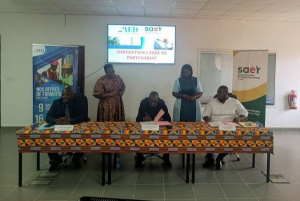
Togo’s Education Development Agency (AED), the agency overseeing IFAD training centers, and the Synergy of Renewable Energy Actors (SAER) formalized their partnership on Friday, November 7, to strengthen cooperation in the renewable energy sector.
The three-year agreement outlines several key areas of collaboration. It includes plans for creating initial and continuing training programs in renewable energy tailored to market needs. In addition, SAER member companies will host trainees from the IFAD Renewable Energy Center for hands-on internships, helping them transition into the workforce.
The partnership also includes work-study programs and aims to build the skills of trainers and company mentors. SAER will take part in the governance of the IFAD Renewable Energy Center. Finally, the agreement provides technical assistance and equipment support to improve training quality and support the development of Togo’s renewable energy sector.
“This agreement reflects our goal to bridge training and employment,” said Dammipi Noupokou, Director-General of AED. “Our ambition is to build a more dynamic environment to prepare young people for future jobs and support the country’s energy transition.”
Serge Adote, Chairman of SAER’s Board of Directors, emphasized the importance of the partnership, noting it will allow SAER to become more deeply involved in the activities of the IFAD Renewable Energy Center, particularly in “innovative and ambitious programs starting in 2026.”
AED and SAER have worked together for several years, including support for the IFAD Renewable Energy Center in developing professional and training standards.
Togo Plans National Radio Mapping Project to Strengthen Frequency Management
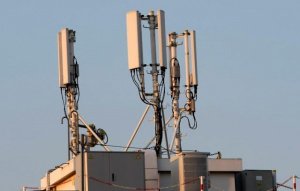
Togo’s Electronic Communications and Postal Regulatory Authority (ARCEP) is moving to establish a national radio frequency mapping system, dubbed RadioMap, which will allow for the visualization, monitoring, and management of all radio frequencies used across the country.
The project involves collecting, analyzing, and mapping data on radio emissions, including antennas, base stations, and microwave links.
As part of the initiative, ARCEP issued a call for tenders on Wednesday, November 5, 2025, to equip Togo with a modern platform for managing licensed radio sites and monitoring quality of service (QoS) and non-ionizing radiation (NIR) levels.
Financed by ARCEP’s 2025 budget, the contract covers the supply, installation, and commissioning of the platform. The successful bidder must deliver the service within 240 days of contract award. The tender, issued under the Public Procurement Code, specifies that alternative proposals will not be accepted.
Interested bidders must submit their proposals no later than December 5, 2025.
R.E.D
Togo Inaugurates Complaint Committees in Lacs Prefecture to Support Biometric ID Project
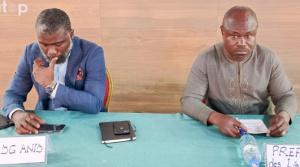
Togo’s National Identification Agency (ANID) is moving ahead with its biometric registration project in Zone 1 of the Maritime region.
The latest step in Aného involved setting up Local Complaint Management Committees (CCGPs) for the Lacs prefecture.
These committees are responsible for ensuring efficient and transparent processing of complaints related to the biometric enrollment process. Specifically, they will review citizens’ concerns and ensure adherence to principles of fairness and confidentiality.
Members of the newly formed committees were officially appointed and trained for their roles on Tuesday, November 4, and Wednesday, November 5, 2025.
The initiative is being carried out under the World Bank–backed West Africa Unique Identification for Regional Integration and Inclusion (WURI-Togo) project. This program aims to provide every resident with a state-recognized biometric identity to facilitate access to social and financial services.
ANID Director-General, Captain Silété Roselin Devo, urged local residents to take part actively in the ongoing enrollment process.
R.E.D
China Backs Togo’s 2030 Universal Electricity Goal With 3,900 Solar Kits
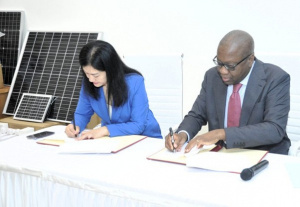
China handed over solar kits to Togo on Thursday, November 6, 2025, in Lomé, to support the country’s goal of achieving universal electricity access by 2030.
The donation is part of China’s “Africa Solar Belt” project, an initiative designed to support the continent’s energy transition and fight climate change.
The donation, consisting of 3,900 photovoltaic kits, is intended to meet the energy needs of rural households. These off-grid systems will boost rural electrification, help diversify Togo’s energy mix, and support low-carbon development. Officials said the initiative aligns with expanding Sino-African cooperation in renewable energy, particularly solar power.
According to Robert Koffi Eklo, the Minister Delegate for Energy, the kits are expected to supply electricity to more than 20,000 Togolese living in areas not connected to the national grid. He said their use would contribute to environmental protection and sustainable development.
Chinese Ambassador to Togo, Min Wang, praised the Togolese government’s efforts to combat climate change, adding that the donation reflects China’s continued support for Togo’s energy transition.
The Ministry of Energy will organize training sessions for Togolese technicians before deploying the kits, to ensure proper installation and maintenance. Various initiatives carried out with partner support have already helped Togo reach an electricity access rate of 70% by the end of 2024.
Esaïe Edoh
Togo, Germany Review Health Cooperation After €484 Million in Support
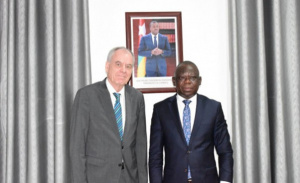
Germany provided €484.59 million — about 318 billion XOF or $527 million — to support Togo’s health sector between 2014 and 2025.
The figure was disclosed during a meeting on November 4, 2025, to review health cooperation between Togo’s Minister of Health, Public Hygiene, Universal Health Coverage, and Insurance, Jean-Marie Tessi, and Germany’s Ambassador to Togo, Claudius Fischbach.
The meeting reviewed progress on projects financed through German cooperation and explored new areas of partnership. The funds supported several initiatives, including the rehabilitation, expansion and equipping of numerous health facilities in the Kara region, under the “Health System Strengthening Program – Reproductive Health and Sexual Rights, Phase II.”
German support was also crucial during the COVID-19 pandemic, supplying medical equipment, training health workers and contributing to the national response. Talks also covered the Kara Infectious Disease Center, planned budget support for 2024-2026, and ongoing initiatives to strengthen the health system and expand universal health coverage.
Both sides stressed the need to speed up administrative and logistical procedures to ensure continuity of activities and achieve better results on the ground.
“The government remains fully committed to removing obstacles and improving coordination to ensure the effective implementation of health projects that benefit our people,” Minister Jean-Marie Tessi said.
In addition to health, Germany also supports Togo in areas including the environment, decentralization and education.
Esaïe Edoh
Lomé to Host Over 600 Leaders for UK–Francophone Africa Investment Forum
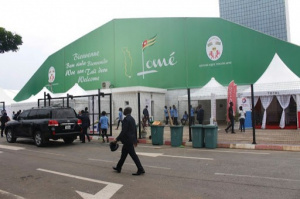
Togo’s capital, Lomé, will host the UK–West and Central Francophone Africa Forum (UK–WCAF) on November 12 and 13, bringing together more than 600 participants, including policymakers, investors, and business leaders from several countries.
Jointly organized by the Togolese government, the UK Department for Business and Trade, and partners such as UK Export Finance and DMA Invest, the forum will highlight investment opportunities, trade partnerships, and financing mechanisms to strengthen economic cooperation between the United Kingdom and Francophone countries in West and Central Africa. Discussions will also address national economic priorities and ongoing reforms to enhance competitiveness and investment attractiveness.
The event comes as Togo continues efforts to improve its business climate and attract more foreign investors. For Lomé, it will be an opportunity to showcase its logistical and commercial advantages—including its deep-water port and pro-investment tax reforms—to deepen ties with British economic partners.
Togo Trains Kara Entrepreneurs to Strengthen SME Competitiveness

The city of Kara is hosting a regional training workshop this week, running until November 7, for micro, small, and medium enterprises (MSMEs). The event is organized by the Ministry of Investment Promotion, Industry, and Economic Sovereignty under the Project to Support Investment Promotion and Public-Private Partnerships (PAPIDPPP).
The workshop aims to equip local entrepreneurs—including artisans, traders, women, business leaders, and young project holders—with practical tools to better structure their activities, improve competitiveness, and access financing.
Training modules cover business creation and management, marketing, basic accounting, and the use of digital technologies to increase commercial visibility. The initiative seeks to professionalize the local entrepreneurial ecosystem and strengthen the private sector as a key driver of economic and social development.
The program is financially supported by the African Development Bank (AfDB) through the Transition Support Facility (TSF).
Togo Urges Local Governments to Strengthen Revenue Collection
- Communes are encouraged to improve local resource management amid rising state funding.
- The FACT fund grew from CFA2.63 billion in 2020 to CFA9.5 billion in 2025.
- The initiative supports decentralization and local development efforts.
Togolese communes have been urged to strengthen the mobilization and management of local resources as state funding for municipalities continues to increase under the country’s decentralization and governance reform agenda.
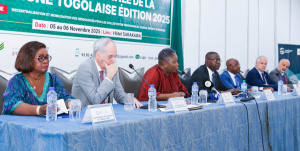
The call was made during the first National Day of Togolese Communes (JNCT), opened on November 5, 2025, in Lomé. Discussions focused on resource mobilization and strategies to help local authorities fully play their role as drivers of local development.
According to Minister of Territorial Administration Hodabalo Awaté, the Local Authorities Support Fund (FACT)—the main financing mechanism for the decentralization process—has grown steadily since 2020. Initially endowed with CFA2.63 billion, the fund now totals CFA9.5 billion in 2025. Its resources have financed essential infrastructure, including health, education, road, and water projects, while helping reduce territorial disparities.
The Faîtière des Communes du Togo (FCT), organizer of the event with support from German cooperation (GIZ/ProDeG IV) and the French Embassy, also called for stronger mobilization of both domestic and external financing.
According to FCT President Yawa Kouigan, fiscal decentralization remains key to enabling communes to implement local development plans and achieve Sustainable Development Goals related to urban governance and resilience.
Around 300 participants from Togo and other African countries attended this first edition of the JNCT.
Togo Drafts Crop Sector Benchmarks to Guide Agri-Investments

To enhance the competitiveness of crop value chains, Togo is developing technical and economic tools to guide investments, optimize production, and improve the sustainability of agro-industrial value chains.
The Agency for the Development of Very Small, Small, and Medium Enterprises (ADTPME) has launched a call for expressions of interest to recruit an expert to develop these benchmarks for crop production.
The initiative is part of the Youth Entrepreneurs Support Project for Value Chains (PAJEC), financed by the African Development Bank (AfDB) and the YEI MDTF Trust Fund.
Based in Lomé, the selected expert will assist ADTPME in identifying high-potential value chains, mapping employment opportunities, and proposing development plans for agro-industrial clusters, particularly benefiting young people and women.
These benchmarks are expected to improve economic planning, facilitate access to finance for agricultural MSMEs, and strengthen the sector’s overall competitiveness.
Applications are open until November 17, 2025.
Togo: EU Extends New Support to Northern Communities Facing Insecurity

The European Union (EU) delegation in Togo has provided new equipment to support civilians in the country’s northern region, which continues to face terrorist threats. In late October 2025, the EU delivered equipment worth about 115 million CFA francs to the Emergency Program for the Savanes Region (PURS) and to the country’s defense and security forces.
The shipment, procured through a global program run in partnership with the United Nations, includes computers, educational materials, and about 60 mine detectors. The equipment complements earlier training and awareness campaigns aimed at protecting communities from improvised explosive devices (IEDs) used by armed groups.
This new aid builds on the EU’s ongoing support for the government’s PURS initiative, which the bloc has backed since 2022. The program aims to strengthen community resilience across key sectors such as health, water, energy, education, and agriculture.
In 2022, the EU and Germany jointly contributed €5 million (over 3 billion CFA francs) to PURS, funding projects to improve living conditions in affected communities.
More recently, the EU selected Togo as one of four West African coastal countries, along with Benin, Côte d’Ivoire, and Ghana, to receive a new €10 million financial package to help manage rising migration pressures stemming from conflicts destabilizing the central Sahel region.