

Togo First
Togo extends universal health coverage to optical care providers
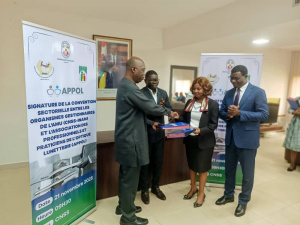
In Togo, the agencies managing the Universal Health Insurance (AMU), the National Social Security Fund (CNSS) and the National Health Insurance Institute (INAM), signed a sector partnership agreement on Friday, November 21 in Lomé with the Association of Optical Professionals and Practitioners (APPOL).
The agreement paves the way for better coverage of visual care for insured beneficiaries by setting common standards for quality, access, and follow-up of optical services. Insured individuals will now be able to access eyeglasses and lenses adapted to their needs through harmonized procedures and a more structured support system across all AMU-accredited opticians.
“The signing of this agreement will help harmonize practices, improve the quality of optical services, and guarantee insured individuals a clearer and better-supervised care pathway. Through this agreement with APPOL, we are not just formalizing a partnership; we are opening the door to better visual health services,” said Ingrid Awadé, director general of the CNSS.
Tchin Darré, minister delegate to the Minister of Health, reaffirmed the government’s commitment to “ensuring equitable access to care, strengthening regulation, and supporting partners in implementing the agreements signed.”
Launched in 2024, the AMU aims to guarantee access to health services for the entire Togolese population, regardless of employment status. The inclusion of self-employed workers highlights the system’s inclusive scope, making Togo the first African country to offer universal coverage to all socio-professional categories.
UK commits CFA40bn to expand rural energy access in Togo
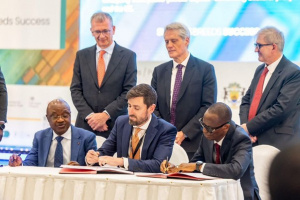
- UK to provide €62 million for rural electrification across 312 communities
- Project to build 1,300 km of medium-voltage lines and 882 km of low-voltage lines
- Support aligns with Togo’s target of universal electricity access by 2030
Togo will receive financial support of 62 million € — about CFA40 billion — from the United Kingdom. A financing agreement was signed late last week in Lomé on the sidelines of the fourth edition of the UK–West and Central Francophone Africa Forum (UK-WCAF IV).
The support will enable the electrification of 312 rural localities and directly benefit nearly 250,000 people, whose living conditions should improve through access to electricity for economic and social activities. The project includes the construction of 1,300 km of medium-voltage lines, 882 km of low-voltage lines, and 312 transformer stations.
????? ??-???? ?? ?̀ ????́ : ?? ???? ?????? ??? ??????????????? ?́?????́?????? ??????́?????? ?? ????? ?? ?????? ?? ?? ???????? ?’?????
— Ministère des Mines et des Ressources Énergétiques (@mineenergie_tg) November 15, 2025
Les 12 et 13 novembre 2025, Lomé a… pic.twitter.com/kHJEMMWcq6
The signing of this agreement, one of the first concrete outcomes of UK-WCAF IV, comes as the country multiplies initiatives to achieve universal electricity access by 2030. Programs already implemented with partner support helped Togo reach an access rate of 70% at the end of 2024.
In the same effort to improve energy access, especially in rural areas, Lomé and Beijing concluded an agreement in early November for the supply of solar kits under the Africa Solar Belt project, an initiative aimed at supporting the energy transition and the fight against climate change. The donation of 3,900 photovoltaic kits will meet the energy needs of more than 20,000 Togolese living in localities not yet connected to the national grid.
Togo: Government Adopts 2026 Draft Finance Bil
-
The government sets the 2026 budget at CFA2,740 billion, up 14.4% from 2025.
-
The draft finance bill expects 1,615 billion in budget revenues, including 1,338 billion in tax revenue.
-
Treasury resources rise sharply, with CFA473 billion in public securities issuances, compared with 332 billion in 2025.
The Togolese government adopts its draft finance bill for 2026 at the end of last week. The document sets total revenues and expenditures at CFA2,740 billion, representing a 14.4% increase compared with the current year. The government expects fiscal revenue to cover more than half of budget resources.
According to the draft finance bill consulted by Togo First, the State’s 2026 budget resources include CFA1,615 billion in budget revenues, 1,097 billion in treasury resources and 27 billion from special Treasury accounts.
The breakdown shows that budget revenues include CFA1,338 billion in tax revenue, up about 10% from the 1,208 billion projected in 2025. Non-tax revenue reaches CFA109 billion, marking a 32% rise from the 72 billion projected in 2025. Project-related grants amount to CFA166 billion, down 12% from the 190 billion planned in the 2025 budget.
Treasury resources consist of CFA473 billion in public securities issuances, compared with 332 billion in 2025. They also include CFA220 billion in project loans and 403 billion in other loans, against 142 billion and 420 billion respectively in the previous year.
The government will now submit the draft finance bill to the two houses of Parliament, both largely controlled by the Union for the Republic (UNIR).
Esaïe Edoh
Togo and Benin Set 30% Agricultural Trade Growth Target Under PRIMA
-
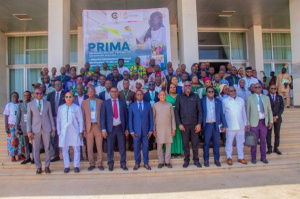
PRIMA aims to raise agricultural transactions between Togo and Benin by 30% over six years.
-
The programme focuses on market integration, trade facilitation and rural entrepreneurship across targeted border corridors.
-
A parallel agricultural fair in Kara seeks to boost commercial opportunities for agribusinesses from both countries.
Kara is hosting until Friday, 21 November 2025, the second regional meeting between the chambers of commerce and industry of Togo and Benin. The event focuses on cross-border agricultural trade and forms part of the six-year Regional Programme for Agricultural Market Integration (PRIMA), financed by the International Fund for Agricultural Development.
PRIMA aims to increase agricultural transactions between both countries by 30% across targeted border corridors. The programme seeks to integrate markets more efficiently, improve trade flows and strengthen the competitiveness of agricultural enterprises. The AARA oversees regional coordination under ECOWAS supervision.
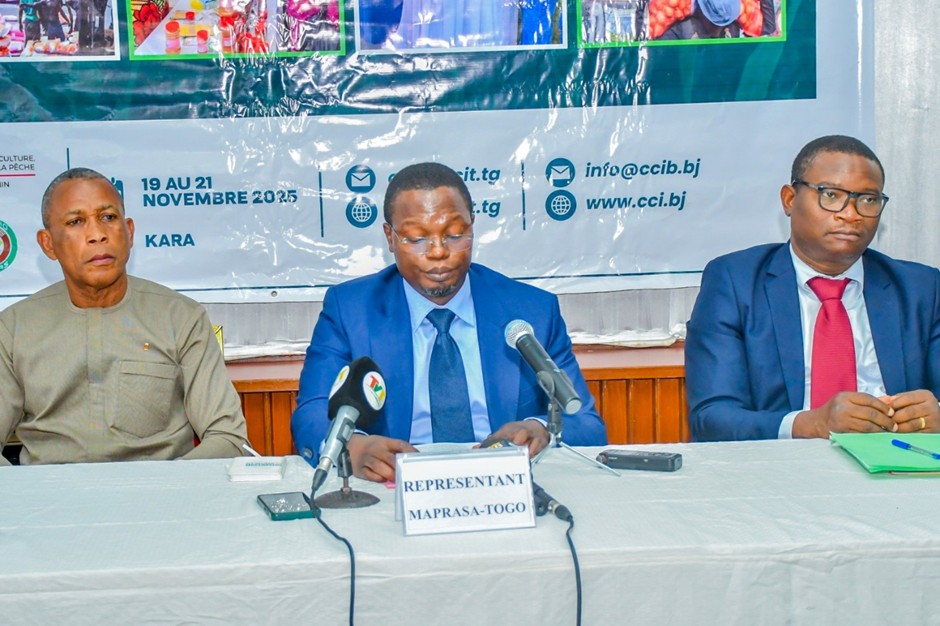
PRIMA operates through four components centred on agricultural trade and rural entrepreneurship. Mawadè Dogo, PRIMA-Togo’s deputy operational coordinator, said the discussions address market integration, trade facilitation and the structuring of rural entrepreneurial initiatives.
The programme also includes the construction of agricultural infrastructure, the development of planned agricultural zones and the rehabilitation of rural roads to ease product transport.
This second meeting follows the first edition held in December 2024 in Benin. It brings together public decision-makers, agribusiness leaders, farmers’ organisations and research institutions from both countries. Participants are reviewing progress on previous recommendations, operational advances, cross-border cooperation and opportunities to promote local agricultural products.
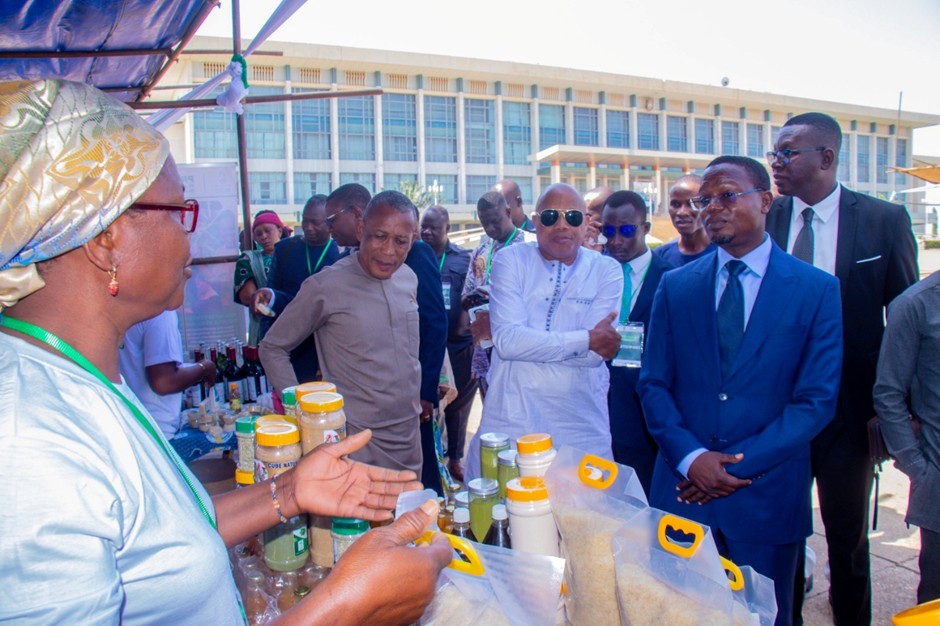
In parallel, an agricultural exhibition runs until Saturday, 22 November 2025, on the esplanade of the Palais des Congrès de Kara. The fair enables agribusinesses from both countries to showcase products and seek commercial partnerships.
Alex Kpanté Bouab, representing the Togolese Minister of Agriculture, presided over the official opening. He highlighted agriculture’s contribution to national GDP and emphasised the need to accelerate growth through stronger commercial integration.
This article was initially published in French by Ayi Renaud Dossavi
Adapted in English by Ange Jason Quenum
Lomé University joins new EU-backed program to tackle noncommunicable diseases
-
EU-funded Empower project targets stronger prevention and care for NCDs
-
Lomé University to support training, digital tools, and PhD supervision
-
Program expands West African research network with two new theses in Togo
Lomé University is among the partner institutions engaged in a new public health initiative funded by the European Union. The financing, obtained by the University of Limoges, opens a new phase of scientific cooperation in West Africa through the Empower project.
Supported for four years under the Africa–France Academic Partnerships program, the project aims to strengthen the prevention and management of noncommunicable diseases (NCDs) in Benin and Togo.
NCDs such as diabetes, hypertension, and some mental health disorders are now the leading causes of death worldwide. In Togo and Benin, more than 80 % of affected people do not have access to adequate care. Empower seeks to address this through two main pillars: training for health workers and digital tools to support early detection. The program includes support for community health agents and the rollout of an application dedicated to diagnosis and continuity of care.
Lomé University will play an operational role in implementing the program. Its contribution will include local training, adapting digital tools to Togolese conditions, and supervising future PhD students recruited in the region.
Two additional theses will be funded in Togo under the project, integrating the country into a broader research network linking Limoges, Abomey-Calavi, Luxembourg, Italy, and Switzerland.
According to available information, Empower follows the previous Inspire-UAC program, focused on public health training. Together, the two initiatives account for 24 PhD projects, including thirteen already underway. Continued cooperation is expected to strengthen local capacity in a field where needs remain significant.
Togo adopts 2025–2030 plan to curb PPR and protect livestock income
-
New strategy aims to strengthen surveillance and harmonize disease control
-
Measures include systematic vaccination and upgrades to veterinary services
-
PPR threatens rural income, with mortality reaching up to 90 % in unvaccinated herds
Togo has reorganized its fight against peste des petits ruminants (PPR) with a new strategic plan covering 2025–2030. Validated on November 17 in Lomé, the plan outlines actions to harmonize disease control efforts, reinforce epidemiological surveillance, and protect livestock income. It also includes measures to strengthen veterinary services, ensure systematic vaccination of herds, and establish a rapid alert system.
Small ruminants, mainly goats and sheep, are a vital source of income for thousands of rural households. PPR, one of the deadliest animal diseases, causes 80–90 % mortality and morbidity levels that can reach 100 % in unvaccinated herds. This leads to major economic losses, including reduced production, lower local meat consumption, limited supply for community events, and commercial losses in livestock markets.
“Peste des petits ruminants is a devastating disease for sheep and goat herds, causing heavy economic losses for breeders. With this plan, we aim to prevent its spread effectively and protect the long-term livelihoods of rural communities,” said Damitoti Yempabou, director of Veterinary Services.
Authorities expect the new strategy to help secure the pastoral economy, strengthen food security, and support regional livestock trade.
In 2024, Togo had 2.24 million sheep and 6.36 million goats across the country, confirming the importance of this sector for rural communities.
Togo Outlines AI Strategy Centered on Education and Regional Data Governance
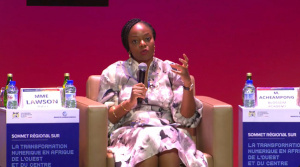
Togo’s Minister of Public Service Efficiency and Digital Transformation, Cina Lawson, outlined the government’s AI priorities this week with a strong focus on education, shared data infrastructure and regional coordination of digital rules.
Speaking at the Regional Summit on Digital Transformation in Cotonou on November 17–18, Lawson said Togo plans to deploy an AI agent in its school system. “This is a key step in preparing schools for the AI era,” she said.
AI agents are autonomous programs that can carry out tasks, analyze data, make basic decisions and interact with users. They are increasingly used to automate, support or personalize services.
Lawson said the education initiative builds on ongoing connectivity efforts, including the rollout of fiber in eleven municipalities. Ensuring that schools and health centers have high-speed internet is a prerequisite for new digital services.
Regional Infrastructure and Governance
Lawson stressed that the cost of computing infrastructure makes regional cooperation essential. She argued that no country in West Africa can finance an AI-dedicated data center on its own. “No country will fund an AI data center alone. We need to work together at the regional level to create a shared cluster,” she said. The approach builds on the new Tier III+ data center recently commissioned with World Bank support.
Lawson also said Togo aims to digitize all ministries within the next eighteen months. This process will generate large volumes of data that must be properly managed, with clear rules governing how it is accessed, used and shared.
She noted that West Africa still lacks a unified standard for data sharing. “We must build a clear framework to enable innovation and digital sovereignty,” she said, adding that data sharing and AI governance must be aligned across the region to support an integrated digital market.
These priorities reflect the commitments set out in the Cotonou Declaration, adopted at the conclusion of the summit co-organized with the World Bank. The declaration urges West and Central African countries to coordinate data governance, develop regional AI capabilities, and accelerate the rollout of key digital services in areas such as education and public administration.
Ayi Renaud Dossavi
Togo Advances Digital ID Program With New Enrollment Phase in Maritime Region

Togo is expanding its national biometric enrollment drive to the Maritime region, allowing residents to obtain their new biometric identity cards starting Saturday, November 22.
The operation was announced by the National Identification Agency (ANID), which is implementing the e-ID biometric identification project. The expansion follows successful rollouts in the Gulf, Agoè-Nyivé, and Savanes prefectures.
Enrollment will commence in Zone 1 of the Maritime region, which includes the prefectures of Vo, Yoto, Bas-Mono, and Lacs. The National Institute of Statistics, Economic and Demographic Studies (INSEED) is managing the deployment of personnel in the field.
As with previous phases, the operation aims to assign every resident a Unique Identification Number (NIU). This number is intended to serve as a single access key to various public, private, and social services, including education, social security, pensions, finance, health, vaccination, and monetary transfers. The system will also consolidate a secure and reliable central database.
All citizens are eligible for the e-ID Togo project, including children aged zero to five, who can be registered using a parent's NIU. The biometric enrollment is financed by the World Bank under the WURI-Togo project, which seeks to provide every citizen with a unique and secure identity.
Togo installs new municipal teams as decentralization enters second term
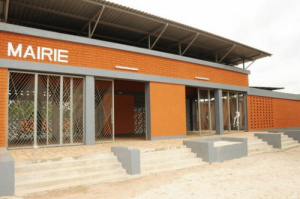
In Togo, the renewal of municipal teams is progressing nationwide. Since mid-November, handover ceremonies have taken place across the five regions, marking the installation of new mayors for the second term of the decentralization process launched in 2019.
In Plateaux-Ouest, several communes have installed new executives. In Kloto 2, Kodzo Mawuena Eho replaces Mensah Abotsi-Dzegbla, according to the Togolese Press Agency (ATOP). In Kloto 3, Yawo Asagbé takes over. In Agou 1, leadership goes to Kodjovi Patrick Sénam Bolouvi, while in Agou 2, Séssimé Koofi Sakpa is reinstated. In Danyi 1, Kossivi Wonyra takes office, and in Danyi 2, Amavi Alovor replaces Bawa Sémedo. In Kpélé 1, Dodzi Abotsi succeeds Batchey Komla Apédo. In Kpélé 2, Yawa Tségan takes command, replacing Dotsou Komlan Holali.
In Plateaux-Est, transitions covered the communes of Ogou, Haho, Est-Mono, Moyen-Mono, Amou, Akébou, Anié, and Wawa. Among the new officials, Agbo Koudjo takes the lead in Wawa 3. Prefects emphasized the importance of citizen participation and careful management of local resources.
In the Kara region, transitions have been completed in all communes. In Kozah 1, N’Djelle Abby Eddah becomes mayor, and in Kozah 2, Batchassi Essonanna takes over municipal leadership. In Doufelgou, Barima Étienne Massoka now heads Doufelgou 1, Koubonou Touni Atiota is reinstated in Doufelgou 2, and Kounté Anguiga leads Doufelgou 3. In Dankpen, Antoine Lékpa Gbégbéni (Dankpen 1), Kampo Nicolas (Dankpen 2), and Oninborla N’yadjaname (Dankpen 3) take office. In Binah, Egbadé Bessegrou (Binah 1) and Wélabalo Tchanda (Binah 2) assume their mandates. In Bassar, Adedokou Adessonkain (Bassar 2) and Damsa Tagba Walla (Bassar 4) are installed, along with Abou-Bakari Nouhoum Salissou (Assoli 1), Tchadizindé Djamilatou (Assoli 2), and Assima Idrissou (Assoli 3).
In the Centrale region, new teams took office between November 12 and 15. In Tchaoudjo, Ouro-Sama Mohamed Sad (Tchaoudjo 1), Kiliou Kokolou (Tchaoudjo 2), Ouro-Bodi Dissadama (Tchaoudjo 3), and Tchagnao Kpégouni (Tchaoudjo 4) were installed. In Blitta, Prof. Batchana Essohanam (Blitta 1), Malou Kodjo (Blitta 2), and Kotokoli Koami (Blitta 3) take up their positions.
In Sotouboua, Gnanguissa Plibam (Sotouboua 1), Paneto Bèguèdouwè (Sotouboua 2), and Banguina Kékéou André (Sotouboua 3) take office. In Tchamba, Titikpina Hamza (Tchamba 1), Amogou Atiodé (Tchamba 2), and Ebeh Yao (Tchamba 3) are installed. In Mô, Patchélé Koudjoukabalo Padasiwé (Mô 1) and Attah N’gissa (Mô 2) take over.
In the Maritime region, communes in Lacs, Yoto, Bas-Mono, Vo, and Avé have also renewed their executives. In Lacs, Anani Messan (Lacs 3), Anenou Ayikoé Martin (Lacs 4), Benoît Amavi (Lacs 2), and Aquéréburu Coffi Alexis (Lacs 1) take office. In Yoto, new mayors are Leguéde Yaovi Mémé (Yoto 1), Assiogbon Koffi Elom Mase (Yoto 2), and Dégbe Kokou (Yoto 3). In Bas-Mono, Agbassou Agossa (Bas-Mono 1) and Afangbédji Komlanvi Sédoufia (Bas-Mono 2) begin their terms. In Vo, Kalipé Kossi (Vo 1), Tomégah Dominique (Vo 2), Kloutsè Elom Yao (Vo 3), and Sodoli Kokouvi (Vo 4) are installed. In Avé, Nomenyo Kokouvi (Avé 1) and Ayawli Kwaku (Avé 2) take office.
These installations open the way for the country’s second wave of mayors since the decentralization process and the 2019 municipal elections. The challenge now will be for local authorities to turn these institutional transitions into effective operational tools with concrete impacts on economic and social development, in a context often marked by limited resources.
Togo Set to Adopt New Labour Agreement After Employers, Unions Strike Deal
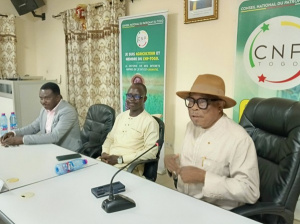
A new cross-industry collective bargaining agreement is set to take effect in Togo after employer organisations and trade unions agreed on the text on Saturday, Nov. 14, 2025.
After a little over a month of negotiations, the parties finalised an agreement to modernise labour relations. Based on the current Labour Code, the new framework updates working conditions to reflect today’s economic environment. It covers several areas, including pay, working conditions, safety, training, and dispute-resolution procedures.
The draft agreement will now be sent to the Directorate General of Labour (DGT) for legal review to ensure it complies with national legislation. Once approved, it will become the legal framework for workplace relations across the country.
Coami Sédolo Tamegnon, President of the National Council of Employers, said the successful dialogue leading to the agreement is “an encouraging sign for strengthening labour relations in Togo.”
After receiving the DGT’s approval, the parties will officially sign the new agreement, which will replace the one in force since December 2011.
Esaïe Edoh