
Togo First
Togo Showcases Reform Success in Washington After Selection for G20 Compact with Africa “Select List”
-
Togo remains among 14 African nations selected for the new Compact with Africa 2.0.
-
The World Bank’s 2024 Business Ready report ranks Togo among the world’s 50 top reforming economies.
-
Private sector contributes 76.8% of Togo’s GDP and 98% of total employment.
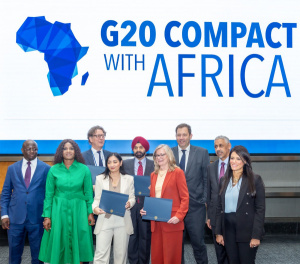
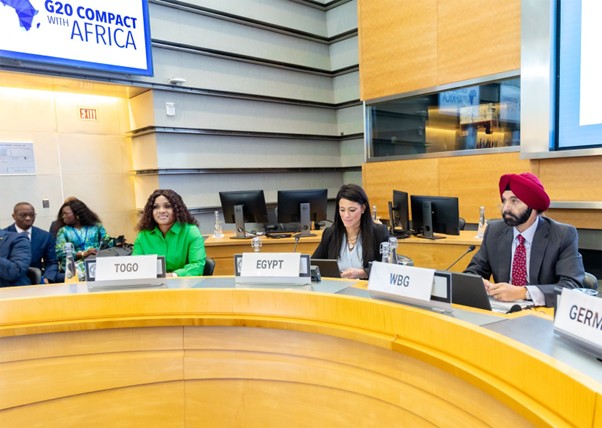
Togo was showcased as one of Africa’s leading reformers in business climate improvement during the high-level Compact with Africa (CwA) meeting held in Washington.
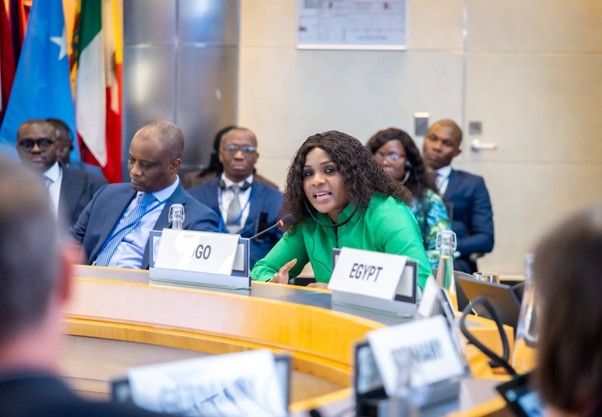
Sandra Ablamba Johnson, Minister and Secretary-General of the Presidency, presented the country’s reform progress and its priorities for the new CwA 2.0 program.
Compact with Africa 2.0 Aims to Deepen Private Investment
Created under the G20 and coordinated by the World Bank, the Compact with Africa initiative seeks to boost private investment in Africa through structural reforms and stronger partnerships among governments, donors, and the private sector.
In 2025, the initiative entered a new phase with CwA 2.0, backed by a multi-donor trust fund hosted by the World Bank with contributions from several G20 partners. The fund will expand technical assistance, ease investment projects, and support economic transformation across member countries.
Togo Among Africa’s “Reform Champions”
Togo joined the initiative in 2018, entering the select group of twelve African nations recognized as “reform champions.” The designation underscored the country’s strong commitment to structural and economic policies supported by the G20.
Eight years later, Togo remains in the select list of 14 countries in the Compact with Africa 2.0 framework.
“This recognition confirms the progress our country has made in improving the business climate and promoting the private sector as the engine of development,” Johnson said, addressing the German Ministers of Finance and Development, along with the heads of the World Bank Group and the African Development Bank.
Togo maintains a Reform Partnership with Germany, supported by the German Federal Ministry for Economic Cooperation and Development (BMZ). The partnership backs a joint reform agenda focused on job creation, agro-industrial transformation, good governance, and economic attractiveness.
Tangible Results from Structural Reforms
The reforms have delivered measurable results. In 2020, Togo jumped 40 places in the World Bank’s Doing Business ranking, reaching 97th globally and 8th in Africa.
More recently, the 2024 Business Ready report placed Togo among the world’s top 50 economies for business regulation performance.
Additionally, the Country Policy and Institutional Assessment (CPIA) score rose from 3.0 in 2016 to 3.8 in 2024, enabling access to more concessional financing from the World Bank’s International Development Association (IDA).
Private Sector Driving Economic Transformation
The reform agenda has fostered flagship projects such as the Adétikopé Industrial Platform (PIA), a symbol of Togo’s industrialization strategy.
Today, the private sector contributes 76.8% of national GDP and accounts for nearly 98% of employment.
“Our ambition is to make the private sector the main driver of growth and development,” Johnson said. She added that the government aims to strengthen regulatory and judicial frameworks, expand innovative financing instruments, and invest in sustainable energy, agriculture, and technology to create jobs for youth and women.
This article was initially published in French by Fiacre E. Kakpo
Adapted in English by Ange Jason Quenum
Lomé Hosts 121st Session of CIMA Insurance Regulator
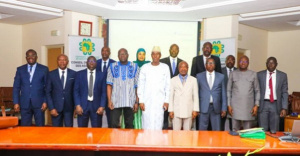
Togo is hosting this week the 121st ordinary session of the Regional Insurance Supervisory Commission (CRCA), the regulatory body of the Inter-African Conference on Insurance Markets (CIMA). The meetings, which began on Monday, October 20, bring together key players from the francophone African insurance market in Lomé.
Over six days, experts from 14 member countries will review licensing requests, recovery plans, and the technical performance of insurance companies. The goal is to strengthen financial stability, restore policyholder confidence, and ensure greater transparency in the sector.
“The industry faces many challenges that hinder its proper functioning,” said CRCA President Mamadou Sy, citing governance shortcomings and delays in regulatory compliance.
Togolese Minister Jean-Marie Tessi, speaking at the opening ceremony, stressed the need for stronger professional ethics, criticizing insurers’ repeated delays in paying claims. “It is unacceptable for insurance companies to use artifices to postpone rightful compensation,” he stated.
The Lomé discussions will also cover climate-related risks, digitalization, and the gradual integration of artificial intelligence into insurance management.
The session, running until October 25, is expected to outline steps toward a more transparent, inclusive, and resilient regional insurance market.
Congo Delegation Studies Togo’s Experience in Green Budgeting
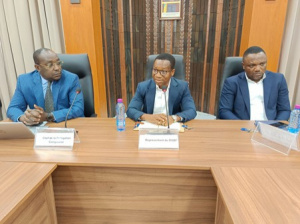
A delegation from the Republic of Congo has arrived in Lomé on October 20 to study Togo’s experience in integrating climate concerns into public financial management. Led by Franck Corneille Mampouya-M’Bama, Director General of Planning and Development, the mission will continue until Friday, October 24, and includes exchanges with officials in charge of planning and public finance. The goal is to understand the mechanisms that enabled Togo to make its national budget more responsive to environmental imperatives.
The delegation will also hold working sessions with officials from the Ministry of Finance and Budget, the Ministry of Environment and Forest Resources, and other institutions involved in implementing green budgeting. The objective is to draw on Togo’s achievements to design a model adapted to Congo’s national context.
According to mission officials, the initiative reflects Congo’s commitment to aligning its public policies with the Sustainable Development Goals (SDGs). At the end of the visit, a revised action framework is expected to be developed to guide climate-sensitive budgeting in the country.
Togo began reforming its budget planning several years ago to integrate environmental considerations. This approach has helped improve the traceability of climate-related expenditures and strengthen the economy’s resilience to climate change.
A similar study visit was previously conducted by a Cameroonian delegation in Lomé in March.
Togo Provides Financial Support to Twenty Young Entrepreneurs in Savanes Region
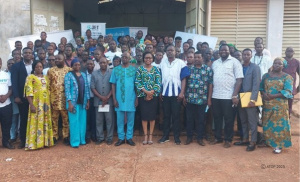
- Twenty entrepreneurs in northern Togo will each receive between 50,000 and CFA1 million ($80–$1,600) in funding.
- The initiative is part of the third edition of the “Carrefour Jeunes” regional forum organized by the Council of Young Entrepreneurs of Togo (CJET).
- Ten top performers will join an immersion trip to Lomé to meet partners and expand business opportunities.
Twenty young entrepreneurs from diverse sectors in Togo’s Savanes region will receive financial support ranging from 50,000 to CFA1 million as part of efforts to boost local entrepreneurship, the Council of Young Entrepreneurs of Togo (CJET) said after its regional forum held October 16–17 in Dapaong.
The beneficiaries were selected at the end of the third “Carrefour Jeunes” forum, aimed at strengthening the business structures of emerging entrepreneurs and consolidating existing ventures. The financial aid is designed to help recipients scale up their operations and formalize their businesses.
Beyond funding, the ten best-performing entrepreneurs will participate in an immersion trip to Lomé, where they will visit economic infrastructures, engage with private and institutional partners, and seek strategic collaborations to accelerate their growth.
CJET President Mélissa Sama said the initiative aims to revitalize entrepreneurial momentum in the Savanes region, which faces both security and economic challenges.
“What we want is to nurture leaders capable of transforming the local economy sustainably,” she stated.
The organization plans to complement these grants with technical and financial support mechanisms tailored to regional entrepreneurs’ needs, in partnership with various institutions. The broader goal is to promote inclusive and resilient economic growth across the region.
CJET, a national organization supporting companies and cooperatives less than ten years old, plays a key role in strengthening the country’s small-business ecosystem. It facilitates access to suppliers, financial institutions, and public authorities while assisting members in meeting administrative and legal obligations.
The council’s work focuses on training, networking, partnership development, and advocacy to improve the business environment and encourage private initiative.
This article was initially published in French by Esaïe Edoh
Adapted in English by Ange Jason Quenum
BlueInvest Africa: Kplolali Ahama Awarded for Aquaponics Project
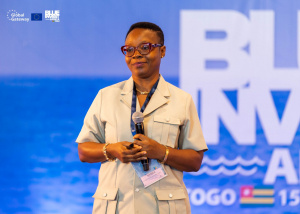
Togolese entrepreneur Kplolali Ahama, founder of Aquaponie du Togo, was among the winners at the third BlueInvest Africa Forum, held in Lomé in 2025. She was honored for an innovative sustainable farming project that combines fish farming with vegetable cultivation.
Co-founded with Kokoevi Agbevenou, Aquaponie du Togo uses an aquaponics system that recycles waste from tilapia and catfish to fertilize vegetables such as tomatoes, cucumbers, and herbs. The pilot site, covering 40 square meters in Lomé, stands out for its modular design, which can be adapted to spaces as small as one square meter—making it suitable for urban households and schools.
“I want to thank the BlueInvest Africa team and the European Union for giving us the opportunity to showcase our company and its project,” Ahama told Togo First.
The founders plan to build the first 3,000-square-meter commercial aquaponics farm in Lomé as their next step.
Charlina Vitcheva, Director-General for Maritime Affairs and Fisheries at the European Commission (DG MARE), praised the project for its “strong environmental and social impact.” She said it embodies BlueInvest Africa’s mission to connect entrepreneurs and investors in sustainable and inclusive ventures.
Aquaponie du Togo, which won in the “Aquaculture Promotion” category, will receive continued support until the next forum in 2026, to be held in South Africa, along with four other winners.
Choosing Togo for the third forum—after Seychelles (2022) and Kenya (2023)—marked BlueInvest Africa’s first event in West Africa.
“The success in Lomé shows the Blue Economy is no longer an abstract idea but a real source of jobs, innovation, and investment,” Vitcheva said.
The two-day event brought together more than 200 participants from 30 countries, including 24 African startups that pitched their projects to European investors, financial institutions, and donors.
Ayi Renaud Dossavi
EU-Mozambique Digital Deal Targets Broadband, Cybersecurity
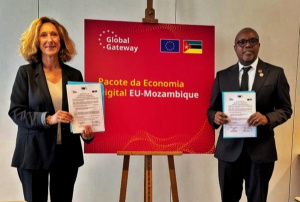
- EU, Mozambique sign Digital Partnership under Global Gateway program
- Deal supports connectivity, cybersecurity, and green digital economy
- Aims to boost broadband, digital skills, and service interoperability
The European Union announced on Tuesday, October 14, that it has signed a Digital Partnership with Mozambique to strengthen bilateral cooperation around technology and sustainable development. The agreement was finalized by Américo Muchanga, Mozambique's Minister of Communication and Digital Transformation, and Myriam Ferran, Deputy Director General for International Partnerships at the European Commission.
The partnership falls under the EU’s Global Gateway program, which aims to mobilize up to 300 billion euros by 2027 to finance smart and resilient infrastructure globally. For Mozambique, the accord serves as a lever to boost connectivity, support the digital economy, and promote the green transition. Both parties intend to cooperate on key areas such as cybersecurity, digital skills, system interoperability, and the regional integration of Southern Africa's digital networks.
This initiative directly supports Mozambique's national digital transformation strategy, which is incorporated into the government's 2025-2029 five-year program. This national plan prioritizes developing telecommunication infrastructure, modernizing public services, and achieving digital inclusion for the population. Specifically, the Mozambican government seeks to increase broadband coverage, promote technological entrepreneurship, and strengthen local capacity in digital professions.
The new partnership is expected to help Mozambique standardize its public service platforms, reinforce the security of its critical infrastructure, and open access to new data management technologies. By integrating its networks into a regional digital ecosystem, the country would establish the necessary foundation for creating interoperable services and implementing advanced data analysis tools for both the government and the private sector.
Samira Njoya
Togo Standardizes Framework for Regional Development Planning
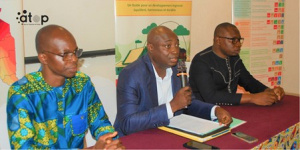
Togo’s regional councils will soon receive a national guide to help prepare their Regional Development Plans (PDRs). The document, finalized following a workshop held earlier this week in Kpalimé, will serve as the official framework guiding local authorities in designing their development strategies.
The guide provides each region with a planning tool tailored to its specific needs while aligning with national priorities. These include the principles of sustainable development, the Sustainable Development Goals (SDGs), and the objectives of the country’s Pact for the Future. It also incorporates cross-cutting themes such as addressing climate change, promoting gender equality, and strengthening social cohesion.
Structured in three main sections, the guide first outlines the national framework for local planning, tracing its evolution since the 1960s and clarifying how regional and national planning are linked. It then describes the key stages of preparing a Regional Development Plan—from the preparatory phase to the regional assessment, definition of a development vision, project prioritization, and implementation methods. Finally, it sets out the mechanisms for monitoring, evaluation, and plan revision.
“Togo now has fully functional regions with elected officials. It is therefore essential to provide them with a tool that helps define priorities and guide territorial planning,” stated the Ministry Delegate for Local Development.
With this document, Togo’s five regional councils now have a clear framework for drafting their Regional Development Plans, marking an important step toward consolidating decentralization and ensuring balanced regional development.
Esaïe Edoh
Togo’s Finance Minister Barscola Reaffirms Economic Reform drive at IMF Meetings
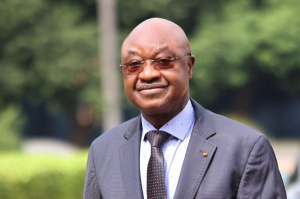
Togo's Minister of Finance and Budget, Georges Barcola, held a series of meetings with officials from the International Monetary Fund (IMF) and the World Bank during their Annual Meetings in Washington. Discussions focused primarily on Togo's ongoing economic reforms and the financial support needed for their implementation.
Since March 2024, Togo has been backed by a 42-month program approved by the IMF under the Extended Credit Facility (ECF), totaling 293.6 million SDR (approximately $400 million). The program is intended to support robust macroeconomic policies and structural reforms aimed at ensuring fiscal stability, fostering inclusive growth, and strengthening the Togolese economy's resilience. Progress in these areas was central to the discussions between the minister and the technical and financial partners.
During the meetings with the Bretton Woods institutions, Barcola presented the main pillars of Togo's economic strategy. The strategy focuses on controlling public debt, strengthening domestic revenue mobilization, improving the quality of public expenditure, and promoting a favorable environment for private sector development.
To date, Togo has received cumulative disbursements of approximately $129 million under the ECF program. The country is seeking further disbursements following the IMF mission that concluded its visit to Lomé in early October.
During the Annual Meetings, the minister reaffirmed the Togolese government's commitment to continuing rigorous economic governance, consistent with the objectives of its 2025 Government Roadmap and the reforms already underway.
Esaïe Edoh
Togo Reappoints Mazamesso Assih as Minister Overseeing Local Development and Social Economy

Togo reappointed Mazamesso Assih in October 2025 as Minister of Local Development, now expanded to include the social and solidarity economy. She has served in government since August 2024, applying her expertise in economic inclusion to national policy.
Assih earned an MBA in Audit and Risk Management in Insurance from the École Supérieure des Assurances de Paris. She began her career at Generali before joining the Fund for the Guarantee of Victims of Terrorist Acts (FGTI/FGAO). Returning to Togo, she gained prominence through her technocratic leadership at the National Fund for Inclusive Finance (FNFI) and at the Secretariat for Financial Inclusion and the Informal Sector.
Under her leadership, Togo achieved notable progress in financial inclusion within the West African Economic and Monetary Union (WAEMU). Appointed minister in 2020, she spearheaded the national financial inclusion strategy, focusing on financial literacy and equitable access to banking services.
Her expanded portfolio now positions her at the center of promoting local development, supporting the social economy, and boosting youth employment—key pillars of Togo’s economic transformation.
New Wave of Mayors Takes Office, Reshaping Local Leadership

Togo is renewing its municipal leadership following local elections held earlier this year. This marks the start of a second term for local officials, six years after the first municipal vote in 2019.
Earlier this week, several of the 117 communes across the country, elected new mayors, including key posts in the capital, Greater Lomé. In Atakpamé, in the Plateau Region, Dr. Komlan Mensah Kassamada was elected mayor of Ogou 1. He succeeds Yawa Kouigan, recently appointed minister of communication. Kassamada, a candidate from the ruling UNIR party, won 13 of 14 votes.
The Greater Lomé area recorded several significant leadership changes. Abdul-Fahd Fofana was elected mayor of Agoè-Nyivé 4. He also serves as minister delegate in the new government and will hold both positions for now. In Agoè-Nyivé 1, Akossiwa Aguzé became mayor, while Éric Kpadé — a former prefect and legislator — was elected mayor of Golfe 2 with a strong majority, receiving 15 votes against three.
In Golfe 3, one of Greater Lomé’s most important municipalities, Essohanim Gnassingbé, formerly deputy mayor, was unanimously elected mayor, securing all 18 votes. He is expected to continue ongoing urban projects and strengthen local governance. Still in the capital, Kossi Aboka was re-elected mayor of Golfe 5, while lawyer Kokou Amenyenou was chosen to lead Golfe 6.
Outside the capital, Yawa Djigbodi Tségan, the former speaker of the National Assembly, was elected mayor of Kpélé 2, further consolidating the ruling UNIR party’s influence in the region.
R.E.D