
Togo First
Togo Trains 100 Young Farmers to Advance Agricultural Mechanization
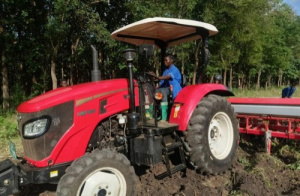
• The National Agricultural Training Institute (INFA) in Tové trained 100 young people in tractor operation and maintenance.
• The program, led by the Ministry of Agriculture and the National Employment Agency (ANPE), aims to expand rural employment and mechanization capacity.
• Graduates will support the Regional Centers for Agricultural Mechanization (CRMA) to improve productivity and investment security.
Togo’s National Agricultural Training Institute (INFA) in Tové certified 50 young trainees on October 7, 2025, after completing a program in tractor driving and maintenance. The graduation follows a similar session in Kara, bringing the total number of trained participants to 100 under the country’s National Program for Agricultural Mechanization and Youth Employment Promotion.
The initiative forms part of the government’s broader efforts to modernize agriculture and reduce youth unemployment, especially in rural areas.
The three-month training program, launched by the Ministry of Agriculture in collaboration with the National Employment Agency (ANPE), provided practical instruction in tractor operation, coupling systems, maintenance, plowing, sowing, and mowing.
Authorities said the goal is to create a skilled workforce capable of managing and maintaining equipment deployed in the Regional Centers for Agricultural Mechanization (CRMA) — key hubs for advancing agricultural productivity.
According to Kossi Tsiglo, Director General of the ANPE, the initiative will “help secure agricultural investments, strengthen productivity, and create skilled jobs in rural areas.”
This article was initially published in French by R.E.D
Adapted in English by Ange Jason Quenum
Togo Launches Sixth Edition of “Consume Local” Month
• Togo launched the sixth edition of its “Consume Local Month” on October 9, 2025, promoting Made-in-Togo products.
• The initiative, held under the UEMOA regional framework, focuses on skills and innovation to strengthen SME competitiveness.
• Authorities aim to increase domestic consumption and expand local value chains across sectors including agrifood, textiles, and cosmetics.
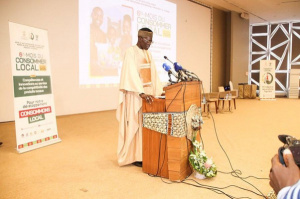
Togo officially launched the sixth edition of its annual “Consume Local Month” on October 9, 2025, in Lomé. The opening ceremony, chaired by Mensah Koffi Vinyo, Chief of Staff at the Ministry of Local Consumption, marked the start of a series of activities designed to promote local products and services under the West African Economic and Monetary Union (WAEMU) initiative.
The 2025 edition, held under the theme “Skills and Innovation for the Competitiveness of Local Products,” highlights the role of entrepreneurship, creativity, and technical know-how in driving national economic growth.
Throughout October, authorities will organize training workshops for micro, small, and medium-sized enterprises (MSMEs), as well as conferences, company visits, trade fairs, and media campaigns across the country.
Officials said the objective is to boost consumption of local products and engage every link in the value chain — from production to marketing — in the nation’s economic development.
“It is about giving greater value to our agro-food, artistic, artisanal, textile, cosmetic, and service innovation potential,” said Mensah Koffi Vinyo. He added that the government views local production as a pillar of structural transformation and sustainable employment creation.
Since its launch in 2019 by the UEMOA Commission, “Consume Local Month” has become an annual event celebrated simultaneously across the bloc’s eight member states. The initiative aims to strengthen regional production capacity and reduce dependence on imports.
According to Abdoulaye Diop, UEMOA’s resident representative in Togo, the goal goes beyond product promotion. “It is no longer just about showcasing our products, but about understanding how skills and innovation transform our economies,” he said.
Throughout October, Togolese authorities and partners will assess progress made during previous editions and define new strategies to improve the competitiveness of local enterprises in both domestic and regional markets.
The event reinforces Togo’s ongoing commitment to industrial diversification, value chain development, and private sector empowerment, in line with the country’s 2025 national development strategy.
This article was initially published in French by Esaie Edoh
Adapted in English by Ange Jason Quenum
BOAD Grants CFA20 Billion Loan to Boost Agricultural Mechanization in Togo
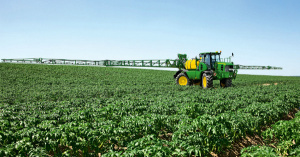
• The West African Development Bank (BOAD) approved a CFA20 billion ($32 million) loan to finance Phase 1 of Togo’s Agricultural Mechanization and Irrigation Support Program.
• The funds will equip Regional Centers for Agricultural Mechanization (CRMA) with modern tools to raise productivity and rural employment.
• The financing aligns with BOAD’s “Djoliba Strategic Plan”, aimed at strengthening productive infrastructure and supporting economic transformation in WAEMU countries.
The West African Development Bank (BOAD) has approved a CFA20 billion ($32 million) loan to support Togo’s efforts to accelerate agricultural mechanization and irrigation. The announcement followed the bank’s 148th ordinary board session held on October 9, 2025, in Lomé.
The new funding targets the first phase of the Agricultural Mechanization and Irrigation Support Program, a government-led initiative designed to modernize farming practices, strengthen food security, and raise farmers’ incomes.
The program will provide modern equipment to Regional Centers for Agricultural Mechanization (CRMA), which currently operate in Kara and Kpalimé. These centers, launched in 2023, serve as technical hubs for training, maintenance, and advisory services for smallholder farmers.
The BOAD financing will also allow the government to expand CRMA operations to other regions, with expected gains in agricultural productivity and rural employability.
According to the regional development bank, the initiative will help farmers better utilize mechanization technologies and ensure sustainable management of agricultural equipment.
BOAD said the operation fits within its Djoliba Strategic Plan, which prioritizes the financing of productive infrastructure and the economic transformation of member states within the West African Economic and Monetary Union (WAEMU).
At the end of its latest board meeting, the bank highlighted its strong financial performance, reporting a CFA22 billion ($35 million) net profit in the first half of 2025. BOAD also recalled its €1 billion bond issuance earlier this year, aimed at scaling up funding for regional development projects.
This article was initially published in French by R.E.D
Adapted in English by Ange Jason Quenum
Lire aussi:
Kodjo Adedze Named Togo’s “Super Minister” for Infrastructure and Housing
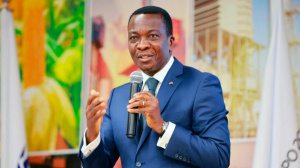
• Kodjo Sévon-Tépé Adedze, former Speaker of the National Assembly, was appointed Minister of Territorial Planning, Urbanism, and Housing, heading a “super ministry” at the center of Togo’s new government.
• Three delegate ministers report directly to him, including former Finance Minister Sani Yaya, signaling a major reshuffle to accelerate infrastructure and housing reforms.
• Adedze faces critical policy challenges, including addressing a 500,000-unit housing deficit and improving access to water and sanitation, currently at 70% in cities and 40% in rural areas.
Togo’s President of the Council Faure Essozimna Gnassingbé appointed Kodjo Sévon-Tépé Adedze as Minister of Territorial Planning, Urbanism, and Housing on October 8, 2025, elevating the former National Assembly speaker to one of the most powerful roles in the country’s new government structure.
The new “super ministry” consolidates oversight of public works, housing, water, and local development, positioning Adedze at the center of policy coordination for national infrastructure and urban growth.
Under Adedze’s direct supervision, three high-profile ministers will lead specialized portfolios: Sani Yaya, former Minister of Economy and Finance for nearly seven years, will oversee Public Works and Infrastructure ; Koamy Gomado, a former member of the opposition ANC party, will manage Local Development and Séna Alipui, from the opposition UFC party, will take charge of Water and Sanitation.
This configuration gives Adedze broad authority over transport, housing, and essential public services — all strategic levers of the administration’s priority programs.
At 63, Adedze brings decades of experience in Togo’s public administration. A customs inspector by training, he graduated from ENA and the National Customs School of Neuilly-sur-Seine before joining the civil service in 1988.
He rose through the ranks to become Director General of Customs, later serving as Commissioner of Customs and Indirect Duties, and eventually as Commissioner General of the Togolese Revenue Office (OTR) following the departure of Rwandan technocrat Gaperi.
Entering government in 2019, Adedze successively held portfolios in Trade, Industry, Local Consumption, and Urbanism and Land Reform before being elected Speaker of the National Assembly in June 2024.
According to reports from the IMF and the World Bank, Adedze’s new ministry faces urgent challenges: making public investment in infrastructure more efficient; reducing a housing deficit exceeding 500,000 units, requiring 15,000 new homes annually; improving urban and rural access to water and sanitation.
Urban coverage currently stands at 70%, compared to only 40% in rural areas.
The ministry will also steer urban and land planning, advance decentralization, and support local development projects, particularly in fast-growing municipalities.
Among Adedze’s flagship projects is the 20,000 affordable housing program, backed by the African Development Bank (AfDB), expected to benefit over 100,000 people. The pilot site of Kpomé-Dalavé, spanning 1,100 hectares, reflects the government’s strategy for planned urbanization and inclusive growth.
International financial institutions have urged Togo to better target capital spending, accelerate road maintenance, and modernize land governance to enhance economic efficiency. The overarching goal is to turn territorial development into a key driver of private-sector-led growth through public-private partnerships (PPPs).
This article was initially published in French by Fiacre E. Kakpo
Adapted in English by Ange Jason Quenum
UNIDO to Support Togo in Implementing National Industrial Strategy
• UNIDO will assist Togo in implementing its national industrialization strategy, aligned with the government’s 2025 Roadmap.
• The partnership will focus on agro-industry, textiles, and local product processing, as well as industrial park development and SME financing.
• A Country Partnership Programme (PCP) is under consideration to strengthen industrial competitiveness and youth and women employment.
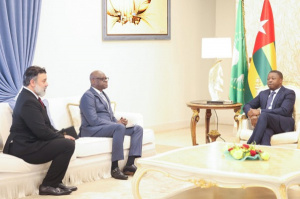
The United Nations Industrial Development Organization (UNIDO) will support Togo in executing its national industrialization agenda, following a meeting on October 8, 2025, between President of the Council Faure Essozimna Gnassingbé and Tidiane Boyé, UNIDO’s resident representative for Côte d’Ivoire, Benin, Niger, and Togo.
The discussions focused on ways to accelerate Togo’s industrial ambitions, which center on the Adétikopé Industrial Platform (PIA) — a flagship project launched in 2021 to drive manufacturing-led growth.
Under the new cooperation framework, UNIDO plans to assist Togo in modernizing key industrial sectors, including agro-processing, textiles, and local product transformation. These sectors are identified as priority areas under the government’s 2025 Development Roadmap.
The organization also aims to foster a business-friendly environment by promoting quality standards, certification systems, and industrial competitiveness, while enhancing the institutional capacity of national agencies responsible for industrial development.
“We have received the President’s orientations regarding his priorities, notably the promotion of youth and women’s employment and the facilitation of access for Togolese products to regional and international markets,” said Tidiane Boyé after the meeting.
The UN agency’s support aligns with Togo’s goal to expand export-driven industrialization while increasing domestic value addition.
According to the Presidency of the Council, UNIDO is preparing to assist Togo through a Country Partnership Programme (PCP) aligned with national priorities. The initiative will focus on developing industrial parks; promoting innovative energy solutions; and facilitating financing for small and medium enterprises (SMEs).
UNIDO also expressed its willingness to collaborate on projects promoting youth and women entrepreneurship, a key pillar of the government’s inclusive growth strategy.
This article was initially published in French by Esaie Edoh
Adapted in English by Ange Jason Quenum
Togo’s National Assembly Kicks Off 2026 Budget Session
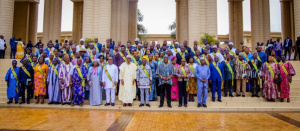
Togo’s National Assembly opened its second regular session of the year on Tuesday, October 7, 2025. Like the Senate, the lower house will use this session to examine the draft 2026 Finance Bill, which the government is expected to submit soon.
In the coming weeks, lawmakers will conduct a detailed review of the government’s budget forecasts. National Assembly President Kodjo Adédzé said deputies will make sure public spending reflects the country’s economic realities and national priorities.
“Together with the Senate, our counterpart chamber, we have a duty to ensure that every franc spent directly contributes to improving the lives of our fellow citizens and strengthening the foundations of our economy,” Adédzé said.
Alongside the budget discussions, several training workshops are planned for deputies, focusing on public finance, social enterprise, and economic governance.
Once the Finance Bill is adopted by the National Assembly, it will go to the Senate for consideration, as required by the legislative process.
Esaïe Edoh
Togo, Benin Launch Cross-Border Health Campaign for 6,000+ Beneficiaries
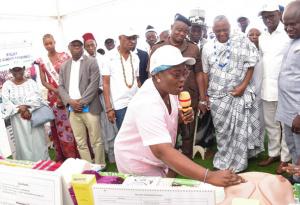
Togo and Benin launched a major cross-border public health campaign in early October 2025 focused on reproductive health, family planning, and HIV/AIDS prevention, according to a statement from Togo’s Health Ministry issued in Lomé on Sunday, October 5.
The campaign, supported by the West African Health Organization (WAHO) and funded through AUDA-NEPAD’s Demographic Dividend and Sexual and Reproductive Health in Africa program, is taking place at the Sanvee-Condji (Togo) and Hilla-Condji (Benin) border crossings. It aims to expand healthcare access for people in remote border communities where public services are often limited.
The initiative targets 2,300 people, seeks to enroll 700 new users of modern contraceptives, and plans to screen 1,600 individuals for HIV and other sexually transmitted infections.
Beyond these immediate objectives, the program is designed to sustainably improve prevention and access to care while integrating border populations into regional health strategies. It also includes the free distribution of 400,000 condoms, vaccinations for women and children, and screenings for pre-cancerous lesions.
Since 2016, four similar campaigns have been held at the Sanvee-Condji–Hillacondji border (Node 2) and at Kodjoviakopé-Aflao on the Togo-Ghana frontier (Node 5).
2025 World Bread Contest: Togo Among 21 Nations Competing in Nantes

Togo will be one of the 21 nations competing in the new edition of the World Bread Contest (Mondial du Pain), scheduled for October 19 to 22, 2025, in Nantes, France.
The country will be represented by a three-person team of bakers led by Chef Marcel Kodzo Dodzi Gbafa-Wona, a renowned artisan and experienced trainer.
The Togolese delegation intends to showcase local expertise, creativity, and precision in line with the competition’s demands. "My team and I will have to create various products, traditional and innovative breads, viennoiseries, and an artistic piece, within a limited time, while meeting specific criteria for taste, technical skill, and presentation," explained Chef Gbafa-Wona. "We will highlight local products such as sorghum, cassava, sweet potato, and cocoa."
A veteran of international contests, the Togolese chef has previously represented the nation at similar events, helping to raise the profile of the country's artisanal excellence. For him, participation in the World Bread Contest extends beyond the competition itself. It aims to provide new visibility for the Togolese bakery and establish the country within the circle of nations recognized for their craft.
This ambition is set to continue in 2026, with Togo planning to participate in the Chocolatine World Cup, also held in France. "That will be an opportunity to continue showcasing our expertise and, above all, to promote Togolese chocolate, whose exceptional quality deserves international recognition," Chef Gbafa-Wona noted.
Togo Hosts International Conference on Youth Employability at University of Kara

-
The University of Kara convened over 700 researchers from 17 countries for its 6th International Scientific Conference, focusing on youth employability and university curriculum reform.
-
Togo’s Higher Education Minister called for African universities to adapt teaching models to local economic needs and promote scientific sovereignty.
-
The conference aims to produce actionable recommendations to align higher education with labor market demands and improve competitiveness for graduates.
Togo’s University of Kara opened the 6th International Scientific Conference on October 6, 2025, emphasizing youth employability and the adaptation of university programs to labor market needs. The event runs through October 10 and brings together over 700 researchers from 17 African and European countries.
The conference theme, “Today's and Tomorrow’s Professions: Sovereignty, Interdisciplinarity, and University Training Challenges,” frames discussions on aligning education with sustainable development and economic priorities.
Minister of Higher Education and Research Kanka-Malik Natchaba urged African universities to revise pedagogical models to better serve local economies. “University education must move beyond external orientation to address sustainable development challenges,” he said, stressing the importance of scientific sovereignty.
The opening keynote, focused on mathematics as a driver of innovation, reinforced the push to integrate science into educational and industrial policy.
University of Kara President Grace Prénam Hozou-Mouzou highlighted the conference’s role as a collaborative platform to anticipate labor market shifts. Delegates aim to develop concrete recommendations to improve the match between higher education and employment, enhancing the competitiveness of Togolese and African graduates.
This article was initially published in French by Ayi Renaud Dossavi
Adapted in English by Ange Jason Quenum
Togo Expands Universal Health Insurance to Self-Employed Workers
-
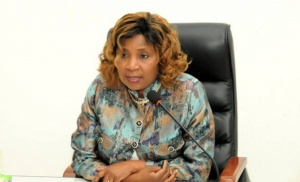
Togo’s CNSS extends Universal Health Insurance (AMU) to self-employed workers, including artisans, farmers, traders, and individual entrepreneurs.
-
The program uses a flexible, advance-contribution system ranging from CFA10,000 to CFA102,000 annually, covering preventive, curative, and hospital care for up to six dependents.
-
CNSS launches a digital platform to facilitate online enrollment and payment, aiming to increase coverage of the informal sector, a critical component of Togo’s economy.
Togo’s National Social Security Fund (CNSS) officially expanded its Universal Health Insurance program (AMU) to non-salaried workers on October 7, 2025, in Lomé. The extension targets thousands of self-employed actors in the informal economy, previously excluded from formal health coverage.
CNSS Director-General Ingrid Awadé described the reform as “a social justice imperative and a lever for sustainable development.” She emphasized that the move aligns with the government’s vision of universal social protection, now encompassing the informal sector, which constitutes a significant portion of Togo’s economy.
The AMU for self-employed workers operates on a flexible, advance-payment system. Contributors may pay 10,000 FCFA per month, CFA28,500 per quarter, CFA54,000 per semester, or CFA102,000 per year. A 90-day waiting period precedes access to benefits.
The scheme covers up to six dependents and provides preventive, curative, and hospital care, along with partial coverage for laboratory tests and essential medications. CNSS suspends benefits after two months of non-payment to maintain program sustainability.
To simplify participation, CNSS launched a digital platform accessible via its website and mobile apps. The platform enables self-employed workers to register, contribute, and manage payments online, supporting broader financial inclusion and streamlined administration.
This article was iniitally published in French by Ayi Renaud Dossavi
Adapted in English by Ange Jason Quenum