ECOWAS Development Bank Rolls Out Gender Equality Framework GES-PI
 Wednesday, 17 December 2025 18:59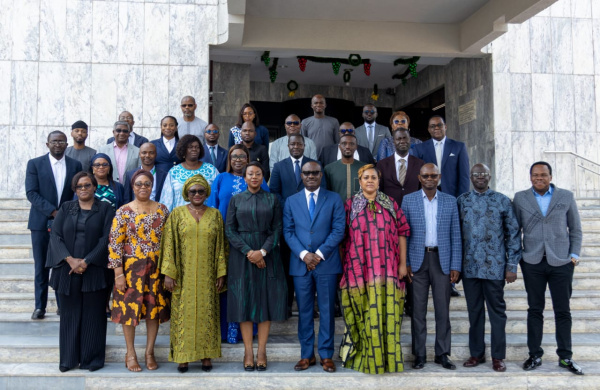
(Togo First) - The ECOWAS Bank for Investment and Development (EBID) on Wednesday launched the rollout of the Gender Equality Seal for Public Institutions (GES-PI), an initiative aimed at strengthening inclusive governance and equity within regional institutions.
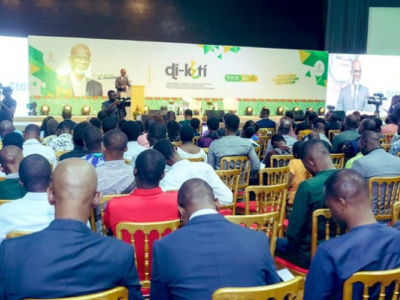
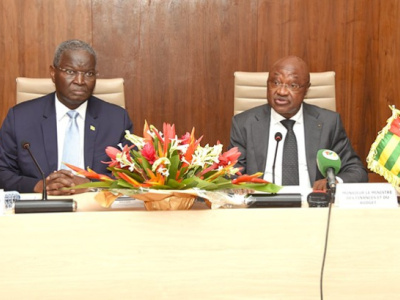
The launch was held at the bank’s headquarters in Lomé, Togo, during a coordination meeting of ECOWAS institutions on the implementation of the Gender Equality Seal.
The meeting was convened by the ECOWAS Commission and chaired by its Vice President, Damtien Larbli Tchintchibidja. Participants included EBID senior management, led by the bank’s president, George Agyekum Donkor, as well as representatives of the ECOWAS Commission, the ECOWAS Centre for Gender Development, and the United Nations Development Programme (UNDP).
In her opening remarks, the Vice President of the ECOWAS Commission said gender equality was not merely a social objective but a strategic requirement for governance and sustainable development, in line with ECOWAS Vision 2050. The framework places people at the center of development and aims to build a stable, prosperous, and inclusive region.
She said the vision could not be achieved if women remained underrepresented in leadership and decision-making roles.
According to her, the introduction of the Gender Equality Seal at EBID sends a strong governance signal, given the bank’s central role in financing regional integration, sustainable growth, and economic empowerment. The seal provides a structured framework to translate political commitments into concrete institutional reforms.
Binta Sanneh, UNDP resident representative in Togo, described the initiative as timely and transformative, noting that significant gaps persist despite progress made in West Africa.
She said that in 2023 women accounted for around 18% of seats in national parliaments across the sub-region, compared with a continental average of 26.5%, while their representation in governments and local authorities remained below 15%.
UNDP stressed that the GES-PI is an operational tool rather than a symbolic label, relying on data-driven assessments and measurable evaluation mechanisms to drive institutional change.
So far, 17 public institutions in nine African countries, including four in West Africa, have committed to the process, delivering measurable improvements in organisational culture, performance, and innovation.
By joining the initiative, EBID aims to strengthen its internal governance and enhance its appeal to international donors and investors, who are increasingly attentive to inclusion and equal-opportunity standards. The bank also seeks to align its practices with international frameworks, including the UN 2030 Agenda, the African Union’s Agenda 2063, and ECOWAS Vision 2050.
S.A