Inside Togo’s Agreement With PFO for the Lomé Ministerial Complex
 Saturday, 20 December 2025 17:41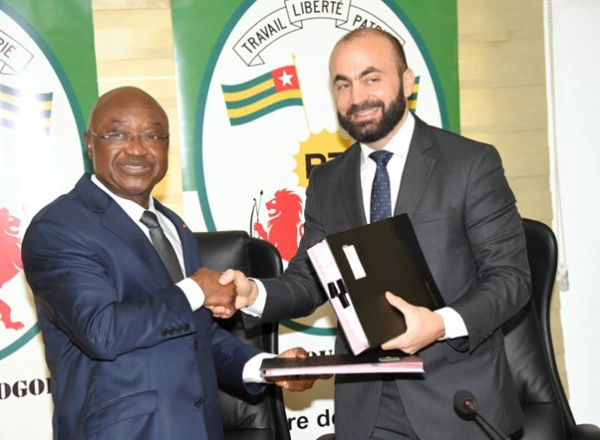
(Togo First) - Togo has reached a key milestone in the construction of a new government administrative complex in Lomé, following the signing of an agreement between the state and the PFO Group, officials said.
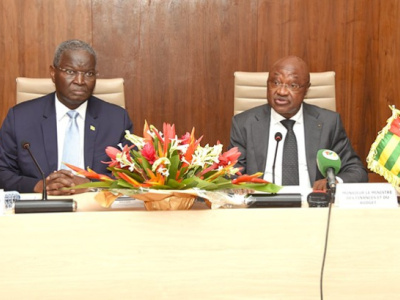
The deal was signed on Dec. 17 in the Togolese capital between the government and the Ivorian-Lebanese construction group PFO (Pierre Fakhoury Operator), marking the transition of the project into its implementation phase.
“The ceremony that brings us together today marks an important step in the realization of the Lomé administrative real estate project, known as the Ministerial City, which is designed to support the modernization of public administration in a context of rapid urban growth,” Finance and Budget Minister Georges Essowè Barcola said at the signing ceremony.
Public-private partnership structure
Unlike traditional public procurement, the project will be implemented through a public-private partnership (PPP) structured as a construction lease. The arrangement involves the Togolese state, the PFO Group and its subsidiary, the Ministerial City Construction Company (SOCOCIM).
Under this legal framework, the state provides the land, while the private partner finances, builds and operates the infrastructure before transferring it back to public ownership at the end of the contract, according to a source familiar with the agreement.
The land, an undeveloped plot located in Bè-Klévé in Lomé’s Golfe 3 commune, will remain the property of the state. PFO is granted the right to use the site for the agreed purposes for the duration of the lease, which the state undertakes to respect.
While construction lease agreements can legally run from 18 to 99 years, they are typically set for periods ranging from 25 to 40 years or 30 to 50 years. The exact duration of the lease signed with PFO has not been disclosed.
Financing and scope
As part of the agreement, PFO and SOCOCIM will finance the project directly or mobilize external funding. Financing discussions involve several banks, including Société Générale, Ecobank, Banque Atlantique, Coris Bank and NSIA Bank. The West African Development Bank (BOAD) has already approved financing of 20 billion CFA francs.
With the mobilized funding, PFO-SOCOCIM will develop an integrated administrative complex intended to serve as a central hub for government ministries in Lomé.
The complex will comprise 18 buildings within a single secured site, combining eight towers of varying heights and ten low-rise buildings. The towers will feature square designs and uniform façades, arranged in pairs according to height and architectural features.
The project will offer around 90,000 square metres of office space and more than 900 parking spaces. Once completed, it is expected to accommodate several ministerial departments and more than 4,500 public officials.
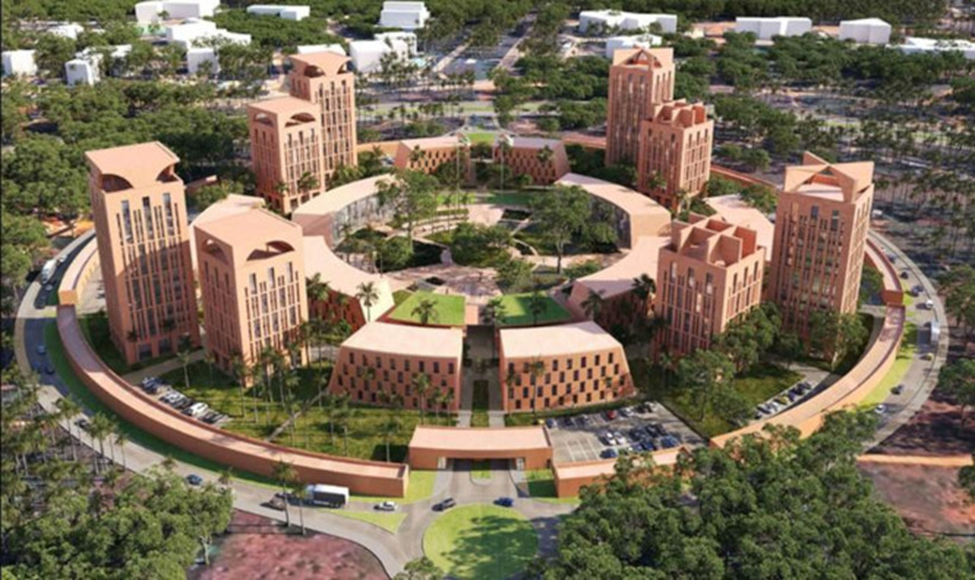
Construction is scheduled to be completed within 36 months from the laying of the foundation stone. PFO-SOCOCIM will bear the technical and financial risks associated with the project.
Operation and transfer
The construction lease also governs the operation of the complex once completed. PFO-SOCOCIM will be responsible for operating and maintaining the facilities throughout the lease period and for transferring them to the state in good condition at the end of the contract.
Although the operational details have not been made public, it is widely expected that the Togolese state will be the primary tenant of the complex and its associated facilities for the duration of the lease.
“This project demonstrates the ability of the Togolese state, its financial partners and the private sector to jointly design, structure and deliver large-scale, useful and sustainable infrastructure,” Clyde Fakhoury, a board member of the PFO Group, said after the ceremony. He said the project would generate more than 1,000 direct and indirect jobs.
Budgetary impact
The use of a construction lease is intended to allow the state to develop strategic infrastructure without immediately drawing on budgetary resources. The state retains ownership of the land and will recover full ownership of the buildings at the end of the contract.
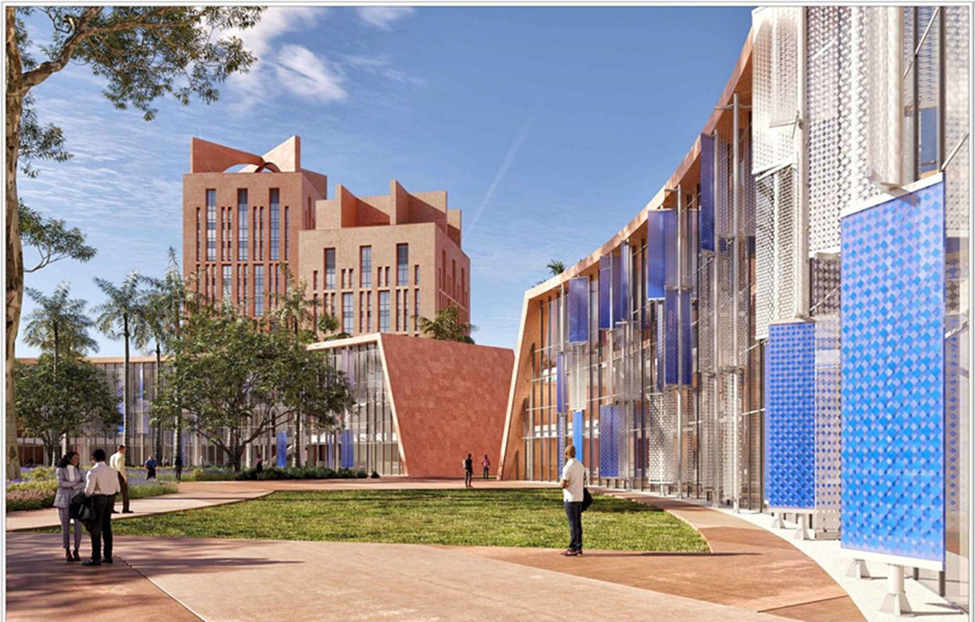
From a budgetary perspective, the arrangement eases pressure on public finances at a time of fiscal constraints. Unlike conventional procurement, the state does not advance construction costs or provide upfront payments. Investment costs are borne by PFO-SOCOCIM, while public expenditure is spread over time through lease payments or contractual fees.
The structure is also expected to accelerate project delivery, as the private partner has a financial incentive to complete construction quickly in order to begin operations, reducing delays commonly associated with public budgetary procedures and improving control over execution timelines.
S.A & Esaïe Edoh