

Togo First
Faure Gnassingbé urges his administration to sustain and pursue reforms to improve Togo's business environment, after major leap in latest Doing Business report
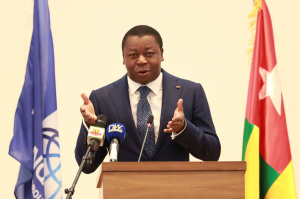
Togo released today its country report for the Doing Business 2020. This was during a ceremony chaired by President Gnassingbé, in the presence of some public figures, diplomats, representatives of the private sector and civil society and executives from the World Bank.
On this occasion, participants reviewed Togo's achievements in the latest Doing Business report.
Hence, various figures, such as the Minister-Counselor in charge of the business climate improvement, the World Bank's local representative, and the IFC's vice president mentioned some of the reasons behind Togo's astounding leap in the global rankings over the past two years (from 156th to 97th). They also detailed indicators where Togo improved the most and those where it still has much effort to make.
"The government's decisions, its strong desire, paired with the senior authorities' leadership and pragmatism," are some reasons behind the "Togolese miracle," according to the head of the business climate cell, Sandra Johnson.
For her part, Hawa Wagué from the World Bank declared: "The World Bank is satisfied by these results and Togo's commitment is lauded. On various indicators, Togo is an example that other countries should follow."
The IFC's VP, Sergio Pimenta, also congratulated Togo and especially lauded the strong involvement of the President who in his opinion greatly contributed to the achievement. However, he stressed that "there is still room for improvement and the IFC will support both the authorities and the private sector in the process." The World Bank's arm for the private sector, it should be recalled, opens its offices in Lomé today.
"In Togo, boasting about our victories is not our habit, celebrating them neither. However, today we will put our differences and quarrels aside and celebrate Togo," declared President Gnassingbé.
However, the leader adds, "This is a race so we must increase our pace."
"We have all our chances to attract investors to our country so do not tire of implementing new reforms. Let's work together to pursue and sustain this motion, We have no other choice so let's do it and let's do it well", Faure Gnassingbé said.
Octave A. Bruce
Improvements in Togo's business climate should increase IFC's investments in the country
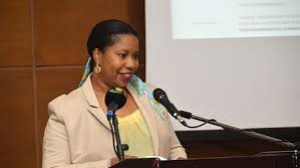
"Togo should become more attractive for investors," according to Ogunsulire Ronke-Amoni, regional representative of the International Finance Corporation (IFC). She made the statement last week upon the issuing of the Doing Business 2020.
Togo is the only country of the OHADA and WAEMU to be among the top 100 of this ranking. This is an indication that "its business climate is getting more favorable to small and medium enterprises which make up 80 to 90% of the private sector."
According to the IFC representative, the improvements "will result in an increase in reliable companies, both small and big, which financial institutions such as the IFC can finance, or provide technical support to."
Jack Ma will be in Lomé in November!
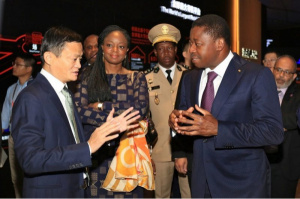
Chinese tycoon Jack Ma will be in Lomé on November 14, 2019, for a meetup with young leaders and entrepreneurs from Togo and other African countries.
Founder of e-commerce mastodon Alibaba, Jack Ma resigned his position as the company chief a year ago to concentrate on philanthropic initiatives through the Jack Ma Foundation, and the Paradise Foundation. The Chinese mogul is also an advocate of the UN sustainable development goals or SDGs.
Any person interested in attending the coming event is free to do so by submitting a dedicated application.
Let's note that Togo has been partnering with Alibaba since the President met with Ma at the previous FOCAC in China. In this framework, members of the Togolese administration and young local entrepreneurs are regularly trained by the firm on the digital economy.
Octave A. Bruce
WAEMU commission and WTO looks at ways to strengthen their collaboration
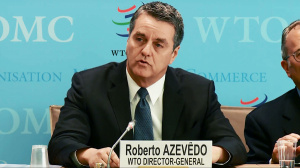
Recently at the headquarters of the WAEMU commission in Ouagadougou, Roberto Azevedo, Director-General of the World Trade Organization (WTO), discussed with the president of the commission, Abdallah Boureima, about ways to strengthen collaboration between the two entities.
While meeting, the two men reviewed WTO projects that could benefit WAEMU States; those are mostly are in the agriculture sector, including cotton and fishery subsidies. They also discussed the region's economic and social development.
Last, Azevedo revealed, they talked of challenges, related to global trade and e-commerce among others, the region currently faces.
Séna Akoda
What do Togolese people think of social and environmental impacts of mining activities in the country?
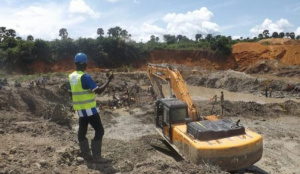
A growing number of Togolese, though not the majority, have a positive perception of mining activities in the country. This was revealed by a study conducted to assess how people perceive the environmental impacts of these activities.
In effect, nearly 59% of the surveyed population believes the activities have a negative impact on the environment.
The results of the study have been submitted for validation by actors of the mining industry, representatives of the ministry of mining, the PDGM, traditional authorities, representatives of mining companies and civil society. The validation session which begins today will close tomorrow; it takes place in Lomé.
The validation "aims to ensure that the study which was trusted to a consultant was conducted thoroughly," says Bala Kindi Abali, expert on social and environmental preservation at the PDGM. Once adopted, the study and its recommendations should help develop an appropriate mechanism to handle complaints related to mining activities.
The latter should reduce conflicts due to the negative impacts of these operations. These include soil degradation which affects agricultural productivity, atmospheric and water degradation impacting health, relocalization, and displacement of populations who are often not appropriately compensated.
According to Sogle Damidaré, Director General of the Mining and Geology office, validating the study should also enable authorities to tackle various issues relative to the environmental impact of mining operations in Togo.
Séna Akoda
Togolese Centre for Fairs and Exhibitions urges e-commerce actors to take part in the coming International Tradefair of Lomé

E-commerce promoters will pay 50% less for their stands than other exhibitors at the coming International Tradefair of Lomé.
This is an offer from the Togolese Centre for Fairs and Exhibitions (Centre Togolais des Expositions et Foires - CETEF).
The good news was broken to e-commerce actors by the Managing Director of CETEF, Kueka-Banka Johnson, last Tuesday, as she met with them.
The promotional offer aims at getting more of the concerned actors to take part in the International Tradefair of Lomé which is set to take place from November 22 to December 9, 2019.
"We do not wish to exclude anyone and there is a place for all the young people operating in this sector," Johnson declared.
The meeting with the e-commerce actors also helped inform them about steps taken to make sure the coming event, which is at its 16th edition, profits both the actors and the event's organizers.
Séna Akoda
Togo: How much do small scale mines pay in wages?
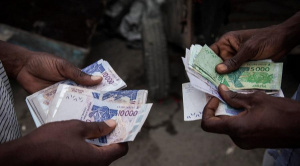
At end-March 2019, small scale mines paid more than XOF2.5 billion of wages according to a study conducted by the INSEED and the Ministry of Mines and Energy. According to the latter, this segment was employing 10,383 people at the time the study was carried out.
According to the same study, these wages represent 96.9% of the mines' current expenditures. Moreover, data secured by TogoFirst shows that they represent 14.2% of all revenues generated by small scale and artisanal mining operations; the latter being valued at XOF18 billion.
Let's recall that the payments come from 1,621 small scale mines identified across the country. Most of them mine sand, gravels, gold, clay, marble, laterite and various other stones used in building.
Séna Akoda
IFC opens its office in Lomé tomorrow
As announced last July by its vice-President for Africa and the Middle East, Sergio Pimenta, the International Finance Corporation will open its offices in Togo this Thursday.
The opening ceremony will be chaired by Togolese Prime Minister, Komi Selom Klassou, and Pimenta. It will also gather various top public figures, representatives of the private sector, as well as technical and financial partners.
Opening the office translates the IFC's ambition "to be closer to local businesses and help authorities achieve their goals," as stated by Pimenta during his visit some months ago.
Let's recall that the IFC, World Bank's private sector arm, is active in Togo with a portfolio of more than $330 million. Its investments cover sectors like energy, financial markets, logistics, and health. The institution also advises the government on how to improve its business environment and attract more investors.
Octave A. Bruce
The Miato is officially launched
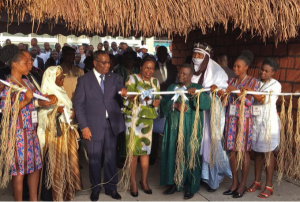
On Monday, October 28, Togo's Craftsmanship International Market (Miato) officially launched.
The launching ceremony took place at the Palais des Congrès of Lomé and was chaired by Prime Minister Komi Selom Klassou.
Themed Innovative craftsmanship, a factor of social and economic development, the event aims to bring to light the genius and potentialities of Togolese craftsmen, promote artisan products and valorize the profession. It also intends to promote true artisanal businesses in Togo and boost tourism.
More than 160 exhibitors from the country's five regions and from 12 other countries will participate in the event.
The market we are launching should make Togo a first-choice destination in the region in line with the first and second axes of the national development plan, said craftsmanship minister, Victore Tomégah-Dobgé who also recalled that a fairground issuing citizenship certificates and birth certificates had been set up on the market's site.
Our cultural riches and know-how give us a great advantage on international markets and we must pursue this direction, said Niger's minister of tourism and craftsmanship, Ahmet Botto, also present at the launch.
Craftmanship contributes 18% of Togo's GDP and it employs nearly one million people, officially.
Octave A. Bruce
Experts from 17 African nations meet in Lomé to establish common legislation for social security
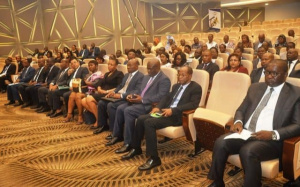
On October 28, 2019, the extraordinary meeting of the committee of experts on the legal framework of Member States of the Inter-African Conference on Social Welfare (CIPRES) opened in Lomé, Togo.
Experts from 17 African countries have gathered at this four-day meeting to debate issues of social security and free movement of goods and people across the continent.
In effect, it aims to harmonize and update regulations of each CIPRES member State in line with the transformation of social security systems. In the long run, this should lead to the creation of a common framework of understanding and legibility relative to social security: for example, at the level of procedures, principles, or obligations of involved parties (knowingly social security funds, insured individuals and employers).
This common framework will help ease the free movement of goods and people, professionals especially, across the various member States.
The common regulation should be produced at the end of the event and be submitted to the CIPRES ministers' council.