

Togo First
Maritime legislation: Togolese legal experts meet in Lomé to discuss measures to fight piracy and other maritime crimes

Lomé is currently hosting a four-day workshop on ways to tackle maritime piracy and criminality in Togo. The training session began yesterday, gathering around 20 legal experts (prosecutors, investigators, law enforcement agents) who will boost their capacities relative to maritime law.
Financed by the European Union, it is organized by the UN Office on Drugs and Crime (UNODC). It is part of a project supporting West Africa's Integrated Maritime Strategy (IMS) and aligns with recent reforms initiated in the country, lauded by the UNODC.
The country "has done a great job these past years, in regard to legal reforms, said the UN office. We can say Togo is a sort of leader, in the Gulf of Guinea, looking at the consistency and quality of efforts it made relating to legal reforms," the institution added.
According to Stanislas Baba, deputy minister in charge of the maritime industry, the country, in addition to reinforcing its maritime legislation by adopting a maritime code, "has established a national jurisprudence overseeing measures to fight maritime crimes."
PM Komi Klassou gathers his staff for an information session on the 2018-2022 national development plan
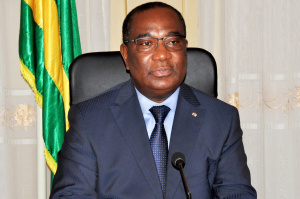
Yesterday, Togo's Prime Minister gathered his staff to better inform them about the 2018-2022 national development plan (PND 2018-2020).
The plan involves three major axes which are important to know, he said. "The President wants us to create conditions that will foster the emergence of a viable and resilient society both in urban and rural areas."
The first strategic axis of the development plan aims at making Togo a logistics hub of excellence and a first-class business centre in the sub-region.
Among assets which the country intends to leverage to achieve this goal is the port of Lomé, Klassou says. This is the only deepwater port on the West African coast which over the years, and after massive investments, has morphed into both a transhipping and refuge port.
The official also noted the economic impact of the rehabilitation of roads. This will ease access to the port for surrounding landlocked countries, he stressed.
Regarding the second axis, the PM put emphasis on the local transformation of agro-food products, to boost related value chains and subsequently develop the agro-industry. The PND also plans for the establishment of manufacturing industries.
Under its third axis, the PND integrates social measures to spur inclusive growth, enhance access to quality education and health services, and ensure universal electrification by 2030.
According to Komi Klassou, the efficient implementation of the PND should lead to the creation of more than 500,000 jobs by 2022 and bring Togo's growth rate to 7.6% by 2022.
Séna Akoda
Cybersecurity: Togo adopts law to protect personal data

Last Wednesday, Togo's parliament voted a law ensuring personal data protection. In effect, the law defines the legal and institutional framework to protect this type of information.
"To protect data, we must first have the means to collect them. This requires a regulatory and institutional framework able to identify our citizens in-depth, using biometrics if needed," the deputies declared. "In this digital world, the digital identity of every citizen is a major topic. It must be protected as efficiently as physical and civil identity, through a digital identification process and by launching biometric ID for citizens," they added.
According to Cina Lawson, the Togolese Minister of Digital Industry, this law aligns with the government's desire to tackle security challenges and issues associated with the expansion of the Digital Age. This "will involve the adoption and anticipation of adequate mechanisms, to make our cyber-environment safe while ensuring the protection of organizations, institutions, businesses and individuals' data."
The law's passing is part of a process that aims to "provide our country, in a gradual and coherent manner, a legal and institutional framework mirroring an ecosystem that aligns with the President's vision to make the digital sector one of the pillars sustaining the growth and modernization of the economy, as well as societal development," the minister added.
Séna Akoda
2020 Doing Business: Togo is the third-best reformer worldwide and the first in Africa
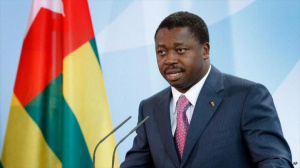
For the second year consecutively, Togo is ranked among the top 10 reformers of the world and the first in Africa, according to the latest Doing Business Report.
Indeed the index which ranked 190 countries, based on ease of doing business, places the West African nation at the 97th position. This is a major leap (up 40 places) compared to the previous edition of the report even if that year the country's ranking had soared by 19 places.
With its performance this year, Togo even came ahead of Nigeria. Only four African countries, including Togo, were listed among the top 100 of the 2020 Doing Business report. The other three are Mauritius, Rwanda, and South Africa.
Worldwide, countries whose rank improved most are Saudi Arabia, Jordan, Togo, Bahrain, Tajikistan, Pakistan, Kuwait, China, India, and Nigeria.
President Faure Gnassingbé attends first-ever Russia-Africa forum in Sochi, Russia
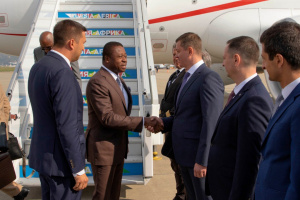
Faure Gnassingbé is currently in Sochi, Russia, for the first Russia-Africa summit. The two-day event focuses on peace, security and development issues mainly but also looks at economic cooperation between Africa and Russia.
The Togolese leader and his delegation will at the summit showcase Togo's economic potential and assets, to attract Russian investments for the 2018-2022 national development plan (PND 2018-2022).
Among these strong points are the country's improvement of its business climate, key projects of the PND such as the widening of the N°1 National Road, and the huge potential of the port of Lomé in terms of investment. These will be discussed during a business forum held on the sidelines of the summit.
At this business forum, opportunities for strengthening the partnership between the Togolese and Russian private sectors will also be discussed.
Séna Akoda
Togo to be represented at the "One Planet Summit in Paris" by Marc Ably-Bidamon, Minister of Mines and Energy
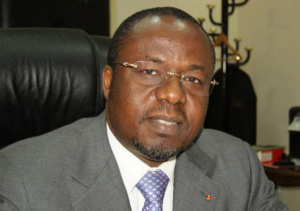
Togo's minister of mines and energy, Marc Ably-Bidamon should be in Paris on October 24 for the One Planet Summit on climate change.
The summit's participants will reflect on ways to increase mixed financing for low carbon emission and clean energy projects. At the event, the Togolese minister will make a presentation on the "mobilization of financial markets to tackle climate change through mixed funding."
During his speech, Ably-Bidamon will highlight the Lomé Initiative, according to his communication cell. The Lomé Initiative, the latter reveals, "is an appropriate framework established by the Presidents of Benin, Burkina Faso, Mali, Niger, Gabon, and Togo."
Overall, the conference will cover topics such as "adaptive measures to favor populations that are vulnerable to climate change, and partnership opportunities to finance sustainable infrastructures."
Séna Akoda
Agriculture: Ten Togolese entrepreneurs apply for funds to build up their capacities in Cape Coast at the 15th general assembly of RUFORUM

The 15th general assembly of the Regional Universities Forum for Capacity in Agriculture (RUFORUM) which is scheduled for this year will take place in Cape Coast.
The organization launched a contest to allow young West African entrepreneurs active in the agricultural sector to take part.
Overall, 421 applications were received from 12 West African countries. About 10 of these applications were submitted by young Togolese. This is far behind other countries like Nigeria, Benin or Ghana, which submitted respectively 205, 103 and 52 applications. Still, Togo did better than Sierra Leone and Burkina Faso which submitted respectively nine and eight projects.
The major selection criterion is the innovative nature of the business or business idea submitted. At the end of the process, the 20 most innovative projects will receive funds to build up their capacities. The results will be released on November 15, 2019.
Séna Akoda
Togo: Youth Employment Support Project (PAIEJ-SP) validates study assessing its impacts across the country
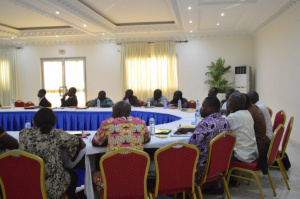
On October 23, 2019, the team steering the Youth Employment Support Project (PAIEJ-SP) validated a study establishing a basis to better assess the project's impact across the country. The study was conducted by the National Institute for Statistics, Economic and Demographic Studies (INSEED).
"This study provides (us) reliable reference data on all five sectors targeted by the PAIEJ-SJ," said Agbeti Komi, Statistician and Economist at INSEED. These sectors include maize, soybean, cassava, and small ruminants.
The PAIEJ-SP was launched in 2016 and will be completed next year. It aimed to create about 20,000 direct jobs and 150,000 indirect ones in the agriculture sector over the period, by supporting farmers and businesses operating in this sector. The estimated cost for the project is XOF12 billion.
The second edition of AFRIBAT building fair launched in Lomé
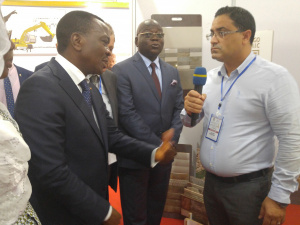
Yesterday, the second edition of the AFRIBAT fair was launched at the Togolese Center For Lomé's Fairs and Exhibitions, by the minister of trade and private sector promotion, Kodjo Adedze.
The event, the official declared on this occasion, "aligns with the government's objective to equip the country with quality services and infrastructures for its emergence."
"It will facilitate business relations between Togolese economic operators, actors of both private and public sector, and investors, as well as local and foreign financial institutions," Adedze added.
For his part, Germain Essohouna Mèba, Chairman of the Chamber of Commerce and Industry of Togo (CCIT), urged the fair's participants to contribute to the transformation of African cities, making them modern, bringing up their standards of living to international levels. In this regard, he noted that the AFRIBAT emanates from the Mediterranean Building Exhibition MEDIBAT.
With its exhibitions, conferences, B2B meetings and more, AFRIBAT provides a framework for exchanges and partnerships between professionals, experts, and entrepreneurs of the construction industry and related sectors.
Mounir Mouakhar and Lotfi Krichen, respectively representative of the Chairman of the Sfax Chamber of Commerce and Industry and president of the permanent Conference of Consular Chambers in Francophone Africa, lauded the organization of the fair in Lomé, a year after it took place in Cameroon.
Séna Akoda
Togo is the second-best place for women, in West Africa (Report)

Togo is the second-best place to be a woman in West Africa according to the latest Women, Peace, and Security Index, a global study assessing women's inclusion in society, their security, and equity in comparison to men. Overall, 167 countries, 51 in Africa, were ranked on the index.
Researchers at Georgetown University's Institute for Women, Peace and Security and the Peace Research Institute Oslo ranked the country 14th in Africa and 113rd worldwide. In West Africa, Ghana was first (6th in Africa and 78th worldwide).
Within their sub-region, the two neighbors are ahead of Senegal (15th in Africa), Guinea (28th), Burkina Faso (29th), Côte d'Ivoire (31st), and Nigeria (37th). The last in the region are Niger and Mali (respectively 44th and 48th in Africa).
Mauritius is the best place to be a woman, the study found, in Africa (it is 60th in the world).
At the end of the ranking in Africa are the Central African Republic, the Democratic Republic of Congo (DRC), and South Sudan (respectively 49th, 50th and 51st).
Worldwide, Norway is the best place for women to be and surprisingly the US was ranked 19th out of all 167 countries ranked. It should be emphasized however that no country had a perfect score.
Ayi Renaud Dossavi