
Togo First
Lomé will host West Africa’s first investment forum next October
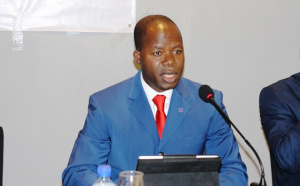
Next October 3 and 4, Lomé will host West Africa’s first investment forum, “Invest in West Africa.” The event aims at finding a solution to private sector’s difficulty in accessing financing in the region.
Also, according to Idrissa Nassa, President of Coris Group which is sponsoring the forum, besides “facilitating the financing of SMEs and SMIs with a high potential, boosting public-private partnerships, the group should gather all investment actors” of the region. The initiative “will show the world that in West Africa, the private sector is ready to absorb investments and is maturing,” he added.
Nassa backed his statement with some figures of AfDB, commenting: “In 2006-2016, the private sector contributed nearly 40% of West Africa’s GDP and 30% of States’ budget. The sector is without a doubt the driver of growth and inclusive development in Africa, and West Africa especially.”
Entrepreneurs, investors, regional and continental organizations are expected at the event. There will also be heads of State and governments, ministers, industrial and investment promoters, heads of banks, finance institutions, sovereign funds, SMEs and SMIs, senior officials, etc.
Séna Akoda
Togo: GVA-Togo launches “Start”, a new home broadband offer that costs XOF15,000
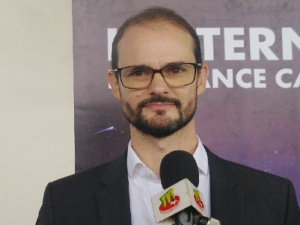
Vivendi’s Togolese subsidiary, GVA-Togo, just launched a new service called “Start”. This is a broadband offer which costs CFA15,000, half what the company’s first offer, CanalBox, cost.
The new offer which falls under the Fiber to the Home project aims at making broadband accessible to all.
“With our Start offer, many Togolese households can enjoy broadband via fiber optics, for only XOF15,000 per month,” says Alexandre Cohen, Managing Director GVA-Togo. The speed of the new connection is 10Mbps.
Togo: A new XOF100 million guarantee fund available for SMEs/SMIs
In Togo, a new guarantee fund of XOF100 million has been put in place by various banks for local SMEs and SMIs. The monies will help “business operators who struggle secure public procurements,” according to a senior official from the National Chamber of Commerce and Industry (CCIT) which put in place the fund.
Businesses interested in benefiting from the fund must first register on a dedicated form.
Besides this fund, there is another established by the national agency for the promotion and guarantee of financing for SMEs/SMIs.
Séna Akoda
After S&P, Moody’s also delivers Togo’s first ratings
Moody’s, just after S&P, delivered its first ratings for Togo. The ratings agency indeed gave the country a B3 rating with stable outlook, while S&P gave it a B rating.
The ratings come as Togo plans this quarter to issue a Eurobond seeking €500 million. The move was comforted by successful Eurobonds issued recently by some neighboring nations.
Monies raised through the Eurobond will be used to refinance short-debt internal debt.
According to the IMF which greenlit the operation, it should not prevent Togo from meeting WAEMU’s convergence criteria by 2020. Public debt should fall below 70% by the same year. Last March, let’s recall, it fell below 67%.
Togo plans to clear all its domestic arrears in the next 10 years

Togo will over the next 10 years clear all its domestic arrears, in line with its medium-term debt strategy. This amounts to XOF225.5 billion which is 10.3% of the country’s public debt.
Lomé plans to pay this year XOF35.4 billion, after having paid more than XOF50 billion in 2017 and XOF65 billion in 2018. This is good news for the private sector which is expected to contribute 65% of the funds needed by the country for its five-year national development plan.
Togo’s efforts to clear all its domestic arrears come after it committed, to the IMF, to progressively do so. Multiple measures were actually taken at the end of 2017, to prevent more arrears from piling up.
Togo: World Bank satisfied with Economic Governance Support Project

In Togo, the Economic Governance Support Project (PAGE) goes in line with the expectations of the World Bank and the European Union (EU) which finances it.
Hawa Cissé Wagué, representative resident of the World Bank in Togo said she is satisfied with the project in an interview with Erick Kaglan, Head of Communications at World Bank Togo. She declared: “I am very satisfied with progress made on the PAGE over the last months.”
The project, she adds, helped boost “public finance management capacities of the State’s monitoring institutions such as the General Inspectorate of Finance, the Audit Court and the Commission for Finance and Economic Development of the National Assembly.” The PAGE helped “elaborate tools necessary for the budget orientation debate such as the manual for the assessment and inclusion of key public investment projects (PIP) in annual budget, and the multi-year economic and budget programming document (DPBEP).”
She also noted progress made regarding the reform of the program budget.
Comforted by the progress, the World Bank urged public authorities to continue its efforts for budget reform, enabling Togo to successfully achieve its budget transition. The latter consists in shifting from a resource budget to a program budget.
Togo is expected to adopt a program budget in 2020. In this framework, the World Bank organized on July 7-9, 2019, a session to train members of the parliament’s commission for finance and economic development. The session aimed at enabling the commission play its role in preparing the country’s budget for 2020.
Séna Akoda
Togo cashes in XOF22 billion for its first bond issuance on the regional market in Q3 2019

It is a great start for Togo on the regional financial market in this third quarter. The country’s public treasury indeed recently raised XOF43 billion via a three-year bond issuance. This represents a coverage rate of 215% and consolidates the country’s performances on this market since the beginning of 2019.
However, the treasury will only cash 110% of the auctioned amount, thus XOF22 billion, in line with rules set by the UMOA-securities coordination agency.
With this operation, Togo since the beginning of the year, has mobilized about XOF230 billion from the regional financial market.
This quarter, Lomé plans to raise XOF115 billion. By the end of September also, it is expected to raise €500 million through a Eurobond. The government expects the latter to be fruitful; a confidence due to its first sovereign ratings recently issued by S&P and Moody’s.
Togolese claim the police, judges and magistrates are the most corrupt (report)
Most (57%) Togolese believe corruption has increased over the past 12 months in the country. This was revealed in the latest corruption perception index published by German NGO, Transparency International, on July 11, 2019.
Still according to the report, 32% of the population claim they had to pay bribes to get administrative documents. Also, while 68% of the surveyed population said authorities’ efforts to mitigate corruption are insufficient, 61% said the government faltered in its resolve to eradicate the phenomenon. It thus appears that all sensitization campaigns carried out by the Higher Authority for Prevention against Corruption and Related Offenses (HAPLUCIA), as well as the government’s reforms to improve transparency, have not changed how the people perceive public administration. Actually, citizens say police forces are the most corrupt, alongside judges and magistrates.
This is a trend that spreads throughout the whole sub-Saharan African region. Indeed, in 2018, the region obtained the worst score on the corruption perception index, an average of 32 on a scale of zero (very corrupt) to 100 (very clean).
In Togo however, all was not bad. Truly, compared to 2015, less people believe officials are corrupt. In 2018, 34% of the surveyed said the public servants are corrupt, as against 58% five years ago.
Water utility company TDE digitalizes bill payment by adopting mobile money solution
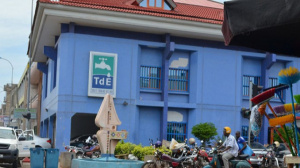
Togo’s water utility company, Togolaise des Eaux or TDE, has adopted Mobile Money as a payment solution to enable its customers pay their bills with more ease.
Besides TMoney and Flooz which offer the service, the utility also partnered with Ecobank with the same goal. TDE customers can thus pay bills via Ecobank Mobile.
By choosing these solutions, TDE joins others such as Canal + and the National Social Security Fund which have also opted for digital payment.
Séna Akoda
Lomé will host an international craftsmanship fair from Oct. 25 – Nov. 3, 2019
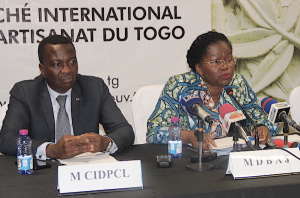
From October 25 to November 3, 2019, Lomé will host the International Craftsmanship Fair of Togo (Miato).
The fair was officially launched on July 12, by the minister of craftsmanship, Victoire Tomégah-Dogbé.
Organized by the ministry of craftsmanship and regional employment chambers, the fair will host exchanges, exhibitions, and stands. “It aims at promoting the creativity of Togolese craftsmen,” the minister said.
It aligns with axes 1 and 3 of the national development plan which projects the organization, every year, from fairs to promotion of local crafts and makes the country a major business centre.
Expected at the coming fair are about 150,000 visitors from 26 countries, African mostly. It will take place every two years.
Octave A. Bruce