
Togo First
Togo: Decision to issue Eurobond nearing
Togo should, if everything goes according to plans, raise €500 million through a Eurobond before the end of this quarter. The government indeed supposedly picked this option over a commercial loan.
Lomé plans to use these funds to clear part of its internal debt. Maturity period for the bond should exceed seven years.
According to sources close to the case, a Togolese delegation is expected in London in the coming weeks. On this occasion, the delegation will meet international institutional investors and study the market, ahead of a potential roadshow. It should be recalled that Ecobank’s top executives proceeded with a similar visit last month, accompanied by some Togolese officials.
Ecobank has, it must be noted, successfully raised €500 million on the London Stock Exchange (LSE). An experience which comforts Lomé in its intent to issue a Eurobond as well. Other reasons that spur the country’s confidence regarding the operation include the IMF’s praise for its efforts to improve public finances, reflected by a dropping public debt, and its first-ever sovereign ratings from US ratings agency S&P.
Between 2012 and 2018, African States raised $87.4 billion through 77 Eurobond issuances. In 2018 alone, around 25 issuances occurred. Among countries which issued the bonds are Egypt, Gabon, Congo, Senegal, Côte d’Ivoire, Tunisia, Rwanda, Ethiopia, and Kenya.
This year, Benin, which has the same ratings (S&P) as Togo, raised €500 million through Eurobonds.
Fiacre E. Kakpo
Togo : ProMifa has been officially launched

Last Friday, the Mifa support project (ProMifa) was officially launched in Lomé by the minister of agriculture, Noël Bataka (photo).
ProMifa is co-financed by the International Fund for Agricultural Development (IFAD), the Togolese government, private sector and its beneficiaries themselves. A total of $35 million (XOF20.24 billion) was mobilized for the project which is to last six years.
According to Aristide Agbossoumonde, Director General of Mifa, ProMifa aims at “providing organized and dynamic actors of the agricultural chains of value, sustainable access to market and both financial and non-financial services.”
In effect, the project will focus on three axes: first, it will provide technical support for agro-pastoral development and access to the market; the second relates to financial support and last is support for the project’s management and coordination.
Overall, ProMifa is to directly benefit 300,000 beneficiaries from rural exploitation areas, professional associations and small enterprises. Women and children will get particular attention under the project, said Martin Lisandro, IFAD’s director for West and Central Africa.
“This launch is a major step for relations between Togo and IFAD and it paves the way for a more efficient, flexible and durable partnership,” he added.
Let’s recall that agriculture currently contributes 40% of Togo’s national GDP.
Octave A. Bruce
Togo will seek XOF115 billion on WAEMU securities market this quarter

For the first quarter of this second half of 2019, Togo will seek XOF115 billion on the UMOA securities market.
The funds will be raised through six issuances of fungible treasury bonds and bills.
In effect, there will be four issuances of fungible treasury bonds and two of fungible treasury bills. The first is scheduled for July 12 and 26, August 9 and September 6. For the fungible treasury bills, the country will proceed to their issuance on August 23. The date for the second operation of this type is yet to be disclosed; however, it was revealed that a sum of XOF15 billion will be sought in this process, while all other five will aim at raising XOF20 billion.
The amount sought by the country represents 18% of the XOF616 billion targeted by all WAEMU States on the regional financial market this quarter.
Séna Akoda
FAO boosts food security in Northern Togo
The Food and Agriculture Organization (FAO) will spend XOF41.4 million in Northern Togo, the Savanes region precisely, to improve food security in the area.
The institution’s representation in the country indeed signed last Friday a memorandum of understanding in this framework with the ministry of agriculture, the Red Cross, the national agency for civil protection and the Technical Support and Council Institute (ICAT).
FAO’s provision falls under a project to “boost resilience of households affected by floods in the Savanes region,” and part of the funds will thus help these people cope with the phenomenon.
In detail, food supplies will be distributed to 900 people, technical trainings in agriculture will be offered, savings and loans associations in villages will be established as well as community listening clubs.
Togo: Loans to the economy on the rise, while related cost and public debt slumps
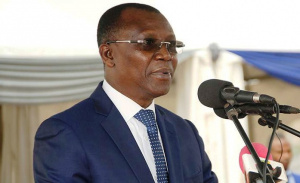
On July 4, 2019, Minister of finance, Sani Yaya, confirmed IMF’s recent forecast for the Togolese economy this year. This was during the second roundtable of the national credit council (CNC) in 2019.
“Looking at available data, economic growth should reach 5.1% in 2019, after standing at 4.9% in 2018 and 4.4% in 2017. This growth would be spurred by growth in all sectors of activities, the tertiary in particular, amid controlled macroeconomic balances,” Yaya declared.
He then lauded better financing conditions which probably contributed to an increase in loans to the economy (38% of GDP at the end of March 2019, the highest within the WAEMU), even if they are still insufficient compared to investment needs.
“At March 31, 2019, loans to the economy rose, driven by intermediation activities of banks and decentralized finance systems,” the official said before adding: “Also, cost of lending by banks slumped. Weighted average interest rate on loans provided by banks was 7.80% at this date, against 8.31% a year early.”
Similarly, public debt which for long was a bottleneck for public investment also reduced to 67.5% (against a standard of 70% in WAEMU) as the government paid part of its arrears and musters efforts to improve public finances.
For Sani Yaya, “the decrease should continue, with a controlled public deficit.” A projection he “correlates with more rationalized public expenses and greater tax income.” In these conditions, inflation should remain weak, standing at 1.7% in 2019, against 0.9% in 2018.
Togo : BCEAO confirms surplus balance of payments in 2017
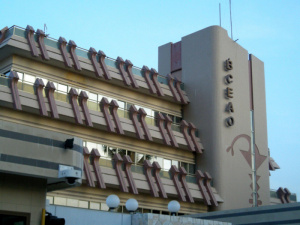
The Central Bank of West African States (BCEAO) organized last week the ninth day dedicated to the diffusion of Togo’s external accounts results for 2017.
According to the apex bank, the country’s balance of payments that year was in surplus, just like in 2016, with respective amounts of XOF10.113 million and XOF67.15 million.
External trade of Togo also recorded a surplus of XOF85.315 million.
Meanwhile, a program backed by the IMF’s extended credit facility over the 2017-2019 period was launched. Paired with this, reforms and projects to improve roads were initiated.
Besides Togo, within the West African Economic and Monetary Union, trade balance was in surplus in Côte d’Ivoire and Senegal as well.
Ayi Renaud Dossavi
MIFA teams up with African Guarantee Fund to boost agricultural sector in Togo
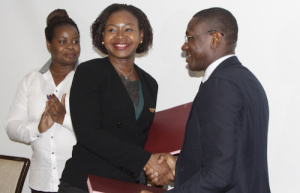
The agricultural financing incentive mechanism (MIFA) and the African Guarantee Fund West Africa signed on July 2, 2019, in Lomé a partnership agreement to establish a fund aimed at further increasing financing to actors of the agricultural sector.
The signing took place in the presence of Minister of agriculture, Noel Koutéra Bataka. The fund is baptized “MIFA’s guarantee fund for agricultural actors.”
The new agreement will enable both parties involved to contribute to the formalization and establishment of portfolio guarantees covering 50% of amounts needed for projects submitted by MIFA S.A to partnering financial institutions.
Additionally, individual guarantees will be put in place for MIFA-backed actors and those seeking funding from MIFA’s partnering finance institutions.
“The partnership that AGF signed with MIFA directly aligns with our strategy for the coming years and it is a unique opportunity to boost Togo’s agriculture which is currently facing structural changes,” said Adidjatou Zanouvi, Managing Director AGF West Africa. “With it”, he adds, “we will help ease and gradually improve the share of bank loans to the agricultural sector; an increase that will substantially impact Togo’s economic growth and the sector itself.”
WAEMU: CRRH-UEMOA listed last week its eighth bond on the BRVM
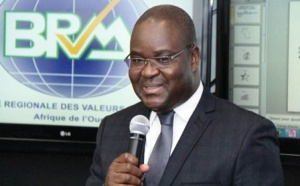
WAEMU’s regional mortgage refunding fund (CRRH-UEMOA) listed exactly one week ago its eighth bond, on the regional stock market, BRVM.
The operation helped raise a total of XOF30.2 billion between 30 October 2018 and January 15, 2019. The proceeds will be used to refund outstanding housing loans provided by banks that hold shares in CRRH-UEMOA.
The bond issuance, BRVM’s managing director Edoh Kossi Amenouve says, makes “CRRH-UEMOA one of the stock’s regular and major issuers.” This regularity according to him “confirms the relevance of the fund and the key role it plays in facilitating access to housing for people across the WAEMU.”
CRRH-UEMOA helps people access housing loans by providing banks with cash. It is based in Lomé, Togo.
Ayi Renaud Dossavi
Lomé-based Oragroup increased its capital to XOF69.415 billion
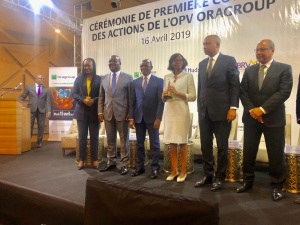
Pan-African banking group Oragroup recently raised its capital to XOF69.415 billion, thus adding XOF6.097 billion to its initial capital. The new capital, the group indicates, is divided into 69,415,031 shares with a nominal value of XOF1000 per share.
From October 29 to November 22, 2018, the Lomé-based group had proceeded to an Initial Public Offering issuing 6,097,561 new shares and selling 7,785,445 existing shares at XOF4100 per share.
In the process, it raised on the regional financial market XOF56.92 billion. The operation was fully subscribed and this was the largest IPO ever recorded on the stock market.
According to Binta Touré Ndoye, former managing director of the group, “the fundraising will help us invest in digital banking, seize opportunities to expand in Central Africa, and boost the Group’s reputation among the people and the financial community, as well as boost equity of some subsidiaries.”
Séna Akoda
Togo chairs African Union Security and Peace Council this month
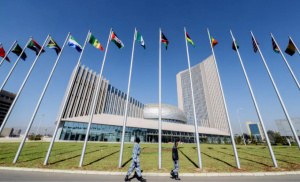
Since July 1, 2019, Togo started chairing the African Union Security and Peace Council, sources close to the union revealed.
The country’s chairmanship which will close on July 31, 2019, will focus on issues related to maritime security, safety and development in Africa.
Regarding safety issues, Toba Sébadé, Representative of the African Union in Togo, will discuss conflict management and settlement with representatives of the 15 member-States of the council.
Next July 16, a meeting will be held to review the implementation of decisions taken at Maritime Safety and Security Summit held in Lomé in October 2016.
Togo’s mandate will be dedicated to light weapons trafficking across Africa, as well as the use of cluster munitions and land mines in populated areas. Sexual abuses in times of conflict will also be discussed.
Togo’s chairmanship will end with a field mission led jointly by the ECOWAS and the African Union, in Gambia, to help with the post-conflict reconstruction process in the country.