

Togo First
Togo : IMF allows a temporary increase in fiscal deficit
The International Monetary Fund (IMF) has allowed a slight increase of Togo’s budget deficit. A true relief for the country struggling to increase internal revenues while social expenditures keep growing.
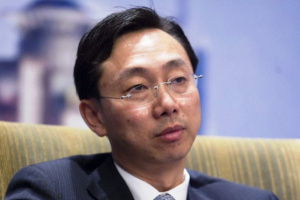
“A temporary increase in the fiscal deficit is warranted to accommodate some urgent spending. Notwithstanding this relaxation of fiscal targets, Togo is projected to remain within the WAEMU deficit criterion (ed.note: 3%) in 2019 and 2020,” said Tao Zhang, Deputy Managing Director and Acting Chair of the IMF’s Executive Board. This was at the end of the fourth review of Togo’s economic performance under a program supported by and Extended Credit Facility (ECF).
Togo, it should be noted, spends more than 40% of its budget to service debt. Recently also, it launched its National Development Plan, for about XOF4.6 billion. After securing part of this amount from the regional market, the nation is expected to seek €500 million on the international market by September 2019.
In this regard, though the IMF insists that improving social spending efficiency should be a priority, the institution warned against widening of fiscal deficit following the international operation. It indeed emphasized on the need to “increase permanent revenues to preserve the hardly achieved budget improvement and preparation of an adequate budget space for social and infrastructure spending.”
In 2016, Togo’s fiscal deficit stood at 9.6% of GDP. The two following years, it was at 2.1% and 6.7% of GDP respectively. This year, which is a year before the WAEMU 3% criterion comes into effect, it was forecasted to improve to 1.6%.
Last year, the country soared 19 places in the Doing Business Index, spurred by major improvements in the business environment.
Fiacre E. Kakpo
Togo : Government adopts WAEMU law on ethics and deontology relative to public procurements

Togo’s government implemented yesterday at a ministers’ council a WAEMU guideline relative to ethics and deontology in public services and public procurements.
The decision is explained by failures to fight malpractices and inappropriate behaviors relating to the procurements. The government hence wishes to better the latter and improve on public service delegations.
In the long term, the adoption of the measure should boost transparency in both public finance management and public procurement processes. In this framework, “every public servant found to have intentionally or by negligence infringed any of the guidelines will be sanctioned accordingly.”
Séna Akoda
ECOWAS to primarily certify five products, including cashew and cement

In line with its quality policy (ECOQUAL), ECOWAS wants to primarily certify the following five products: cashew nuts, vegetal oil, cement, water and fish.
This is to ease access to safe products and services, which meet set standards, in West Africa. According to Commodafrica, it would also allow buyers, sellers and other concerned parties to easily reach agreements regarding standard assessment processes in the region.
With regard to this last aspect, the initiative aims at ensuring that “firms meet quality standards as this would benefit not only them by making them more competitive, but also by protecting consumers and the environment,” says Yaya Niato, representative of the ECOWAS commission in charge of business promotion and private sector.
This measure arises in a context where Togo, it should be highlighted, eyes a cashew output of 24,000 tons this year.
Ayi Renaud Dossavi
Projet Cizo: Solar academies effectively commence training
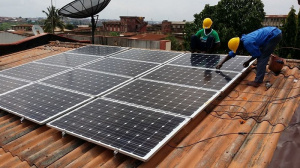
Last Monday, the five solar academies announced under the CIZO project effectively began operations.
A first batch of 450 students (90 dispatched across the five centres) started classes at the academies, according to a statement by Kya Energy Group, local startup picked to steer the project.
Overall, the firm should train 3,000 technicians (600 per academy) over six months to solar kit maintenance and installation techniques. The academies are situated in Lomé, Kpalimé, Sokodé, Kara and Dapaong.
Prior to the start of the classes, fifty technicians were trained.
Launched in 2017, the CIZO aims at providing electricity to two million Togolese by 2022. This figure was scaled up after the country’s national electrification strategy was launched in June 2018.
Togo Volailles, a new poultry project set to create 7,000 jobs, at its pilot stage
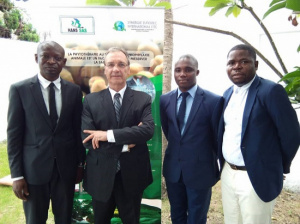
Togo Volailles is the name of the project developed by Heugan & Associés Négoces (Hans) SAS, Synergie Eurobec International (from Canada) and New Tech Distribution (France). This project was revealed last week.
In effect the project aims at boosting poultry production in Togo (then to other West African countries), make local poultry products cheaper and eventually reduce poultry import by 10% in the country and the region.
According to Daniel Ropert, from Synergie Eurobec International, “It is more costly to produce poultry in Togo than to import. However, prices of imported poultry are too high compared to purchasing power of Togolese. These are two factors that must be tackled. Local production costs must be decreased and this production will subsequently improve thus driving imports down.”
The project’s pilot stage aims at producing, every week, a million chicks and 300,000 broilers (set to rise to 1.5 million in the next five years). About 7,000 direct and indirect jobs should be created at this stage which requires an investment of XOF25 billion.
The project’s promoters now call out to investors, governments, development partners and financial institutions to secure the funds.
Séna Akoda
Togo to fully formalize its road transport industry by 2022
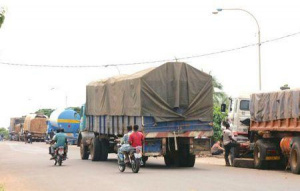
By 2022, Togo plans to undertake a deep reform of its road transport sector as it aims to make it more performant and professional.
In this framework, a meeting was held yesterday between actors, professionals of the sector, and international partners, such as the World Bank, that are backing the project.
Participants looked at key points of a four-month review of the sector led by the International Road Transport Union (IRU), as well as potential solutions which are to serve as guidelines for Togo to effectively transform its transport sector.
The review let’s note is part of a 41-month technical support program which is expected to improve legal and regulatory framework as well as boost capacities in the sector.
The reform, it should be emphasized, aligns with the first axis of Togo’s national development plan which aims at making the country a major logistics hub and first-class business centre in the region by 2022.
In Togo, the road transport sector handles more than 90% of goods and services moving across the territory. The government’s desire to modernize it and make it more competitive is thus quite justified.
Octave A. Bruce
Togo sends a delegation to China to follow-up on past China-Africa FOCAC summit
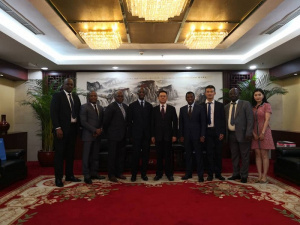
A follow-up group for the past Africa-China Cooperation Forum (FOCAC) has been sent to China by the Togolese government, to track potential partnerships and investments for which foundations were laid at the time.
The delegation includes Samuel E. Mivedor, CEO of Togo Invest SA, Patrick Daté Tévi-Benissan, General Secretary at the Presidency, Etsri Homevor, General Secretary at the ministry of development planning and economist Koffi Sodokin. The group was recently at the head office of the China Road and Bridge Corporation.
The Chinese construction group had during the FOCAC said it was interested in handling the corridor project falling under Togo’s national development plan (which was presented at the event). China Road and Bridge Corporation is actually already operating in Togo, on the Lomé-Vogan-Anfoin road project and has also worked on the rehabilitation of the Amakpapé Bridge.
Séna Akoda
Nigerian mobility startup Max.ng raised $7M to expand across 10 West African cities

Nigerian mobility startup Max.ng recently raised $7 million to expand to 10 West African countries, boost its steam and develop in the coming years a transportation and delivery system using three-wheelers.
The money was secured from a group of African and non-African investors, includng capital-risk firm Novastar Ventures and Japanese company Yamaha Motor Co.Ltd. Adding the recent proceeds, Max.ng has successfully raised $8.5 million so far.
MAX is building technology infrastructure and financial services to make mobility safe, affordable and accessible to 1 billion Africans
The Nigerian firm, according to co-founder Adetayo Bamiduro, “is building technology infrastructure and financial services to make mobility safe, affordable and accessible to 1 billion Africans.”
MAX targets the sub-Saharan Africa market which it values at $80 billion. In West Africa, the startup will settle in Ghana and Côte d’Ivorie and add new types of vehicles, such as watercrafts and three-wheeler taxis, to its fleet.
It should be noted that this year alone, two Nigerian mobility startups, Gozem and Kobo360, entered the Togolese market. MAX could thus be the next.
Ayi Renaud Dossavi
Lomé’s port is again recognized as the best transshipping port in West and Central Africa
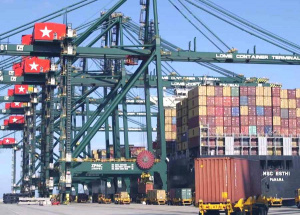
For the third consecutive year, Lomé’s port (PAL) has been recognized by the African Ports Awards foundation as the best transshipping port in West and Central Africa.
The port received the award at the 40th annual council of the West and Central Africa Port Management Association (AGPAOC), held from June 17 to 20 in Lomé.
Besides this, the infrastructure was recognized as the port with the highest traffic volume increase, in the region.
Lauding the awards, Togo’s port authorities indicated they reflect efforts made to modernize Lomé’s port over the recent years but also added the recognition will drive them to keep pushing to make the PAL a true tool to accelerate regional integration.
“Now more than ever, the State has a major role to play to boost the port’s competitiveness, by launching mechanisms for concession and regulation of maritime and port activities,” declared Fogan Adegnon, Managing Director of PAL.
Besides Lomé’s port, the port of Tema in Ghana was recognized as that with the most productive container terminal in Central and West Africa. Meanwhile, Cotonou’s port in Benin is the best in regards to transit. The awards were given based on data provided in 2016, 2017 and 2018 by Codex, the African ports rating agency.
The three ports distinguished themselves in a pool of 24 ports, situated in West and Central Africa, along the coast going from Mauritania to Angola.
More than 85% of businesses active in Togo operate in the informal sector

A total of 115,880 businesses are currently active in Togo. This figure was disclosed last week by the national statistics institute, INSEED, quoting the latest global business survey carried out across the country.
The survey found that 85.5% of the listed businesses operate in the informal sector.
In details, the Grand Lomé region hosts most businesses operating in the country (63.4%). Nipping at its heels is the Plateaux with a percentage of 10.1%, the maritime region (outside Grand Lomé) with 8.3%. Closing are respectively Kara, the Central region and the Savanes region with 6.8%, 6% and 5.4%.
Launched between January and March 2018, by the ministry of planning, development and cooperation, the study aimed at providing the government with an updated registry of businesses operating in the country. The drive behind this move was the improvement of business climate and achievement of goals set under the national development plan (PND).
The initiative was financed by the government, European Union and the World Bank (all three parties gathered XOF960 billion for this purpose).