
Togo First
CIZO Project: SOLEVA starts operations as planned
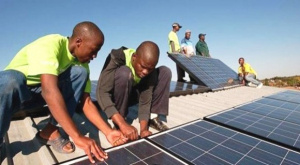
On Saturday, June 1, SOLEVA, second firm active on the CIZO project, started its operations in Vogan, a community situated 67km from Lomé.
The Off-grid specialist should sell at least 300,000 Sun King® (owned by its US partner Greenlight) solar kits across Togo in the next five years.
According to the Togolese Agency for Rural Electrification and Renewable Energy (AT2ER), 15,000 solar kits have already been installed across the country under the CIZO project. These kits were distributed by British BBOXX which was the first firm accredited to undertake the project.
CIZO is a program aimed at boosting electrification in Togolese rural areas by providing low-cost solar kits to their populations. Through it, the government intends to reach more than three million households which currently lack access to the national grid.
Ayi Renaud Dossavi
Togo mobilizes (again) XOF16.5B on regional financial market
Last Friday, Togo raised on the regional financial market XOF16.5 billion, through a bond issuance with a 3-year maturity period and an interest rate of 6.25%.
Initially, the country’s public treasury aimed to mobilize XOF15 billion. However, the operation was oversubscribed at 278.59% or 41.7 billion secured from investors in all WAEMU States except Guinea Bissau.
Let’s recall that the funds secured through the issuance are to finance the country’s national budget. In collaboration with the Central Bank of West African States (BCEAO) and UMOA-securities, Togo had mobilized between May 23 and 31, 2019, XOF15 billion, through a similar operation. Nominal value for the latter was XOF10,000
Sani Yaya calls out to African Solidarity Fund to help finance Togo’s national development plan
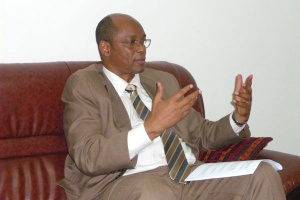
Togo’s minister of economy and finance, Sani Yaya, urged the African Solidarity Fund (ASF) and its partners to finance the 2018-2022 national development plan. This was at the opening ceremony of ASF’s 10th general assembly.
The plan, Yaya said, “needs XOF4,622 billion in funding, two-thirds of which will be secured from the private sector. I trust that the African Solidarity Fund whose mission is to participate in the economic growth of its member States will fund key projects that fall under this plan, through its various intervention mechanisms,” he added.
“I would also like to invite the Fund’s partners, banks, financial institutions and private sector actors to leverage opportunities brought about by this plan to grow their activities,” the minister concluded.
Responding to the call, the head of the ASF, Ahmadou Abdoulaye Diallo, commented: “We will significantly contribute to the financing of Togo’s national development plan.”
Séna Akoda
To modernize farming in Togo, E-agribusiness will deploy 125 agricultural drones

In order to modernize Togolese agriculture in 2020-2025, E-agribusiness will deploy 125 farming drones across the country. In parallel, the firm intends to train 500 people to pilot the gadgets.
The project aligns with the second axis of the government’s national development plan, knowingly getting more young Togolese interested in agriculture. It also aims at boosting productivity, securing farms and saving time.
In this framework, E-Agribusiness currently seeks, ahead of the project’s pilot phase, farmers who may be interested in using and testing the drones. The firm noted that assistance at this stage will be free.
Ayi Renaud Dossavi
Pitch Your Startup Idea: With his Kondjigbalê App, Yvon Koudam wins first prize
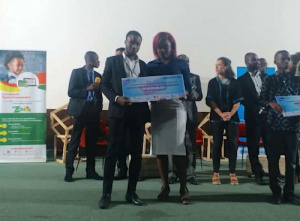
Yvon Koudam won the “Pitch your startup idea” contest, the pinnacle event of Togo’s first Student Digital Entrepreneurship Forum (FENES) launched last Friday.
With “Kondjigbalê,” a project promoting an online health booklet, the youth was awarded a prize of XOF500,000 (under the innovation and digital entrepreneurship category). “We came from far and are nowhere near our goal yet but we have made progresss,” declared Koudam.
At the second place was Sitsopé Sekpona from the University of Lomé who developed a mini-generator. She was awarded XOF300,000 for best social entrepreneurship project.
The third and last prize (Women entrepreneurship category) amounting to XOF200,000 was awarded to Abida Gbati from the University of Kara who came up with a project named “Health for All”.
Let’s indicate that 20 contestants ran in the final stage of the forum. One of the participants lauding the event said it came at the right time as many “Togolese are unaware of opportunities available in the digital sector.”
Meanwhile, Joël Agboglo, CEO of Enginnova which organized the even in partnership with institutions such as the German Cooperation, the French embassy and others, said “our goal to make this forum the country’s biggest tech entrepreneurship event has been achieved.”
Séna Akoda
Togo is, in West Africa, the leading exporter of organic products to the European Union
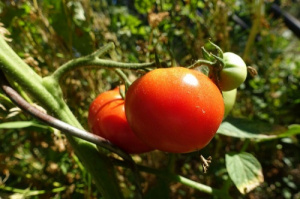
Togo is presently the leading West African exporter of organic products to the European Union (EU).
According to data from the European Commission relayed by Commodafrica, in 2018, Togo exported 22,123 tons of agricultural organic products to the EU. This is more than Ghana, the second largest exporter with 14,948 tons, Côte d’Ivoire (14,392 tons), and Burkina Faso (12,456 tons). Last in the ranking were Nigeria and Gambia.
Let’s emphasize that Africa, West Africa especially, contributes very marginally to organic exports to Europe where demand for these products is on the rise (valued at about €34 billion in 2017). The market is currently largely dominated by China and Southern American countries.
Regarding Togo, it is worldwide the EU’s 31st exporter contributing only 0.7% of the Union’s imports. Shares of Ghana, Côte d’Ivoire and Burkina Faso in this market respectively are 0.5%, 0.4% and 0.4%.
As a reminder, Data from the Organic Farming Research Institute (FIBL) shows that a little less than 37,000 farmers are into organic farming in Togo. This is only 4.83% of all farmers active in the sector across the continent. In the West African country, nearly 40,000 ha are dedicated to the sector (1% of all cultivated land).
Ayi Renaud Dossavi
Luxembourg-based startup Koosmik recently raised $2M to develop its operations in Togo
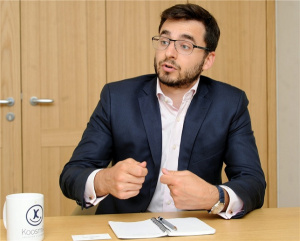
Koosmik, a Luxembourd startup specialized in financial services raised on May 22, two million dollars to expand its activities in Togo where it has been operating since 2017.
This is the second time the firm proceeds to a fundraising aimed at boosting its operations in the West African nation. Through the previous operations, it successfully mobilized more than a million dollars.
Just like the first, the second fundraising was steered by Batipart International - major stakeholder of hospitality group Onomo International – Alpharatz, as well as business angels from France, Belgium, Luxembourg, Turkey and Morocco.
Koosmik’s app (App Store and Google Play) offers its users online banking services.
In 2018, the app boasted more than 60,000 users in Togo. The firm, which was founded by Grégoire Yakan, also its actual CEO, plans to expand to other French-speaking West African countries, a market with a population that exceeds 85 million people.
Ayi Renaud Dossavi
A year after launching, ECO CCP boasts 110,000 users and XOF3 billion worth of transactions
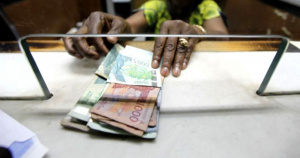
From May 2018 to May 2019, 110,000 ECO CCP savings mobile accounts have been created. The figure was released by Société des Postes du Togo (SPT), which launched the financial inclusion tool in May 2018.
Over the period, the accounts recorded 52,318 transactions amounting to more than XOF3 billion.
Let’s recall that ECO CCP account is linked to users’ TMoney or Flooz mobile money accounts. It offers a 2% interest rate and enables a wide range of operations including withdrawals, deposits, intra-transfers and wiring from a non-user to a user and vice-versa.
Lauding the service’s first-year performance, the SPT plans on deploying 3,000 ECO CCP agents across the country by end-2020, to better rural populations. By the same time, the company expects to have a million users for the new service.
Séna Akoda
Togo: Government to impose minimum quota of local products in dishes offered by hotels and restaurants in the country
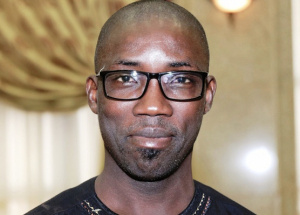
A minimum quota of local products will be integrated to meals offered in hotels and restaurants operating in Togo. The measure aims to promote local production, processing and consumption, which are impaired by a high importation level.
“Through this initiative, the Head of State wants to improve consumption of local products,” reports local newspaper Kamgou citing minister of agriculture Noël Bataka (photo).
In February 2019, on the sidelines of a cabinet reshuffling, the ministry of Trade, now headed by former chief commissioner of the Togolese Revenue Office (OTR), Kodjo Adedze, was tasked with ensuring that consumption of local products rises.
ECOWAS: The EBID launches a XOF25 bln bond operation to fund 7 projects in the WAEMU
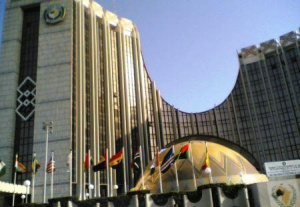
The ECOWAS Bank for Investment and Development (EBID) has just launched a bond issuance operation. The aim of this operation, approved by the regional council for public savings and capital markets, is to raise XOF25 billion in order to fund seven (7) projects in the energy, industry, hospitality and financial sector. These projects will be implemented in Benin, Côte d’Ivoire, Burkina Faso, Niger, Senegal and Togo.
In the framework of that operation, 2.5 million 7-year bonds with a nominal value of XOF10,000 will be issued. The interest rate is 6.4%. The interest will be paid bi-annually with a 2-semester deferred payment for the principal.
For this operation launched on May 28, 2019, the consortium CGF BOURSE and SGI-TOGO was mandated as an arranger and lead partner. According to Africabourse, one of the underwriters accredited to this operation, the subscription is open till June 26, 2019.
At end 2018, the EBID’s cumulative net commitments in ECOWAS member countries was close to $1.39 billion invested in 133 active projects. In 2017, these commitments were $1.327 billion for the same volume of active projects. This is due to the combined effects of new commitments in 2018 at the completion of five projects in the loan portfolio of Benin, Burkina Faso, Senegal and Togo as well as the cancellation of three investments in Côte d’Ivoire, Senegal and Togo.