
Togo First
Togo : State cedes its stakes in various firms to Togo Invest S.A
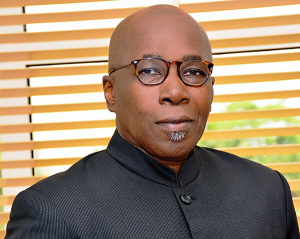
The State has transfered to Togo Invest Corporation S.A its stakes in Complexe Pétrolier de Lomé S.A, Société Togolaise de Stockage de Lomé S.A and Togo Oil Company S.A. Related decree was adopted in a council of ministers held on May 29.
In detail, the State has ceded respectively 100%, 40% and 79.734% of the firms to Togo Invest. The move should “grant the latter more financial weight and credibility, in addition to boost the performances and profits of concerned oil companies,” reads the statement of the council of ministers.
Besides, this decision happens to align with the State holding’s primary mission statements, knowingly: “acquisition of equity likely to generate revenues that could be reinvested in key projects, establish efficient funding mechanisms and partnerships, as well as create firms in the form of subsidiaries or joint-ventures.”
Séna Akoda
30% of businesses created in 2010-2015 are no more operational (Report)

In Togo, 30% of businesses created between 2010 and 2015 are no more operational. This was disclosed by the Business Formalities Centre (CFE) in a study on business survival in Togo, covering that specific period.
According to the study, out of over a total of 40,831 businesses created at the CFE from 2010 to 2015, 28,582 or 70% are still operational, against 12,249 or 30% which have ceased operations.
However, the document further notes, out of the still active businesses, 21,436 still function on a permanent, regular basis; 4,002 are seasonal and 3,144 rarely operate. Thus, while statistics show that businesses’ potential survival rate over the period under review is 70%, real survival rate is 52.5%.
Many factors explain the failure of businesses created and some are: age, educational level, social capital size, geographic location and business type (corporate or individual enterprise).
So far, a total of 77,302 businesses are registered at the Business Formalities Centre (CFE). This month alone, 691 firms were created at the institution. An impressive number. However, the real concern is to know how long they will survive.
Séna Akoda
Here are the 10 young Togolese selected for the 2019 Mandela Washington Fellowship
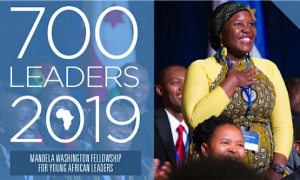
This year, ten young Togolese, six women and four men, were selected to benefit from the Mandela Washington Fellowship – YALI launched by former US President Barack Obama in 2014.
The youth will be trained over a six-week period at some of the biggest US universities. The courses, which combine theory and practice, are in the following category: business and entrepreneurship, civic engagement and public administration.
At the end of the six weeks, the participants (700 overall) will attend mentorship and networking workshops for three days in Washington DC. They will also on this occasion meet with prominent figures.
In Togo, selected beneficiaries are:
Civic engagement:
Adzo Agouvi, Managing Director, Cathina House International
Hamdiya Katchirika, Journalist and blogger, specialised in women leadership issues
Ayi Renaud Dossavi, Journalist at Togofirst, and writer
Peace Vera Ahadji, Project manager and founder of Hands from above
Hombalotouna Attegoua, Administrative assistant, in charge of water and sanitation at Jeunes Volontaires pour l’Environnement (JVE)
Public administration :
Komi Ognadon Aokou, Analyst at Tony Blair Institute of Global Change
Sonia Afi Akpedze Mitchikpe, works at Eco Activist of Governance and Law Enforcement (EAGL)
Business and entrepreneurship
Eklou Ida Amemassovor, programmer who trains young African talents at Afriworkers
Délali Akossiwa Kpotufe, works at Maison TV5 Monde
Kondi Komi-K Nusianunyoa, Ceo of E-Media
YALI is a program that supports Young African leaders in their efforts to promote growth and prosperity, boost democratic governance and foster peace and security in Africa.
Togo: Ministers adopt new investment code aligning with national development plan
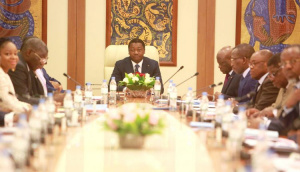
The Togolese government adopted a bill for a new investment code. This was during a council of ministers held yesterday, May 29.
The move aims, the ministers say, to “make the country’s legal investment framework more appealing to investors and steer their actions so as to achieve a strong and robust economic growth, enhancing job and wealth creation at economic and social levels.”
The new document features among new amendments to the former investment code, incentives that are proportional to investment (tax reduction varies based on investment size or impact on job creation); incentives varying according to business operating zones; fixed exoneration rates on dues, indirect and direct taxes over a five-year period.
Moreover, some amendments focus on status of holdings’ headquarters, regional headquarters of an international firm or their operational centres, which fosters job creation. Some also regard approval and declaration requirements, as well as redefine minimum re-investment thresholds.
A code that aligns with 2018-2022 PND
The new code, it should be noted, aligns with the three axes of the 2018-2022 national development plan (PND).
In effect, looking at the first axis, the new investment code, once adopted should “make Togo more attractive for major international companies, by offering specific tax incentives that will support the growth of a logistics hub, while at the same time enabling short-term growth of tax earnings, through the limitation of incentives” mentioned above.
Regarding axis n°2, the new code’s proportional tax incentives component will spur the development of long-term growth economic pillars.
Last, by ensuring job creation across the country, leveraging tax incentives based on implementation areas, the code aligns with the PND’s third axis relative to social growth and inclusion initiatives.
Séna Akoda
OADEL releases a catalogue promoting “Made in Togo” products
A second edition of the “Nos Produits 228” catalogue, dedicated to “Made in Togo” products, was recently issued by the organization for food and local development (OADEL).
The 146 pages catalogue aims at getting Togolese consumers more interested in local products. It features food by category such as breakfasts, flours, alcoholic and non-alcoholic drinks, etc. The first edition of the magazine was released in 2008.
Items featured are listed in the same organization as in stores, so that they can be easily spotted by buyers, according to Nedo Homawoo, owner of Neho Likors, an aromatized liquor business.
Overall, around hundred Togolese processors, and nearly 400 local products can be found in the catalogue.
Ayi Renaud Dossavi
These are the conditions to benefit from WAEMU’s SME and SMIs support program
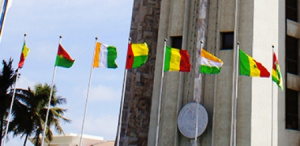
SMEs and SMIs willing to benefit from the WAEMU SME/SMI support program must meet specific criteria.
They must be autonomous, produce goods or market services, be registered at the Trade and Personal Property Credit Register (RCCM) in any of the WAEMU member states, or any equivalent register.
Moreover, in line with legal standards in effect, the firms must provide their financial statements, a management and support framework, and have a pre-tax annual turnover of at least one billion CFA.
The present program aims to finance SMEs and SMIs as they struggle to get loans from banks and other conventional lending institutions, for their expansion. Quite a paradox considering that the businesses make up nearly 95% of the WAEMU’s economic fabric.
Séna Akoda
Thirty four speakers will be present at the coming Togo-EU economic forum
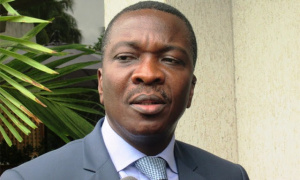
There will be 34 speakers at the Togo-EU economic forum which will be held in Lomé next June 13-14. This was recently disclosed by the event’s organization committee.
Besides local speakers (both officials and private actors), there will be representatives of the UN, IMF, and the European Union, amongst others.
Among local speakers are Kodjo Adedze, minister of trade and private sector, Laurent Tamegnon, chairman of employers’ association, and Germain Mèba, president of the chamber of commerce and industry (CCIT).
As for key foreign speakers, these include Jyrki Katainen, vice president of European Commission for Employment and Investment, Paul-Harry Aithnard, Managing Director of Ecobank in Côte d’Ivoire and WAEMU, Mario Pezzini, head of OECD’s development center. Others such as Vincent Laly, CEO Le MOCI, Clément Ahiley, AGET’s chairman or Etienne Giros, president of EBCAM and CIAN, will be attending the forum whose main objective is to enable Togo secure funding for its national development plan.
Séna Akoda
Trade : Togo works on establishing a reinforced partnership with Chinese tech giant Alibaba
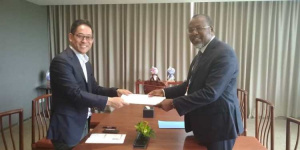
Last Monday, Togolese minister of mining and energy, Marc Ably-Bidamon, met Alibaba’s vice president, Brian Wong, to discuss a possible reinforced trade partnership between the two parties.
This was on the sidelines of the New Economy Workshop’s launch in Hanghzou, China. Ably-Bidamon gave Wong a letter from president Gnassingbé inviting Alibaba’s founder, Jack Ma, to Togo for a working visit.
Ending today, fourteen Togolese public officers are attending the tech giant’s New Economy Workshop. At this occasion, they will learn more about digital economy, Big Data and financial inclusion.
Ayi Renaud Dossavi
South African firms Technology Innovation Agency and Wave International interested in Togolese market

Technology Innovation Agency (TIA) and Wave International, two South African firms, are interested in the Togolese market. Indeed, representatives from the two companies were recently received by President Faure Gnassingbé.
TIA leverages sciences and technology to advance industrial development and boost youth employment in SA while Australia-based Wave International is a private investment initiative engaged in sustainable development and ecosystem protection.
Senisha Moonsamy, representative of TIA discussed with the president investment opportunities for her firm in Togo and also a potential economic cooperation between South Africa and Togo. Dr Gilles Assouline, MD of Wave International, for his part discussed the firm’s desire to expand to Togo and help the West African nation in the framework of its national development plan.
The meetings, it should be emphasized come after president Gnassigbé’s official trip to South Africa, for the recent institution of reelected South African president, Cyril Ramaphosa, on May 25, 2019.
Ayi Renaud Dossavi
EDF-Energy Generation equips about 100 West African women, Togolese included, with tools to foster solar entrepreneurship

Signed about a year ago, the partnership between French energy firm EDF and Lomé-based pan-African company Energy Generation has yielded its first results.
Concretely, EDF taught, under a program named “Women and Solar Entrepreneurship,” about a hundred women from Togo, Ghana and Côte d’Ivoire, techniques related to the installation and maintenance of off-grid solar systems. “The program aimed for these women to become key contributors of energy transition in their respective countries,” said Astria Fataki, President of Energy Generation as the partnership was being signed.
Founded in 2016, Energy Generation is involved in projects to boost electrification in rural areas across sub-Saharan Africa. Besides the Women and Solar Entrepreneurship program, it benefits from EDF’s support for the EDF Pulse Africa Awards which rewards African startups that really play a role in energy development across the continent.
Séna Akoda