

Togo First
Next May 31, Lomé will host Togo’s first digital entrepreneurship and student forum
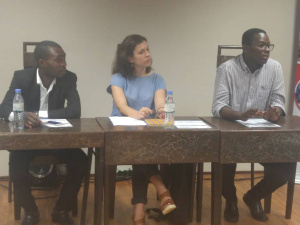
The first digital entrepreneurship and student forum (FENES) will begin next May 31 at the Palais des Congrès of Lomé. This was disclosed yesterday by the event’s organization committee at a press conference.
Promoted by Enginnova and backed by the German cooperation, the forum aims to “democratize and foster digital entrepreneurship among students and young startups,” according to Joël Atakpa, CEO of ZONOA.
Exhibitions, exchange panels and a contest rewarding digital projects will take place during the occasion. For the contest, three prizes will be given. The first is the entrepreneurial innovation prize (CFA500,000), social entrepreneurship prize (CFA300,000) and the female entrepreneurship prize (CFA200,000). Each winner of these prizes will attend the 2020 Vivatech fair in Paris.
Overall, more than 200 candidates registered for the contest and only 20 have been selected.
According to Joël Agboglo, CEO of Enginnova, the FENES should become Africa’s Vivatech.
Carina Lange, representative of the German cooperation, said “this event is a great platform for young entrepreneurs in Togo. It is very important to show the public what the youth are doing in terms of digital innovations and how they live digital transformation.”
Séna Akoda
After Burkina Faso, the 2019 AfroMarketers Tour will stop by Lomé next June 12
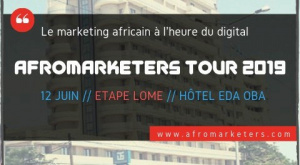
Next June 12, The 2019 AfroMarketers Tour will stop by Lomé, at the Eda Oba hotel.
Roundtables, keynotes, workshops and networking sessions revolving around digital technology and its professional and marketing use are planned in the event’s framework. There will also be a challenge co-organized with a major local university.
More than 150 decision-makers, marketing and digital communication professionals, as well as around 20 speakers are expected at the event.
The tour will begin in Ouagadougou (June 10), before coming to Lomé, and then head to Cotonou and Dakar (October 2019) and will close in Abidjan (January 2020). Overall, more than 1,000 decision-makers, professionals and 80 speakers will attend the event through the five capitals.
The Togo-EU forum is the best chance for European investors to know all about business opportunities in Togo
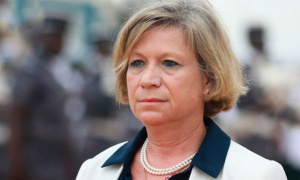
This is the right time to organize this forum, declared Cristina Martins Barreira, Chief of the European Union Delegation in Togo, commenting on the first Togo-EU forum which will take place in Lomé next June 13-14.
Among reasons backing this statement, the EU official mentioned the launch, a few months ago, of the national development plan. The latter which spans from 2018 to 2022 aims at supporting Togo’s economic transformation, relying mostly (65%) on private sector.
In addition to this, she talked about projects leveraging public-private partnerships and the multiple reforms recently implemented by the country to improve its business climate. These reforms have in effect helped Togo gain 19 places in the World Bank’s 2018 Doing Business ranking; a leap that pushed the country into the top 15 countries that implemented the most reforms over the past decade (Mo Ibrahim Index).
These, according to Barreira, “reflects a strong political will to make private sector the driver of Togo’s economic growth.”
The Togo-EU forum is “the perfect occasion for both European and Togolese firms to know more about available financing opportunities in order to invest in Togo.”
Expected at the event include Togo’s President, Faure Gnassingbé, Jyrki Katainen, Vice President of the European Commission, Carlos Lopes, Mario Pezzini, and Paul Harry Aithnard, among others.
Octave A. Bruce
Jyrki Katainen, Vice President of EU commission urges European investors to attend Togo-EU economic forum
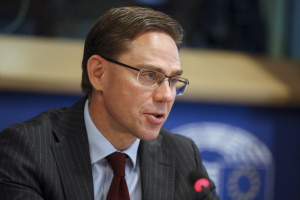
The European Commission’s Vice President, Jyrki Katainen, will co-chair the opening ceremony of the Togo-EU economic forum which will take place in Lomé on June 13-14, 2019.
Katainen, in this framework, urged European investors to “cease this unique opportunity to diversify their investment portfolio and expand their footprint towards a win-win partnership between the European Union and Togo.”
The event falls under the EU’s new external action paradigm, one enacted via the launch of the European Union’s Investment Plan. The latter aims at boosting European private investment, through a new “Africa-Europe Alliance for jobs and sustainable investments.”
This alliance for its part is intended to deepen trade and economic ties between the EU and Africa, by focusing EU’s external action on easing investment and creating jobs in Africa. In this regard, the coming forum should enhance “the mobilization of private funds to generate growth and jobs in Togo.”
Various EU financings to support private investment will be presented at the forum. Also, 100 projects, over about 400 submitted, could be selected and financed by potential European investors on this occasion.
Séna Akoda
Togo-EU forum: 391 projects have been submitted
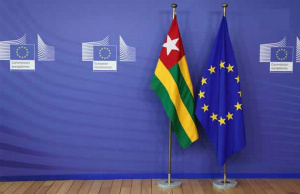
A total of 391 applications were submitted in response to the call for projects relative to the coming EU-Togo economic forum. Out of these, 100 will be selected by the event’s organization committee.
Projects submitted are in the following sectors: agro-food, agriculture, banking and insurance, construction and related materials, trade, services, transport and logistics.
Selected applicants will present their projects to potential investors at B2B meetings that will take place during the forum. The event aligns with Togo’s national development plan and will serve as a connection platform for Togolese and European investors.
It is to be held next June 13-14, in Lomé. Nearly 400 participants, including 300 investors from the EU and Togo are expected to attend.
Ayi Renaud Dossavi
Climate: PNUD to spend $500,000 to help Togo implement Paris Agreement INDC
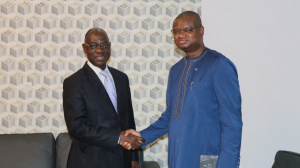
To tackle global warming effects, the PNUD will inject $500,000 in a project that will help Togo implement its intended nationally determined contribution (INDC) in line with the Paris Agreement. The objective here is to turn the INDC into an investment plan pegged to the country’s national development plan.
This was disclosed by the PNUD’s communication cell, after a meeting May 20 between Aliou Dia, resident representative of the institution in Togo, and David Olatokoun Wonou, minister of environment and sustainable development.
The ministry plans on shortly sending a support request to the INDC Partnership which Togo is a part of, in regard to the project. The latter, in the long term, should boost the country’s resilience against climate change.
The Paris Agreement is the first global agreement aimed at tackling global warming. It was adopted at the 21st Conference of the Parties of the United Nations Framework Convention on Climate Change (COP21), in Paris.
Séna Akoda
Togo: OIF holds workshop on Big Data and Artificial Intelligence

Yesterday, the West African division of International Francophonie Organization (BRAO-OIF) started in Togo a workshop on emerging technologies. The four-day event is held at Woelab Prime, a tech center founded by Togolese architect Sénamé Agbodjinou.
Participants will learn about technology trends currently shaping the digital world, startups’ model in relation to innovation and entrepreneurship, impact and opportunities associated with artificial intelligence and Big Data, and will hear testimonies of some startuppers operating in Togo.
Besides Togo, the workshop will take place in Gabon, Madagascar, Senegal, Egypt and Romania. According to the BRAO-OIF, it aims at enabling digital actors in the above countries to learn more about their professional perspectives in a world that presently undergoes digital transformation.
Ayi Renaud Dossavi
Togo: 1,500 youths introduced to opportunities related to the PND

Last Friday, a workshop on Leadership, Citizenship, and opportunities related to the 2018-2022 national development plan (2018-2022 PND) was held. This was in the Amou prefecture (168 km north of Lomé)
The meeting’s theme was “challenges related to the PND and opportunities for youth.” It is part of a battery of workshops organized by the ministry of youth aiming to inform Togo’s youth about key projects and job opportunities relevant to the PND.
The workshops will take place in about 10 prefectures targeting 150 youths per community.
The next prefectures targeted are Vo, Avé, Danyi, Sotouboua, Mô, Dankpen, Binah, Kpendjal and Cinkassé.
Ayi Renaud Dossavi
Cina Lawson, first female African political figure to receive the Harvard Kennedy School Award
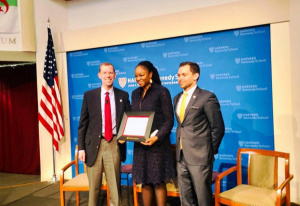
Togo’s minister of posts, digital economy and technological innovations received last Saturday, the Alumni Public Service Award from Harvard Kennedy School (HKS). She thus becomes the first female African political figure to win this award.
“What great honor to receive today the Harvard Kennedy School Alumni Public Service Award,” the Togolese official declared. “I hope this prize will inspire a generation of African women and young leaders pushing them to commit to improving others’ lives,” she added.
She was awarded for contributing to the development of ICT and digital industry in Togo, using them for the profit of social causes. For example, she launched Campus WiFi, a project that provides free access to broadband internet in all public universities and health facilities in the country. There is also Eco CCP, a mobile money savings account, the digital work environment (ENT) which benefits high schools, etc.
The Alumni Public Service Award, which is given to former students who “greatly improved human condition at local, provincial, national or international scale,” is the second prize received by Lawson after the first place of Napoléons Awards, under the women category.
Séna Akoda
European firms discuss how to create a Togo-EU chamber of commerce and industry
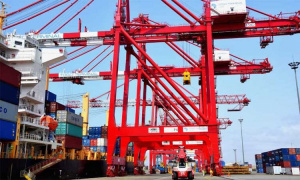
Some European firms regrouped at the end of last week in Lomé, to discuss the creation of a Togo-EU chamber of commerce.
This chamber should help boost trade between the two entities, making their relationship more sustainable as well.
Actually, a memorandum of understanding to this end is expected to be signed by the Togolese chamber of commerce and industry (CCIT) and its European counterpart at the coming Togo-EU forum, next June 13-14.
The forum should also help raise funds to finance Togo’s 2018-2022 national development plan (PND 2018-2022). Fund needs for this plan amounts to XOF4,622 billion, two-thirds of which (XOF3,000 billion) are expected from the private sector.
Overall, 400 participants, including 150 European economic operators are accepted at the event.
Séna Akoda