
Togo First
Togo: More than XOF400 million invested in the construction of three slaughterhouses
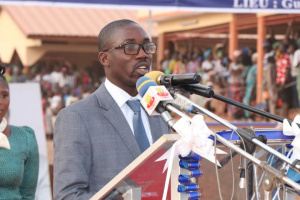
Three slaughterhouses will be built in Kara, Sokodé and Kpalimé, respectively. This aims, according to the ministry of agriculture and husbandry, at boosting meat production and quality, in line with the Agriculture Sector Support Project (PASA).
Building the facilities will cost more than XOF400 million and each of them will include: an operation building, an administrative building, a sanitary facility and a processing facility (burning and skinning).
The project aligns with the second axis of the national development plan and was officially launched in Djamdè (Kara region), on May 23, 2019, by Noël Koutéra Bataka, minister of husbandry.
Ayi Renaud Dossavi
Government reviews new mining policy to foster the sector’s growth
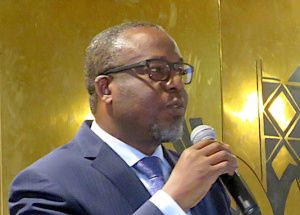
Yesterday, a session to review and validate a new mining policy in Togo was opened in Lomé. The policy should pave the way to a new strategy to exploit mining resources.
The policy under review “determines types of investments, fostering economic growth on one side and helping reduce poverty through mining-related activities,” says Togo’s minister of mining, Marc Ably-Bidamon, who initiated the review session.
This aims at promoting a sustainable, transformation-centered, mining sector, one that meets the “people’s legitimate expectations.”
The validation process falls under the Mining Governance and Development Project (PDGM), backed by the World Bank.
Let’s recall that last month, still under the PDGM, two Bachelors degrees, one in mining geology and another in analytical chemistry, Mining and Environment, were launched at the University of Lomé, in order to train a new generation of mining experts in Togo.
Ayi Renaud Dossavi
Togo : Five information desks opened in the framework of PNPER
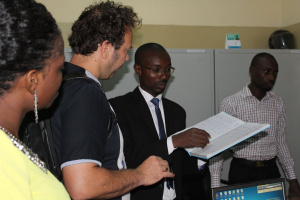
Five information desks have been opened across the country under the national project for the promotion of rural entrepreneurship (PNPER).
These facilities will receive, inform and direct the project’s potential beneficiaries. According to sources close to the project, they are already operational.
Laurent Stravato, Director of the International Fund for Agricultural Development (IFAD) Togo, recently visited the desk established in the Maritime (Tsévié) region to check if it is operational. This was in line with IFAD’s mission to monitor the implementation of the 2019 annual work plan budget. The visit, started May 21, should end on May 25.
IFAD, since the launch of a rescue plan for the PNPER rescue operation, has been meeting with the State secretariat in charge of inclusive finance, which took over the project from the ministry of agriculture.
Séna Akoda
Cameroonian Ferdinand Ngon Kemoum appointed Oragroup’s new Managing Director
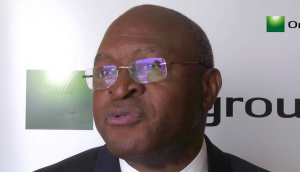
Cameroonian Ferdinand Ngon Kemoum is Oragroup’s new Managing Director. Former deputy MD of the group between October 2009 and September 2015, he replaces Binta Touré Ndoye who resigned after steering the group’s wheel since 2016.
The Cameroonian will assume office next June 1. Until now, he was MD of Emerging Capital Partners (ECP) in Douala. ECP it should be emphasized holds a majority stake in Oragroup. Ngon was in charge of “identification, analysis and recommendations of investment as well as investment appraisal, management of transactions, portfolio and exits.”
Before joining ECP, he was MD of Framlington Asset Management Central Africa. He however also held various positions at LOITA Capital Partners International, a specialized investment bank based in Johannesburg, at Amity Bank Cameroon, Banque Méridien Biao Cameroon, Meridien Bank Cameroon and Afriland First Bank.
He was also CEO of Banque Continentale Africaine (BACAR) in Kigali, and was board member of many African companies, mostly banks and insurance firms.
“Ferdinand Ngon Kemoum has great assets to guarantee Oragroup’s continuous success,” declared Vincent Le Guennou, Co-CEO of Emerging Capital Partners. An opinion backed by a Togolese bank expert who lauds the new appointee’s experience.
Last April, Oragroup listed on the BRVM, the largest operation ever registered on the stock market. Data released last Friday shows that the group’s net banking income and net result soared to $221 million and $51.9 million respectively (+17% and 36% respectively) in 2018. Meanwhile, total balance sheet rose by 21% to stand at $3.7 billion over the period. This increase was pegged to a rise in deposits and loans in Togo. The latter grew by 24% and 16% respectively, standing at XOF1,462 billion and 1,255 billion.
Chamber of Commerce and Industry (CCIT) informs local businesses about WAEMU’s SMEs/SMIs support mechanism
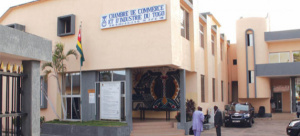
WAEMU set a mechanism to support SMEs and SMIs which is currently at the heart of an information workshop held at the Togolese Chamber of Commerce and Industry (CCIT). The workshop is organized by the committee in charge of identifying mechanisms and facilities supporting SMEs and SMIs in Togo.
According to the CCIT, WAEMU’s “mechanism aims at providing an appropriate solution to the issue of access to bank financing for SMEs, by leveraging incentives that the Central Bank of West African States (BCEAO) has put in place for lending institutions and by better structuring support to these businesses.”
Truly, young entrepreneurs operating in Togo have difficulties securing financing to expand and even in cases funds are provided, they are often insufficient in regards to businesses’ real needs.
This is in a context where “SMEs and SMIs make up more than 90% of Togo’s economic fabric,” according to Coami Laurent Tamegnon, chairman of the national employers’ council.
Séna Akoda
Togo: Local private businesses learn more about 9001 ISO standard version 2015

Quality managers of private firms operating in Togo are currently undertaking a two-day workshop (started yesterday) focused on the 9001 ISO standard v 2015. This norm specifies quality standards imposed on these firms.
Organized by the West African Federation of Employers’ Organizations, the workshop will equip local companies so that they can tackle issues related to international standards, in terms of quality assessment and management.
Another objective of the meeting is to enable the private sector to better analyze market context, identify customers’ needs and better meet them with necessary tools.
Ayi Renaud Dossavi
Rankings of banks operating in Togo (BCEAO)

Lomé-based Oragroup was the leading bank in Togo in 2017, sources released by the BCEAO indicate. According to the apex bank, the bank whose assets were valued at XOF545 billion that year is followed by Ecobank Togo whose assets amounted to XOF416 billion over the period.
The country’s best bank two years ago was Union Togolaise de Banque (UTB), with total assets estimated at XOF303 billion. While the lender is currently fully under State control, a privatization process was initiated last year due to financial struggle.
The last of the thirteen banks operating in the country was InterAfricaine de Banque (SIAB), ex-Baltex, before which is positioned Banque Populaire pour l’Epargne et le Crédit (BPEC) ; the latter was acquired in 2018 by the Sunu Group.
In 2017, Togo’s banking industry weighed more than XOF2,430. Emphasis should be put on the fact that the country hosts headquarters of two pan-African banks, Ecobank and Orabank.
Rankings by deposits collected
Looking at deposits, Orabank and Ecobank are in tight race for this segment. Indeed, over the period under the review, data from the BCEAO shows, the first collected XOF317 billion while the second raked in 301 billion.
Nipping at the heels of these two were UTB (214 billion), BTCI (168 billion), Diamond Bank which is now NSIA Banque (107 billion), and Banque Atlantique (104 billion).
Last runners are SIAB and Société Générale (the lenders started operations in Togo only in 2015), with respectively nine billion and 30 billion of deposits.
Rankings by loans granted
In terms of loans granted, Orabank leads the race, outstripping its immediate challenger Ecobank by more than XOF100 billion. Loans given by the bank stood at XOF292 billion in 2017, while Ecobank’s were at 161 billion.
UTB is next with nearly 150 billion of loans granted. It is followed by Banque Atlantique (which is detained by Moroccan BCP).
The least performers in this category were SIAB (XOF8 billion), BIA (33 billion) and BPEC which experienced some difficulties.
Fiacre E. Kakpo
Wari makes its services available on WhatsApp, to expand global reach

Wari users can now access the firm’s services via WhatsApp. The Senegalese company made the announcement in a recent statement.
The move “aims at enabling the public, through strategic partnerships, to have access to Wari’s services all over the world,” the statement reads. Commenting on the new development, Wari’s President and CEO, Kabirou Mbodje, declared : “We have been working for many months on the globalization of our platform through strategic acquisitions and partnerships on all continents.”
In detail, Wari users have the possibility to send and receive money, open and top up their accounts, phone vouchers, pay bills and TV subscriptions, all via WhatsApp.
MyWari, as the new service is named, is currently available in French, English, Spanish, Italian and Portuguese. Soon, it will be in Russian and Arabic.
Let’s recall that Wari is a digital financial platform launched in 2010. Its services are currently available in more than 60 countries with 500,000 direct outlets worldwide.
Ayi Renaud Dossavi
Togo plans to establish 500 Eco-villages for XOF7 billion

Togo plans on creating 500 new eco-villages for XOF7 billion. The project follows a successful pilot stage in Donomadé, a village of the Yoto prefecture, 104 km south east of Lomé.
Communities created under this project will have eco-friendly socio-communal infrastructures (schools, health centers) and their people will have access to social services.
The pilot stage of this project which is backed by the PNUD led to the construction of three boreholes, a 10KVA mini solar plant. In addition, Donomadé received a multi-purpose power platform that feeds a flour and cassava mill in the village. The facility was established through collaboration between the ministries of environment and grassroots development.
In regards to farming, the village now grows soybeans and pepper as a result of the project’s implementation. Also, veterinary products and high-performance broodstock have been given to the village’s breeders.
Besides Donomadé, the pilot covered Andokpomey, a villague located in Avé prefecture.
Séna Akoda
Togo-EU forum: A preliminary meeting in Paris to discuss business opportunities related to the event

A meeting is being held today in Paris ahead of the coming Togo-EU economic forum in Lomé, Togo.
The present meeting is an opportunity for participants to discuss investment and business opportunities Togo offers, in line with its 2018-2022 national development plan (PND).
Sandra Johnson, minister delegate in charge of improving business climate, and Kodjo Adedze, minister of trade, are at the meeting with Togo’s ambassador to France, Calixte Madjoulba Batossie.
It should be noted that nearly 400 participants, including 300 European and Togolese investors are expected at the forum which will be held June 13-14, 2019.