

Togo First
Togo: Authorities want to engage local farmers in World Bank’s school canteen project
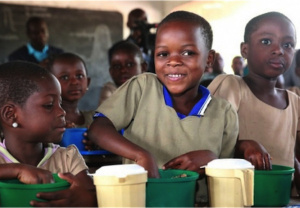
Togo’s government is exploring ways to combine the World Bank’s school canteens project with local production by engaging small farmers.
The ministry of agriculture recently discussed the matter with a delegation from the World Food Program (WFP) led by its regional director, West and Central Africa, Christophe Niokoi.
In detail, Togolese authorities want to ensure the sustainability of school canteens by supplying them with food products from, better organized and structured, local producers. This would improve upon the quality of food eaten by the kids.
The present project falls in line with Togo’s national development plan (PND) integrating the agriculture financing incentive mechanism (MIFA).
In 2018, nearly XOF1.3 billion was secured for the school canteen project in Togo. With more than seven million meals served, it fed 91,394 pupils in nursery and primary schools, according to the national agency for support to grassroot development (ANADEB).
Ayi Renaud Dossavi
Local governance: Government halves candidacy fee for women
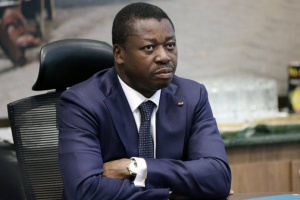
Women participating in local elections next June 30 will pay a fee of CFA10,000 to this end. This is half the amount set for male candidates.
The measure decided during the ministers’ council of May 8, 2019, aims to “promote women candidacy and their participation in local governance.”
This is part of a more general move to get women and youth more involved in governance in Togo. A point on which President Gnassingbé stressed during his speech to the nation on the sidelines of the 59th anniversary of Togo’s independence.
Let’s recall that a similar measure had been enacted during the legislative elections last December 20.
BOAD and PNUD seek ways to contribute, together, to Togo’s development
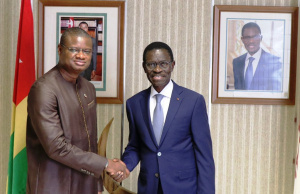
Yesterday, the president of the West African Development Bank (BOAD), Christian Adovelande, and PNUD’s resident representative in Togo, Aliou Dia, met to discuss ways to better contribute to Togo’s development.
In effect, the talks focused on the mobilization of funds from the Green Climate Fund for Africa and Togo especially.
At the end of the “fruitful” meeting, Aliou Dia declared: “We would be glad to work with an institution as prestigious as the BOAD to support Togo’s development.”
Last February, the BOAD secured €100 million to finance renewable energy in Togo and five other WAEMU states. The money went to a project aimed at decarbonizing West Africa’s energy mix and improving access to clean energy.
Séna Akoda
Lomé to host social entrepreneurship forum on June 6, 2019
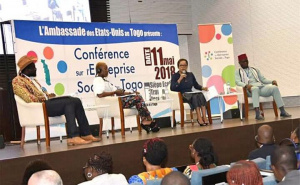
Next June 6-7, there will be a social entrepreneurship forum in Togo. The event is organized by the US embassy, Ecobank, Alafia and organizations promoting social economy in Togo.
At this occasion, issues related to the legal framework defining social enterprises and possible advantages they could benefit from will be discussed. The latter could come as tax or administrative incentives aimed at fostering the firms, not primarily to help them make profits but rather boost populations’ living standards.
The matters of Togo’s social entrepreneurship ecosystem and corporate social responsibility (CSR) will also be covered.
Let’s recall that in March this year, the US embassy and the national youth employment coalition (CNEJ) organized a 3-day training workshop on social entrepreneurship. The latter was led by Theresa Carrington, a US social entrepreneur and CEO of Ten By Three, a firm empowering rural communities through craftsmanship.
Ayi Renaud Dossavi
Lomé hosts four-day workshop on conditions to access GEF’s funding
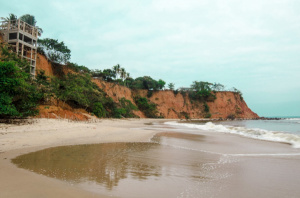
Yesterday, a four-day workshop focusing on tackling global warming and the Global Environment Facility’s (GEF) new policies and strategies was initiated in Lomé. Eight coastal countries are represented at the event which also aims at regrouping actors engaged in the environment sector and mobilize resources for environmental protection.
The workshop, it should be emphasized, takes place as environmental issues are worsening in the Gulf of Guinea region.
Indeed, according to World Bank, in 2017, environmental degradation (flooding, coastal erosion, air-water pollution) cost Togo $310 million. Coastal erosion alone accounted for $213 million thus 4.4% of Togo’s GDP that year.
Ayi Renaud Dossavi
Togo: National Health Insurance Institute provides health insurance to artisans
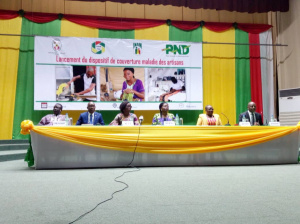
Togolese artisans now have access to health insurance. The mechanism put in place by the National Health Insurance Institute (INAM) and the ministries of health and social protection was launched May 14, at the Palais de congrès de Lomé.
According to the ministry of craftsmanship, the measure falls under axis 3 of the PND. In the next three years, more than 100,000 artisans should in its framework have an insurance covering non-professional health issues.
“Social protection for artisans falls under a process aimed at gradually covering all social layers in the country, after public administration,” said Victoire Tomegah Dogbé, minister of craftsmanship and youth.
Craftsmanship has for some years now been recording a rapid growth in Togo. In 2017, it represented 18% of the GDP, helping reduce trade balance by 20%, and employing more than a million people.
Togo: Business operators encouraged to invest in agriculture
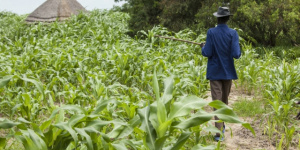
Last Monday, a meeting regrouping economic operators, representatives of the Togolese chamber of trade and industry (CCIT), the national employers’ council (CNP), various finance institutions and the ministry of agriculture took place in Lomé.
The roundtable aimed at introducing to entrepreneurs business opportunities existing in Togo’s agricultural sector.
Multiple opportunities are available in this sector, for example in regards to preparation of arable lands, extensions, crop and animal production, fish ponds, rice factories, logistics, packaging, storage, processing, fertilizer production, mechanization, maintenance, etc.
During the workshop, key projects were developed by the ministry of agriculture. These include a project to develop the Djablé rural plain and PARTAM, another project to develop the Mô plain.
In the long run, “the government wants economic operators to get more interested in agriculture.” This sector contributed 40% of Togo’s GDP in 2018.
Séna Akoda
Lomé hosts pan-African Poultry Conference
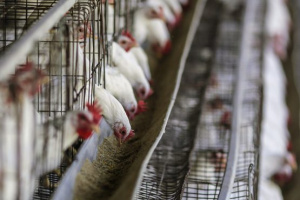
The University of Lomé is hosting today, May 14, the pan-African Poultry Conference. Three hundred researchers from fifteen countries, from Africa and elsewhere, are attending the event.
The three-day forum is organized by the regional excellence center for poultry sciences (CERSA) and Togolese branch of the World Poultry Science Association (WPSA). The latter wanted to gather the sector’s various actors to discuss achievements and innovations happening in the poultry industry.
Five major topics will be discussed during the event: product quality, processing and health safety, and poultry economics.
The CERSA it should be recalled was created in 2014. It received an $8 million financing from World Bank to boost food security through poultry, by training professionals, technicians and experts.
Besides Togo, other countries expected at the conference are: South Africa, Belgium, Benin, Burkina Faso, China, Côte d’Ivoire, Eritrea, Ghana, France, Lesotho, Nigeria, Netherlands, Senegal, and Turkey.
Ayi Renaud Dossavi
Reviewing trade between Togo and the UK
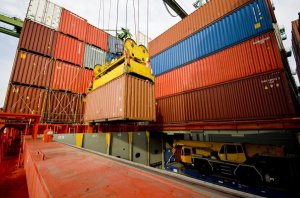
As the UK recently said it would boost cooperation with Togo, across different economic sectors, Togo First reviews the state of trade between the two nations.
According to latest data made available, trade between the UK and Togo in 2017 was valued at $48.9 million. Exports, since 1993, have been very meager totaling only $0.7 million in 2017. In contrast, imports grew rapidly, exceeding $448 million in 2012 before falling progressively to $48.2 million in 2017.
Trade balance is therefore $47.5 million, or 97% of total trade with the European country.
Provisional statistics from Comtrade shows that British exports to Togo almost doubled in 2018. Indeed, last year Togo imported more than $73 million of goods from the Island, against $4.5 million only for exports.
Mostly, the UK exports to Togo include combustible minerals, oil and gas, clothing (used and new), drinks (liquors and sodas), vinegar, cars, electronic equipment, etc.
For its part, the West African nation exports oleaginous products and fruits, cereals, gains, fruits, artwork, antiquities and collector items.
In 2017, Togo was the UK’s 117th export market and its 182nd import market.
Togo joins OECD’s development center
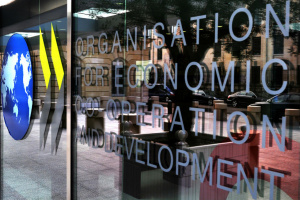
Togo is now a member of the development center of the Organization for Economic Cooperation and Development (OECD). The country joined the center May 13, 2019.
President Gnassingbé lauded the achievement saying it would reinforce his country’s relations with the Paris-based institution and also facilitate experience-sharing related to development.
Founded 71 years ago, the OECD works with emerging and developing economies, helping them build a stronger, healthier and fairer world. With Togo, it now has 55 member-countries, 10 in Africa.
Let’s mention next month, Mario Pezzini, head of the OECD development center will be in Togo for the Togo-EU economic forum.