

Togo First
Togocom and PNUD plan on establishing new incubators based on Rwandan KLab model
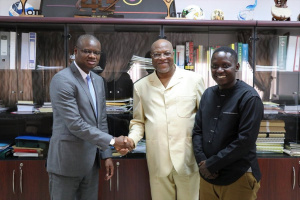
In addition to institutional mechanisms and private initiatives existing, Togocom and the PNUD plan to create incubators based on the Rwandan Klab model. The move aims at boosting employment and fostering entrepreneurship.
“Productive” talks took place last Tuesday between Aliou Dia, PNUD’s resident representative in Togo, and Affoh Atcha-Dedji, director general Togocom.
According to Dia, “private sector plays a major role in job creation and mobile telephony even more so in the process to create incubators for youth in Togo.”
Let’s note that in Rwanda, Klab incubators, the country’s most dynamic, won in December 2017, the TV5Monde innovation prize and from April 28 to 30, this year, its founder, Aphrodice Mutangana, was in Lomé to discuss with young Togolese about the initiative.
Séna Akoda
Togo : Hôpital américain de Paris secures deal to manage upcoming St Pérégrin medical complex
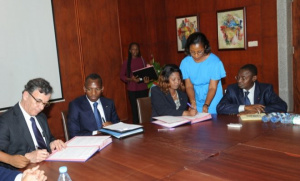
Last week, Togo’s national social security fund (CNSS) signed with Hôpital américain de Paris a convention under which the latter will manage the Saint Pérégrin hospital whose construction began about two months ago. The agreement was signed by Ingrid Awadé, Director CNSS, and Robert Sigal, MD Hôpital américain de Paris.
Let it be noted that St Pérégrin will in line with the deal benefit from the US hospital’s medical cooperation, strategic and managerial support, teleconsulting, tele-expertise, help in handling medical evacuations and assessing medical offer.
St Pérégrin is a level 4 hospital spanning 6,000 ha. Estimated cost for the infrastructure is CFA17 billion and its construction is expected to take 12 months. The site will have a 4-star hotel and an helipad.
Ayi Renaud Dossavi
Togo: WAEMU has in the past 25 years invested more than CFA6 billion in agriculture
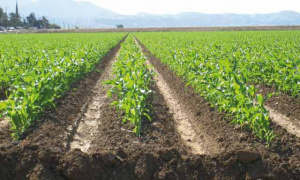
In the last 25 years, the West African Economic and Monetary Union (WAEMU) injected more than six billion CFA in Togo’s agricultural sector. The figure was obtained from data released by the representative resident of the WAEMU commission, Assoukou Raymong Kripeu, and other data compiled by Togo First.
According to the commission’s representative, out of the sum mentioned, 3.6 billion was used to build grain harvest and storage warehouses in order to improve Togo’s food security, by securing agricultural output and seeds. An additional CFA62.5 million was provided to produce, certify and supply grain seeds; CFA1.1 billion for multipurpose hydraulic facilities; about 730 million to organize vaccination campaigns against anthrax; 525 million for the structuring of the rice and maize sectors; and 50 million for crop preservation.
Besides these, some part of the funds was used to dig four water boreholes and the commission currently works to set up a regional agricultural information system (SIAR) which is a platform on which the country’s agricultural data will be posted.
Séna Akoda
Togo’s grain output rises for third consecutive campaign
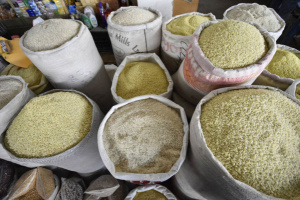
For the third consecutive campaign, Togo’s grain output has risen, according to data released by the Inter-States Committee to Fight Drought in Sahel (CILSS).
Spurred by favorable weather conditions, grain production in 2018-2019 rose 3% compared to the previous season. It stood at 1.339 million tons. This trend spread to the whole West African Economic and Monetary Union (WAEMU) with Burkina Faso, Benin and Mali recording respectively increases of 22%, 14% and 12%.
Mali is the region’s largest grain producer, a position it has been holding for the past six years, with an output of 10.453 million. The country is followed by Niger (5.954 million tons), Burkina Faso (4.953 million) and Côte d’Ivoire (3.475 million tons). Then comes Senegal, Benin, Togo and Guinea-Bissau.
Togo : Lomé hosts workshop to discuss a strategy for private sector growth
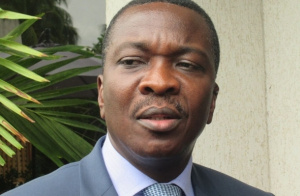
To provide Togo’s private sector with more performant tools and means, a two-day workshop was started April 29, 2019 in Lomé. In effect, the workshop assesses a strategic document to revitalize this sector.
This strategy will serve as a macroeconomic monitoring guide for actions aimed at fostering the private sector, said Kodjo Adedze (photo), minister of the private sector. It will list “actions undertaken by the government, technical and financial partners.”
The document has four axes, namely: improving the business climate and boosting investments, business growth, capacity-building, and public-private dialogue reinforcement.
Ayi Renaud Dossavi
OTR releases registry of fiscally up-to-date businesses
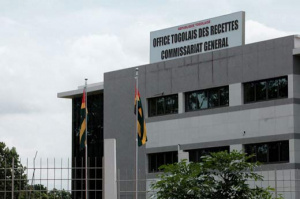
Togo’s Revenue Office (OTR) just released on its website the registry of firms that are fiscally up-to-date.
This release aims at informing business owners about their status in regards to tax payment and firms absent from the registry are those that are yet to have settled all their taxes.
These firms are urged to pay their dues or risk “a 15% levy on customary values of their imports, as imposed by the law.”
Séna Akoda
Togo: Index value to rise starting January 2020
President Gnassingbé committed, at the parliament last Friday, to raise the index value of the public administration starting next January.
This is part of various social measures announced by the leader, most of which will be adopted under the next finance bill. The increase is the second after that of 6% in 2013 recorded subsequent to long talks between the government and workers’ syndicates.
The new improvement will accordingly raise civil servants’ purchasing power. In addition, the government will boost consulting and initiate necessary actuarial studies –starting from January 2020 still – to reinstate retirement allowance, in a way that is compatible with our efforts to improve public finances, declared President Gnassingbé.
Moreover, “measures are already taken to build two retirement facilities that will be managed by associations,” he added. “In the retirement homes, retirees will perform various activities that will enable them to earn money,” said Christian Trimua, minister of human rights, on TV.
Togo : Faure Gnassingbé raises to 25% share of public procurement guaranteed to youth and women

From 20%, the share of public procurements set aside for youth in Togo is now 25%. This was revealed last Friday by President Gnassingbé, at the parliament.
The rise aims at enabling more youth to have access to public procurements. Indeed, on January 3, 2018, the president had committed to guarantee 20% of contracts to local youth and women. However, the move did not bear the results expected with only 4,000 entrepreneurs having benefited from it, winning contracts valued at XOF12.638 billion.
“We can do far better and instructions have already been given to simplify and ease access to public procurement, as well as to establish mechanism to support young entrepreneurs financially in the process,” said Faure Gnassingbé. He then urged “all those (entrepreneurs, ed.note) who have not taken advantage of this measure yet to do so and help improve it by sharing their experience with competent authorities.”
Cotton: Togo should produce 152,000 tons this campaign, according to the USDA
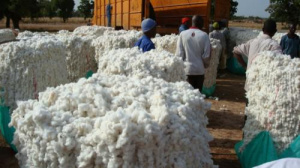
Togo should produce 152,000 tons of cotton during the 2019-2020 campaign according to the United States Department of Agriculture (USDA). This is 18% more than the country did in the last season.
The whole West African region is actually expected to record an uptrend over the period. The USDA’s expectations align with those of the regional programme for the integrated protection of cotton trees in Africa (PR-PICA which regroups Benin, Burkina Faso, Côte d’Ivoire, Mali, Senegal and Togo), whose coordinators recently met in Cotonou, Benin.
Indeed, under the best weather conditions, PR-PICA expects cotton output in West Africa to soar 38% reaching 3.4 million tons, with Burkina Faso doubling its output. Mali is expected to record the highest output, a million tons.
Ayi Renaud Dossavi
Africa Plastic Technology eyes turnover of XOF123 billion over the next three years
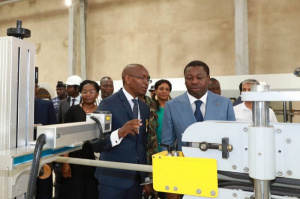
The new Africa Plastic Technology factory recently inaugurated in Tsévié (Zio prefecture) should generate a turnover of XOF123 billion over the next three years.
This was revealed by Kodjo Adédzé, minister of trade and industry, during the inauguration ceremony, on April 25.
In terms of output, the firm plans to make 65,000 tons of plastic over the period concerned with main products being PVC tubes (pressure tubes, telephonic cables sheathing, high-density polyethylene pipes for water adduction).
The installation of this infrastructure which falls under the second axis of the national development plan should generate 200 direct and 500 indirect jobs.
Séna Akoda