
Togo First
Brexit: What will be the impact in a no-deal scenario for Togo and its neighbors?

Britain’s exit from the European Union will “significantly affect conditions for access to the British market for developing countries.” This is according to the UNCTAD which however adds that this will have little impact on Togo.
In the related report, the institution indicates that the WAEMU is one of the least exposed regions to the Brexit. The document attributes this to low exports by Togo, Benin, Burkina Faso, Mali and Niger which export very little to the UK. Senegal, also a member of the union, could for its part lose up to $1.5 million if the deal goes through. However, Côte d’Ivoire risks 8% of its exports, valued at $29.7 million, in this scenario. In Ghana, 39% of exports, valued at $91 million, could be slashed making it the biggest loser in sub-Saharan Africa, and the second country that would lose the most in Africa after Morocco (-$97 million).
Overall, around twenty African countries may see their exports fall in the event of Brexit. These losses are estimated at $420 million.
In regard to gains, Africa could capture $3.24 billion in a “no-deal” scenario. Major winners would be South Africa ($3.04bln), Mauritius ($220mln), Botswana ($190mln), Seychelles ($105mln), and Namibia ($85mln).
Worldwide, big winners would be China, US, Japan and Thailand.
Togo to, definitely, adopt Progamme-based budget in 2020
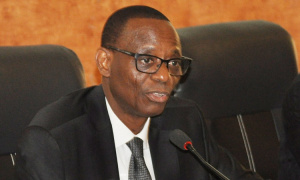
In 2020, Togo will no more rely on a means-based budget rather opting for a programme-based one. The shift aims at improving the State’s performances towards achieving its goals.
The measure was taken during a meeting, called by the Ministry of Economy, on April 23, in Lomé. The latter regrouped various officials such as general secretaries and directors, and department chiefs to get them acquainted with the new budget format, its implementation, as well as mistakes to avoid while dispatching budgetary actions and programs to various ministries.
The “State budget for 2020 will be presented and adopted based on specific” programmes, instead of means which is the current format as the latter “has shown limitations,” declared Patoki Badanam, secretary general, ministry of economy.
The decision let’s emphasize aligns with public finance reforms undertaken in the member-States of the West African Economic and Monetary Union (WAEMU), but also with the Economic Governance Support Project (PAGE) which is backed by the European Union and the World Bank.
For 2019, the government, let it be recalled, presented two types of budget to the parliament.
Ayi Renaud Dossavi
World Bank to invest $224M in off-grid solar project in West Africa
The World Bank just greenlit a $224.7 million financing to help BOAD and ECOWAS expand access to off-grid power across 19 countries, in West Africa and Sahel, therefore including Togo.
The funds fall under the off-grip power regional project. Most of these, $150 million, will be in the form of loans and grants from the International Development Association (IDA) while the remaining $74.7 million will be provided as a subsidy from Clean Technology Fund. Funds secured by the ECOWAS will be directed to its center for renewable energy and energy efficiency (ECREEE).
Most of the funds will serve to improve power access by households, businesses and public institutions, “through a harmonized regional approach to deploy modern autonomous solar systems.” At least 1.7 million people are currently lacking access to electricity or with a poor access.
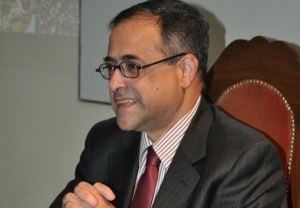
“So far, only 3% of households in West Africa and Sahel use domestic solar systems while there are still 208 million people with no access to power in the region. This project will help decision-makers lower barriers to enable the creation of a regional market for such equipment needed to reduce energy insufficiency in the region,” said Rachid Benmessaoud (photo), coordination head of regional integration in West Africa.
Countries that will mainly benefit from the funding are Benin, Burkina Faso, Cape Verde, Cameroon, Côte d’Ivoire, Gambia, Ghana, Guinea, Guinea-Bissau, Liberia, Mali, Mauritania, Niger, Nigeria, Central African Republic, Senegal, Sierra Leone, Chad and Togo.
Togo: Government starts providing quarterly subsidies to 61,000 poor households
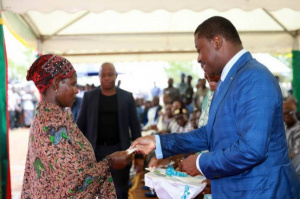
A total of 61,000 households from 585 villages spread across Togo’s 209 poorest districts will receive over two years, a quarterly subsidy of XOF15,000. This is part of the government’s social nets and basic services project (Filets Sociaux et Services de Bases or FSB in French) launched last December, and funded by the State and the World Bank.
The new campaign was launched April 23 at Timbou, in Cinkassé, by President Gnassingbé, in the framework of the independence celebrations, next April 27th.
This year, XOF4.32 billion is allocated to the FSB, XOF3 billion from the World Bank and XOF1.32 billion from the State. These monies will serve to meet “needs for food, health, school fees, and some as well will serve build a fund that will finance businesses,” said the Presidency assuring that beneficiaries were picked based on a thorough survey conducted by the National Institute of Statistics, Economics and Demographic Studies (INSEED).
ICAT Kara is currently holding a working session dedicated to Kara agropole project
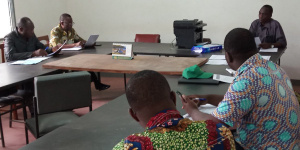
The Technical Support Council Institute of Kara (ICAT-Kara) is holding a working session related to the Kara agropole project.
The training, according to reliable sources, will teach staff deployed on the field, how to identify sites for agricultural cooperation and technical centres as well as production blocks that are part of the Kara agropole.
This session follows a vast tour led by the project’s coordinators and Noël Bataka, minister of agriculture, across various communities of the Kara region. The tour’s purpose was to inform the people of this region about the various job and development opportunities that the project will generate.
Séna Akoda
WAEMU : Togo records highest increase in deposits at microfinance institutions in 2018

In 2018, Togo was within the West African Economic and Monetary Union (WAEMU), the country that recorded the highest increase in money deposits at microfinance institutions, or decentralized financial systems (DFS), knowingly +24.8%. The nation came ahead of others like Mali (+23.4%), Benin (+6%) and Côte d’Ivoire (+5.9%).
The data was revealed in the recent report of the West African States Central Bank, BCEAO, on state of microfinance across the WAEMU. The document which covers the period from December 2017 to December 2018, was released this month.
Also, loans provided by the DFS rose by 24.8% in Togo, the second highest increase in the union, after Benin (+34.1%) and behind Burkina Faso (+21.1%), Mali (+20.2%), Côte d’Ivoire (+17%) and Senegal (+11.6%).
More globally, this amount recorded an average growth of 18.2% over the period reviewed to stand at CFA1,414.7 billion.
According to the Apex bank, these figures reflect a “relatively opportune progression of financial inclusion.”
Ayi Renaud Dossavi
Mining Governance and Development Project invests CFA700 mln in training at University of Lomé
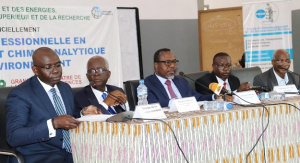
In Togo, the mining governance and development project (PDGM) backed by the World Bank, has recently sponsored a quality training at the University of Lomé.
The PDGM invested CFA700 million in the training. The latter mainly focuses on improving skills and logistics of both lecturers and students through practical works and by rehabilitating lecture halls. In addition, a bus and pick-up were provided under the sponsorship.
The announcement was made April 16, during a ceremony to launch two new bachelor degrees at the Faculty of sciences of the University of Lomé: one in mining geology and another in analytical chemistry, mining and environment option. The PDGM is part of actions to boost transparency in the mining sector. It benefits from a $15 million financing from the World Bank.
Séna Akoda
Togo records again an outstanding performance on regional financial market
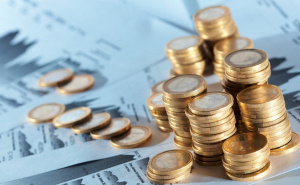
Last Friday, Togo raised XOF77 billion through a fungible Treasury bond issuance. This is almost four times the amount initially sought and represents a 385% oversubscription.
The operation is the second of the quarter and the first was as well highly oversubscribed. Investors come from all WAEMU States, with the exception of Guinea-Bissau and Niger.
Togo’s public treasury out of the amount mobilized will retain XOF22 billion, consolidating its performances from the first quarter.
Togo moves 10 places in RSF’s press freedom rankings

Out of 180 countries, Togo is 76th on the 2019 press freedom rankings released April 18, 2018. The country thus jumped ten places in the rankings with an increase of 0.54pt in its score.
“Press offenses have been depenalized since 2004 and professional journalism organs now have a great capacity to defend the press when it is attacked,” says Reporter Sans Frontière (RSF).
Commenting on tensions in mid-2017 spurred by socio-political conflicts and the government’s response to these, the NGO declared : “the situation has calmed down a little and the number of attacks against journalists is decreasing, drastically.”
This year, in Togo, no journalists were killed or arrested, according to RSF’s barometer.
However, the study highlights the strong exposure of media to politics ahead of local and presidential elections respectively in 2019 and 2020.
Another issue is that State media are struggling to “provide real news serving the public,” in an industry counting 171 newspapers, 74 radio stations and 10 TV stations.
Professionalization of journalism, a real challenge to media viability
“Major challenges in the way of the future press code under evaluation is the sector’s professionalization – during protests mainly – and access to more funds to ensure the media’s economic viability ; and the protection of journalists and their sources.” The above-mentioned code, according to RSF, is a beacon of hope for the industry.
Overall, the NGO found that press freedom keeps declining in many countries and “safe” zones are getting scarce. Only 24% of the 180 nations on the index have a “good” or “relatively good” environment for press freedom, against 26% in 2018.
In Africa, no country has a “good” situation and only four have a “relatively good” one, in relation to press freedom. Togo is under the second category.
Togo: Only 20% of the population uses mobile internet
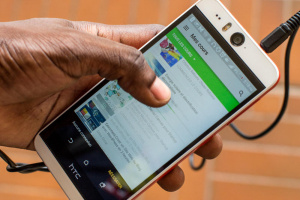
Less than a quarter (20%) of the Togolese population uses mobile internet, recent data from the Global System for Mobile Communications Association (GSMA) shows. This trend is spread across the sub-region and rings a bell regarding efforts that need to be made to achieve digital inclusion.
Indeed, according to the association, in West Africa 61% of the population has no access to broadband even if the number of smartphone users is expected to double by 2025.
In Togo, 19% of the population, adults mostly, are covered by mobile broadband but fail to access it via their smartphones. This calls for more efforts to improve infrastructures, accessibility, get content and consumers ready.
However, to achieve digital inclusion, a major challenge must be overcome; that is expanding broadband coverage, a high-cost process. Other issues are related to consumers’ demand.
At end-2018, the West African mobile industry was officially employing 200,000 people and 800,000 informally. The sector contributed $52 billion to the region’s economy. This amount should rise to nearly $70 billion in 2023, according to GSMA.