

Togo First
Togo: ISP Téolis is willing to open its capital if…
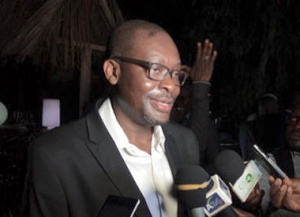
Téolis, the internet service provider (ISP) which recently entered the Togolese market announced that it would open up its capital only under certain conditions.
“We are willing to open our capital. It is not closed. However, for now what we are looking for are real partners, who bring to the table more than just money. We are looking for a partner with expertise,” a global network, Téolis’ Chairman, Michel Bagnah confided to Togo First.
According to Bagnah, Téolis has initiated its investment plan, which aims at generating a turnover of more than XOF3 billion over the next four years.
Presently however, the ISP is deploying in Baguida (13km east of Lomé) and Agoè (north eastern suburb of Lomé), and plans on expanding inside the country, while adding remote monitoring and cybersecurity to its offers.
National road 1 expansion project to be debated during the coming Togo-EU Forum
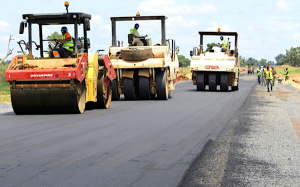
The second phase of the expansion of the national road n°1 (RN1) will be showcased during the Togo-EU forum which will be held in Lomé next June 13-14.
The phase which will cost $620 million should improve the movement of goods and people along the Lomé-Ouaga axis, in addition to boosting performances of the port of Lomé. It articulates with other projects such as the dry port of Cinkassé and the multipurpose platform of Adakpamé.
Regarding investment opportunities, multiple forms of financing are available, namely: concessions, Build-operate-transfer (BOT) agreements, partnership agreements, and traditional loans from development banks.
Investment can be made at the various stages of the project including conception, financing, construction, exploitation and maintenance.
Ethiopian Airlines to open new line to Houston, via Lomé, starting April 23, 2019

Starting next June 23, Ethiopian Airlines will be flying to Houston, Texas, via Lomé. This is after deciding to terminate its Addis Ababa-Lomé-Los Angeles liaison.
According to reliable sources, the line that went to California is being redirected to Houston and there will be three flights per week to this destination.
“New flights to Houston will be the only line between Houston and Africa and will ease movement of Africans in Houston, as well as oil firms and others who operate on the continent,” the airlines said.
The new line will contribute to Lomé’s vision to become by 2022 a logistics hub in West Africa.
Recently, Brussels Airlines announced it would connect to Lomé, thus becoming the second European airlines to do so, after Air France.
Séna Akoda
South African medical devices maker Sinapi seeks partner in Togo
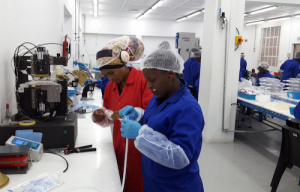
Sinapi biomedical, a Stellenbosch-based (Western Cape, South Africa) biomedical engineering firm plans on entering the West African market, through Togo.
“We wish to collaborate with local authorities to improve healthcare in Togo. We are actually seeking a local private or public partner, specialized in the distribution of our medical devices.” This was revealed to Togo First by Tobias Van Reenen, chief of global sales at Sinapi.
Founded in 2001, the company since 2003 has been developing chest drainage, urinary, obstetrics and feeding devices. It plans in the long run to build a production unit in Togo.
“We are looking to set up a small production plant in Togo. However, it will depend on some elements, but that is our vision,” Van Reenen declared.
For the executive, Togo could be the starting point for its expansion across West, East and Central Africa. Sinapi is currently present in South Africa, and South Korea via a local partner.
Annual Investment Meeting : Cina Lawson promotes Togo in Dubai
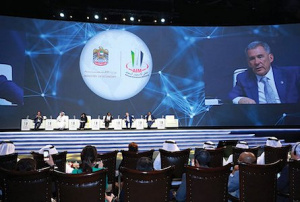
Togo’s minister of posts, digital economy and technological innovations is currently in Dubai where she is attending the 9th Annual Investment Meeting (AMI).
The minister will talk during a panel of the United Nations Economic Commission for Africa (UNECA). She should at this occasion meet various investors to discuss investment opportunities available in Togo, same as she did during the recent CEO Forum.
The theme of this edition is “Mapping the future of foreign direct investment: Enriching world economies through digital globalization.” In line with this theme, the event will focus on the impact of digital globalization on ways through which policies can be implemented to improve business climate around the world.
Séna Akoda
Togo: Rural electrification agency carries out sensitization campaign in Kara
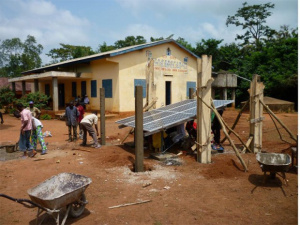
Togo’s agency for rural electrification and renewable energies (AT2ER), is currently carrying out a sensitization campaign in Kara, in the north.
On this occasion, the agency told various administrative authorities and actors of civil society about some of the actions it undertook to ensure that Togo is fully electrified by 2030.
The AT2ER was established in May 2016 to boost rural electrification. It steers the CIZO, a project which will cost more than XOF68 billion and be carried over five years. The latter is financed by the African Development Bank (AfDB) and should provide power to more than two million Togolese over the period.
Ayi Renaud Dossavi
Lomé will host West Africa Fertilizer Forum next April 24 to 26
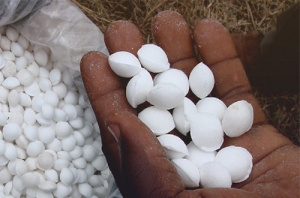
From next April 24 and 26, Lomé will host the West Africa Fertilizer Forum.
The event will gather major actors and all parties interested in the West African fertilizer industry, according to the Africa Fertilizer initiative, which will organize it in partnership with the Regional Fertilizer Professionals Association.
More than 200 participants from 38 countries are expected at the forum ; producers, developers and investors.
In Togo, firms like CECO Group, CIAT Sarl, and ETG Togo SA (Export Trading Group) operate in the fertilizer industry.
Ayi Renaud Dossavi
These are the banks backing mobile money operators in Togo

There are no e-money institutions in Togo, unlike Benin, Burkina Faso, Mali, Côte d’Ivoire and Senegal. This was revealed in a report on these institutions released by the Central Bank of West African States (BCEAO) at the end of December 2018.
Just like Togo, Guinea-Bissau and Niger also have no e-money institutions but rather focus on partnerships between banks and telecom operators active in the mobile money segment.
In Togo, Moov Etisalat, whose mobile money offer was baptized Flooz, is the operator that entered the most partnerships with banks. The banks backing the operator are Banque Atlantique, Orabank, Ecobank Transnational Incorporated, and Diamond Bank (now NSIA BANQUE)
With TMoney, public operator Togo Cellulaire partnered with Banque Togolaise pour le Commerce et l’Industrie (BTCI).
All these partnerships aim at boosting financial inclusion and allowing individuals with no bank accounts in Togo to rapidly have access to banking services.
Séna Akoda
ANPE organizes International Employment Forum
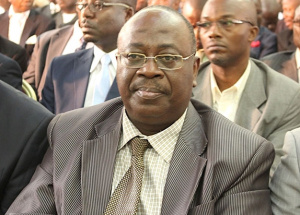
Yesterday, the International Employment Forum was held in Lomé. The event which was organized by Togo’s national employment agency (ANPE) and Migration aimed at presenting support and framework established by the agency to facilitate travel abroad, legally, for professional purpose.
The theme of the event was “Employment beyond borders”.
Among attendees were many representatives of States and institutions, such as the ECOWAS, the Canadian and Tunisian embassies.
For Edmond Comlan Amoussou, MD of ANPE, the forum aligns with a mission the agency was given by the government which is to “handle all issues related to the movement of public workers.”
This includes “freely supporting the workers interested in going abroad to either study or work, legally.”
Ayi Renaud Dossavi
Oragroup to get listed next April 16
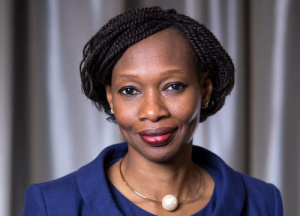
Oragroup will be listed on the Bourse Régionale des Valeurs Mobilières (BRVM) next April 16. The bank indeed received the approval of the regional council or public savings and financial markets (CREPMF) for the operation.
The listing, which covers 20% of the lender’s capital (floating) will take place a few months after its IPO which occured between October and November 2018.
The IPO, it should be recalled was fully subscribed and helped raise more than XOF56 billion; it actually is the largest IPO ever recorded on the BRVM.
Out of the remaining 80% of the capital, more than 50% are held by Emerging Capital Partners (ECP).
At the end of 2017, the total balance sheet of Orabank expanded 45%, from 2014, standing at €2.72 billion (XOF1,794 billion). Over the same period, its net banking product rose by 33%, to reach €164 million (XOF108 billion).
The holding let’s recall is present in 12 countries, in both West and Central Africa, and has its headquarters in Togo. With more than 139 agencies and 1,811 workers, it operates in four distinct monetary zones (WAEMU, CEMAC, Guinea and Mauritania).
Ayi Renaud Dossavi