

Togo First
France is completely opened to a reform of the Franc zone, but….
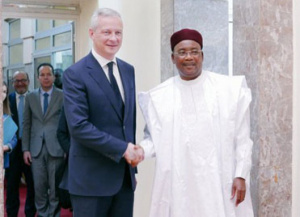
“We are completely opened to a deep reform of the CFA, however it is up to the States to decide.” This was declared by France’s Minister of Economy and Finance, Bruno Le Maire after meeting with Niger's president, Issoufou Mahamadou on the sidelines of a meeting between the Franc Zone’s ministers of finances, held in Niamey on March 27-28, 2019.
According to these ministers, the zone provides stability and helps tackle inflation. Considering this, a deep reform of the Franc Zone may not occur any soon.
This is in a context where two out of three Togolese think the CFA should be replaced, according to a study released by Afrobaromètre last February.
Ayi Renaud Dossavi
AFDB injects €12.5M into Adiwale Partners Co to support SMEs’ development in francophone West Africa

The African Developent Bank (AfDB) has approved a €12.5 million financing in first generation private equity fund Adiwale Fund 1. The information was revealed by the pan-African institution in a statement issued last Thursday.
“The Bank’s investment in Adiwale Fund 1 will improve financing options and SMEs capacities in French-speaking West Africa,” said Alhassane Haidara, head of industries and non-sovereign services at the AfDB.
The recently approved financing will first profit Côte d’Ivoir, Senegal, Burkina Faso and Mali and then Togo, Benin and Guinea.
Adiwale Fund 1 was co-founded in 2016 by two Togolese citizens, Jean-Marc Savi de Tové and Vissého Gnassounou. It targets SMEs with a high potential in the French-speaking part of West Africa. Its transactions’ volume ranges between three and eight million euros according to the AfDB and it has capitalization of €75 million.
Ayi Renaud Dossavi
Togo: ANSAT to, from now on, pay farmers cooperatives via bank accounts for their yield surpluses
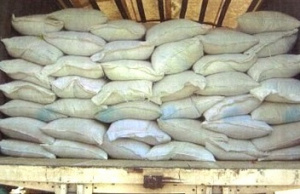
From now on, the national agency for food security (ANSAT) will pay grain farmers their production via bank accounts.
“We have put in place a new procedure that involves prior stock declaration. In effect, ANSAT agents will visit the farmers to check the stock’s quality, after which the money will be wired to the cooperative’s account,” said Napo Gnofam, Sales Head at ANSAT.
This is a major change knowing that previously the ANSAT agents had to go through the whole nation to purchase the yield. The reform which aims at fostering farmers’ financial inclusion aligns with the current purchasing campaign’s theme, namely: the bancarization of cooperatives.
Séna Akoda
Pan-African firm Liquid Telecom eyes Togolese market

Liquid Telecom, subsidiary of Zimbabwean group Econet Wireless, could soon enter the Togolese market.
Last Monday, the group announced in Kigali, at the Africa CEO Forum, which was attended by a Togolese delegation led by President Gnassingbé himself.
If Liquid Telecom succeeds in entering Togo, it would be its first step in West Africa. However it will be the country’s fourth Internet Service Provider (ISP) after Togo Telecom, Vivendi Africa and Teolis.
Founded in 1997, Liquid Telecom is currently the largest pan-African optical fiber operator with a network spanning more than 70,000 km going from Cape town to Cairo.
Octave A. Bruce
Cotton: WAEMU to soon have a regional consultation framework?

In the West African Economic and Monetary Union (WAEMU), actors of the cotton sector wish to put in place a regional consultation framework. This was revealed during an exchange workshop held in Ouagadougou regarding the sector’s structuring in the region.
According to Zourata Lompo-Ouedraogo, cabinet director of Jonas Gbian, head of agriculture, water resources and environment of the WAEMU commission, putting this framework in place is necessary. “Cotton is the main source of revenue for more than 15% of households in the region and it employs almost 70% of its active population in rural areas,” she said.
“It also creates many direct and indirect jobs across all economic sectors and helps fight poverty while contributing to the development of other agricultural sectors,” Lompo-Ouedraogo added.
However, she then emphasized, “boosting cotton output and making the sector more competitive requires that it is better structured, in both the member States and in the region as a whole.”
The above-mentioned workshop was organized to achieve this goal, among others. It began March 27 and will end March 29.
Séna Akoda
Togo-EU economic forum: Hundred projects will be picked and financed by European investors
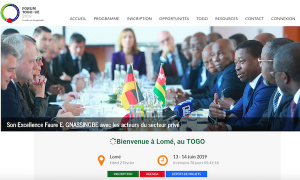
A total of hundred projects will be financed in the framework of the coming Togo-EU economic forum next June 13-14.
The call for the projects was recently launched on forumtogo-ue.tg, the website dedicated to the event.
The projects cover sectors such as agrofood and agriculture, bank and insurance, construction and related equipment, trade, services and enterprises, transport and logistics.
Selected applicants will have their capacities reinforced to properly sell their projects to European investors.
Also, those interested in attending the forum must register online (registration fee is €77). Four hundred participants, including 150 European business actors are expected at the event.
Séna Akoda
Coastal degradation cost Togo $310M in 2017
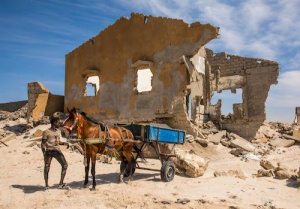
Coastal degradation cost Togo $310 million in 2017. This was disclosed in a World Bank report on the hazard’s impacts in West Africa, especially in Benin, Côte d’Ivoire, Senegal and Togo.
In the report, three major factors were discussed: floods, coastal erosion, pollution (water and air) and waste management.
In detail, coastal erosion alone cost the country $213 million, thus 4.4% of its GDP in 2017. Togo, it should be emphasized has more people living near its coasts than any of the other countries surveyed.
As for flooding, Togo lost $10 million to the phenomenon in the year reviewed. This is against a total of $1.45 billion losses for the four countries.
Regarding losses related to pollution and waste, they amount to $87 million, respectively $59 million for the first (water and air) and $28 million for the second.
Let’s recall that in June 2018, the World Bank disbursed $210 million for the West Africa Coastal Areas Management Program (WACA), to help people living in coastal areas better cope with coastal erosion.
Countries benefiting from the WACA program include Benin, Côte d’Ivoire, Senegal, Sao Tomé and Principe, and Togo.
Ayi Renaud Dossavi
Africar Group launches Togo’s first car dealing website

French group Africar, leading small car ads network in Africa revealed March 27 that it would launch in Togo Carasigbe.com, the first-ever online car dealing platform.
This website adds to about 20 others already operating across Africa. With it, both individuals and concessionaires will be able to “sell cars, bikes and trucks, more safely and rapidly.”
Carasigbe.com can be accessed on computers and smartphones.
By launching this platform, Africar joins Kobo360 and Gozem, two other foreign startups that recently started operating in Togo. The French firm is Emerging Classifieds Ventures, an Australian startup that specializes in car and property deals online.
Octave A. Bruce
Immigration: More Togolese prefer staying in Africa than going to Europe

Only 8% Togolese would go to Europe if they had to emigrate. This was revealed in Afrobaromètre’s latest survey on emigration in Africa.
The survey conducted in November 2018 indeed shows that 4 out of 10 Togolese would rather go to another West African country (43%) or another region in Africa (12%).
These figures align with a global trend emerging across the continent.
Africans often leave the continent seeking jobs, youth and graduates especially, or due to poverty which they are fleeing from. In Togo for example, 35% of the surveyed by Afrobaromètre say they would emigrate in search for a job. Other factors like “democracy and freedom” or “peace and security” only motivate 4% of the surveyed.
Let’s note that this year, Togo launched its national development plan which aims at creating 500,000 jobs by 2022.
Ayi Renaud Dosssavi
Africa CEO Forum : Ethiopian Airlines chosen as African Champion of the Year
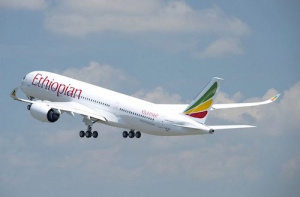
Ethiopian Airlines won the African Champion of the Year at the 2019 Africa CEO Forum in Kigali. This reflects a “vote of confidence” in the company, two weeks after it suffered the crash of one of its Boeing 737 max; an accident that killed 157 people.
The title rewards the airlines’ efforts in contributing to regional economic integration in Africa. Ethiopian airlines competed with other African giants like South African firm Engil Africa, the Azalaï Hotel group or Morocco’s Banque centrale populaire (BCP).
Let’s recall that Ethiopian Airlines is a partner and stakeholder of Lomé-based Asky Arlines which is a major airlines in West Africa, alongside Ecobank Transnational Incoporated (ETI).
Ayi Renaud Dossavi