
Togo First
Agricultural fair to be held ahead of 11th National Togolese Farmer Forum next month

From April 11 to 19, 2019, an agricultural fair will be held at the Palais des Congrès of Kara. This, ahead of the 11th National Togolese Farmer Forum (FNPT).
During the fair, local agricultural products will be promoted, same for technological innovations, agro-industrial products, and many more.
The fair’s goal, according to the ministry of agriculture which is behind the initiative, is to “valorize agricultural potentialities, as well as local agricultural products in both the country and to international attendees.”
For this year’s edition of the FNPT, the theme is: “Agricultural transformation poles to valorize Togo’s potential: a new vision translated by the National Development Plan (PND 2018-2022).”
Séna Akoda
Togo : Lomé hosts 3-day workshop on social entrepreneurship, organized by US embassy and CNEJ
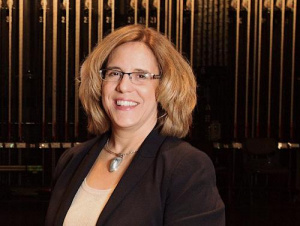
On March 25, 2019, a three-day workshop on social entrepreneurship was started at the University of Lomé. Initiated by the US embassy and the national coalition for youth employment (CNEJ). This workshop aims at helping young people build their ideas and turn these into products meeting international standards.
What distinguishes social entrepreneurship from traditional entrepreneurship is that the first integrates a social component, beyond personal interests.
The workshop will be led by Theresa Carrington, social entrepreneur, founder and CEO of Ten by Three, a firm that empowers rural communities through craftsmanship.
Let’s note that just before the training was opened, a memorandum of understanding was signed by the CNEJ and the US embassy. This agreement’s purpose is to establish a resource framework for social entrepreneurship, as well as ensure the organization of an annual conference on this topic.
Ayi Renaud Dossavi
Togo: FNFI reveals new products on its fifth anniversary
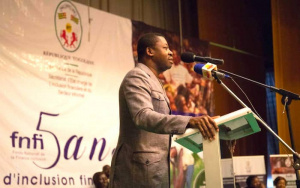
On the sidelines of its fifth anniversary, the National Fund for Inclusive Finance unveiled new products it will be offering. These include a solution to directly refinancing beneficiaries reaching out to financial partners and another to help beneficiaries formalize (PAF).
The two products were launched in Kara last Saturday during a ceremony presided by Togo’s head of State, Faure Essozimna Gnassingbé.
The PAF finances equipment for craftsmanship and processing. It also aims at providing craftsmen their working capital. According to president Gnassingbé, the two new products are an appropriate answer to requests made by FNFI beneficiaries.
For Mazamaesso Assih, State Secretary in charge of inclusive finance, with these new products, beneficiaries will truly contribute to the growth of Togo’s GDP.
Let’s emphasize that two conventions were signed during the announcement. The first between Orabank and the FNFI and the second between Orabank and the FNFI’s partnering institutions.
Séna Akoda
BBOXX already has almost one million customers worldwide, the most living in Africa
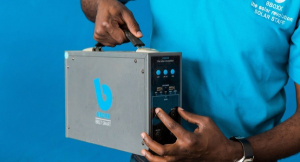
Almost a million beneficiaries. That is the number of people that received BBOXX solar kits worldwide so far.
The British firm indeed declared: “To date, we have provided clean, cheap and reliable electricity to about a million people.” Africa is the greatest beneficiary since it has the highest demand for BBOXX’s products.
BBOXX on the continent operates in Rwanda (its largest market), Kenya, DRC, Pakistan, Nigeria, Cameroon, Angola, South Africa and Togo. In the latter, the group provides the kits under CIZO, a presidential initiative.
There, the kits, since March 2019 benefit from a monthly subsidy, via the CIZO check, an incentive to speed up household electrification, in rural areas especially.
Commenting on the decision, BBOXX’s CEO, Manssor Hamayun, said: “This is huge! Togo’s government is the first government around the world to have a plan to achieve universal electrification by recognizing subsidies’ major role.”
Séna Akoda
Togo : 85% of LLCs created in 2018 were without a notarial deed
In Togo, 85% of LLCs created in 2018 were under a private deed, meaning involving no notarial deed. This equals 2,200 companies over a total of 2,587, the rest having been established with a notarial deed.
This data comes from the Centre for Business Formalities (CFE) and reflects the multiple reforms initiated by the government in the recent years to improve business formalization.
More specifically, in 2014, an interministerial decree enabling the creation of LLCs without a notarial deed was adopted.
Moreover, it is now possible to create a business within seven hours (since last February) and registration applications are submitted at the CFE’s desk all working days, from 7:30 AM to 2PM.
Ayi Renaud Dossavi
Africa CEO Forum 2019: Togo promotes its 2018-2022 PND
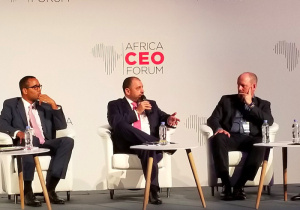
Today as announced earlier, the special Invest in Togo session dedicated to the PND’s promotion in Kigali opened, chaired by the Togolese president.
Hosting the session are President Gnassingbé himself, Sani Yaya, his minister of finance, Gregory Krief, Managing director MSC Togo and the Lomé Container Terminal (LCT), and Frederic Dovi-Akué, MD Do Pharma SA.
“65% of funds needed for Togo’s national development plan will come from the private sector,” says Sani Yaya. To this, Aliou Maïga, Head of the International Finance Corporation (IFC) for West and Central Africa, responded: “The IFC believes in Togo’s potential. We are ready to back investors that are interested in venturing in this country.”
For his part, Gregory Krief, MD of Mediterranean Shipping Company (MSC), said making Lomé a logistics hub, the PND’s first axis, is already a “reality”. Talking about the country’s power strategy, he adds: “Today, Togo has the best strategy for universal electrification. It’s a good example.”
Frédéric Dovi Akue, MD of Do Pharma, then declared, valorizing human resources available in Togo: “There are very qualified and motivated people with good theoretical bases. A manna for investors.”
Séna Akoda
Togo : Government opens single desk for land operations

The government of Togo has opened a single desk to handle land-related operations. The decree creating this desk was adopted last Wednesday in a council of ministers.
The Single Land Desk (GFU in French) as it is named “aims at simplifying and accelerating procedures to land deeds.” It regroups representatives from all administrations involved in processes of submission and collection of documentation needed to register properties.
According to the government, this entity “will, just like the Center for Business Formalities (CFE), help cut costs and reduce risks related to land operations.”
The new reform follows another in December 2018 to ease property transfer by merging the following processes: case study, liquidation and payment of registration fees, and land conservation.
Togo: Regional chambers of agriculture amended
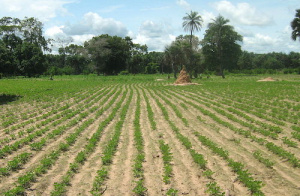
Togo’s government recently amended its regional chambers of agriculture, local institutions in charge of representing and promoting this sector.
For instance, every member of the regional chamber will be paying a membership fee. Also, the Bureau national des chambres régionales d’agriculture (BN-CRA), which oversees all the chambers, is now the Permanent Council of Agricultural Chambers in Togo (CPCAT).
The decision, adopted by decree in a council of ministers held last Wednesday, aims “at strengthening the credibility of the representative chambers as well as the legitimacy of procedures in decision-taking institutions.”
It also aims at making them “more functional and efficient,” and to help agricultural actors better understand their purpose.
Let’s recall that the regional chambers of agriculture were established since 1997 in Togo. They represent villages and townships near public authorities, while tackling agricultural issues.
Ayi Renaud Dossavi
WAEMU : Togo had the second highest rate of bancarization in 2017 (BCEAO)
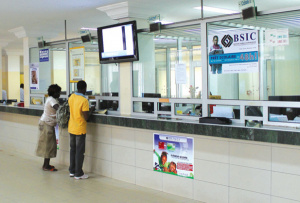
In the West African Economic and Monetary Union (WAEMU), Togo had the second highest rate of bancarization, 27%, in 2017. The information is disclosed in the BCEAO’s latest financial inclusion report.
According to the document, Benin was the union’s most bancarized nation over the period reviewed, ahead of Togo, Burkina Faso (22.2), Senegal (19.6%) and Côte d’Ivoire (16.6%).
On a year-to-year basis, Togo recorded the fastest growth of bancarization rate in 2017 (+2.9%), thus coming ahead of Mali and Senegal (+2.2% and +1.9% respectively).
This is in a context where this figure increased slightly across the whole region, from 16.6% in 2016 to 17% in 2017.
According to the BCEAO, the rise was driven mainly by a greater number of bank account holders. From 9,025,385 in 2016 it grew to 9,430,625 in 2017, up 4.5%.
Ayi Renaud Dossavi
Six out of 10 Togolese feel climate change effects, farmers mostly – Afrobaromètre

More than six out of 10 Togolese believe that the weather has worsened in the past ten years, in regard to agricultural production. This was revealed in the latest survey of Afrobaromètre released February 28th.
This opinion is even more shared among farmers (72% of surveyed). Farmers in the Savanes region appear to be the most hit by the bad weather, according to the survey (83% of the surveyed).
Still in the same report, Afrobaromètre said two out of three Togolese (68%) feel that drought has become “somehow” or “very” severe in their region, over the period reviewed. On the other side, only two out of 10 (26%) of Togolese think flooding has increased in their region.
The survey was, it should be emphasized, carried out in a context where more than half of the Togolese population (55%) has heard about climate change and strangely farmers who are most affected by the phenomenon appear to be the least aware of it (41%).
Ayi Renaud Dossavi