

Togo First
French customs prevented 24.6t of automotive waste from being exported to Lomé last year
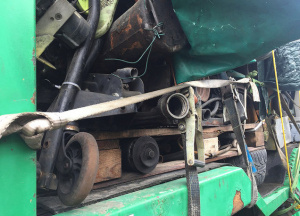
Last year, in April, Sète’s customs, in south eastern France, ceased 24.6 tons of automotive waste headed to the Port of Lomé. This is revealed in the latest report of France’s customs.
While conducting a routine inspection of two semi-trailers headed for Africa, custom officers noticed that the “vehicles’ refuse skips were not empty as declared but instead full of automotive waste that had not been depolluted.”
The inspection led to the discovery of “24.6 tons of automotive waste, knowingly, three road tractors’ engine blocks, forty used truck tires, eight lorry axles, bumpers with licence plates, reservoirs and batteries.”
Since it is forbidden in the European Union to export waste to countries that do not have the adequate capacity to process this waste, “the firm accused paid depollution charges as well as fees to dispose of the goods, and a fine.”
According to data from French customs, in 2017 this office recorded 471 cases related to transborder transfer of waste (up 82% compared to 2016).
Togo: What are the strategies and techniques to keep a struggling business afloat?
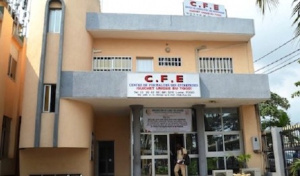
After introducing many young entrepreneurs, all over the country, to opportunities provided by the new tax code, the national agency for funding promotion and guarantee (ANPGF) now wants to give them solutions that may help their businesses thrive.
At the upcoming “Mercredi de l’Entrepreneur” that will be held March 13, a training session on the best “strategies and techniques to revive a business in difficulty” will be organized.
This is a context characterized by a lack of official data on businesses that last after five or ten years of existence.
Séna Akoda
Performances of Air France KLM in Africa slumped in 2018

Last year, Air France KLM’s performances in Africa slumped.
Flight tickets across the continent decreased to €1.12 billion in 2018, from €1.17 billion the year before. Similarly, the airline’s revenues from flights to sub-Saharan African countries was down €120 million compared to 2017.
While the carrier failed to provide more details about its poor performances in Africa, it still disclosed a 1.6% reduction of its available seat kilometers (passenger carrying capacity). Number of passengers carried per kilometer also decreased, according to Ecofin Agency.
Let it be recalled that market shares of Air France KLM, which holds shares in many African airlines in Africa is contracting amid a growing competition with emerging regional and international airlines. These airlines indeed provide an easier connectivity and more competitive fares, according to more and more African travelers.
Since 2017 for example, Air France’s shares in Kenya Airways have been reduced to 7.76% from 26.73%, after the East African airline restructured its debt and equity.
Togo : APRODAT seeks a consultant to produce procedural guide for PTA-Togo project

Togo’s national agency for agropole promotion and development (APRODAT) seeks a consultant for the operationalization of the agricultural transformation project (PTA-Togo). The latter is financed by the African Development Bank (AfDB).
The selected consultant will be providing the agency a guide on administrative, financial and accounting, and public procurement procedures. In addition, it will provide assistance, training and help establish an accounting and finance management system.
Hiring a consultant is part of a wider operation to acquire material and non-material assets previously announced by APRODAT. A general procurement notice was issued in this framework last February 5.
For more information on the call for expression of interest, please visit AfDB’s website. Deadline for submission of applications is March 20, 2019.
Ayi Renaud Dossavi
Togo puts in place unified social registry to better serve vulnerable populations

To better identify the needs of financially vulnerable households in need of public aid, a unified social registry (RSU) is at its operationalization stage. These tools should help better target vulnerable households and individuals, across of all Togo’s regions, for the various ongoing social projects.
The initiative which was developed in partnership with the World Bank was presented during a sensitization meeting with local authorities and administrative actors, on March 6, 2019.
According to Hawa Cissé Wagué, resident representative of World Bank in Togo, the RSU will ease the institution’s actions, especially those relating to its objectives to reduce extreme poverty by 2030, and foster a strong and inclusive growth. “By properly identifying beneficiaries, we will be able to provide them subsidies needed, in the form of money transfers or through our social canteen program with Togo,” the representative added.
For Togolese authorities, the initiative aligns with a social mandate, which converges with the third axis of the national development plan (PND).
Ayi Renaud Dossavi
Togo: Non-tax earnings forecasted at CFA73 billion in 2019

This year, the Togolese government expects non-tax earnings to amount to CFA73 billion, in line with its 2019 budget forecast. Compared to 2018, the new forecast is three billion lower.
In 2019, Togo hopes to collect CFA27.3 billion in dividends on its financial participations. Mining and phone royalties should amount to CFA2 billion and CFA15.5 billion respectively. The rehabilitation of the Gnassingbé Eyadéma international airport is expected to exceed CFA2 billion. As for administrative fees and charges, they are forecasted at nearly 7.8 billion.
The State expects to collect CFA881 billion of budget revenues this year, 76% of which should come from the Revenue Office (OTR). Non-tax earnings are expected to contribute 8.3% of budget revenues. Total budget is set at CFA1,461 billion.
Notaries to charge new tariffs for property transfer and sales

In Togo, notaries reviewed their fees for direct property sales and property transfers. This was decided during the extraordinary general assembly of notaries held last Jan. 31, in Lomé.
The new fees were set based on the property’s value, instead of degressive rates used previously.
“In the past, this rate was degressive and for properties worth more than sixteen to twenty million CFA francs (World Bank study), the fee perceived was about CFA350,000, against 250,000 currently),” said Sandra Johnson, State secretary and Coordinator of the Business Climate Cell (CCA).
From now on, notaries’ charges stand at CFA100,000 for properties worth less than CFA1 million, CFA150,000 for properties worth between one to five million. For properties worth between five to ten million, notaries will charge CFA200,000 and CFA250,000 for properties worth between 10 to 22.5 million.
“For sales or transfers of property valued at more than 22.5 million, notaries’ charges remain the same as before,” the new provision indicates.
BBOXX raises €6M via crowdfunding to improve access to solar power in Togo and six other African nations
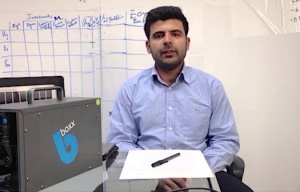
BBOXX, first operator active on the CIZO project in Togo, just raised more than six million euros through a crowdfunding arranged with Trine, a service that carries out sustainable investments in solar energy.
Sources close to BBOXX reveal that in Europe, 4,400 single investors took part in the crowdfunding, investing an average of €500-€600.
BBOXX’s goal is to “speed up installation of domestic solar kits in Togo, Kenya, Rwanda, DRC, Mali, Senegal and Guinea.”
The fundraising, the largest ever via crowdfunding in Africa for solar power, should benefit more than 200,000 people with no or limited access to power in these countries. “This investment will benefit all customers of BBOXX, unlocking potential of households, communities and SMEs in both rural and urban areas,” the British firm added.
Crowdfunding, an innovative way to fund solar energy projects
Mansoor Hamayun, CEO and Co-founder of BBOXX declared: “Hundreds of millions of people in Africa still live without electricity. Our collaboration with Trine helped us reach out to single investors that share a vision which is to transform the lives of these people by providing them sustainable energy. Crowdfunding could change the way the solar industry is financed and put pressure on investors active in the sector to adapt their commercial models, thus benefiting customers.”
For his part, Sam Manaberi, CEO and Co-founder of Trine added: “We recorded an unprecedented demand of retail investors who wish to invest, sustainably, in solar power in growing markets like Africa… Crowdfunding is a flexible and cost-effective funding mechanism that allows high-growth firms like BBOXX to easily expand.”
Séna Akoda
Togo: VAT revenues expected to reach CFA269bn this year, down 6% compared to 2018

This year, the value-added tax (VAT) should yield CFA269 billion in revenues for the Togolese economy. This represents 40% of tax earnings expected throughout the year.
Compared to 2018, this amount is 6% lower than the forecast for VAT revenues. Indeed, the government, in its June 2018 mini-budget expected VAT revenues to stand at CFA286 billion (128 billion for internal VAT and 158 billion for customs VAT).
Scale-down noticed by Togo First will affect both internal and customs VAT. The first should slump about 10% to CFA114 billion while the second is expected to fall to CFA155 billion.
Let’s recall that since January 1, 2019, VAT is set at 18%, perceived on a single basis unlike in the previous years where this tax was reduced from some products.
Regarding total budget revenues, they are expected to stand at CFA881 billion, including CFA669 billion of tax earnings, this year.
By 2025, Togo plans to get four new 30MW solar plants
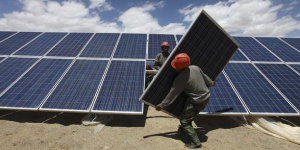
In Togo, four new solar power plants are expected to be developed by 2025. The infrastructures which will each have a capacity of 30MW will help boost access to power in rural areas.
The plants’ installation aligns with the government’s goal which consists in ensuring that renewables contribute 50% of national energy mix, by 2030. The project falls under the “Solar Program”, in the framework of which Togo already secured a $15 million financing from the Abu Dhabi Fund for Development. Regarding this facility, they were used to partially fund the first large-scale solar plant (30MW) in Togo.
Still in line with its energy transition, Togo plans to set up mini-grids across the territory by 2030.
Séna Akoda