

Togo First
MIFA SA urges agricultural actors to register on its database
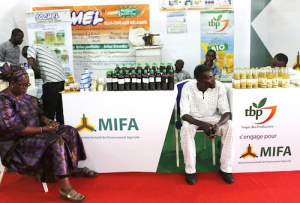
MIFA SA plans on putting in place a database listing the various actors engaged in Togo’s agricultural sector. This aims at structuring agricultural value chains and comes after the listing of investors involved in the scheme at the end of 2018.
Interested actors are thus urged to express their desire to be listed in the database, via mail or by sending their details to the secretariat of MIFA SA.
These include fertilizer and service providers; those ensuring primary production, collection, transformation and conditioning, in addition to market actors (consumption, industrial, export).
Request for registration should include a form to get the actor’s identity, address, entity and related date of creation, field of activity and sector. Other details related to products or services offered, production and commercialization capacity, location and zone of intervention are also demanded.
Last, part of the form will be filled with challenges faced by actors, the type of support he or she wants, skills and labor they have at their disposal, etc.
Registration will close on March 1, 2019.
Séna Akoda
Togo: Kountoum gets a mini solar power plant
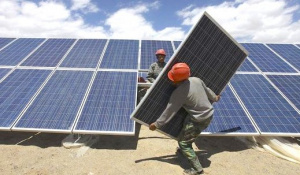
A new mini solar power plant has been developed in Kountoum, 415km north of Lomé, in the Bassar prefecture.
The infrastructure which has a low tension small distribution network, will power public lighting system.
It was commissioned Feb 26 under the high patronage of President Faure Essozimna Gnassingbé. This project falls under the government’s strategy to boost access to power in rural areas.
Indeed, in the past two years, Togo built many similar mini solar plants, namely in Assoukoko (250 kWc), Bavou (150 kWc), and Takpapiéni (100 kWc).
These projects are part of a larger program, the regional program for clean energy development and energy efficiency (PRODERE) which costs CFA2 billion.
Ayi Renaud Dossavi
New land code introduced to local populations
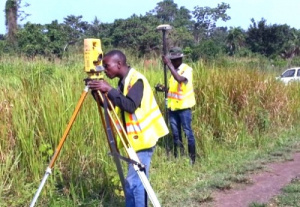
Togolese populations were recently introduced to the new code on private and state-owned land. This was on the sidelines of the civil society forum on land held last Tuesday, in Atakpamé (161km north east of Lomé).
Participants learned about the new regulation, in order to prevent future land conflicts and improve land management in the country.
The meeting, its second edition, is organized by ADHD, an Ngo that works for a sustainable rural development, and the ministry of housing. It aligns with national commitment strategies for equal access to land, for rural populations mainly.
Let’s recall that the new code lists 736 articles and considers the various changes that occurred in Togo, in the recent years, in regards to land. This new regulation aims to make land legislation safer, fight speculation, land grabbing and sell-off in rural areas. It was adopted in June 2018.
Ayi Renaud Dossavi
Since its launch, PUDC provided access to power to 96,000 people, in Maritime and Savanes regions
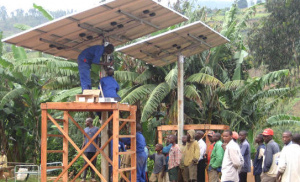
Two and a half years since its launch, the Community Development Emergency Programme (PUDC) helped 96,000 people living in the Maritime and Savanes regions gain access to solar power, via multipurpose platforms.
The scheme’s beneficiaries are spread across 16 localities of the two regions.
Providing modern power services to the populations of these localities, to women especially, helped them start businesses in sectors such as agro-food.
The PUDC covers key sectors like education, agriculture, health, social protection and clean water supply. It targets communities that have little or no access to government support, with main goal being reducing social inequalities and boosting inclusive growth, at both local and national levels.
Séna Akoda
Togo counts more than 36,000 organic farmers – FIBL
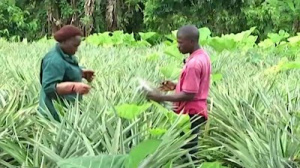
In Togo, there are more than 36,000 organic farmers, according to the latest survey of the Research Institute of Organic Agriculture (FIBL) on global organic production. This figure represents about 4.83% of all African farmers operating in this field.
According to the same survey, close to 40,000 ha of lands, which is only 1% of lands exploited in Togo, are dedicated to organic farming in the country.
While this area is modest compared to global standards, it puts Togo ahead of its WAEMU neighbors. Indeed, Benin and Burkina Faso respectively dedicate 0.5% of their arable lands to organic farming. Both nations respectively have around 4,000 and 27,000 farmers active in this field. In Africa, 0.2% of arable lands are used for organic farming and 815,070 farmers are active in the sector.
Demand for organic products has been growing substantially in the past years. In Togo for example, the organic soy market is potentially worth nine billion CFA, for the 2018-2019 season alone.
Ayi Renaud Dossavi
Togo-EU Economic Forum to focus on 7 key sectors targeted by PND
The Togo-EU economic forum will focus on promoting seven key sectors, in line with the National Development Plan (PND 2018-2022).
The first sector on which investors will focus is agriculture-agribusiness. This sector contributes 40% of Togo’s GDP and authorities plan over the 2018-2022 period to locally process agricultural products prior to their export.
The second sector is industry. The country plans in regards to the latter to create zones dedicated to the processing of agricultural products for export purpose. Also projected are special economic zones, reinforcing SMEs and SMIs, etc. Boosting the industrial sector should significantly contribute to job creation and economic growth.
Another sector is that of services which falls under axis 1 of the PND : Develop a top-class logistics hub and business center in the region. Authorities’ efforts to make the port of Lomé and the airport more competitive, paired with the valorization of ICTs, should help achieve this goal.
During the forum, empowerment of women and young entrepreneurs will also be discussed. Among others, participants will also discuss access to financing, development funds and private-public partnership.
Séna Akoda
Financial inclusion on the rise in Togo

From 2014 to 2018, the percentage of Togolese adults (more than 15 years old) having access to finance institutions grew from 18.3% to 45.3%. Last year’s figure represents almost half of the country’s adult population, according to the World Bank 2018 report on financial inclusion.
The rise, a quite impressive one compared to 2011 where the figure stood at 10%, aligns with a general trend relative to financial inclusion. For example, the number of mobile money accounts online in the country rose from 1.4% to 21.5% between 2014 and 2018.
Regarding the latter, 37.6% of these accounts are held by women, while rural people detain almost half (45%) of accounts attached to finance institutions.
According to the World Bank’s report, the growth of financial inclusion is driven by the expansion of digital access, the emergence of new financial services accessible via internet and mobile.
Ayi Renaud Dossavi
Togo to officially launch national development plan next March 4, in Lomé
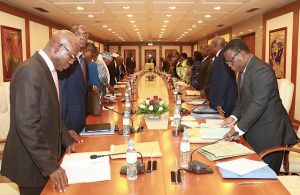
On March 4, 2019, Togo will officially launch its national development plan (2018-2022) in Lomé.
Adopted at a ministers’ council, the plan sets strategic goals for economic and social development, but also for growth over the 2018-2022 period. It revolves around three axes ; the first which aims at creating a top-class logistics hub and a business center of reference in the region ; the second which aims at developing poles of agricultural processing, manufacturing, and mining ; and the third which aims at consolidating social development and boosting inclusion mechanisms.
With this plan, authorities plan to create 500,000 jobs by 2022, and achieve a GDP growth of 7.6%.
To implement it, the country wants to attract 3,000 billion CFA from the private sector alone, out of a total of 4,622 billion needed.
Subsequent to the China-Africa summit which held Togo’s first ever business forum, a Togo-EU forum will be held next June 13-14. Just like the forum in China, the second’s purpose is to let Togo showcase its growth ambitions and business climate.
Séna Akoda
Cashew: Togo eyes an output of 24,000 tons in 2019
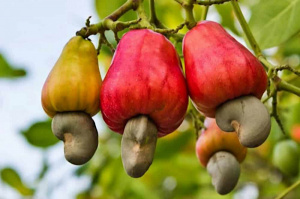
Togo eyes a cashew output of 24,000 tons this year and 30,000 tons in the next four years. This target falls under a program-agreement signed between the government and the sector’s actors.
This program aims at creating more than 200,000 jobs during the period.
The related agreement was signed in the framework of the third cashew sales campaign, launched by the minister of agriculture last Friday in Dapaong, in the Savanes region.
On this occasion, actors of the cashew industry discussed measures to take to advance the sector. Among the topics covered are the role of the mechanism promoting agricultural financing (MIFA) as well as a stricter management of sales.
In 2018, Togo exported 15,000 tons of cashew, the country’s fourth agricultural export, after cotton, coffee and cocoa.
Ayi Renaud Dossavi
Robert Dussey represents Togo in Samoa for talks about ACP-EU agreements

Togo’s minister of foreign affairs, Robert Dussey, is presently in Apia, Samoa Islands, for the Africa-Caribbean-Pacific (ACP) summit currently being held there.
During the meeting, participants will review the policies put in place by the ACP regions, and also assess how far advanced are talks related to laws regulating partnership with the European Union. These laws should substitute the Cotonou Agreements which expire next year.
“This is a historical meeting since it officially marks the start of talks for this regional pillar, following the adoption of the ACP mandate to negotiate a new partnership agreement with the European Union,” said Dussey.
It should be noted that many meetings have been held to renegotiate the partnership. In May 2018 for example, Lomé hosted such meetings on the sidelines of the 107th session of the ACP council of ministers.
The Cotonou Agreements, let’s recall, were signed in June 2000, replacing the Lomé convention. They regroup 79 ACP member States and 28 European Union nations, thus totaling a population of around 700 million people.
Ayi Renaud Dossavi