

Togo First
DHL 2018 Global Connectedness Index : Togo did better in 2017 than the year before

Togo jumped nine spots in the 2018 DHL Global Connectedness Index (GCI). The report, a detailed analysis of globalization, measured by international flow of trade, capital, information and people ranked, in this edition, Togo number one in the WAEMU, in terms of connectivity to global flows.
The African country is 92nd out of 169 countries, making it one of the nine African countries listed in the first 100 countries listed under the index.
Among internal factors that helped the country improve its performance in the rankings, there is better operational environment, better infrastructures, press freedom, freedom to work and freedom of financial flows.
The country also implements policies fostering trade globalization, such as visa facilitation policies for foreigners (the country was actually ranked third in the 2018 Visa Openness Report of the African Development Bank –AfDB).
In the near future, Togo’s overall situation should further improve, especially after the implementation of the African Continental Free-Trade Agreement, backed by the African Union and to which nearly 50 African countries have already committed to.
Ayi Renaud Dossavi
Togo: IMF and AfDB confirm 5% and 5.3% growth for 2019 and 2020 respectively
Togo should grow by 5% in 2019, Sampawende Jules Tapsoba, IMF’s resident representative announced last Friday.
This forecast is similar to that made by the AfDB in its last Togo economic outlook. According to the institution, Togo would grow by 5% in 2019 and 5.3% in 2020.
This encouraging outlook, after a slowdown due to the socio-political crisis and a decrease in public investments, will be spurred by the agriculture, energy and financial sectors and the first realizations in the framework of the National Development Plan.
The IMF further reveals that public debt that was around 81% of GDP in 2017, at the start of the 3-year program supported by a $241 million Extended Credit Facility, should decrease to under 70% this year.
Ayi Renaud Dossavi
Togo to benefit from US Women's Global Development & Prosperity Initiative
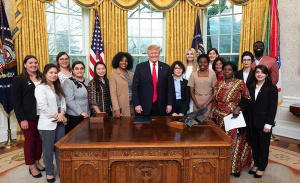
Togolese women will benefit from the Women's Global Development & Prosperity Initiative, a scheme launched Feb.7 by the Trump administration, seeking to advance women’s economic empowerment. This was announced by the US Embassy in Togo.
The initiative aims to reach 50 million women globally by 2025. To this end, it will focus on efficiently directing policies’ efforts and programs to support the development of the female workforce and women entrepreneurs.
Further, it will provide innovative educational programs, financial and technical assistance, capacity building as well as mentoring to support women's participation in the economy. In Togo, this objective is in line with the 3rd axis of the National Development Plan.
Let’s note that Togolese Olowo-N'djo Tchalla who has become a reference in the promotion and empowerment of women with his company Alaffia, took part in the launching ceremony at the White House.
Séna Akoda
Nigerian transport & logistics platform Kobo 360 will soon have offices in Togo
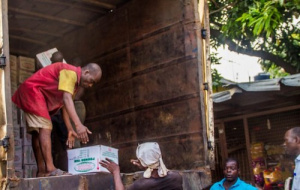
Nigerian transport and logistics platform, Kobo 360, will open offices in Togo next March, in line with its expansion strategy in West Africa.
The Nigerian platform, whose model is the same as Uber’s, connects companies that want to transport their goods to truck owners. To date, this network has access to a fleet of more than 5,000 trucks.
In the framework of its arrival in Togo, the startup’s representatives recently met actors of the transport sector in Lomé. In the coming months, Kobo 360 intends to expand to Ghana and Kenya.
In addition, the firm also wants to diversify its offers this year. These include warehousing and small-size (starting from five tons) delivery services.
In July 2018, Kobo 360, let’s recall, raised $1.2 million to support its ambitions in West Africa.
Ayi Renaud Dossavi
MCC Threshold : Togo finally gets $35M facility approved last April

Togo finally has access to the $35 million US financing approved last April under the MCC’s threshold program. The funds will be used to support ICTs and land management in the county.
Documents for the funds’ disbursement were signed on February 14, 2019, by Togolese and US officials.
“We noticed that Togo made significant efforts in the last nine months, in regards to ICTs and land. We have good reasons to be satisfied since this is a milestone for the US-Togo partnership; a partnership we want to be more dynamic”, said Cynthia Huger, CEO of the MCC, in the presence of the US ambassador to Togo, David Gilmour.
In detail, the threshold program will in the ICT sector help improve populations’ access to affordable and quality services, by promoting private investments. In the land sector, it should foster the formalization of land access, by legitimizing customary land rights and boosting inclusive access, among others.
Togo now wants to benefit from the Compact, also an MCC program whose amount exceeds that of the threshold and which is more difficult to secure. A move spurred by the recent validation of two new indicators under the MCC’s yearly reference assessment, putting Togo on the same level as Côte d’Ivoire.
Fiacre E. Kakpo
Togo now has a national cybersecurity agency

Togo now has its own cybersecurity agency, the ANCY. The latter will ensure security and defense of IT systems in Togo.
According to the council of ministers held last Wednesday, the agency’s role is to fight threats and risks inherent to the expansion of the digital industry.
ANCY’s creation aims at supporting “the implementation of the national development strategy for ICTs”, says the communiqué of the council. It falls under the “reform of Togo’s legal and institutional frameworks, in order to boost security and trust in the digital sector.”
Let’s recall that the law on cybersecurity and the fight against cybercrime was adopted in Togo in December 2018.
Ayi Renaud Dossavi
Togo : Government keeps legal rate of interest at 4.5%
In Togo, the legal rate of interest applied in 2019 was kept at 4.5%. This was announced by the government following the council of ministers held in Tabligbo, in the Yoto prefecture, about 90km from Lomé.
The rate which stood at 3.5437% in 2017, was increased to 4.5% in 2018.
Implemented within the WAEMU to help calculate, in the absence of special stipulations, damages and interests owed by a lender who failed to pay a debt on time, the legal rate of interest in Togo is set by the government for a given calendar year.
Fiacre E. Kakpo
Togo: APRODAT to launch tenders for agropole project

Many tenders will be launched by the agency for the promotion and development of agropoles in Togo (APRODAT), in line with the beginning of operational phase of the Togo Agricultural Transformation Project (PTA-TOGO).
The tenders will cover purchases of goods (lab and agricultural equipment; office furniture; softwares and IT equipment; an accounting and finance management system), works (developing the agro-park, building two water processing and treatment plants; building 10 agricultural transformation centres and a dam) and consultancy services provision related to PTA-TOGO.
Bidding documents should be available starting this month.
Ayi Renaud Dossavi
Togo: A technical committee has been put in place to make civil state more efficient
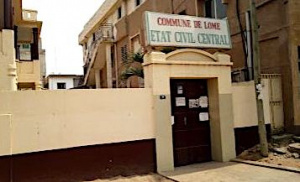
Last Tuesday, a technical committee was put in place to improve the functioning of civil State in Togo.
In effect, the objective is to tackle challenges related to “staff, efficiency, and equipment”, says Douti Lardja, head of the newly formed committee. Hence, an initial assessment was carried out to “identify what could be done to make civil State more efficient and effective”.
Subsequently, some of the solutions that emerged included increasing staff and reinforcing capacities.
The civil state is one of the government’s major concerns, both in regards to planning and as a tool that will improve the reliability of electoral register, said Payadowa Boukpessi, minister of territorial administration, while talking to members of the committee.
Ayi Renaud Dossavi
Togo : FORSETI, the software handling commercial conficts, has been updated
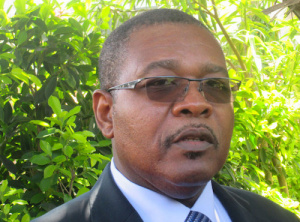
Last Tuesday, local economic actors were introduced to the latest updates of FORSETI, the software handling online procedures related to commercial conflicts in Togo. This was during a meeting held in the framework of the project to reinforce the commercial chambers of the lower and appeal courts of Lomé.
“For a long time, only judges and clerks used the platform”, says Kouami Gaméli Lodonou, head of mission of the project. Now, lawyers can “refer to commercial courts, pay online, and track their cases”, using the software. This significantly saves time for court officers and their clients.
The recent meeting, let’s indicate, aimed also to make reforms implemented in Togo to improve its business climate known to taxpayers.
Also, last month, the FORSETI’s innovations were presented to court officers, during a meeting launched by the National Program for Justice Modernization (PNMJ) and the Business Climate Cell.
Ayi Renaud Dossavi