

Togo First
Togo : Total and Brasserie du Bénin were OTR’s best taxpayers in 2018
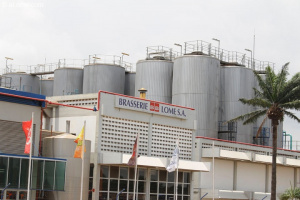
In 2018, the leading taxpayers of the Togolese Revenue Office (OTR) were Total’s local subsidiary and Brasserie du Bénin (BB).
These firms were distinguished during the second edition of the taxpayer day for their exemplary tax and duty payments.
Total Togo was the country’s largest taxpayer last year, and together with BB, they led this ranking ahead of a hundred other firms.
The awards granted to the two firms were to recognize partnership between the OTR and taxpayers. They also aim to reward the best taxpayers to ensure the good trend is sustained and stimulated.
Séna Akoda
Togo to soon adhere to creation of African Trade Insurance Agency

Togo should soon sign the agreement regarding the creation of the African Trade Insurance Agency (ACA), an institution whose purpose is to support trade and investment in Africa.
Indeed, a bill was adopted on January 30 in this framework during the first Council of Ministers of the new Togolese government.
According the council’s statement, adhering to the agency’s creation will provide Togo “socio-economic advantages, especially in regards to poverty reduction”, through “a better partnership between African States, multilateral development institutions and the private sector”.
ACA is an African multilateral institution which aims at tackling the lack of insurance on political risks, commercial or not, and subsequently boost financing for investments in Africa and contribute to the growth of external trade, including intra-African trade.
Besides the recently adopted bill, the council of ministers have adopted five other decrees.
Ayi Renaud Dossavi
Togo to get two new commercial courts

In Togo, two commercial courts will be created to appropriately deal with business conflicts.
The related decision was taken during a council of ministers held last Wednesday, a statement released by Foli-Bazi Katari, spokesperson of the government and minister of communication revealed.
The two new courts, the first of which will be in Lomé and the second in Kara (414 km North of Lomé), respectively cover the maritime and Kara regions.
The decision to establish the two courts aims at “adapting procedural business law to the transformation of this sector”, in addition to efficiently meet needs, by transferring “commercial cases to specialized jurisdictions”.
The two new courts are the first in many to come. Indeed, “many other similar jurisdictions will be created to gradually cover the whole country and finalize the process started”, reads the statement.
Ayi Renaud Dossavi
Togo secures CFA20 billion from IFAD for its MIFA scheme
Last Tuesday, the International Fund for Agricultural Development (IFAD) approved the provision of a CFA20 billion financing to Togo, to support its agricultural financing incentive mechanism (MIFA).
The facility will span six years, starting this year and will in detail provide technical support for the development of agro-pastoral value chains and access to market (38% of the financing), support to develop financial products (45%), and institutional support (17%).
Talks for the facility started at the launch of MIFA and were closed in four months, A record, looking at the IFAD’s procedures.
Founded in 1977, on the sidelines of the international food conference, IFAD is headed since April 2017 by Gilbert Houngbo, former Prime Minister of Togo.
Ayi Renaud Dossavi
Togo : At end-September 2018, 177 land titles had been transferred within a delay of 9-10 days
At end-September 2018, 177 land deeds were fully transferred in Togo. This is according to data from the Office of Cadaster, Land Conservation and Registry (DCCFE).
Compared to the same period in 2017, this number almost doubled from 94 titles processed in about 21 days respectively. Compared to the whole 2017 year, where 127 titles were fully transferred, the figure recorded at the end of the third quarter of 2018 is ahead by around 50 deeds.
Demands for land title transfer are processed more rapidly as a result of multiple reforms implemented to satisfy both investors and populations.
Over the first nine months of the past year, the corresponding delay for the processing of these cases varied between 5, 9 and 10 days with a peak of 12 days. Based on these figures, global average delay for all transfers over the period was 9-10 days.
Let’s however recall that this delay recently improved further, from 9 days to 7, between December 13, 2018, and January 15, 2019.
Séna Akoda
Togo: Government sets up a department for “made in Togo” promotion

Togo’s government has set up a ministerial department that will be in charge of promoting local consumption through products “made in Togo”. The portfolio was assigned to Kodjo Adedze, the newly appointed minister of trade.
Mr. Kodjo who was the former inspector of the Togolese Revenue Office (OTR) will now be responsible for taking concrete actions towards ensuring better growth for “made in Togo” products. First actions are awaited in this sector which now covers a wide range of activities, from agro-forestry production and processing, to energy, education and services.
In this wake, during his handover ceremony, the official committed to producing a “collegial work” to boost trade in the country, and ensure that local consumption is effective.
Togo : Eco CCP eyes a million subscribers by 2020
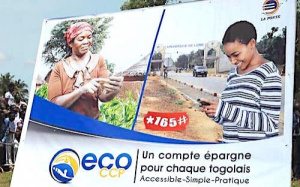
Launched in May 2018 to boost financial inclusion in Togo and enable the post office to create new growth stations, ECO CPP recorded 100,000 subscriptions in 2018.
According to the ministry of economy, posts and technological innovations, Société des Postes du Togo which initiated the project wants to reach a million subscribers by 2020.
ECO CCP is a free mobile savings account with a 2% interest rate. It works like an e-wallet and can be used anywhere in Togo, with a USSD code, via mobile money services of Togo Cellulaire and Moov Togo.
ECO CCP enables withdrawals, deposits, money transfers, and wiring to both traditional accounts and ECO accounts.
Fiacre E. Kakpo
Togo : BOAD and MIFA to soon ink partnership agreements
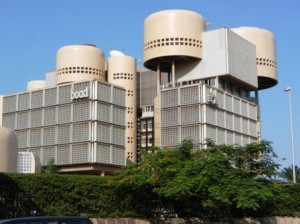
The BOAD and MIFA’s coordination team will “in the coming days” sign partnership agreements, sources close to the MIFA indicate.
The deals fall in line with support provided by BOAD to the Togolese scheme. In effect, the regional bank should invest €100 million in this project.
In this framework, a guarantee line should be put in place to facilitate farmers’ access to financing.
Also, firms of the concerned value chain should be funded via a dedicated desk. Last, a MIFA project is to be financed under the guidance of MIFA’s coordination team.
The MIFA, let’s recall, is based on a risk-sharing principle. It aims to boost bank loans to the agricultural sector via related value chains.
Séna Akoda
Microfinance: Number of clients up 9.5% at the end of Q3 2018, year-on-year
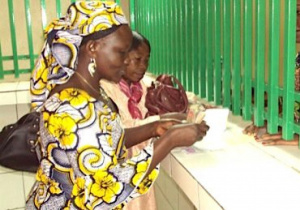
At end-September 2018, the number of people that benefited from the services of microfinance structures in Togo stood at 2,483,190, according to data from the Central Bank of West African States (BCEAO). This is 9.5% more compared to the previous year.
Meanwhile, the number of structures operating in the sub-sector was 75 at the end of Q3 2018.
Over the same period, the number of service points grew from 462 to 515. Deposits at end-September 2018 amounted to 188 billion CFA against about 165 billion the year before.
Outstanding loans rose from around 140.5 billion to 161 billion over the period under review.
Concerning recovered loans, figures were less good. From 11.9 billion, they rose slightly to 13.709 billion. In this context, loan portfolio of decentralized financing structures contracted to 8.5%, against 8.43% a year earlier, for a generally admitted norm of 3%.
Séna Akoda
Togo: Government commits to reducing budget deficit to 1.5% in 2019
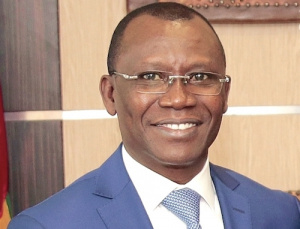
Lomé committed with the IMF to reduce its budget deficit, grants included, to 1.5%. This was revealed in a letter of intention dated November 20, 2018, from Minister Sani Yaya.
“The government has adopted the 2019 finance law which aligns with the global purpose of the ECF-backed program. The new law eyes a maximum budget deficit of 1.5% of GDP, far below the 3% set within the WAEMU,” Sani Yaya declared.
The government will thus streamline its budget.
“Our budget adjustment will focus on improving collection of revenues, through permanent measures relating to tax management and policy, rationalization of non-priority expenses, following expenditure review,” the official added lauding budget performances of the first half of 2018.
“Revenues exceeded forecast of 1.5% of GDP and expenditures were below 3.4% of GDP set under the budget, mainly because expenses for equipment which were financed by external resources were lower than projected”.
“This unprecedented budget streamlining will help reduce the public debt/GDP ratio in 2019 to 70%, as compared to 77.7% in 2016. Hence, this year, all convergence criteria of the WAEMU should be met,” Yaya further indicated.
While the IMF forecasts a debt ratio of 70% this year, the WAEMU for its part expects the figure to fall to 67.5% of the GDP, spurred by a new debt strategy.
Fiacre E. Kakpo